Jack’d - Gay Chat & Dating
- 20.76K
- 4.0
- Installs
- 5.00M
- Price
- Free

Screenshots

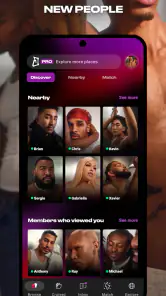

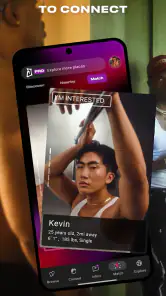
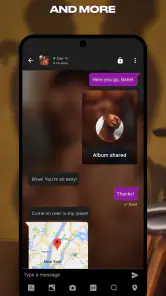
Analysis by Reviewed
I approached Jack’d as a practical social app rather than just another dating download. Its focus is gay chat and matching, so the useful question is not whether it can replace every social platform, but whether it helps you find relevant conversations without making the process feel like work. After spending time with it, I found an app that is easy to understand, broad enough to be useful in many places, and more comfortable for users who want a direct LGBTQ+ dating environment than a general-purpose social network.
It is free to install, although optional purchases range from $1.00 to $89.99 per item. The app is rated for mature users aged 17 and over, which fits the adult nature of its conversations and dating purpose. Perry Street Software has kept the product active for a long time: it first appeared on February 11, 2011, and the current Android version is 8.13.2. That history matters because Jack’d feels like an established service rather than a short-lived experiment, even though the experience still depends heavily on how many nearby people are active.
How Jack’d feels in everyday use
Speed expectations when browsing and chatting
My first impression was that Jack’d is built around quick decisions. You open it with a specific goal in mind, look through nearby profiles, and decide whether to start a conversation or move on. That directness makes the app feel faster than social networks that bury dating tools inside a larger feed. There is less temptation to spend time watching unrelated posts, and the gay dating focus is visible from the beginning.
Perceived speed is not only about loading screens. It also comes from how quickly the app lets me understand a profile. A clear photo, a short description, and a message option are more useful here than a complicated profile full of unrelated activity. When I was checking the app during short breaks, that focused layout made it practical for a quick look rather than something that demanded a long session.
There is an important exception: the app can feel much less immediate when the local user pool is quiet. That is not a fault that an interface can completely solve. A fast app still feels unproductive if nearby profiles are inactive, far away, or not looking for the same type of connection. Jack’d works best when I treat it as a way to open possibilities, not as a guarantee of an instant reply.
The service has attracted more than five million installs, along with an average rating of 4.0 from roughly 118 thousand ratings. Those figures suggest a substantial audience, but they should not be mistaken for a promise that every neighborhood will be equally lively. In a large city, the experience may feel more active than in a smaller area. I would check the local profile quality and recent activity before deciding whether it deserves regular use.
What happens during heavier use
Jack’d becomes more demanding when I use it repeatedly over a longer period: moving through many profiles, opening several conversations, and returning to compare chats. That is the point at which a dating app can become mentally tiring even if the phone itself remains responsive. The main burden is usually attention. A large number of choices can make it harder to remember who I wanted to answer and why.
You May Like

Clash of Clans Is Won Between the Battles

Android Auto Makes the Case for Quieter Car Software

MobiOffice: Transforming Mobile Productivity with Seamless Integration

EA SPORTS FC™ Mobile Soccer: Redefining Mobile Sports Gaming

How Microsoft OneDrive Became a Mobile Productivity Giant

How Google Translate Breaks Language Barriers Effortlessly
My practical approach is to use short sessions with a clear purpose. I might browse for a few minutes, respond to messages that deserve an answer, and then leave instead of endlessly refreshing the same area. This makes the app feel lighter and also improves the quality of my conversations. A person who keeps checking every few minutes may find the experience repetitive, especially when the same profiles remain visible.
One useful workflow is to separate discovery from conversation. I first look for profiles that seem compatible, then stop browsing and give attention to the people I actually want to know. This is more effective than opening every profile and sending identical messages. It also reduces the chance of mixing up details between chats, an easy mistake when several conversations are active at once.
For people who use the app while traveling, the same principle helps. I would not rely on a quick glance at the local grid to judge an entire city. Instead, I would allow time for the area to show a useful range of profiles and would be clear in my own profile about whether I want a date, conversation, or something more casual. That small amount of preparation matters more than simply having a large number of visible accounts.
Reliability and the reality of online conversations
Jack’d feels most reliable when I use it as an introduction tool rather than as proof that someone is available, genuine, or compatible. A profile can start a conversation, but it cannot replace basic judgment. I would keep early messages inside the app, avoid sharing sensitive personal details too soon, and arrange a first meeting in a public place if a chat develops into an in-person date.
The mature rating is worth taking seriously. This is not an app I would recommend to younger teenagers, and it is not a good choice for anyone who wants a completely non-romantic social space. Even when the interface is simple, conversations can become personal quickly. Users should be comfortable setting boundaries and ending a chat when the tone becomes disrespectful or pressuring.
Reliability also depends on expectations. Some people open a gay dating app hoping for immediate chemistry, while others are looking for friendship, local community, or a discreet way to meet people. Jack’d can support different intentions, but it cannot make those intentions match automatically. I found that a specific profile description and a direct first message produced better results than waiting for the app to do all the work.
There are around 21 thousand written reviews associated with the app, and that volume reflects a wide range of user experiences. I would read that kind of feedback as a sign of an active, long-running product rather than as a guarantee of perfect reliability. The most realistic expectation is that the software provides access to a pool of people; the quality of each interaction still depends on location, timing, communication, and personal safety.
Device constraints and who should think twice
On Android, the minimum operating system requirement is Android 7.0. That makes Jack’d accessible on many older phones, which is useful for people who do not replace devices frequently. At the same time, an older phone may offer a less comfortable experience than a recent model, especially if storage is nearly full or the system is already struggling with other apps.
I would pay attention to the condition of the phone rather than assuming that the app itself is demanding. A nearly full device, an outdated system, or aggressive background management can make any social app appear unreliable. Keeping some free storage, updating the operating system when possible, and closing apps that are genuinely causing trouble are sensible steps before blaming Jack’d for every pause or reload.
Resource demands are also connected to how you use the service. Occasional browsing and messaging should be easier to manage than leaving a dating app open for long periods while repeatedly checking for new activity. If battery life is already a concern, I would avoid treating Jack’d as a constant live feed. Open it when I have time to respond, then close it when I am finished.
People using iPhones or Android phones should also think about their preferred dating style. Jack’d is a better fit for someone who values a dedicated gay social environment and is willing to make choices independently. It is less suitable for a person who wants a highly guided matchmaking process, extensive compatibility analysis, or a platform centered mainly on long-form profiles. A general dating service may be better if you want to compare several orientations and relationship formats in one place, while a broader social network may suit someone who wants community discussion more than direct dating.
Small habits that make the experience better
The first habit I recommend is writing a profile that answers the questions people otherwise have to ask repeatedly. A short statement about what I am open to, the kind of conversation I enjoy, and whether I prefer meeting locally can save time on both sides. It also filters out some mismatched approaches before they become awkward conversations.
The second is to judge consistency rather than charm alone. A polished photo or confident opening line can attract attention, but a respectful exchange over several messages tells me more. I would notice whether someone answers what I actually wrote, accepts a boundary, and is willing to explain basic details about a proposed meeting. That is a more useful test than rushing from a first message to an offline plan.
The third is to keep the app from becoming an emotional scoreboard. A quiet day does not necessarily mean the service is failing, and a busy day does not mean every conversation deserves equal attention. I get more value from choosing a manageable number of genuine chats than from trying to respond to everyone. This is especially important for users who become discouraged by unanswered messages or repetitive introductions.
A fourth practical insight is to use timing and place intelligently. If I am only checking Jack’d at unusual hours or from a very small town, I should expect a narrower range of active profiles. When traveling, I would update my location context in my profile and avoid implying that I am available for an immediate meeting if I am not. Clear expectations reduce the friction that often gets blamed on the app.
Free access, optional purchases, and value
The free entry point is one of Jack’d’s strongest advantages. I can install it and decide whether the local community is useful before spending anything. That is exactly how I think a location-based dating app should be evaluated: try the basic experience first, inspect the quality of nearby profiles, and only then consider whether an optional purchase solves a problem I actually have.
The purchase range is wide, from $1.00 to $89.99 per item, so I would be cautious about buying on impulse. A paid option is only worthwhile if it gives me a clear benefit in my own routine, such as saving time or improving how I manage the app. It is not worthwhile simply because I feel impatient after a quiet day. No purchase can create genuine compatibility or guarantee that another person will answer.
I also appreciate that the free version gives the app a fair chance to prove its value. Someone who lives in an active area may find that enough. Someone in a smaller community may discover that the main limitation is the number of suitable people nearby, in which case paying more would not necessarily change the underlying experience. That distinction is easy to miss when dating apps present upgrades at the moment of frustration.
How it compares with familiar alternatives
Compared with a general social network, Jack’d is more focused. I do not have to search through unrelated content to find people who are interested in gay dating or chat. That focus can make the first step easier, particularly for someone who wants a dedicated space instead of announcing personal interests on a broad public platform.
Compared with large mainstream dating apps, the appeal is its specific audience. A mainstream service may offer a larger overall pool or more elaborate matching tools, but it can also feel less tailored to gay users depending on the local community and the way profiles are organized. Jack’d makes more sense when relevance matters more to me than having every possible dating feature in one application.
On the other hand, a mainstream alternative may be the better choice for users who want more structured relationship filters, a different balance between swiping and messaging, or access to several kinds of dating communities. Jack’d is not automatically superior; its advantage is concentration. I would choose it because the audience and purpose fit, not because a dedicated app removes all the normal uncertainties of online dating.
It also differs from friendship-first LGBTQ+ communities. Those services may be better for group discussion, events, or slower social connection. Jack’d is more direct and personal, which is useful when I want to meet or chat with individuals, but less ideal when I am mainly seeking a broad community conversation without dating pressure.
Who will enjoy it, and who should skip it
I think Jack’d is a good match for adults who want a straightforward gay chat and dating app, especially those who prefer to browse independently and start conversations themselves. It is also worth trying for travelers, newcomers to a city, and people who want a dedicated LGBTQ+ dating environment rather than a general social feed.
I would be more hesitant to recommend it to someone who dislikes direct messaging, expects an algorithm to make nearly every decision, or needs a highly moderated community experience. It may also disappoint users in places with a small or quiet local audience. In that situation, trying another service alongside it may be more sensible than assuming the app alone will solve the problem.
For a realistic everyday scenario, imagine finishing work in a new city and having an hour before dinner. I would open Jack’d, check whether nearby profiles match what I am looking for, and send one or two thoughtful messages instead of broadcasting the same greeting. If a conversation develops, I would keep the first meeting public and easy to leave. If the local selection feels inactive, I would close the app and try again later rather than spending money out of frustration.
My performance verdict
After using Jack’d with a performance-focused mindset, I see it as a practical, established social app whose biggest strength is focus. It is quick to understand, accessible on older Android devices, and free to try. Its perceived speed is generally good for short browsing and messaging sessions, while heavier use can become repetitive and mentally demanding. The more important variable is not raw responsiveness but whether the local audience gives you enough worthwhile conversations.
I would not describe it as a magic matchmaking solution. The app cannot remove the need for clear communication, patience, privacy awareness, or careful first meetings. Optional purchases should be considered only after the free experience proves useful, and users with limited local activity should compare it with broader alternatives.
Overall, I would recommend Jack’d to an adult looking for a direct gay dating and chat environment, particularly if a relevant local community is available. Its best value comes from focused browsing, honest profiles, and selective conversations rather than endless checking. If that sounds like your style, it is worth trying without spending money first. If you want guided compatibility tools, community groups, or a much broader dating audience, another service may fit your routine better.
Jack’d - Gay Chat & Dating Frequently Asked Questions
Does Jack’d work well in every city or region?
Jack’d’s usefulness can depend on how many people nearby are active on the app. In a large or busy area, you may find more profiles to browse and more chances to start a conversation; in a quieter location, the selection may feel limited. Since the experience is location-based, it is worth considering the level of activity around you before downloading.
Who develops Jack’d, and what kind of app is it?
Jack’d is a social app developed by Perry Street Software, with a focus on gay chat and dating. Its purpose is to help users connect through profiles and conversations, rather than provide a general-purpose social feed. If you are comparing dating apps, consider whether this LGBTQ-focused community and its location-based approach fit the kind of connections you hope to make.
Who can use Jack’d, and is it intended for adults?
Jack’d is a social and dating app primarily for gay, bisexual, transgender, and queer users. It is rated Mature 17+, so it is intended for an adult audience rather than children. Before downloading, consider whether you are comfortable using a dating-focused social app, where profiles and conversations may involve romantic or casual interest.
Which devices can run Jack’d?
Jack’d is available for Android and iOS devices, and compatibility depends on the operating system version your phone is running. The current version is 8.13.2, and the minimum operating-system requirement is 7.0. Check that your device meets the app’s minimum requirement before installing. Keeping your phone’s software current can also help with general compatibility and security when using social and dating apps.
What is Jack’d - Gay Chat & Dating used for?
Jack’d is a social and dating app designed primarily for gay, bisexual, transgender, and queer users. After exploring the app, its main purpose is to help people discover nearby profiles, start private conversations, share photos, and potentially meet for friendship, dating, or casual connections. The experience is strongly location-based, so the profiles and opportunities shown can vary considerably depending on your city and local user activity.
Pros
- Large LGBTQ+ user base in many cities and regions.
- Profiles can include detailed interests
- preferences
- and relationship goals.
- Useful filters help narrow matches by distance and personal criteria.
- Private photo sharing offers more control over sensitive images.
- Location-based discovery makes finding nearby users straightforward.
Cons
- Some useful features require a paid subscription or in-app purchases.
- The app may feel less active in smaller towns or rural areas.
- Location features can raise privacy concerns if settings are not reviewed.
- Profiles and messages may include spam or users seeking casual encounters.
- Occasional technical issues can affect notifications and message delivery.

- Category
- Social
- Version
- 8.13.2