Holy Bible Launcher: KJV+Audio
- 2.46K
- 4.7
- Installs
- 1.00M
- Price
- Free

Screenshots





Analysis by Reviewed
I approached Holy Bible Launcher: KJV+Audio as a practical reading tool rather than simply another Bible reference app. Its central idea is straightforward: keep the King James Version close at hand, make daily verse reading easy, and add audio for moments when looking at a screen is inconvenient. After using it in those different situations, my view is that its greatest strength is focus. It does not try to become a broad religious library or a social platform; it puts scripture access at the center.
That narrow purpose is also the key to deciding whether it belongs on your phone. If you want the KJV in a simple, accessible format and appreciate listening as well as reading, this free Books & Reference app makes a persuasive case. If you need several translations, extensive academic tools, or a large collection of study resources in one place, the experience may feel limited compared with a full-featured Bible platform.
How the reading and listening experience works in everyday use
The first thing I noticed is how quickly the app gets to its main job. A launcher-style Bible app is most useful when it reduces the distance between deciding to read and actually opening a passage. That makes it a good fit for a short morning reading, a quiet pause during the day, or a familiar chapter before bed. I did not have to treat it like a research project before beginning.
The King James Version gives the app a very specific character. Its language is formal, rhythmic, and familiar to readers who already prefer traditional wording. That can make a passage feel memorable, especially when read aloud, but it also means newcomers may need more patience with older expressions and sentence structures. I would not recommend choosing this app solely because it is free if you already know that modern translations are easier for you to understand.
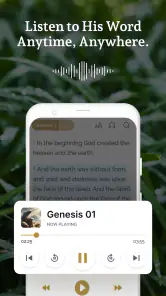
The audio option changes the way the app fits into a routine. Reading demands your eyes and a little more deliberate attention, while listening can accompany a walk, household task, or quiet drive when it is safe and appropriate to do so. I found that alternating between the printed verse and the spoken version helped me stay with longer passages. Audio is not merely a decorative extra here; it gives the same scripture a second route into a daily habit.
One useful workflow is to begin with a short reading while your attention is fresh, then switch to audio when you want to continue without staring at the display. That approach is particularly helpful for people who find that ambitious reading plans fail because they require a fixed block of uninterrupted screen time. The app works better when treated as a flexible companion than as a strict course.
Another practical tip is to use the launcher concept intentionally. Instead of burying the app in a crowded folder, place it where a daily reading decision becomes visible. That small change can matter more than adding another complicated feature. A Bible app can contain excellent tools and still go unused; quick access makes the difference between intending to read and opening a passage.
More From Our News Desk

Clash of Clans Is Won Between the Battles

Android Auto Makes the Case for Quieter Car Software

MobiOffice: Transforming Mobile Productivity with Seamless Integration

EA SPORTS FC™ Mobile Soccer: Redefining Mobile Sports Gaming

How Microsoft OneDrive Became a Mobile Productivity Giant

How Google Translate Breaks Language Barriers Effortlessly
For a realistic example, imagine a commuter who wants a calmer start before work but has only a few spare minutes. Reading a short section at home and listening to the continuation later creates a manageable rhythm without requiring one long session. Someone else might use the audio during an evening walk and return to the text afterward to reread a sentence that stood out. These are modest workflows, but they show where this app earns its place.
Why the focused design is more useful than it first appears
The strongest evidence in its favor is consistency. The app is built around one recognizable text and one clear purpose, so a user who values the KJV does not have to navigate a crowded collection before reaching scripture. That simplicity is valuable for personal devotion, family reading, or anyone who wants a reference available without turning the phone into a distracting study dashboard.
I also like the way text and audio serve different kinds of attention. Reading is better when I want to examine wording, pause at a verse, or move back and forth through a passage. Listening is better when I want the cadence of the language to carry the session. With the KJV, that distinction is especially noticeable because the prose has a strong spoken quality. The audio can make a familiar chapter feel different without changing the source text.
Daily verse reading is another sensible use. A short, repeatable practice is easier to maintain than an overly ambitious plan, and the app’s emphasis on daily engagement supports that kind of habit. I would use it for a brief morning reading, then return later for a longer chapter when time allows. The important point is to avoid measuring success only by length; the app is well suited to regular contact with the text.
It is also a reasonable choice for readers who want a free starting point. The app is free, carries an Everyone content rating, and is developed by AtomApplications. Its public reception is strong, with a 4.7 average from around 6.7 thousand ratings, while its reach has passed one million installs. Those figures do not replace personal preference, but they do suggest that the basic approach has connected with a substantial audience.
Its current version is 3.19.0, and it runs on Android 10 or later. That operating-system requirement is worth checking before installing, especially if you keep an older phone for reading or audio use. On a compatible device, the app is positioned as an accessible everyday utility rather than a premium purchase that requires a financial commitment before you can decide whether the KJV suits you.
The release date, February 14, 2023, also places it in a relatively modern app landscape rather than making it an old digital edition that has simply remained available. I would still judge it by how comfortably it fits your routine, but the combination of a current version and a clear reading purpose makes it easier to consider as a regular tool.
Where it falls short for serious study
The meaningful weakness is not that the app focuses on the KJV; that is its identity. The issue is that a focused KJV reader may not satisfy users whose questions go beyond reading and listening. If you regularly compare translations, consult original-language notes, follow cross-references, build detailed study plans, or collect organized annotations, you may eventually want a more expansive Bible platform.
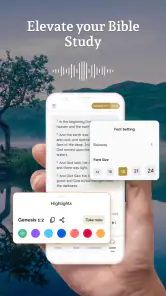
This matters because the usual alternatives in this category often compete through breadth. They may offer multiple translations, commentary collections, maps, reading plans, highlighting systems, or community features. A broader app can be better when your goal is research or structured study. In contrast, this launcher-style experience makes more sense when you already know that the KJV is the text you want and prefer not to sort through a large toolbox.
The traditional language itself can also become friction. Readers who are new to the Bible, younger users, or anyone who prefers contemporary English may understand a modern translation more quickly. Audio can improve flow, but it cannot remove unfamiliar vocabulary or older grammar. I would therefore treat this app as a poor first choice for someone who wants the easiest possible introduction to biblical reading in modern language.
There is a trade-off between concentration and flexibility. A narrow app can help prevent feature overload, but it gives you fewer ways to adapt the material to different study styles. If you want to compare a verse immediately with another translation, this may not be the most efficient place to work. My practical solution would be to keep this app for focused KJV reading and use a separate reference tool when comparison becomes important, rather than expecting one app to do both jobs equally well.
Audio also has limits as a study method. Listening is excellent for continuity and repetition, but it is less precise when I need to inspect a particular phrase or remember where a detail appeared. I would not rely on audio alone for close reading. The best results come from using it as a companion: listen for the broader passage, then return to the text for careful attention.
There is another small but important consideration for personal habits. A launcher encourages quick access, but quick access can become quick dismissal if the user treats the daily verse as a box to check. I found the app more rewarding when I slowed down after the initial reading and asked what I actually remembered. The tool can support reflection, but it cannot provide that reflection for you.
Who should install it, and who should choose something else
I would recommend it first to established KJV readers who want a convenient mobile copy with audio. It is especially suitable for someone who prefers traditional wording, wants a simple daily routine, and does not need a large study library. It also fits households where different people read at different times: one person can use the text quietly, while another can listen during a task or walk.
It may also work well for someone returning to Bible reading after a long break. The free price removes a financial barrier, and the direct format makes it less intimidating than a large application filled with menus. I would begin with a small, repeatable session rather than setting an unrealistic target. A few minutes of reading followed by a short listening session is enough to learn whether the style suits you.
Readers who learn better through sound should give the audio feature serious consideration. Some people retain the shape of a passage more easily when they hear it, while others need the printed words in front of them. This app supports both approaches, and moving between them is one of its most useful practical advantages.
On the other hand, I would steer away from it if your first requirement is translation variety. It is also not my pick for a student who needs extensive scholarly material in the same workspace, or for a reader who wants social discussion and shared notes to be central to the experience. A broader alternative will likely save time in those cases, even if it feels less focused.
Families should also think about reading level rather than relying only on the Everyone rating. The age classification makes it broadly suitable from a content perspective, but the KJV’s wording may still be challenging for children or beginners. An adult can make the experience more approachable by reading a short passage aloud, explaining unfamiliar terms, and using the audio as reinforcement rather than assuming every listener will understand the language immediately.
Before installing, I would check the Android requirement and think about storage and listening habits in practical terms. The app needs Android 10 or later, so an older spare device may not be compatible. I would also decide whether I mainly want quick text access, regular audio sessions, or both. That answer will tell you whether this focused tool is a better match than a larger all-purpose Bible app.
My final view after using it as a daily Bible companion
My conclusion is favorable, with a clear condition: this is strongest when simplicity and the King James Version matter more than feature quantity. The combination of accessible reading and audio makes it easier to build a routine around scripture, and the launcher approach keeps the main purpose visible. For a free app in Books & Reference, that clarity is a genuine strength rather than a lack of ambition.
I would not call it a universal Bible solution. Its traditional language will not suit everyone, and readers who need translation comparison or deep research tools may outgrow it. Those are meaningful limitations, not minor complaints. Still, they are closely tied to the app’s focused identity, so they should not surprise anyone who chooses it for KJV reading.
AtomApplications has created something I would recommend to a friend who says, “I want the KJV on my phone, and I want to hear it sometimes, but I do not want a complicated study system.” That person can start without paying, use it across ordinary parts of the day, and decide naturally whether the reading habit becomes regular. With its 4.7 average, around 6.7 thousand ratings, and more than one million installs, it has clearly found an audience, but my recommendation rests more on the practical fit than on popularity.
If that description matches you, install it, place it somewhere easy to reach, and begin with a short passage rather than waiting for a perfect quiet hour. If you need modern wording, multiple translations, or research features first, choose a broader alternative instead. For the right reader, Holy Bible Launcher: KJV+Audio is a focused and approachable way to keep traditional scripture reading and listening close to everyday life.
Holy Bible Launcher: KJV+Audio Frequently Asked Questions
Is Holy Bible Launcher: KJV+Audio suitable for children and families?
The app is rated for Everyone, and its focus is reading and listening to the King James Version of the Bible. That makes it potentially suitable for family use, including adults who want Scripture close at hand. Parents can still explore the app together with younger users and review its settings, notifications, and any audio or launcher behavior before making it part of a child’s device.
Which Bible translation does the app provide?
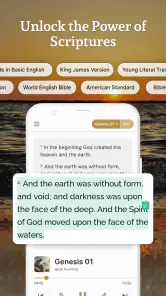
Holy Bible Launcher: KJV+Audio focuses on the King James Version, or KJV, rather than presenting itself as a collection of multiple translations. This is useful if you specifically want to read or listen to that familiar English translation. If you prefer another translation, compare your needs with the app’s KJV-centered approach before downloading, since translation choice can affect how comfortable the text is for everyday reading.
What is Holy Bible Launcher: KJV+Audio?
Holy Bible Launcher: KJV+Audio is a Bible-focused app designed to provide quick access to the King James Version of Scripture. It combines Bible reading with audio playback, allowing users to listen to passages as well as read them on their device. The launcher-style design may also make Bible content easier to reach from the home screen, depending on the device and installed version.
Does Holy Bible Launcher: KJV+Audio work offline?
The text of the King James Version may be available for offline reading after installation, which is useful when traveling or when an internet connection is unavailable. However, audio features, updates, advertisements, or additional online content may require connectivity depending on how the app is configured. It is recommended to open the app once while connected and check whether audio files need to be streamed or downloaded.
Can I listen to the Bible instead of reading it?
Yes, audio listening is one of the main features associated with Holy Bible Launcher: KJV+Audio. Users can generally select a biblical book or chapter and play the corresponding narration while following along with the text. Playback controls and available voices may vary by version, so users who prefer a particular narration style should review the app’s current listing and permissions before downloading.
Pros
- Quick access to KJV verses directly from the home screen
- Audio playback makes listening convenient during commutes or quiet time
- Clean Bible-focused layout with minimal distractions
- Useful for users who prefer traditional King James wording
- Can support a consistent daily Scripture-reading routine
Cons
- KJV language may feel difficult for readers unfamiliar with older English
- Audio and some features may require an internet connection
- Launcher permissions may concern users who value strict privacy
- Home-screen replacement may not suit people who prefer standard launchers
- Limited appeal for users seeking multiple Bible translations

- Category
- Books & Reference
- Version
- 3.19.0