Goodwall - Learn & Earn
- 520.00
- 4.3
- Installs
- 5.00M
- Price
- Free

Screenshots




Analysis by Reviewed
I approached Goodwall - Learn & Earn as a social app with a practical purpose: helping people connect learning, personal development, and future opportunities in one place. That focus makes it different from a general social network, where conversation and entertainment usually come first. Here, the useful question is not simply whether the feed is interesting, but whether it helps me present what I can do, discover worthwhile possibilities, and keep moving toward a clearer goal.
After spending time with it, I see the strongest appeal in its combination of social discovery and self-development. It is free to use, made by Goodwall, and aimed at a teen audience, so the experience is positioned for younger people who may still be building confidence, experience, and a public profile. The app has been available since March 7, 2016, and its current version is 1.10.11.1, which suggests a product that has had time to refine its direction rather than appearing as a short-lived experiment.
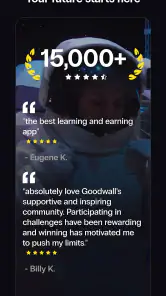
Goodwall has a 4.3 average from around twenty-three thousand ratings and more than five million installs. Those figures do not automatically make it the right choice for everyone, but they do show that the concept has reached a substantial audience. My overall impression is positive, with one important qualification: this is most useful when I treat it as an active tool for presenting myself and finding direction, not as another social feed to scroll without a plan.
How the app feels in everyday use
A social profile built around progress
The central idea works best for people who have something to show but may not yet have a long employment history. A student can use the space to think about skills, interests, learning efforts, and ambitions in a more structured way than a casual social profile allows. Someone changing direction can also benefit, especially when a traditional résumé feels too narrow to represent personal projects, volunteer work, or developing abilities.
What I like about this approach is that it encourages me to think in terms of evidence rather than vague claims. Saying that I am interested in design is less convincing than showing a project, describing what I learned, and explaining the problem I tried to solve. Goodwall feels designed for that transition from “I want to do this” to “Here is what I have started doing.” That is a valuable mindset for younger users who often underestimate small accomplishments.
The social element matters because progress can feel easier when it is visible and shared. At the same time, visibility can create pressure. I would not recommend posting every personal goal immediately. A better workflow is to prepare a small set of meaningful updates, review the wording, and share only what I would be comfortable explaining to a teacher, mentor, recruiter, or future collaborator.
A realistic student scenario
Imagine a student preparing for an application but lacking formal work experience. Instead of waiting until the deadline to assemble everything, I would use Goodwall as a running record. After completing a course, joining a school activity, helping organize an event, or finishing a personal project, I could add a concise explanation of the task and the skill involved. Over time, that creates a more complete picture than a single rushed résumé session.
You May Like

Clash of Clans Is Won Between the Battles

Android Auto Makes the Case for Quieter Car Software

MobiOffice: Transforming Mobile Productivity with Seamless Integration

EA SPORTS FC™ Mobile Soccer: Redefining Mobile Sports Gaming

How Microsoft OneDrive Became a Mobile Productivity Giant

How Google Translate Breaks Language Barriers Effortlessly
The useful detail is to describe the process, not just the result. For a community project, I might mention how I divided responsibilities, solved a scheduling problem, or communicated with others. For a learning activity, I would note what changed in my understanding and what I produced afterward. This makes the profile more credible and gives other people something specific to respond to.
Goodwall cannot replace the application itself, and it cannot guarantee an opportunity. Its value is earlier in the process: it helps me notice and organize experiences that I might otherwise forget. That makes it particularly helpful for users who feel they have “nothing to put down,” when the real issue is that their experience has not yet been described clearly.
Where it differs from familiar alternatives
Compared with a conventional résumé builder, the app feels more continuous and personal. A résumé is usually prepared for a particular purpose and then left unchanged. A social development profile can grow as I learn. That is useful when my interests are still evolving, although it also means I need to keep the presentation focused instead of collecting disconnected entries.
Compared with a broad social network, the context is more constructive. A general platform may offer a larger audience, but it also mixes professional identity with entertainment, private life, and fast-moving conversations. Goodwall’s narrower purpose can make it easier to share achievements without competing with unrelated content. The trade-off is that users who want a huge general audience may find the environment less lively than the networks they already use.
Compared with a dedicated learning platform, Goodwall appears more interested in what learning leads to: confidence, visibility, connections, and future possibilities. A course platform is usually better when I want deep instruction, exercises, grading, or a carefully sequenced curriculum. I would use Goodwall alongside those services, not instead of them. It can help me present the outcome of learning, but it is not a substitute for learning itself.
Small habits that make the experience more useful
My first practical tip is to complete the profile in stages rather than trying to write a perfect version in one sitting. I would begin with a clear description of the direction I am exploring, then add only the strongest examples. This avoids a common problem with social profiles: filling every available space with information that does not help anyone understand the person behind it.
My second tip is to write updates for a reader who knows nothing about the activity. A short sentence explaining the challenge, action, and result is more useful than a list of impressive-sounding words. This also makes older posts easier to reuse when preparing an application or introducing myself to someone new.
A third, less obvious use is reflection. I can revisit older entries and compare what I thought I wanted with what I actually enjoyed doing. That turns the app into a lightweight record of changing interests. For teenagers in particular, this can reveal patterns: perhaps communication appears repeatedly, or perhaps technical tasks are more motivating than expected. I would not treat that pattern as a formal career assessment, but it can support better questions and decisions.
How the product’s evolution affects current users
The current version, 1.10.11.1, is important mainly because it tells me I am looking at an actively maintained stage of the product rather than an abandoned early release. I would expect existing users to benefit from a more settled experience than someone who tried the app near its launch in 2016. Still, a version number alone does not tell me that every part of the experience has changed dramatically, so I would judge the app by how well its present tools support my routine.
For a returning user, the biggest practical effect of continued development is likely consistency. A profile that represents months of effort only has value if I can keep using it comfortably. I would therefore update the app before making an important profile revision, then check that older work, personal descriptions, and visible activity still appear as intended. This is a sensible habit for any app that stores a record of personal progress.
New users should not assume that a mature product removes the need for judgment. Social education apps evolve, but the quality of a profile still depends on what I choose to share, how carefully I describe it, and whether I participate thoughtfully. The app can provide a setting and a structure; it cannot supply genuine experience or replace a personal plan.
Privacy, confidence, and the pressure to perform
Because this is a social app for teens, I would approach public sharing carefully. I would avoid posting sensitive personal details, exact routines, private contact information, or anything that reveals more about my location and daily life than necessary. The most useful content is usually about skills and outcomes, not personal exposure.
There is also an emotional side. Seeing other users’ accomplishments can motivate me, but it can just as easily make my own progress seem insignificant. I think the healthiest way to use Goodwall is to compare my current profile with my previous one, not to measure myself against the most polished person in the feed. Small, genuine progress is more valuable than trying to create an impressive image without substance.
Parents and educators may find the app useful as a conversation starter. Rather than asking a teenager to produce a perfect career plan, they can discuss which activities the young person chose to share and why. That approach keeps ownership with the user. I would not use the app as a grading system or demand that every achievement become public.
Remaining gaps and situations where I would skip it
The main limitation is that a social development app depends on participation. If I only open it occasionally, leave my profile unfinished, and never reflect on what I am learning, the experience may feel thin. The app is not a magic shortcut to opportunities. It works better as a habit than as a one-time download before an application deadline.
I would also skip it if my only goal were structured education. Someone looking for detailed lessons, extensive practice, or formal progress tracking should choose a dedicated learning service. Likewise, a professional with a well-established portfolio may get more value from a specialized networking platform or a personal website that offers greater control over presentation.
Another trade-off is audience clarity. A profile intended for friends, mentors, schools, and opportunity providers may need different levels of detail. I would think carefully about what belongs in a broadly visible social space and what should remain in a private document. Users who want complete separation between personal identity and future-oriented networking may prefer tools designed specifically for private résumé creation.
The app’s teen rating is appropriate to its audience, but younger users may still need guidance about digital footprints and respectful interaction. I would especially encourage first-time users to read their profile as a stranger would. If a sentence reveals too much, sounds exaggerated, or could be misunderstood without context, I would edit it before sharing.
What I would watch as I keep using it
I would watch how well the app balances social activity with meaningful development. A strong experience should make it easier to discover relevant people and ideas without turning learning into a popularity contest. The more the service encourages thoughtful evidence, constructive feedback, and useful connections, the more distinct it becomes from ordinary social media.
I would also pay attention to whether the profile remains valuable as a user moves from school into work, training, or independent projects. The early audience may need encouragement and discovery, while older users may need sharper presentation and more purposeful networking. Goodwall’s long-term usefulness depends on serving those changing needs without losing its approachable tone.
For existing users, I would keep an offline copy of important descriptions and project details. That is not because the app is unsuitable for storing progress, but because personal achievements should never exist in only one place. Keeping a simple private record also makes it easier to adapt the same experience for applications, interviews, or conversations with mentors.
Goodwall is free, which removes the biggest barrier to trying it. That makes experimentation reasonable: I can create a modest profile, add a few genuine examples, and decide whether the social environment helps me stay engaged. I would not judge it after a few minutes of scrolling. I would judge it after using the profile to explain something real that I learned or completed.
My recommendation is therefore specific. I would suggest it to a student, early-career learner, or curious teenager who wants a more purposeful online identity and is willing to contribute regularly. I would not present it as a replacement for courses, a résumé, a portfolio, or careful privacy habits. Used alongside those tools, it can connect the pieces and make personal progress easier to notice.
In the end, Goodwall - Learn & Earn succeeds because it treats development as something worth sharing and organizing, not merely consuming. Its best feature is the change in mindset it encourages: skills become visible when I record the work behind them. Its weakness is equally clear: without honest input and continued attention, it becomes just another account. For the right user, that balance is worthwhile, and the free entry point makes it an easy app to test with a real goal rather than empty curiosity.
Goodwall - Learn & Earn Frequently Asked Questions
Is Goodwall - Learn & Earn intended for a particular kind of user?
Goodwall is a social education app for people preparing for their future, especially students and young people exploring personal and career development. It brings learning and opportunity discovery together with a social profile, so it may suit someone who wants to showcase interests and goals as well as browse options. The app is rated for Teen audiences, and individual opportunities can have their own eligibility requirements.
Who develops Goodwall, and how established is the app?
Goodwall is developed by Goodwall and has been available since March 7, 2016. It has reached over 5 million installs and has an average rating of 4.3 from around 23,000 ratings, suggesting a sizeable audience. Those figures can offer useful context, but they do not guarantee that every opportunity will suit you. Think about the app’s social, learning, and career focus when deciding whether it matches what you want.
Can I use Goodwall without creating a public profile?
Goodwall is built around profiles that help connect people with learning and career opportunities, so you should expect to set up an account and add information about yourself to get the most from it. You can be thoughtful about what you share and review the app’s privacy settings before posting or applying. Consider whether you are comfortable presenting your education, interests, and goals on a social platform before signing up.
What is Goodwall - Learn & Earn, and how does it work?
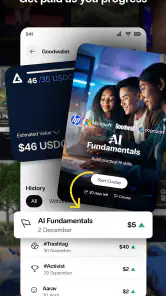
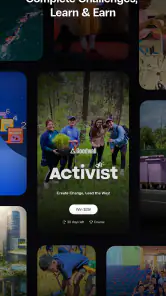
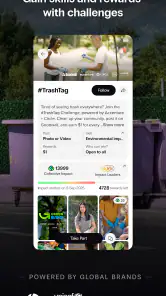
Goodwall - Learn & Earn is a career and personal-development platform that connects users with learning opportunities, challenges, scholarships, internships, jobs, and other professional experiences. After creating a profile, you can explore opportunities, complete selected activities, build your skills portfolio, and sometimes receive recognition or rewards. Availability and requirements may vary by country, age, campaign, and partner organization. Its focus is preparation for the future through a social education experience, making it more than a conventional job-search app.
Can I really earn money or rewards with Goodwall - Learn & Earn?
Goodwall may offer rewards through specific challenges, campaigns, surveys, learning activities, or partner opportunities, but earnings are not guaranteed simply for installing the app. Each opportunity normally explains its eligibility rules, deadlines, reward type, and verification process. Before participating, read the conditions carefully, because some rewards may be limited, require approval, or be available only in selected regions. Treat rewards as a possible benefit of taking part, not as dependable income.
Pros
- Free access to career courses and practical learning resources.
- Rewards encourage users to complete challenges and develop new skills.
- Community features help users connect with peers and potential mentors.
- Profile tools let users showcase achievements
- interests
- and abilities.
- Suitable for students and young professionals exploring career opportunities.
Cons
- Reward availability and value may vary by country or campaign.
- Some opportunities require completing several steps before earning rewards.
- The platform may feel less useful without regularly updating your profile.
- Career content can be more helpful for beginners than experienced professionals.
- Notifications and community activity may become distracting over time.

- Category
- Social
- Version
- 1.10.11.1