Clubhouse
- 4.14K
- 4.4
- Installs
- 10.00M
- Price
- Free

Screenshots




Analysis by Reviewed
I find Clubhouse most useful when I treat it as a place to listen first, rather than another feed I have to keep up with. It is a social app built around live voice conversations, and that shift changes the way a session feels: there are no faces to watch, and the value comes from the people speaking and the questions they raise. I can dip into a discussion while doing something else, then leave when it stops being useful. That flexibility is appealing, though it also means the experience depends heavily on finding a room worth your time.
Who gets the most from live audio
I would recommend trying it if you enjoy hearing several people think aloud, especially when a topic benefits from disagreement or personal experience rather than a polished presentation. A listener who is curious about a field can get a feel for the questions people in it are asking, then decide what to investigate further. The best fit is someone comfortable with conversations that take unexpected turns and with learning by listening rather than following a fixed lesson.
It is less suited to anyone who needs dependable, searchable answers. A live exchange can be illuminating, but it is not automatically a reliable source, and a useful point may pass before you can write it down. For precise instructions, current professional advice, or information you need to cite later, I would use a trusted written resource or an on-demand program instead. Clubhouse works better as a doorway into ideas than as the final reference.
A practical way to sample a room
When I have only a short break, I would browse for a topic I already care about, listen long enough to hear whether the speakers are addressing it, and leave if the conversation has drifted. That small test prevents the common trap of staying simply because a room is live. If something useful comes up, I make a brief note of the subject or a speaker’s name rather than expecting to reconstruct the whole discussion afterward.
For a first visit, I would also try rooms with different formats and audiences instead of judging the app from one conversation. A focused discussion can feel quite different from a broad, informal gathering. The point is not to spend hours exploring: a few deliberate visits can reveal whether the pace, subject matter, and social energy suit you. If they do not, there is no obligation to make a routine of it.
How it fits a busy day
Imagine making breakfast before work and wanting company without having to watch a screen. A live room can provide a sense of being among people while your hands are occupied. I would keep the volume at a level that lets me stay aware of my surroundings, and I would avoid trying to follow a complicated discussion while doing anything that needs full attention. The convenience of audio does not make every activity a safe time to listen.
That same scenario also shows the trade-off: a conversation may end or move on before you are ready, and you cannot pause a live exchange to catch a missed sentence. When I need control over timing, a saved podcast or recording is a better choice. When I want to hear spontaneous reactions and perhaps ask a question, the live format has a quality those alternatives cannot quite reproduce.
You May Like

Clash of Clans Is Won Between the Battles

Android Auto Makes the Case for Quieter Car Software

MobiOffice: Transforming Mobile Productivity with Seamless Integration

EA SPORTS FC™ Mobile Soccer: Redefining Mobile Sports Gaming

How Microsoft OneDrive Became a Mobile Productivity Giant

How Google Translate Breaks Language Barriers Effortlessly
Finding a useful balance
It helps to decide in advance whether I am there to listen, contribute, or meet people. Those goals call for different expectations. Listening is the lowest-pressure way to explore; speaking can make the session more engaging, but it also means accepting the room’s pace and social norms. Networking is possible, yet I would approach it as a by-product of thoughtful participation rather than assuming that every conversation will lead to a useful contact.
I would also be selective about what I share aloud. A room can feel informal, but speaking to a group is different from sending a private message to someone I know. I keep personal details out of casual discussions and avoid treating an interesting speaker as automatically trustworthy. That is ordinary online judgement, but it matters in a voice-first setting where a confident, friendly tone can make claims sound more certain than they are.
Where alternatives have the edge
For quick coordination with friends or colleagues, a group chat is usually more practical: it leaves a written trail and makes it easier to exchange a detail without interrupting everyone. For a planned talk that needs visuals, slides, or a clear agenda, a video meeting is more functional. For background listening on a fixed schedule, recorded audio wins because I can stop, resume, and revisit a passage. Clubhouse earns its place when being there together matters more than having a transcript or a carefully edited result.
That distinction is useful before downloading: ask whether the thing you want is an exchange or a resource. If you want conversation, the app’s format is the point. If you want a durable answer, a personal conversation with a known group, or a presentation that depends on seeing demonstrations, another format will often save time. I see the strongest case for Clubhouse in open-ended discussions where listening to different voices is itself valuable.
What changes mean for returning users
The app’s release history gives returning users a reason to check the current experience instead of relying on old impressions, but a version number does not explain what has changed. I would spend a few minutes looking through the present room layout and available controls before deciding whether the app fits my routine again. In particular, I would notice whether the subjects I care about are active at the times I am free, since a social audio app is only useful when people are actually having conversations I want to hear.
For a new user, the same check answers a practical question: does browsing feel inviting or like work? If it takes too much effort to locate a worthwhile room, the theoretical appeal of live audio may not translate into a habit. I would try more than one topic and return at another convenient time before drawing a conclusion. The quality of a single room is a poor measure of the whole experience, but repeated browsing that produces nothing relevant is a fair reason to move on.
Where it fits in today’s social routine
Clubhouse is still a distinctive choice for people who enjoy spontaneous conversation and learning from other people’s perspectives. Alpha Exploration Co. develops the app, which is free to install and sits in the social category. It has a 4.4 average from around 586,000 ratings and more than 10 million installs. Those figures suggest a sizable audience, but they do not guarantee that every topic or time of day will have a lively room. I would approach it as a place to explore, not as a dependable substitute for a scheduled class, a private group chat, or a polished podcast.
The app was released on May 20, 2021, and its current version is 25.12.02. That establishes a clear timeline, but version numbers alone do not tell me which parts of the experience have changed or how a particular room is moderated. For someone returning after a break, the sensible move is to open the app and judge the current rooms and controls firsthand rather than assume it works exactly as it did at launch. The age rating is Teen, and optional in-app purchases range from $0.49 to $59.99 per item, so I would check any purchase prompt carefully before proceeding.
Welcome to the World of Clubhouse
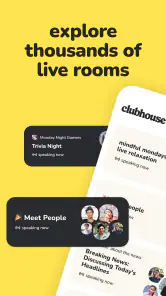
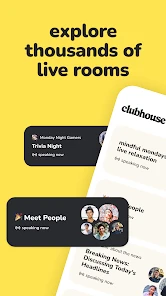
At its core, Clubhouse is like a live, interactive podcast. When you open the app, you’re greeted by a variety of rooms you can join. Each room focuses on a different topic, from tech and entrepreneurship to wellness and art. And here’s the kicker—these conversations are happening in real-time with real people. You can just sit back and listen, or if you’re feeling brave, raise your hand to join the conversation. It’s like being at a massive virtual conference, but in the comfort of your home.
The Experience
Using Clubhouse is pretty straightforward. After creating an account, you’ll find a hallway filled with rooms, each hosted by users around the world. The app's minimalist design keeps things simple, allowing the conversations to shine. I joined a room discussing the future of AI, and it was fascinating to hear insights from industry experts. The feeling of being part of these discussions, without the pressure of being on video, is refreshingly unique.
One of the standout features is the app’s exclusivity. Currently, you need an invitation to join, which adds an element of intrigue and community. This keeps the rooms filled with genuinely interested and engaged participants. The invite-only model might sound elitist, but it’s actually a smart way to maintain quality discussions.
Connecting and Networking
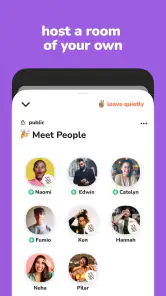
For networking enthusiasts, Clubhouse is a goldmine. You can follow experts, connect with like-minded individuals, and even collaborate on projects. I’ve made some valuable connections just by participating in rooms related to my field. Plus, the ability to create your own rooms means you can start conversations on topics you’re passionate about, attracting people who share your interests.
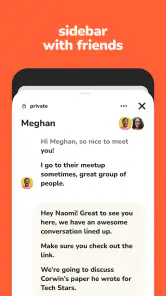
However, like any app, it’s not without its downsides. The lack of a chat feature can make it difficult to share links or notes. Plus, the Android version was released much later than the iOS version, which initially limited its accessibility. But these are small trade-offs for the unique audio experience Clubhouse offers.
Making a room worth your time
I get more from a room when I decide what I want before joining: a quick overview, a fresh point of view, or the chance to ask one focused question. If I’m only browsing, I listen for a few minutes and leave if the discussion is repetitive. That is a better fit for Clubhouse than treating every live conversation like a commitment. A speaker’s confidence is not the same as expertise, so I take strong claims as a starting point for further checking rather than as settled advice.
A useful everyday scenario is a commute or a quiet household chore. I can listen hands-free when it is safe and practical, note the name of a speaker or topic afterward, and follow up elsewhere if I want details. I would not rely on a live room for instructions I need to revisit precisely: the conversation moves on, and the missing text-based trail makes names, links, and key points easy to lose. If I want to learn something step by step, a saved podcast, article, or course is usually the better tool.
Finding the right social format
Compared with conventional social networks, Clubhouse puts less emphasis on pictures and polished posts and more on being present at the same time as other people. Compared with group messaging, it is easier to hear several viewpoints without everyone typing at once, but harder to keep a record or share a resource in context. And unlike an on-demand podcast, the live format lets listeners participate, while offering less control over when a useful discussion happens. I would choose based on the task: live exchange for open-ended discussion, messaging for coordination, and recorded audio for reliable listening on my own schedule.
It is also not ideal if you dislike speaking in groups, need captions or written summaries to follow a discussion, or prefer conversations that stay private and predictable. Listening without taking the microphone can still be worthwhile, but the open-ended nature of rooms means quality varies with the host and participants. If a room feels unwelcoming or wanders away from its topic, leaving is a perfectly sensible choice; there is no need to stay just because you joined.
What to expect as you return
The app’s version number indicates ongoing releases, but I would not read that as proof of any particular new feature. Existing users should check the current interface for themselves and take a moment to see how rooms are presented before settling into a routine. If you are new, the practical questions are simpler: can you find subjects you care about, are the live hours convenient, and do you enjoy listening without a visual feed? A quick trial across a few different rooms will answer more than assuming the app will feel like another social timeline.
For Android, the listed minimum operating system is version 8.0. The app is free, while optional purchases can make it worth paying attention to prompts and confirming what you are selecting. I would not pay for anything until I know that the conversations and community suit me. That cautious approach matters especially here, because the central value is not a bundle of content I can inspect in advance; it is the quality of live exchanges I happen to find.
Final Thoughts
In a world where social media often feels saturated with noise, Clubhouse offers a breath of fresh air. It’s a platform that values voice and conversation over visuals and likes. Whether you’re looking to learn something new, expand your network, or just enjoy some good company, Clubhouse might just be the app for you. Just remember to keep your ears open and your curiosity alive, because you never know what you might discover in the next room you enter!
Clubhouse Frequently Asked Questions
What kind of conversations can I find on Clubhouse?
Clubhouse is centered on live voice chats, so it is best suited to people who enjoy listening to or joining conversations as they happen. Rooms can range from discussions about business to casual chats, and the subject matter depends on who is hosting and participating. If you prefer audio conversation over posts and images, its format may feel especially appealing.
Can I use Clubhouse just to listen, or do I have to speak?
You can join a room simply to listen; speaking is not required. Clubhouse’s audio-first format lets you follow a conversation without taking an active role, while users who want to contribute can raise a hand to speak. This makes it possible to explore topics at your own pace and decide whether you would rather remain an audience member or join the discussion.
Is Clubhouse free to download, and are there optional purchases?
Clubhouse is free to download, so you can try its live audio social experience without paying upfront. The app also offers optional in-app purchases, which may be relevant if you choose to use paid features or items. You can explore the basic experience first and decide whether those extras matter to you; downloading the app does not mean you must make a purchase.
What devices and operating systems can run Clubhouse?
Clubhouse is available on Android and iOS, giving users a choice of mobile platforms. On Android, the current version requires Android 8.0 or later, so it is worth checking your device’s operating system before downloading. The app is designed for live voice conversations, so a working microphone and headphones or speakers can help you take part comfortably, whether you plan to speak or listen.
What is Clubhouse and how does it work?
Clubhouse is a social networking app that allows users to join virtual rooms where they can engage in audio conversations with people around the world. These conversations are live and can cover a wide range of topics, from business discussions to casual chats. Users can either listen in or participate by raising their hand to speak. Unlike traditional social media platforms, Clubhouse focuses solely on audio interaction, making it a unique space for more personal and spontaneous discussions.
Pros
- Innovative real-time audio conversations.
- No text or video distractions.
- Networking opportunities with industry leaders.
- Diverse topics and discussions.
- Easy to join and host rooms.
Cons
- Invite-only access limits user base.
- No option for recording conversations.
- Poor moderation in some rooms.
- Requires constant internet connection.
- Limited discoverability of rooms.

- Category
- Social
- Version
- 25.12.02