AMERICAN NURSE EXAM PREP 2026
- 4.00
- 4.8
- Installs
- 10.00K
- Price
- Free
Screenshots
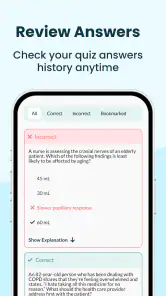
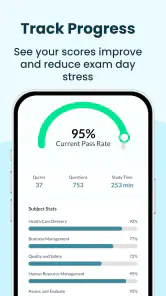
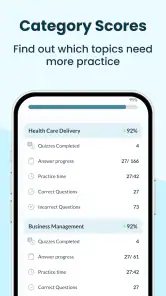
Analysis by Reviewed
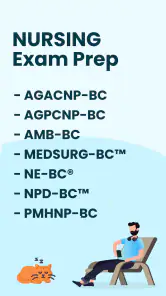
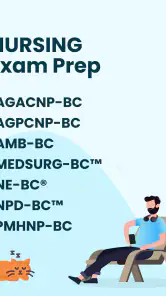
Preparing for a nursing exam is difficult enough without wasting time figuring out whether a study app actually fits your exam, your schedule, and your level of preparation. I spent time with AMERICAN NURSE EXAM PREP 2026, an education app from Prepia Inc, and found that its main appeal is straightforward: it puts practice questions and study-guide material for several advanced nursing paths into one place. It is aimed at learners working toward PMHNP, MEDSURG, AGACNP, and other American nurse examinations, rather than at someone looking for a general introduction to nursing.
The app is free to install and is suitable for Everyone, although some content is offered through in-app purchases ranging from $9.99 to $49.99 per item. That combination makes it easy to try before committing, but it also means you should understand what you need from the app before paying for additional material. In my experience, the best way to judge it is not by opening every available topic at once, but by choosing the exam area closest to your goal and seeing whether the question practice helps you identify weak points.
What to expect when you open the study app
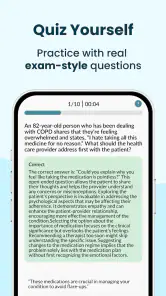
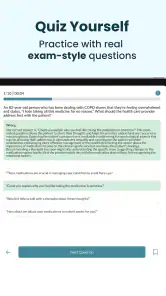
The first impression is that this is a focused revision tool, not a complete replacement for nursing school, clinical experience, or an official examination handbook. Its value comes from active recall: reading a question, making a decision, and then checking whether your reasoning matches the expected answer. That is a much more useful activity than simply rereading notes when your exam is approaching.
The app covers more than one nursing route, which is helpful for people comparing specialties or preparing for a particular advanced practice path. At the same time, that breadth can create a small risk at the beginning. If you casually jump between PMHNP, MEDSURG, and AGACNP material, your study session can become a collection of unrelated questions instead of a deliberate plan. I recommend treating the app as a set of exam-specific workspaces, even if the interface presents them together.
Its store rating is a strong 4.8 average from around 150 ratings, and the app has passed the ten-thousand-install mark. Those figures suggest that it has found an audience, but they should not decide whether it is right for you. A high average cannot tell you whether the question style matches your examination, while an install count cannot tell you how deeply the explanations cover a topic. Your own first practice session is more revealing.
One useful expectation to set is that practice questions are most valuable when you review mistakes immediately. If you only chase a high score, you may remember the correct option without understanding why it is correct. I found the app more worthwhile when I treated every missed item as a prompt to write down the clinical clue I overlooked, the priority I misunderstood, or the distinction between two tempting answers.
Who will get the most from it
This app makes the most sense for a nursing student, graduate student, or working nurse who already has foundational knowledge and needs structured repetition. It can also help someone returning to study after a break, because practice questions quickly reveal which subjects have faded. The format is especially useful for short sessions: a commute, a lunch break, or the final part of an evening when a full textbook chapter feels unrealistic.
More From Our News Desk

Clash of Clans Is Won Between the Battles

Android Auto Makes the Case for Quieter Car Software

MobiOffice: Transforming Mobile Productivity with Seamless Integration

EA SPORTS FC™ Mobile Soccer: Redefining Mobile Sports Gaming

How Microsoft OneDrive Became a Mobile Productivity Giant

How Google Translate Breaks Language Barriers Effortlessly
I would be more cautious about recommending it as the only resource for a first-time learner. If you are still learning core pharmacology, assessment principles, or disease processes, a question bank may show you that an answer is wrong without giving you enough teaching depth to build the subject from scratch. In that situation, pair it with your course notes, a trusted textbook, or instructor guidance. The app works best as a testing and reinforcement layer.
It is also not the ideal choice for someone who wants a broad, non-exam-specific nursing reference. The store short description identifies it as American nurse exam preparation, and that focus matters. If your goal is bedside reference during a shift, medication lookup, or a general nursing dictionary, you should choose a tool designed for those jobs instead. This app belongs in a study routine, not in the role of an urgent clinical decision aid.
Starting without getting lost
Choose one target before exploring everything
After installing the app, my first recommendation is to decide what “success” means for the current session. For example, you might choose to complete a small set of PMHNP questions, review MEDSURG errors from the previous day, or test whether AGACNP material is at the right level for you. This simple decision prevents the common beginner mistake of browsing categories for longer than actually studying.
Because the app brings several nursing exam areas together, write down your target examination before you begin. That note can be as simple as “PMHNP this month” or “MEDSURG fundamentals today.” It gives you a filter when the range of available study material feels appealing but distracting. I found that a narrow target made the app feel more manageable and made my results easier to interpret.
Use the free access as a fit check
Since the app is free, the sensible first step is to test the accessible material rather than immediately purchasing anything. Pay attention to three things: whether the questions resemble the reasoning expected in your exam, whether the explanations help you correct mistakes, and whether the organization fits the way you study. These are more important than simply counting how many questions you can open.
In-app purchases are priced per item, with available options between $9.99 and $49.99. I would only consider paying after identifying a specific gap that extra material could address. Buying broadly because the app covers several specialties may leave you with more content than you can use. Buying for a clearly chosen exam and a defined revision period is easier to justify.
The current version is 2.1.020, and the app supports Android 7.0 or later. For most Android users, that makes compatibility relatively uncomplicated, but it is still worth checking the operating system on an older phone or tablet before planning your entire revision schedule around it. A study tool is most useful when it is available on the device you actually carry and use consistently.
Build a mistake log outside the app
One of the most useful workflows I found was keeping a separate mistake log. For each missed question, record the topic, the clue you missed, and the reason your chosen answer seemed attractive. This turns the app from a sequence of disposable quizzes into a personal map of recurring errors. It also protects you from a common problem with question banks: remembering the wording instead of learning the principle.
Keep the notes short. “Confused priority with completeness” is more useful than copying an entire explanation. After several sessions, sort the notes into themes such as assessment, intervention, safety, communication, or disease management. Then use the app to test one theme at a time. This approach is particularly helpful when your score looks acceptable but the same type of reasoning mistake keeps appearing.
Your first meaningful study session
Turn the first question set into a baseline
For a first session, I would not try to prove that I am ready. I would use the questions as a baseline. Choose one exam path, answer without looking at notes, and mark the items where you guessed even if you happened to be correct. A lucky answer is not secure knowledge, and treating it as mastered can create a false sense of progress.
When reviewing the results, separate three kinds of problems. The first is a knowledge gap, where you simply did not know the concept. The second is a reading error, where you missed a qualifier or priority word. The third is a reasoning error, where you knew the facts but selected an action that did not fit the situation. Each requires a different response, and this distinction is more valuable than a single overall score.
For a realistic everyday routine, imagine a nurse studying after a shift. There may only be enough energy for one focused session. I would spend the first few minutes reviewing yesterday’s mistake log, complete a manageable question set in one specialty, and finish by revisiting only the explanations connected to errors or guesses. The next day, I would begin with those notes rather than starting from a random topic. That creates continuity without requiring a long uninterrupted study block.
Read explanations as reasoning lessons
Do not rush past the explanation after selecting an answer. Ask yourself what made the correct option better than the alternatives. In nursing examinations, several choices can sound clinically reasonable, but one may be the priority because of safety, urgency, assessment sequence, or the wording of the case. The real learning often sits in that comparison.
A practical technique is to explain the answer aloud in one sentence before moving on. If you cannot do that, you probably recognized the option without fully understanding it. I also recommend covering the answer choices on a second attempt and predicting the priority independently. This reduces the chance that you are simply becoming familiar with the app’s presentation.
Another non-obvious benefit of this method is that it reveals when you are studying the wrong specialty area. If the questions feel unrelated to your current syllabus or examination plan, a low result may say more about the mismatch than about your ability. Change the target before concluding that you need to purchase more content or study longer.
Confusion points that can affect your results
A correct answer does not always mean readiness
Practice apps make it easy to focus on performance numbers, but a correct answer earned through guessing deserves review. I would use three labels in my notes: confident, uncertain, and wrong. The uncertain group is often the most important because it exposes fragile knowledge before the exam does. Reviewing only incorrect answers can hide this weakness.
There is also a difference between recognizing a familiar question and transferring the concept to a new case. To avoid overestimating progress, revisit the underlying principle in your own words and then look for a different example in your course material. The app can start the learning process, but your notes and textbooks help make it durable.
Broad coverage can become shallow studying
Having PMHNP, MEDSURG, AGACNP, and other preparation areas available is convenient, but it can encourage constant switching. Each switch carries a mental cost: terminology, priorities, and clinical context change. For most sessions, I would stay with one track. Reserve mixed review for later, when you want to test whether you can identify the correct framework without a category label guiding you.
This is also where the app may compare differently with a conventional review book. A book usually gives you a planned sequence and fuller explanations, while a question app gives you faster feedback and makes it easier to expose weak areas. I prefer using the app to decide what deserves deeper reading, then returning to a structured source for the teaching. Choosing one over the other depends on whether your immediate problem is lack of knowledge or lack of exam practice.
Do not treat it as clinical authority
Exam preparation and patient care are related but not interchangeable. I would never use a practice answer as a substitute for local protocols, supervision, current clinical guidance, or professional judgment. The app is for learning how to approach examination questions. It should not be opened during patient care to settle an urgent decision.
This distinction is especially important for experienced nurses. Your real-world practice may involve resources, team roles, and policies that differ from the simplified assumptions of an exam question. When an item seems to conflict with your clinical experience, use it as a prompt to check the exam framework and your authoritative study sources rather than assuming the app alone resolves the issue.
How to decide whether paid material is worthwhile
The free starting point lowers the risk of trying the app, but paid content deserves a deliberate decision. Before purchasing, identify the examination you are preparing for, the subjects you routinely miss, and the amount of time remaining in your study plan. If you cannot answer those questions, more questions may add volume without improving your preparation.
I would also consider how you learn. If detailed teaching, diagrams, lectures, or long-form case discussions are essential for you, a paid question set may not meet that need by itself. If you already understand the material and need repeated practice with prioritization and recall, additional question content may be much more useful. The price range makes this a meaningful trade-off rather than an automatic upgrade.
A sensible workflow is to use the accessible material for a short trial period, keep a mistake log, and then ask whether the available questions are helping you make better decisions. Look for evidence such as fewer repeated reasoning errors, clearer explanations in your own notes, and improved confidence on unfamiliar wording. Do not purchase solely because a topic feels difficult; difficulty may mean you need teaching material rather than another quiz.
Parents or educators should also remember that the app is marked Everyone, but the subject matter is professional nursing exam preparation. The age label describes suitability from a store perspective, not academic level. A younger user may be able to open it, yet still find the advanced terminology unsuitable without substantial background.
Making the next stage of preparation more effective
Move from isolated practice to a weekly pattern
Once you have completed your first sessions, create a simple cycle. Use one day to test a focused topic, the next to review mistakes, and a later session to mix related subjects. This spacing helps you discover whether you can recall the idea after time has passed. It is more informative than repeating the same questions immediately until the answers feel familiar.
At the end of each week, review your mistake log and choose the two or three patterns that appear most often. For example, you may know the disease process but miss questions asking for the first action, or you may understand interventions but overlook safety precautions. Return to the relevant study guide material, then use the app to check whether the error has changed. This creates a feedback loop that a generic quiz session does not provide.
Use mixed review only when it has a purpose
Mixed practice can be valuable later because real examinations do not always announce the subject before asking you to reason. However, I would not begin there. First build confidence within your chosen PMHNP, MEDSURG, or AGACNP track. Then combine neighboring topics to test recognition, prioritization, and switching between clinical contexts.
If you are preparing for more than one examination, keep separate notes and separate goals. The app’s broad scope can support exploration, but your revision records should remain precise. Otherwise, a strong result in one area may make your overall preparation look better than it really is in the exam that matters most.
Know when another resource is better
Choose a textbook or course when you need a complete explanation from first principles. Choose instructor feedback when you cannot tell why your reasoning is wrong. Choose official examination guidance when you need the most authoritative understanding of format, eligibility, or current requirements. Choose this app when you need accessible question practice and a way to make revision more active.
That division of labor is, in my opinion, the strongest way to use it. The app’s convenience is real, but convenience can become a weakness if it encourages you to replace deeper study with endless tapping. Its best role is to expose uncertainty, direct your reading, and give you repeated opportunities to practice choosing the safest or most appropriate answer.
Overall, I found AMERICAN NURSE EXAM PREP 2026 most convincing as a focused companion for nursing exam preparation. Prepia Inc has positioned it for learners who want practice questions and study guides across several American nursing paths, and the free entry point makes experimentation easy. I would recommend starting with one specialty, using the first session as a baseline, and keeping a concise mistake log from the beginning.
My final advice is to judge progress by the quality of your reasoning, not by the number of questions completed. If the app helps you explain why an answer is correct, recognize your recurring traps, and choose what to study next, it is doing something useful. If you need full teaching, clinical reference material, or a complete exam plan, pair it with a stronger source rather than expecting one app to do everything. Used with that realistic expectation, it can become a practical part of a steady, personalized revision routine.
AMERICAN NURSE EXAM PREP 2026 Frequently Asked Questions
Who develops American Nurse Exam Prep 2026, and what devices can run it?
American Nurse Exam Prep 2026 is an education app developed by Prepia Inc. It requires Android 7.0 or later, so check your device’s operating system before downloading. The app is also available for iOS. Its compatibility and access to particular features may vary by platform, so review the relevant app-store page on the device you plan to use.
What is American Nurse Exam Prep 2026?
American Nurse Exam Prep 2026 is a study and practice app designed for people preparing for U.S. nursing examinations, such as the NCLEX-RN or NCLEX-PN, depending on the content included in the selected version. Its store summary highlights practice questions and study guides for PMHNP, MEDSURG, AGACNP, and more. It generally combines practice questions, explanations, topic-based quizzes, and progress tracking to help learners review nursing concepts and become familiar with computer-based exam questions.
Is American Nurse Exam Prep 2026 suitable for NCLEX preparation?
The app can be useful as a supplementary NCLEX study tool because it offers convenient practice on a phone or tablet and helps identify subjects that need more attention. However, it should not be treated as a complete replacement for an official NCLEX study plan, nursing school materials, current test-plan information, or reliable review books. Users should confirm that the app’s questions match their exam level and current requirements.
What topics and question types are included in the app?
The available material may cover areas commonly tested in nursing examinations, including fundamentals, pharmacology, medical-surgical nursing, maternal and newborn care, pediatrics, mental health, prioritization, delegation, safety, and infection control. The app’s summary also mentions study guides for PMHNP, MEDSURG, AGACNP, and more. Practice formats can vary, but users should expect multiple-choice questions and possibly select-all-that-apply or case-based items. Check the app description and in-app categories for the exact current coverage.
Does American Nurse Exam Prep 2026 work offline?
Offline availability depends on how the application stores its question bank and explanations. Some sections may remain accessible after the initial download, while progress synchronization, advertisements, updates, or certain premium features may require an internet connection. Before relying on it during travel or in areas with limited service, open the app in offline mode and confirm that the quizzes and explanations you need are available.
Pros
- Covers key NCLEX-style topics for focused nursing exam preparation.
- Practice questions help identify weak areas before test day.
- Useful for studying in short sessions during commutes or breaks.
- Clear explanations can reinforce core nursing concepts.
- Updated 2026 focus may suit candidates planning a near-term exam.
Cons
- Some content may not fully reflect the latest NCLEX-RN test plan.
- Requires consistent self-study; it does not replace clinical instruction.
- Question difficulty and wording may differ from the real NCLEX.
- Advanced features or complete access may require an in-app purchase.
- Primarily benefits English-speaking users comfortable with nursing terminology.
- Category
- Education
- Version
- 2.1.020