Tile Club - Match Puzzle Game
- 3.37K
- 4.9
- Installs
- 100.00M
- Price
- Free

Screenshots







Analysis by Reviewed
My first impression of Tile Club - Match Puzzle Game is that it works best as a small, focused puzzle break: the rules are easy to grasp, but making good choices takes more thought as the boards become harder. I like that balance. It gives me something to concentrate on without asking me to learn a complicated control scheme before I can begin.
A quick session with choices to make
The useful habit here is to look across the board before tapping the first tempting match. Clearing tiles can open up later choices, so I try to think about what a move will leave behind rather than treating every available pair as equally good. That small pause makes the game feel more deliberate and helps avoid the familiar puzzle-game trap of playing on autopilot.
It also suits the gaps in an ordinary day. I can imagine opening it while waiting for a takeaway or settling into a short break, completing a level, then putting the phone away. If I have only a minute, I would avoid starting when I need to leave immediately; puzzle decisions are more enjoyable when I am not rushing through them just to close the app.
Reads About Tile Club - Match Puzzle Game
Reading a board before committing
A useful way to make a short session feel less like random tapping is to choose a match with its consequences in mind. I look for the move that leaves me with several possible next choices, rather than simply clearing the tiles that are easiest to spot. It is a small distinction, but it changes the rhythm: the satisfying moment is not only removing a group, but seeing how that decision shapes the next part of the board.
This also gives me a practical stopping point. If I finish a level and have a few minutes left, I can start another; if I am interrupted, I do not need to turn a casual game into a long appointment. For anyone who plays in brief bursts, that matters more than an elaborate routine. I would still avoid opening a level while walking, crossing a street, or trying to listen closely to someone, since even a simple board deserves enough attention to make its choices enjoyable.
A relaxed match game with a real planning element
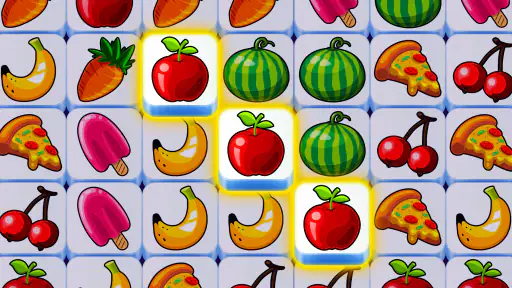
So, what exactly is the Tile Club - Match Puzzle Game? Essentially, it’s a clever little puzzle game that challenges you to match tiles and solve increasingly complex puzzles. The aim is simple: match tiles to clear the board. But don’t let the simplicity fool you; as you progress, the puzzles get trickier, demanding a blend of strategy and speed.
Gameplay and Mechanics
Jumping into the gameplay, I was immediately struck by how intuitive it is. The game eases you in gently, allowing you to get comfortable with the mechanics before ramping up the difficulty. You’ll find yourself sliding and matching tiles, aiming to create combos that can wipe out more tiles in one go. And trust me, there’s nothing more satisfying than a perfectly executed combo!
More From Our News Desk

Clash of Clans Is Won Between the Battles

Android Auto Makes the Case for Quieter Car Software

MobiOffice: Transforming Mobile Productivity with Seamless Integration

EA SPORTS FC™ Mobile Soccer: Redefining Mobile Sports Gaming

How Microsoft OneDrive Became a Mobile Productivity Giant

How Google Translate Breaks Language Barriers Effortlessly
The graphics are vibrant and engaging, adding a delightful visual element that keeps you hooked. Plus, the sound effects are spot on, providing that extra bit of excitement when you nail a tough level. It’s like the game is cheering you on!
When the familiar loop works best
For me, the clearest strength is the low barrier to entry. A person who has never spent much time with puzzle games can understand the basic aim without a lengthy introduction, while someone who already enjoys matching tiles can pay attention to the order of moves and the shape of the remaining options. That makes it easy to hand to a friend who wants a casual game, though I would not mistake approachability for a guarantee that every stage will be effortless.
It is also a good fit for small pockets of downtime when I want one clear task rather than an ongoing story to keep track of. A queue, a quiet lunch break, or a few minutes before bed all suit the basic loop. I would be less likely to choose it when I want an absorbing narrative, a long session with a changing set of systems, or a puzzle that rewards building and testing a complicated proof. Its appeal is the compact decision, not a sprawling mental project.
Why You’ll Love It
One of the things I absolutely love about this game is its accessibility. Whether you’re a seasoned puzzle aficionado or a complete newbie, you’ll find something to enjoy. The game’s learning curve is well-paced, ensuring you never feel overwhelmed or bored.
Moreover, the game encourages strategic thinking. It’s not just about mindlessly matching tiles; you’ll need to plan your moves and think a few steps ahead. This makes it a perfect choice for those who enjoy a good mental workout.
Good fit for casual puzzlers, less so for purists
As a puzzle game from GamoVation, Tile Club sits comfortably among approachable tile-matching options: it is easier to pick up than a rule-heavy logic puzzle, while still asking for more attention than a purely reflex-based game. I would recommend it to someone who enjoys spotting patterns and planning a few moves, but not to a player looking for deep, open-ended problem solving or a serious competitive challenge.
One practical trade-off is that “easy to learn” does not mean every board will feel easy. When a level gets awkward, slowing down and checking which matches preserve useful choices is a better approach than tapping quickly. If you prefer games where each action has a clear, predictable outcome, the changing puzzle layouts may feel less satisfying than a fixed-grid logic game.
How it compares with other puzzle choices
Compared with a classic number-placement puzzle, this asks me to read a changing arrangement and make local decisions rather than fill a fixed structure by applying a long chain of deductions. Compared with a fast arcade puzzler, it is less about reacting in a split second and more about noticing what a move may leave available. That middle ground is the point: the game is more thoughtful than a reflex test, but it does not demand the sustained concentration of a dense logic challenge.
If you enjoy the physical feeling of sorting and grouping, tile matching is likely to feel more immediately inviting than a puzzle built around abstract symbols. If you prefer every challenge to have one carefully demonstrable solution, a logic-grid or number puzzle may be more satisfying. I would choose Tile Club when I want a visual, approachable task and choose those alternatives when I want a slower, more methodical problem.
What to expect before installing
The game is free to download and is rated Everyone, which makes it an accessible option for a broad audience. It has a 4.9 average from around 492,000 ratings and has passed 100 million installs, so it has clearly found a large audience. GamoVation lists version 2.9.1, with support for Android 5.1 and later; in-app purchases range from $0.99 to $99.99 per item. I would treat those purchases as optional rather than a reason to spend: try the basic puzzle loop first and decide whether it holds your attention before paying for anything.
If you are wondering whether it is suitable for a quick daily routine, I think so, provided you are happy to pause between levels when you need to. It is also a reasonable choice for a newcomer to tile-matching, since the basic aim is easy to understand. On the other hand, if you want a game built around a story, long-form progression, or purely solitary logic problems, another kind of puzzle title may suit you better.
A sensible way to try it
I would start by treating the free download as a chance to see whether the central matching decisions suit me, not as a commitment to spend. During the first few sessions, I would pay attention to whether I enjoy scanning the board and weighing one move against another. If I find myself tapping without caring about the result, the game may not be the right fit, and buying anything is unlikely to fix that mismatch.
For players who do enjoy it, a simple personal rule helps keep the experience casual: decide in advance whether in-app purchases are off the table, or set a limit that feels comfortable before opening any offer. That is especially useful for a game designed to be easy to pick up, because a quick session can make it tempting to act without thinking. The range of available item prices is broad, so I would make spending decisions deliberately rather than treating a purchase as part of ordinary play.
Where the friction shows
My main reservation is that the simple matching premise can become repetitive if you want every session to introduce a fundamentally new kind of challenge. The gradual increase in difficulty gives the familiar loop more bite, but it does not change what kind of game this is. I would also keep the optional purchase range in mind if a player is prone to spending impulsively; free entry is convenient, yet it is still worth setting a personal limit before browsing any in-game offers.
For the best experience, I would use it as a short, low-pressure brain break rather than expect it to replace a deeper puzzle game. Take a moment to scan the board, favor moves that keep future matches available, and stop when the puzzle stops feeling fun. That approach makes the planning feel rewarding without turning a casual game into a chore.
When I would choose something else
I would skip this one if my main goal were a strong sense of discovery, a narrative that carries me from one session to the next, or a wide variety of distinct puzzle mechanics. Its central pleasure comes from matching and planning within that familiar format, so players who tire quickly of repeating a core loop may reach that point sooner than they would in a game that regularly changes its rules.
I would also pick a different kind of game when I want to compete directly with another player or track a demanding skill challenge. Tile Club suits personal, bite-sized play better than a session where the main attraction is head-to-head pressure. That is not a flaw for the audience it serves, but it does clarify the recommendation: choose it for accessible visual puzzles, not for a complex competitive or story-led experience.
Final Thoughts: A Must-Try for Puzzle Lovers
Wrapping things up, Tile Club - Match Puzzle Game is a delightful blend of fun and challenge. It’s easy to pick up, hard to master, and oh-so-addictive. Whether you’re killing time on a commute or winding down after a long day, this game offers the perfect escape.
If you’re on the hunt for a game that’s both entertaining and mentally stimulating, give this one a go. Who knows? You might just find yourself joining the club!
My recommendation is strongest for someone who wants an inviting tile-matching puzzle they can understand quickly and return to in short sessions. I would suggest trying it without spending first, playing slowly enough to notice how choices affect what remains, and seeing whether that planning stays enjoyable after the novelty wears off. If it does, the game has a clear place as a small everyday diversion; if you want variety, story, or deeper formal logic, another puzzle style will probably serve you better.
Tile Club - Match Puzzle Game Frequently Asked Questions
Can I play Tile Club in short sessions during the day?
Yes. Tile Club is built around individual tile-matching puzzles, so it can suit a quick break as well as a longer play session. You can focus on a puzzle when you have a few spare minutes and return to the game later. Its touch-based, casual format makes it approachable for players who want a puzzle game that does not require learning complicated controls.
Is Tile Club a good choice for players who enjoy relaxing puzzles?
Tile Club may appeal to players looking for a puzzle experience that is easy to pick up while still asking them to think about their moves. Matching tiles gives each level a clear goal, while the need to plan can add a strategic element. The overall idea is straightforward, making it suitable for casual play without requiring familiarity with a complex game system.
Does Tile Club offer a gradual challenge for new players?
The game is designed around progressing through tile-matching puzzles, which gives players an opportunity to get comfortable with the basic idea as they play. Its simple controls make it approachable for newcomers, while later challenges can encourage more deliberate planning. That combination can work well for someone who wants an easy-to-understand puzzle game with room to practice.
Is Tile Club - Match Puzzle Game free to download?
Yes. Tile Club is free to download, so you can try its tile-matching puzzles without paying upfront. The game also offers optional in-app purchases, with prices ranging from $0.99 to $99.99 per item. If you prefer not to spend, you can simply play without making purchases; the game’s main appeal is working through its matching challenges.
What kind of game is Tile Club, and who makes it?
Tile Club - Match Puzzle Game is a puzzle game developed by GamoVation. Its focus is matching tiles and progressing through puzzles, making it a fit for players who enjoy a casual game with a strategic element. The game has a 4.9 average from around 492,000 ratings, and has been installed over 100 million times.
Pros
- Engaging puzzles keep players entertained.
- Bright
- colorful graphics are visually appealing.
- Regular updates with new levels and features.
- Easy to learn
- hard to master gameplay.
- Great for quick gaming sessions.
Cons
- In-app purchases can be expensive.
- Requires internet connection to play.
- Ads can be intrusive at times.
- Limited lives can be frustrating.
- Some levels may feel repetitive.
- Category
- Puzzle
- Version
- 2.9.1