Skip-Bo™: Solitaire Card Game
- 8.23K
- 4.8
- Installs
- 5.00M
- Price
- Free

Screenshots


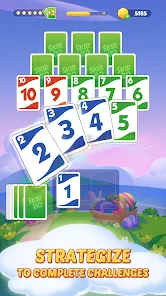



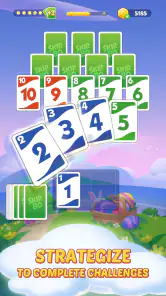
Analysis by Reviewed
I like card games that give me something to think about without demanding a long learning session, and Skip-Bo fits that middle ground. It is a mobile take on a familiar sequence-building card game, but the stockpile objective gives each turn a clear purpose: get through your own cards before your opponents do. A short visit can be entertaining, though the decisions become more interesting when I stop treating every legal play as automatically the best one.
First Impressions and Gameplay
When I first downloaded Skip-Bo™: Solitaire Card Game, I wasn’t quite sure what to expect. I’d heard of the physical card game before but hadn’t had the chance to play it. The app was quick to install, and I was greeted with a simple, intuitive interface that made it easy to jump right into the action.
The game’s premise is straightforward: be the first to play all the cards from your stockpile. It sounds simple, right? But there’s a twist. You can only play cards in numerical order, and there are strategy elements involved, like managing your discard piles and blocking your opponents. It’s a nice mix of luck and skill, keeping you on your toes throughout the game.
How to Make Each Turn Count
The useful habit I developed is to look at the stockpile before making a move elsewhere. A play that clears a card from a discard pile can feel productive, but it matters less if it doesn’t help expose or use the stockpile card that is actually holding up progress. I also try not to empty a discard pile without a reason: keeping cards arranged so they can support a later sequence gives me more options when the draw is unhelpful.
This is where the game differs from a conventional solo solitaire app. Solitaire usually asks me to organize a layout toward a win on my own; here, I am also judging whether a move advances my race and whether an opponent’s visible progress makes a blocking play worthwhile. If I want a quiet, purely solitary puzzle, classic solitaire is a better fit. If I want a light contest with turns that reward planning, this has more interaction.
Features That Stand Out
One feature I found particularly delightful was the multiplayer option. You can play with friends or match with online players. This makes the game much more interactive and competitive, which is something I always look for in a card game app. Plus, the chat feature allows for some friendly banter or strategic mind games.
Another cool aspect is the game’s customization options. You can choose different card designs and backgrounds to suit your style, which is a small but nice touch. The app also offers various difficulty levels, so whether you’re a beginner or a seasoned pro, there’s a challenge waiting for you.
That mix makes it especially suitable for someone who already knows the physical game and wants a convenient way to play, as well as a newcomer willing to learn through repeated turns. For a casual evening, I can see it working as a low-effort activity alongside a chat with friends. In a quick break, I would start a match only when I have enough time to finish it rather than assume every game will fit neatly into a couple of minutes; the changing draw and other players’ choices can affect the pace.
When the Pace Gets Busy
In a crowded multiplayer game, I find myself making more decisions per turn: use a card now, keep it available, or prioritize the stockpile over a move that might slow someone else. That makes the game livelier, but it can also make a session feel less predictable than a solo card puzzle. My practical tip is to decide on a simple priority before a turn—usually advancing the stockpile—then adjust if an opponent is close to finishing. It keeps me from spending too long weighing every possible move.
The game is free to download, with optional in-app purchases priced from $0.99 to $99.99 per item. I’d treat those purchases as optional rather than part of the basic reason to try it: the appeal is the card play, not customizing every detail or buying anything before you know whether the turn-based rhythm suits you. Anyone who dislikes optional spending prompts in games should be cautious and check purchase settings before handing a device to a child.
Performance, Compatibility, and Fit
As a card game, Skip-Bo does not ask for the kind of rapid visual response I expect from an action game. That makes it a sensible choice when I want measured turns rather than reflex challenges. I can’t promise identical smoothness on every phone, but the game’s straightforward presentation gives it a less demanding feel than a graphically intensive title. If responsiveness seems inconsistent, I would first check the device’s available resources and connection, especially when playing online, before assuming the card game itself is at fault.
Mattel163 Limited develops the game, which is rated Everyone. It has a 4.8 average from around 334,000 ratings and more than 5 million installs, so it has clearly found a substantial audience. The current version is 1.9.8590, and it supports Android 4.4 and later. Those details make it accessible to many older Android devices, though operating-system compatibility alone cannot guarantee that every handset will feel equally quick or stable. If a session is interrupted, I would avoid assuming that an unfinished match will always resume exactly as expected; for a dependable short break, choose a moment when an interruption would not be frustrating.
Choosing the Right Way to Play
For someone deciding between this and a conventional solitaire game, the main question is whether they want other players to affect the rhythm. Skip-Bo’s shared race gives me a reason to watch what opponents are doing, while a solo puzzle lets me focus on one layout without waiting on anyone else. I reach for this game when I want a little competition and a changing set of choices; I prefer classic solitaire when I want a quiet activity that I can pause mentally and return to without tracking another player’s progress.
It also suits different moments in different ways. If I have a longer wait and can pay attention to a full match, playing online makes the turn-by-turn competition part of the appeal. If I am only trying to fill a very brief gap, I would not start a game unless I can tolerate leaving it unfinished or being interrupted. For a family setting, the Everyone rating makes the game broadly suitable, but I would still supervise purchases on a shared device and consider whether online play and chat are appropriate for the player.
One small strategic adjustment is to use discard piles with a plan rather than treating them as storage for whatever is inconvenient now. I try to keep their order useful for future sequences, especially when a card I might need is not immediately playable. That approach does not remove the luck of the draw, but it can prevent a turn from becoming a dead end simply because I placed useful cards in an awkward order. It is a helpful habit for new players who understand the basic sequence but are not yet getting much control over their options.
Another trade-off is that the competitive layer can make a familiar card game feel less relaxing. Watching an opponent approach the end of a stockpile can prompt me to reconsider a move, but constantly trying to block someone may distract from my own progress. I get better results by keeping my primary objective in view and treating interference as a situational choice, not a rule for every turn. Players who dislike time pressure or social competition may find solo card games more comfortable, even if those alternatives offer less interaction.
What Keeps You Coming Back?
There’s something incredibly satisfying about completing a game of Skip-Bo. Maybe it’s the combination of strategy and chance or the thrill of beating an opponent. Whatever it is, the game has a knack for keeping you hooked. The app does a stellar job of recreating the feel of the physical card game while adding its own unique elements.
Regular updates keep the game fresh, with new features and bug fixes ensuring a smooth experience. It’s clear that the developers are committed to maintaining a high-quality app that users will enjoy for a long time.
The audience figures also suggest that this is not a niche curiosity: it has a 4.8 average, around 334,000 ratings, roughly 8,200 written reviews, and over 5 million installs. I take that as evidence that many players enjoy the basic format, not as a guarantee that every match or device will suit me. The free entry point makes it easy to see whether the stockpile race is satisfying before deciding whether any optional extras matter to my own play.
For a new player, I would learn by focusing on one question each turn: does this move help clear the stockpile, preserve a useful sequence, or respond to a genuine threat? That simple check is more practical than trying to calculate every possible line from the start. Once the rules feel natural, it becomes easier to notice when a move that looks immediately useful will leave better options for a later turn.
Performance Verdict and Who Should Try It
In everyday use, I see this as a measured, turn-based game rather than a test of speed. The format leaves room to think, and its modest-looking card presentation does not suggest the heavy visual demands of a fast action title. Still, online play depends on a working connection, and a busy device or a disrupted session can spoil the flow. I would close unnecessary apps if the phone feels sluggish and choose a stable moment for a match I care about finishing. Those are sensible precautions, not a promise that every interruption will recover cleanly.
Skip-Bo is a good fit for players who enjoy sequencing cards, learning through short decisions, and having a rival’s progress give those decisions context. It is also a reasonable choice for people who know the tabletop game and want a portable way to play. I would steer someone toward a solo solitaire app if they want complete independence from other players, and toward a different kind of game if they need instant rounds, a strong reflex challenge, or guaranteed uninterrupted play. The app’s strongest appeal is its balance of familiar rules and a competitive objective, not elaborate presentation.
In conclusion, if you’re looking for a card game that’s both challenging and fun, Skip-Bo™: Solitaire Card Game is definitely worth a download. It’s perfect for casual gamers who want something easy to pick up but hard to put down. So, why not give it a try? You might just find your new favorite card game app!
Skip-Bo™: Solitaire Card Game Frequently Asked Questions
Is Skip-Bo™: Solitaire Card Game beginner-friendly?
The game is based on a straightforward card-playing goal: arrange cards in sequence and work through your stockpile. That makes the central idea approachable for newcomers, while choosing when to play a card can add a strategic element. If you have played other solitaire or sequencing card games, the basic premise should feel familiar, though Skip-Bo has its own rules and rhythm.
Can I play against friends or other people?
Skip-Bo™: Solitaire Card Game can be enjoyed solo or with friends in multiplayer mode, giving you a choice between a personal game and playing with others. Multiplayer is a good fit when you want a more social card-game session, while solo play lets you focus on your own moves. An internet connection is needed for multiplayer, so plan accordingly before starting.
Does Skip-Bo™: Solitaire Card Game cost anything to download?
Skip-Bo™: Solitaire Card Game is free to download, so you can try the card game without paying upfront. Optional in-app purchases are available, with prices ranging from $0.99 to $99.99 per item. If you prefer not to spend, you can choose not to make purchases; check the purchase prompts carefully, especially if a child may use the device.
What is Skip-Bo™: Solitaire Card Game?
Skip-Bo™: Solitaire Card Game is a digital adaptation of the classic card game where players aim to be the first to get rid of all their cards by playing them in sequential order. The game can be enjoyed solo or with friends in multiplayer mode, capturing the essence of the traditional Skip-Bo gameplay with some digital enhancements.
Is Skip-Bo™: Solitaire Card Game available for both Android and iOS devices?
Yes, Skip-Bo™: Solitaire Card Game is available for download on both Android and iOS platforms. Users can find it on the Google Play Store for Android devices and the Apple App Store for iOS devices, ensuring a wide range of compatibility across smartphones and tablets. On Android, it requires version 4.4 or later, so it is worth checking your device’s software before downloading.
Pros
- Engaging multiplayer experience
- Intuitive and easy-to-learn rules
- Colorful and appealing graphics
- Regular updates with new features
- Offline mode available
Cons
- Occasional connectivity issues
- In-app purchases can be pricey
- Frequent ads disrupt gameplay
- Limited customization options
- Can be slow on older devices

- Category
- Card
- Version
- 1.9.8590