Role Swap: Tricky Puzzle
- 152.00
- 4.8
- Installs
- 10.00M
- Price
- Free

Screenshots





Analysis by Reviewed
I like puzzle games that give me a clear action to try rather than asking me to learn a complicated rule set first. In Role Swap: Tricky Puzzle, the central idea is to approach a situation from a different role, then work out what that new viewpoint changes. That makes each puzzle feel like a small experiment: I look at the scene, consider what the character might do, and test a solution. It suits a quick break when I want something more involving than tapping through a simple matching game.
Who will enjoy changing perspective?
This is a good fit if you enjoy short, scenario-based puzzles and don’t mind pausing to rethink an obvious-looking answer. It is less suited to players who want a long narrative, deep character development, or the same carefully explained rules repeated in every level. The role-switching premise is the appeal, but it also means you need to be willing to infer what a scenario expects instead of relying on a single familiar puzzle pattern.
A realistic use is opening it during a quiet few minutes between errands: try one scene, see whether your first idea works, and decide whether you have time for another. I would avoid starting when I need to stop immediately, though. A puzzle that catches my attention can make “one more” tempting, and an interrupted attempt is less satisfying than reaching a solution and moving on.
How the puzzle loop feels
The useful way to approach a tricky scene is to treat the role as a clue, not decoration. Before tapping around, I ask what the person in that situation would notice, be able to do, or care about. Then I test the simplest action that follows from that interpretation. If it fails, the feedback gives me a reason to reconsider the scene rather than keep repeating the same move. This small reset is part of the fun: a wrong guess can expose the assumption that was holding me back.
That rhythm—inspect, act, read the result, then adjust—makes the game different from a conventional jigsaw or match-three puzzle. Those alternatives are better when I want a familiar visual task with predictable rules. Role Swap is a better choice when I want a little lateral thinking and enjoy the moment a scenario suddenly makes sense. The trade-off is that anyone who dislikes trial and error may find its puzzles less relaxing than a straightforward casual game.
One practical way to keep the experimenting useful is to change only one part of my interpretation at a time. If I switch both the assumed goal and the action I try, a failed result tells me very little. Holding the scene’s apparent goal steady while reconsidering what the role can do makes the feedback easier to read. It is a small habit, but it turns a sequence of guesses into actual reasoning.
A good fit for small pockets of attention
The game works best for me when I have enough time to focus on one complete scene, but not necessarily enough time for a long gaming session. That makes it a reasonable choice during a calm wait or a break at home. I would not choose it while walking, riding in a crowded place, or trying to listen closely to someone: the point is to observe the situation and think through the role, and divided attention makes that process feel like random tapping.
More From Our News Desk

Weather by Xiaomi Review: Clear at a Glance, Less Clear Up Close

X Under Pressure: Can It Recover When Posting Goes Wrong?

Clash of Clans Is Won Between the Battles

Android Auto Makes the Case for Quieter Car Software

MobiOffice: Transforming Mobile Productivity with Seamless Integration

EA SPORTS FC™ Mobile Soccer: Redefining Mobile Sports Gaming
If I am playing around other people, I can make a scene into a quick “what would you do?” prompt before touching the screen. That is different from needing a multiplayer feature; it is simply a way to share the reasoning. It can be enjoyable with a friend or family member who likes debating a solution, but it is not the best pick for a group looking for quick turns, competition, or a lively party game.
When hints and patience matter
A question people often have about this sort of puzzle is what to do when the intended answer does not come to mind. My first move would be to stop tapping, reread the scene, and name the role’s likely priorities in plain words. Then I would test one action that follows from those priorities. If I keep making the same kind of guess, I am probably not learning from the response. A short pause can be more productive than pushing through while annoyed.
That advice also points to a limitation: the game’s appeal depends on how comfortable you are inferring what a scenario wants. If you prefer puzzles that show their rules explicitly or provide a steady sequence of clues, a conventional logic grid or word puzzle may feel fairer. Role-based interpretation is more playful, but it can also make a wrong turn feel subjective, especially when you expected a different reading of the scene.
Becoming Someone Else
When I first downloaded Role Swap: Tricky Puzzle, I was curious about how the developers would handle the concept of role swapping. Let me tell you, they did not disappoint! The app immerses you in scenarios where you not only swap roles but also solve puzzles from that new perspective. Imagine being a detective one moment trying to solve a crime and a chef the next, struggling with a culinary mystery. It's all about embracing a fresh viewpoint, and it's both thrilling and challenging.
Engaging Gameplay
The gameplay is as engaging as it gets. Each role comes with its own set of challenges and puzzles that require creative thinking. The interface is user-friendly, ensuring that even if you're not a tech-savvy person, you'll be able to navigate through the app with ease. And let's not forget the graphics, which are surprisingly detailed for a mobile game. The vivid colors and sharp designs make the game visually appealing, keeping you hooked for hours on end.
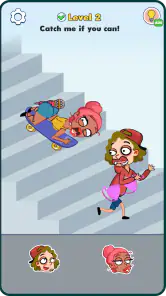
That visual presentation is most useful when it helps me understand the situation at a glance; it should support the puzzle rather than distract me from it. I try to look at the whole scene before deciding which detail matters, because a prominent object is not automatically the key to the answer. This is especially helpful when my first instinct is to interact with the most noticeable thing. A role-based puzzle asks me to connect the scene to a person’s point of view, not simply hunt for a tappable object.
Variety of Roles
One of the most exciting aspects of the app is the sheer variety of roles you can assume. From a cunning spy to a wise old wizard, the possibilities are endless. Each role requires you to think differently, and the puzzles are tailored to suit these unique perspectives. It's like having multiple games wrapped into one, offering endless fun and learning opportunities.
The variety matters because it gives me a reason to reassess my usual assumptions. I cannot rely on one solution pattern just because it worked in a previous scene; a role that suggests secrecy invites a different line of thought from one that suggests knowledge or authority. My useful tip is to ask not only “What can this character do?” but also “What would this character consider a successful outcome?” That second question can reveal why an apparently sensible action is not the right one for the scene.
Challenges Galore
If you're someone who loves a good challenge, then this app is definitely for you. The puzzles range from moderately easy to downright tricky, testing your problem-solving skills at every turn. I found myself scratching my head on more than one occasion, but that's part of the fun, isn't it? The satisfaction of finally cracking a tough puzzle is unparalleled.
There is a useful difference between a puzzle that is difficult because I have not noticed a clue and one that is difficult because I have settled on the wrong interpretation. When I am stuck, I try to identify which of those is happening before I make another move. If I have overlooked something, I scan the scene again; if my reading of the role seems off, I reconsider its motive or abilities. That check keeps frustration from building and makes the eventual solution feel earned rather than accidental.
A few practical trade-offs
Because the challenge depends on reading a scene and guessing which action fits the role, I would play with enough attention to notice details rather than tapping quickly. If I get stuck, I take a brief pause and reread the situation before trying another move; that is more useful than treating every failed attempt as a cue to tap everywhere. This is a small but worthwhile habit for a game built around perspective, and it keeps experimentation from turning into random poking.
For a shared break, I can also imagine handing the phone to a friend and asking what they would try before making my own move. That turns a solo puzzle into a quick discussion without needing a separate mode or extra setup. It works best with someone who enjoys reasoning aloud; if they prefer fast action or competitive play, this slower exchange may not hold their interest.
For a first session, I would give myself permission to stop after a solved scene rather than trying to judge the whole game from a single tricky moment. A quick win shows whether the perspective-shift idea clicks for me; a difficult scene shows whether I find the interpretive challenge enjoyable or irritating. That is a better test than playing while rushed, since impatience can make any puzzle that asks for careful observation feel less fair than it is.
Who should choose another kind of game?
Role Swap is not my pick when I want a continuous story to follow, a timed challenge, or a familiar puzzle format I can solve almost automatically. A standard logic game may be a better match for someone who wants consistent rules, while a word puzzle suits a player looking for language-based clues. Here, the pleasure comes from interpreting a scenario and adapting to its role, so the same premise that makes it distinctive can feel frustrating if a player wants every answer to be plainly signposted.
It is a free puzzle game from MegaJoy Games Studio, with a Teen content rating. Its 4.8 average from around 31,000 ratings and more than 10 million installs suggest that it has reached a broad audience, though popularity alone cannot tell me whether its particular style will suit you. Version 1.45 supports Android 6.0 and later, which makes it an option for many older devices. I would still check that your phone runs smoothly before settling in for a longer play session.
Those figures are useful context, not a substitute for matching the game to your taste. The Teen rating is also worth keeping in mind if you are choosing a game for a younger player; I would check that rating against the player’s age and your own preferences rather than assuming every puzzle game is suitable for every child. Since it is free, trying it involves no purchase decision, but your time and patience are still part of the bargain.
When another session begins
The reward is not a complicated score to chase; it is the satisfying click of understanding why a different role changes the answer. Once I solve a scene, I have a natural stopping point. I may start another when I have a little more time because the next scenario promises a fresh perspective, rather than because I need to maintain a streak or keep a long run alive. That makes the game easy to fit around ordinary pauses, while the occasional stubborn puzzle can still turn a brief visit into a longer one.
That reset is a strength if I like self-contained challenges: I can finish a thought, put the phone down, and return later without needing to remember a complicated chain of events. It is less compelling if I need a persistent story or a sense of progression that carries a single plot forward. In that case, a narrative adventure would be a better companion, while a familiar casual puzzle is a safer choice for moments when I want to play without interpreting a scenario.
Overall, Role Swap: Tricky Puzzle is more than just a game; it's an experience. It's about having fun while also challenging yourself to think outside the box. Whether you're looking to kill some time or seriously engage your brain, this app has something for everyone. So, why not give it a try and see how many roles you can master?
Role Swap: Tricky Puzzle Frequently Asked Questions
What type of game is Role Swap: Tricky Puzzle?
Role Swap: Tricky Puzzle is a puzzle game built around a tricky story and memorable scenarios. If you enjoy games that invite you to pause, consider what is happening, and work through a challenge, its premise may appeal to you. The game is free, so you can try it without an upfront purchase.
What is the main objective of Role Swap: Tricky Puzzle?
Role Swap: Tricky Puzzle is a game designed to challenge your problem-solving skills and creativity. The main objective is to solve various puzzles by swapping the roles of characters within the game. Each level presents unique challenges that require you to think strategically and adapt to different roles to succeed.
Is Role Swap: Tricky Puzzle suitable for all age groups?
Role Swap: Tricky Puzzle is rated Teen, so it is best for players and families to consider that age guidance before downloading. Its puzzles may appeal to people who enjoy light, accessible problem-solving, but the Teen rating means it should not automatically be treated as suitable for every age group. Parents can decide whether it fits their household.
Are there in-app purchases in Role Swap: Tricky Puzzle?
Role Swap: Tricky Puzzle offers in-app purchases that enhance the gaming experience but are entirely optional. Players can choose to purchase hints or additional levels, however, the game can be fully enjoyed without spending any money. It’s designed to be accessible to both paying and non-paying users.
How does Role Swap: Tricky Puzzle enhance cognitive skills?
Role Swap: Tricky Puzzle is crafted to improve cognitive skills by engaging players in strategic thinking, problem-solving, and adaptability. The puzzles require players to think outside the box, encouraging mental agility and creative solutions. Regular play can enhance memory, concentration, and logical reasoning abilities.
Pros
- Engaging puzzle mechanics
- Smooth
- intuitive controls
- Creative level design
- Frequent updates with new content
- Suitable for all ages
Cons
- Ads can be intrusive
- Occasional bugs
- Limited hints available
- Some levels feel repetitive
- In-app purchases can be pricey
- Category
- Puzzle
- Version
- 1.45