LINE: Disney Tsum Tsum
- 67.84K
- 3.9
- Installs
- 10.00M
- Price
- Free

Screenshots


Analysis by Reviewed
I have always liked puzzle games that can fill a few spare minutes without demanding a serious time commitment, and LINE: Disney Tsum Tsum fits that role unusually well. It is a colorful Disney-themed matching game from LINE (LY Corporation), built around quick rounds, familiar characters, and a simple goal: clear as many connected Tsum Tsum figures as possible before the timer runs out. The basic idea is easy to understand almost immediately, but getting consistently good results requires more attention than the cheerful presentation first suggests.
That contrast is the main reason I kept coming back. The game feels welcoming when I am tired or only have a short break, yet it still gives me something to improve. It is free to play and rated for Everyone, so it is approachable for younger players and casual adults alike. At the same time, its in-app purchases, which range from $1.99 to $49.99 per item, mean that the free experience needs to be judged carefully rather than accepted as automatically generous.
How the first goals turn a simple puzzle into a routine
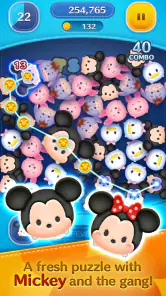
The opening experience is deliberately readable. Tsum Tsum characters appear on the board, and I connect matching figures by tracing through adjacent pieces. Longer chains generally feel more satisfying because they clear more of the screen and create room for the next move. The short round structure makes the first objective obvious: use the available time efficiently, make chains quickly, and try to beat the result from the previous attempt.
That early clarity matters. I do not need to learn a complicated board layout, memorize a large collection of rules, or understand a deep story before playing. The Disney characters provide instant visual recognition, while the rounded figures and bright animations make successful moves feel lively. This is a good fit for someone who wants a puzzle game that can be understood on the first launch rather than studied.
The first meaningful challenge is not simply finding a match. It is learning when to connect a long chain and when to clear a shorter one to prevent the board from becoming awkward. If I wait too long for a perfect opportunity, the screen can lose its rhythm. If I clear everything as soon as possible, I may miss a better chain. That small decision gives the game more substance than a basic tap-to-clear puzzle.
One useful habit is to scan the board before making the first move instead of immediately following the most obvious group. I look for a long connection, then check whether clearing it will leave useful paths for the next few seconds. This is especially valuable when the board is crowded. The best move is often not the largest visible group, but the one that opens the most space while keeping my hand moving.
The game also benefits from its low commitment. A round can fit into a commute, a queue, or the few minutes before an appointment. I can play without setting aside a long session, and a disappointing result does not feel like a major loss. That makes it easier to experiment with different ways of connecting Tsum Tsum rather than repeating one safe pattern every time.
You May Like

Clash of Clans Is Won Between the Battles

Android Auto Makes the Case for Quieter Car Software

MobiOffice: Transforming Mobile Productivity with Seamless Integration

EA SPORTS FC™ Mobile Soccer: Redefining Mobile Sports Gaming

How Microsoft OneDrive Became a Mobile Productivity Giant

How Google Translate Breaks Language Barriers Effortlessly
For a realistic everyday example, I could open it while waiting for a coffee order, finish a round before my name is called, and close the game without feeling that I have abandoned a large task. On a longer evening, the same quick structure encourages “one more attempt” because each round offers an immediate chance to improve. That balance between convenience and replay value is one of the strongest parts of the design.
What counts as progress when the rounds are so short
Progress in a game like this is not only about reaching a distant finish line. I notice it through better chain planning, higher scores, more confident movement, and a growing understanding of how quickly the board changes. Even when I do not unlock something new, a cleaner round can feel rewarding because I made fewer wasted moves and maintained momentum for longer.
The character-collection angle also gives the game a personal layer. Disney fans may enjoy seeing different Tsum Tsum figures appear as part of the broader play experience, while puzzle-focused players can treat the characters as tools within a scoring challenge. These motivations overlap, but they are not identical. Someone who cares mostly about collecting may tolerate slower puzzle improvement, whereas someone chasing better results may care less about which character is on screen.
I found that separating those goals helps prevent frustration. If I approach every round expecting a major unlock or dramatic improvement, the pacing can seem modest. If I treat each attempt as practice in recognizing shapes and managing time, the small gains become easier to appreciate. The most reliable progress comes from improving decisions, not from rushing every move.
Players wondering whether the game is suitable for children should find the presentation approachable because it carries an Everyone age rating and avoids a dark or intimidating tone. Still, the timed format may frustrate a child who prefers relaxed puzzles with no pressure. For that audience, a slower matching game may be a better first choice. Tsum Tsum works best when the player enjoys quick reactions and does not mind replaying a round after an imperfect attempt.
There is also a practical question about whether progress feels meaningful without spending money. My view is that the free entry point is enough to understand the game and decide whether its loop suits you. However, players who become invested in collecting or improving may encounter pressure to consider purchases. I would recommend playing for a while before buying anything, because the central matching action is the part that determines whether the game is genuinely enjoyable for you.
Why the difficulty rises through decisions rather than complicated rules
The difficulty curve is appealing because the rules remain simple while the demands on the player grow. At first, I can concentrate on spotting matching figures. Later, I need to think about chain length, board position, timing, and the consequences of each clear. The game does not need to add a completely different puzzle system to become harder; it makes the same basic action less forgiving as my goals become more ambitious.
This creates a useful divide between casual and committed play. A casual player can connect obvious groups, enjoy the animation, and finish a round with a modest result. A more dedicated player can study the board, plan several moves ahead, and replay the same style of challenge while trying to improve execution. Both approaches are valid, although the second requires more patience because progress depends on repeated practice.
My main advice is to avoid treating every second as an emergency. The timer encourages frantic movement, but frantic movement often leads to short, inefficient chains. I get better results when I use the beginning of a round to establish a rhythm, then speed up once I recognize the available paths. This is a small but important trade-off: deliberate observation costs a moment, yet it can prevent several poor moves afterward.
Another practical technique is to keep my eyes moving across the whole board rather than staring at one cluster. A promising chain can disappear after nearby pieces shift, so focusing too narrowly makes me react to yesterday’s board instead of the current one. I also try to avoid dragging through a group simply because it is close to my finger. The shortest physical path is not always the best scoring opportunity.
That kind of advice separates this game from very passive match-three alternatives. In a traditional match-three puzzle, I usually make one exchange and wait for the board to resolve. Here, the continuous connecting motion gives me more direct control and a stronger sense of speed. On the other hand, players who prefer calm planning, predictable turns, or a clearly defined level map may find the timed flow less comfortable.
Compared with endless tile-matching games, the Disney identity gives this one more personality, but it can also make the experience feel more collection-oriented. If I want a purely abstract puzzle with minimal visual distraction, a simpler alternative may suit me better. If I enjoy recognizable characters and want my puzzle sessions to feel playful, the Tsum Tsum presentation is a meaningful advantage rather than decoration.
The game is not difficult because its instructions are obscure. It is difficult because the window for making good choices is short. That distinction is important for new players. If a first few rounds feel messy, I would not interpret that as a sign that the game is inaccessible. I would give it several attempts and focus on connecting more smoothly rather than chasing an impressive result immediately.
Where the pacing encourages another round
LINE: Disney Tsum Tsum is very effective at creating a compact repeatable loop. A round begins quickly, the board changes constantly, and the result arrives soon enough to invite comparison with the previous attempt. That pacing works especially well for players who enjoy incremental improvement. I often find myself thinking, “I know where I lost time,” which is a stronger reason to replay than a generic reward screen.
The same design can become tiring if I am sensitive to timers or repeated attempts. Because each round is short, failure does not carry much consequence, but the pressure never fully disappears while I am playing. Someone looking for a relaxing bedtime puzzle may prefer a game with untimed turns. Tsum Tsum is cheerful, yet cheerful presentation does not remove the underlying urgency.
Retention also comes from the desire to see what comes next, whether that means improving a score, making better use of a particular character, or continuing a collection-oriented routine. I appreciate that these motivations can coexist, but they can also pull in different directions. A player focused on performance may want to repeat the most comfortable strategy, while a player focused on variety may be tempted to change characters or approach even when it is less efficient.
This is where spending pressure deserves an honest mention. The game is free to start, but optional purchases can make the broader experience more tempting for people who dislike waiting or want to accelerate their involvement. I would set a personal spending limit before becoming invested, especially if the game is being used by a child. The safest way to enjoy it is to treat purchases as optional extras rather than necessary proof of progress.
There is no need to spend money simply to discover whether the core puzzle is enjoyable. I would first play during different situations: a very short break, a longer relaxed session, and a moment when I am already distracted. If the game remains fun when I am not chasing a new reward, that is a good sign that the basic loop works for me. If it only feels worthwhile when something new is about to appear, I would be cautious about investing further.
Device compatibility is also straightforward for many users: the current version is 12.9.1 and requires Android 8.0 or later. That makes checking an older Android phone important before installation. The game is available as a free Android title, but the presence of in-app purchases means “free” describes access, not necessarily every possible path through the experience.
Who will enjoy it, and who should choose another puzzle
I would recommend it to Disney fans who want a light game with enough timing and planning to avoid feeling completely automatic. It is also a good option for people who like short sessions, visible improvement, and a colorful board that stays active from one moment to the next. Families may appreciate the approachable theme, provided younger players are comfortable with the timer and adults keep an eye on optional spending.
I would be less likely to recommend it to someone who wants a deep story, a calm no-pressure puzzle, or a carefully structured campaign with a clear final destination. It is not the right choice if the main appeal of puzzle games is leisurely analysis. The constant movement is part of its identity, so removing that pressure would remove much of what makes it distinct.
It may also disappoint players who dislike collection-driven motivation. The matching itself is satisfying, but the surrounding appeal depends partly on caring about the Disney characters and the sense of building an ongoing routine. If familiar characters do not add anything for you, a minimalist puzzle with fewer distractions could offer a cleaner experience and perhaps a better focus on pure strategy.
The game has reached a broad audience, with over ten million installs and an average rating of 3.9 from around 545 thousand ratings. Those figures suggest a substantial player base, but they do not guarantee that its pacing will match every player’s taste. I would read the numbers as evidence that the concept has lasting appeal, not as a substitute for considering whether timed chain-making is the kind of puzzle you personally enjoy.
My verdict on the long-term progression
After spending time with it, I see LINE: Disney Tsum Tsum as a strong casual puzzle game whose best feature is the way it turns a very small rule set into a repeatable skill challenge. The early goals are clear, progress can be felt through better decisions, and the difficulty rises naturally as I try to use the board more efficiently. Its Disney presentation makes the experience warmer and more recognizable than many abstract matching games.
Its weaknesses are equally clear. The timer can make relaxing play difficult, repeated rounds may feel similar if I am not motivated by improvement or characters, and optional purchases introduce a pressure that careful players should manage. The free entry point is valuable, but I would not assume that every long-term goal will feel equally comfortable without spending or patience.
My final recommendation is to try it if you want a friendly, fast puzzle for short breaks and enjoy improving through repetition. Start without buying anything, learn to scan the whole board, and judge the game by whether the connecting itself remains fun after the novelty of the Disney characters settles. For me, that core loop is strong enough to support regular play, but only for players who like quick decisions. If you want slow, turn-based thinking, another puzzle category will probably serve you better.
LINE: Disney Tsum Tsum has been available since June 30, 2014, and its continued presence makes sense: the rules are instantly approachable, the rounds are easy to fit into daily life, and the path from casual play to more deliberate optimization is clear. I would describe it as a charming pick-up-and-play puzzle with real timing depth, best enjoyed with sensible limits around repetition and purchases.
LINE: Disney Tsum Tsum Frequently Asked Questions
Is LINE: Disney Tsum Tsum easy to learn for new players?
Yes. LINE: Disney Tsum Tsum is designed around a simple puzzle idea, so you can understand the basic play quickly: connect matching Tsum Tsum characters on the board before time runs out. Learning how to make longer chains and use character skills effectively takes practice, but newcomers can start with the basics without needing to master complicated rules first.
How much storage space does LINE: Disney Tsum Tsum need?
The space required can vary with the device and the game’s installed content, so it is sensible to check the download size shown in your device’s app store and leave some extra room for updates. If your phone is nearly full, removing unused downloads or apps first can make installation smoother and help leave room for the game to update later.
What kind of game is LINE: Disney Tsum Tsum?
LINE: Disney Tsum Tsum is a puzzle game built around quick rounds and familiar Disney characters. Its simple, colorful presentation makes the basic idea easy to understand, while chasing higher scores and collecting characters provide reasons to keep playing. It may suit players looking for a light, pick-up-and-play experience rather than a story-driven adventure or a complex strategy game.
What devices can run LINE: Disney Tsum Tsum?
LINE: Disney Tsum Tsum is available for Android and iOS devices. On Android, the minimum operating system requirement is version 8.0, so check your device’s software version before downloading. The game is free to install, but compatibility can depend on the device and its operating system. Keeping your device’s software up to date can help you avoid installation or performance problems.
What is LINE: Disney Tsum Tsum and how is it played?
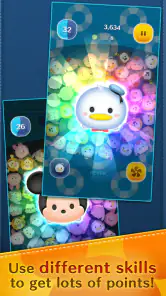
LINE: Disney Tsum Tsum is a casual puzzle game based on small, collectible Disney and Pixar characters called Tsum Tsum. During each round, you connect matching Tsum Tsum icons by drawing a line through them before the timer runs out. Longer chains usually create larger scores and special bubbles, while each character has a unique skill that can help clear the board or improve your performance.
Pros
- Simple tap-and-swipe gameplay is easy to learn for players of all ages.
- Disney and Pixar character roster gives collectors plenty of goals to pursue.
- Short rounds work well for quick sessions during commutes or breaks.
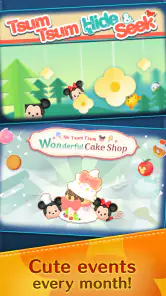
- Regular events add themed challenges
- rewards
- and limited-time excitement.
- Cute animations
- sound effects
- and character skills make matches feel lively.
Cons
- Energy and item limits can interrupt play unless you wait or spend resources.
- Randomized drops may make collecting favorite Tsum Tsum characters frustrating.
- Progress can feel grindy when missions require repeated upgrades or high scores.
- Some events and rewards favor players who log in frequently or spend money.
- The busy interface and many currencies may overwhelm new players at first.

- Category
- Puzzle
- Version
- 12.9.1