Geometry Dash Meltdown
- 151.05K
- 4.6
- Installs
- 100.00M
- Price
- Free
Screenshots
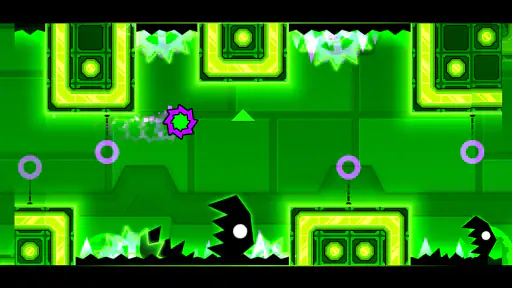
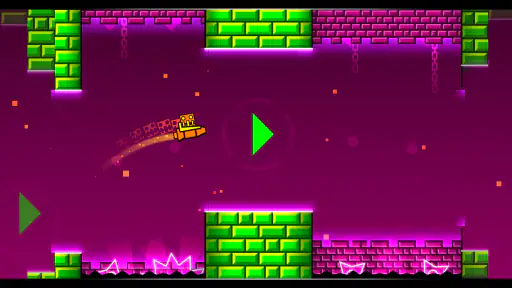
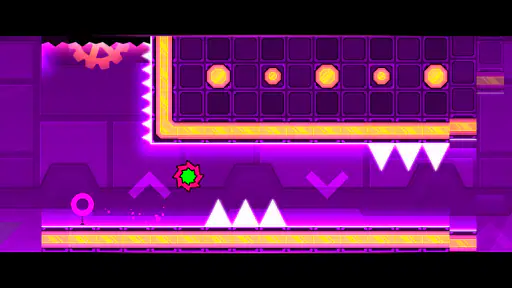
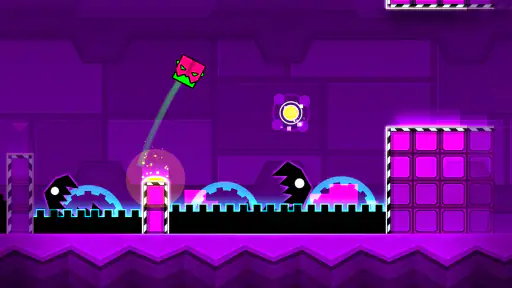
Analysis by Reviewed
I usually judge a mobile game by what happens after its opening rush: does it earn a place in my regular rotation, or does the novelty wear off once I have seen the main idea? Geometry Dash Meltdown makes a strong first impression with compact, music-driven platforming, but its lasting appeal depends on whether you enjoy practising the same demanding sequences until your timing clicks.
A quick start with a steep learning curve
As an arcade game from RobTop Games, Meltdown is easy to understand from the first attempt: you control a geometric character through hazards, with jumps and flight tied to precise timing. There is little to learn before playing, which makes it a natural choice when I have a few spare minutes and want something more focused than a casual match-three game. The catch is that simple controls do not make the challenge gentle. A small timing error can end a run, and progress comes through attention and repetition rather than gradual hand-holding.
That makes the first week appealing for players who like a clear, immediate goal. I can restart after a failed attempt and concentrate on the obstacle that caught me, instead of managing a long setup or a complex control scheme. The music helps give each run its own rhythm, but I would not treat it as background entertainment: the visual action and beat both demand attention. If you are looking for a relaxed game to play while watching a show or answering messages, this is a poor fit.
Making short sessions count
A useful everyday routine is to save it for a moment when I can give the screen my full attention: waiting for a ride, taking a short break, or unwinding before switching to another task. I aim for a small, specific goal, such as getting farther through a troublesome section, rather than promising myself a long session or insisting on finishing a level. That keeps the quick restart loop satisfying instead of turning a spare moment into an unexpectedly tense chore.
When attempts keep ending at the same obstacle, I find it more useful to pause briefly and identify what went wrong than to tap through retries on autopilot. Was I reacting to the hazard too late, or trying to follow the beat without watching the visual cue? Changing one thing on the next run gives each failure a purpose. This is a small adjustment, but it makes the game feel more like practising a skill than gambling on a lucky attempt.
Unleashing the Meltdown Experience
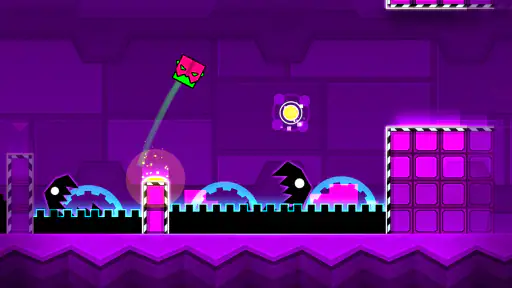
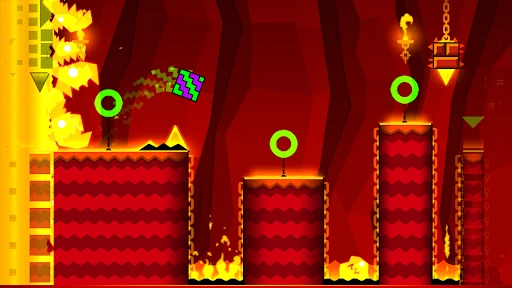
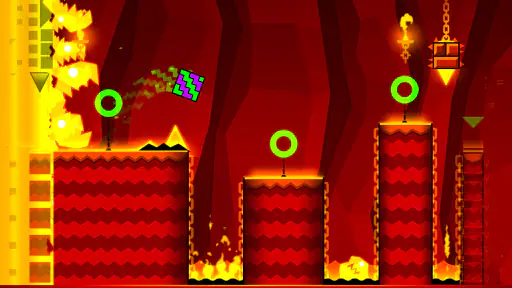
Right off the bat, Geometry Dash Meltdown grabs your attention with its vibrant graphics and pulse-pounding music. The game features three new levels that are anything but easy. The adrenaline rush you get as you guide your little icon through spikes, over pits, and across chasms is like nothing else. It's a test of your reflexes and timing, and trust me, it’s addictively frustrating in the best way possible!
Gameplay That Keeps You on Edge
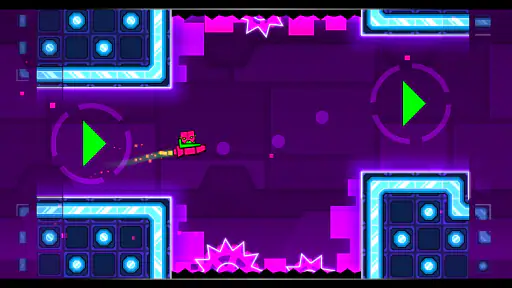
The gameplay is straightforward yet challenging. You tap to jump and hold to fly, guiding your character through a series of daunting obstacles. Each level is synchronized perfectly with the game's soundtrack, making the experience incredibly immersive. Missing a jump or crashing into a spike can be annoying, but it’s all part of the fun and learning curve. Each attempt feels like you're getting one step closer to mastering the level.
You May Like

Clash of Clans Is Won Between the Battles

Android Auto Makes the Case for Quieter Car Software

MobiOffice: Transforming Mobile Productivity with Seamless Integration

EA SPORTS FC™ Mobile Soccer: Redefining Mobile Sports Gaming

How Microsoft OneDrive Became a Mobile Productivity Giant

How Google Translate Breaks Language Barriers Effortlessly
That clear input scheme is especially helpful when deciding whether the difficulty is fair for you. There is no elaborate control layout to memorise, so the real test is reading the course and acting at the right moment. I would not mistake that simplicity for accessibility in the sense of being easy, though: a player who dislikes repeating a difficult passage may find the basic controls do little to soften the challenge.
Stunning Visuals and Soundtracks
One of the standout features of Geometry Dash Meltdown is its stunning visuals. The levels are beautifully designed with bright colors and dynamic backgrounds that change in sync with the music. Speaking of music, the soundtracks are absolutely killer. Composed by F-777, the tracks are catchy, intense, and they perfectly complement the fast-paced action of the game.
The game’s aesthetics are not just about looking good; they play a crucial role in guiding players through the challenges. The visual cues are intuitive, and once you get the hang of it, it feels almost like you're dancing through the levels.
That relationship between sound and movement is worth treating as a practical choice, not just a matter of taste. In a quiet room, I can use the soundtrack as one more timing reference; in a noisy place, it may be harder to settle into the rhythm, and visual concentration has to do more of the work. If sound is unavailable or unwelcome, I would try a few attempts without relying on the beat before deciding whether the game suits that setting. The demanding timing remains central either way.
Practice that pays off—and can wear thin
For a practical routine, I would play one focused run during a commute or a short break, then stop before frustration takes over. Because each attempt asks for concentration, a few attentive minutes can feel more satisfying than a much longer session spent tapping without learning the pattern. When I fail repeatedly at the same point, I try to notice whether I am reacting late to the screen or anticipating the beat incorrectly; changing one habit at a time makes practice more useful than simply rushing into another attempt.
The trade-off is that repetition is central to the experience. Players who enjoy refining timing and earning progress through retries may find a reason to return over weeks. Those who need fresh stages, a changing objective, or a story that unfolds between sessions may feel they have reached the end of the appeal sooner. The rhythm gives the obstacles personality, but it does not remove the need to memorise and execute difficult sequences.
Who will enjoy the challenge
I would recommend it first to players who get satisfaction from focused practice: people who like spotting a pattern, adjusting their timing, and seeing a run improve through their own effort. It can also suit someone who wants a compact arcade game rather than a large world to manage. The immediate controls make it approachable to try, while the steep difficulty gives experienced players a reason to keep refining their play.
I would be more cautious about recommending it to someone who wants a gentle game for switching off, or to a player who expects frequent new objectives to keep each session feeling different. Younger players can understand the basic action, but the challenge may be more demanding than the Everyone age rating suggests at first glance. If the intended player gets discouraged by repeated failure, a slower puzzle game or a more forgiving arcade option is likely a better match.
Where it fits among arcade games
Compared with endless runners, Meltdown feels less like surviving an unpredictable stream and more like learning a tightly arranged challenge. That makes it a better choice if you enjoy precision and replaying a level to improve, while an endless runner is often more suitable when you want variety without committing to mastering a fixed sequence. It also differs from slower puzzle games: there is little time to pause and reason once a run is underway. I would choose it for active, focused play, not as a gentle wind-down.
There is a useful trade-off here for anyone choosing between arcade styles. An endless runner can provide changing moment-to-moment situations, but its emphasis is often on keeping a run alive; Meltdown asks me to learn a particular sequence and execute it cleanly. A puzzle game gives more room to stop and think, whereas this one rewards a quick response. I would pick based on the kind of attention I want to give, not just on the broad arcade label.
It is free, rated for Everyone, and has an average rating of 4.6 from around 1.9 million ratings, with more than 100 million installs. Those figures suggest broad reach, but they do not tell you whether its demanding retry loop suits your temperament. The game was released on December 19, 2015, and version 2.2.145 supports Android 5.0 and later. If you are choosing a game for a younger player, the age rating is useful context; I would still expect the difficulty itself to be the main hurdle, rather than the controls.
What returning players get from it
Its lasting value is less about a stream of changing activities and more about whether the core challenge stays enjoyable for you. If I return after a few days away, I can focus on timing again without having to relearn a complicated control system. That makes it easy to pick up between other games. At the same time, the same focused structure can feel narrow if I want a fresh kind of task each time I open an app.
There is no need to turn every session into a test of patience. I would keep it installed if I naturally feel curious about improving after a difficult run, and set it aside if I am replaying out of obligation. That is a useful way to judge the game’s recurring value: not whether I can spend a long time on it, but whether another attempt still feels like my choice.
Why You'll Keep Coming Back
Geometry Dash Meltdown is one of those games that you just can’t put down. The thrill of completing a level after numerous attempts is immensely satisfying. Plus, the desire to beat your own score or that of your friends adds a competitive edge to the game. It’s perfect for those short breaks or even long gaming sessions when you just want to zone out and challenge yourself.
Another reason for its addictive nature is the simplicity of its design. There are no complicated controls, no lengthy tutorials—just pure, unadulterated fun right from the start. It’s easy to pick up, yet incredibly hard to master, which is a hallmark of a great mobile game.
For me, the competitive pull works best as a personal nudge rather than a reason to turn every run into a comparison. The strongest satisfaction comes from noticing that I handled a section more cleanly than before. If beating a friend’s performance motivates you, that can add another goal; if comparison makes a difficult game feel stressful, there is plenty to enjoy by treating your own progress as the measure.
One useful way to decide whether to keep it installed is to notice what you want after a difficult run. If you feel curious to try again and improve one section, it is doing its job; if each restart feels like an obligation, an arcade game with more changing goals will probably suit you better. I would also treat sound as part of the design rather than an optional extra. Playing with the music audible makes the rhythm easier to follow, while a noisy setting can make precise attempts less comfortable.
Maintenance without a daily commitment
Meltdown is not the sort of game I would keep only because I feel obliged to check in every day. Its appeal comes from choosing a level of focus when I have the energy for it, so a break from playing does not have to become a problem to solve. I can return when I want a short skill challenge, then leave it alone when I would rather play something calmer. That makes its maintenance burden light in terms of routine, even if mastering the obstacles asks for patience.
On a phone, that distinction matters: a quick launch is convenient, but a quick session is not automatically relaxing. I would save it for a time when interruptions are unlikely, since an incoming message or a need to look away can break concentration at exactly the wrong moment. For a waiting room or a quiet commute, it can make spare time feel active; while multitasking, it is far less accommodating.
A lasting spot on your phone?
For a player who enjoys rhythm-led precision and can accept repeated attempts, I think this arcade game earns a place as a compact challenge rather than an all-purpose time-killer. Its bright presentation and soundtrack give the obstacle courses character, while the simple inputs make it easy to return after a gap. The main limitation is also its defining feature: progress depends on focused repetition, so anyone looking for relaxed variety may tire of it.
My recommendation is to try it when you have a few uninterrupted minutes and judge the first difficult stretch honestly. If a failed run makes you want to understand the timing and have another go, the game has the kind of lasting appeal you are likely to value. If you mainly want to unwind without concentrating, choose a gentler arcade game instead. Meltdown is at its best when I want a brief, demanding test—and I would keep it around for exactly that reason.
Geometry Dash Meltdown Frequently Asked Questions
Is Geometry Dash Meltdown suitable for children?
Geometry Dash Meltdown is listed for Everyone, making it suitable for a broad age range. Its appeal comes from arcade action, music, and timing-based challenges rather than a complicated premise. Younger players may still find the quick reactions and repeated attempts demanding, so it helps to consider whether they enjoy challenging games. The age guidance is useful, but each player’s patience and preferences matter too.
How does Geometry Dash Meltdown control, and is it easy to learn?
The basic idea is straightforward: you jump and fly through obstacles, with timing at the heart of each move. That makes the controls easy to understand, but getting through a level consistently takes practice and precise reactions. The music can help you anticipate what is coming, although it does not remove the challenge. Players who like simple controls paired with demanding gameplay may find the format appealing.
Does Geometry Dash Meltdown suit players who are new to rhythm games?
It can, especially if you enjoy learning through repetition. Geometry Dash Meltdown is an arcade game built around jumping and flying in time with music, so the rhythm helps you anticipate the action. The controls and obstacles still demand quick reactions, and mistakes can mean starting a section again. If you are new to this style, expect a learning curve rather than a relaxed experience.
What is Geometry Dash Meltdown about?
Geometry Dash Meltdown is a rhythm-based action platformer that challenges players to navigate through a series of obstacles and platforms in time with the music. It features vibrant graphics, catchy soundtracks, and fast-paced gameplay, making it both addictive and challenging for players of all ages. Its simple premise is easy to understand, but progressing calls for concentration and precise timing, which gives each attempt a clear sense of challenge.
Is Geometry Dash Meltdown free to play?
Yes, Geometry Dash Meltdown is free to download and play. However, the game does offer in-app purchases that allow players to buy additional features or remove ads. These purchases are optional, and players can enjoy the full experience without spending any money. It is listed as suitable for Everyone, so families can also check the age guidance before installing.
Pros
- Engaging rhythm-based gameplay
- Vibrant and colorful graphics
- Challenging levels to master
- Simple yet addictive mechanics
- Offline play available
Cons
- Limited levels available
- Can be frustratingly difficult
- Ads can be intrusive
- In-app purchases for extras
- No multiplayer mode
- Category
- Arcade
- Version
- 2.2.145