Geometry Dash
- 144.27K
- 4.8
- Installs
- 5.00M
- Price
- $2.99
Screenshots
Analysis by Reviewed
When I want a quick game that still asks for my full attention, Geometry Dash is an easy one to reach for. A short session can turn into a determined string of retries: the controls are simple, but the obstacles leave little room for a mistimed move. I find that contrast—easy to start, demanding to master—at the heart of its appeal.
It suits players who enjoy learning a sequence through practice rather than gradually improving a character or collecting upgrades. If you prefer relaxed platforming, forgiving checkpoints, or a story-led adventure, its repeated failures may feel more irritating than rewarding. I’d choose it for focused bursts, not as a calm game to play while distracted.
A sharp first impression, built for attention
The first thing I notice is how quickly the game establishes its terms: watch the moving course, make a brief input at the right moment, and learn from the attempt. There is very little between me and the next try, which makes it convenient when I have only a few minutes. At the same time, that immediacy can be demanding. I need to put down whatever else I’m doing rather than treat it as background entertainment.
That makes it a useful choice for a small break between tasks, on a commute where I can focus on the screen, or while waiting for an appointment. A realistic session for me is to open it, work on one stubborn stretch, and stop when I catch myself tapping without thinking. The game is easy to return to, but the best use of a short session is deliberate practice, not trying to squeeze in progress while distracted.
It is also worth knowing what kind of progress feels rewarding here. I don’t get the usual sense of building a stronger character or filling a collection; the payoff is recognizing a pattern and executing it more cleanly. That makes improvement personal and immediate, but it may feel thin if you want a steady stream of unlocks or a story that carries you between challenges.
Visuals and Music: A Perfect Harmony
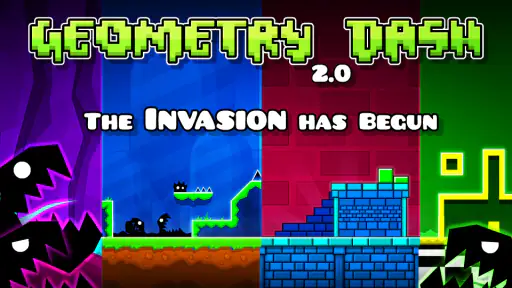
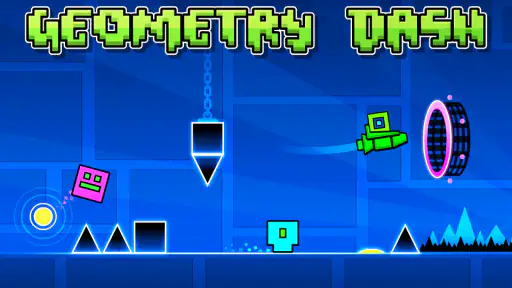
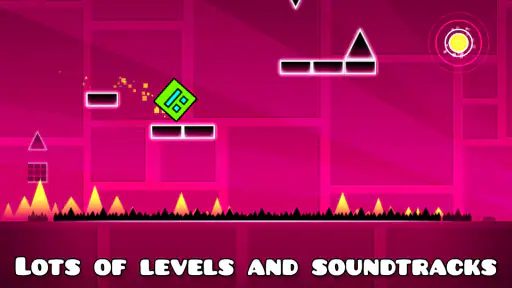
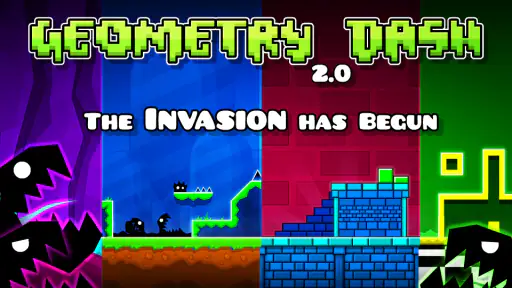
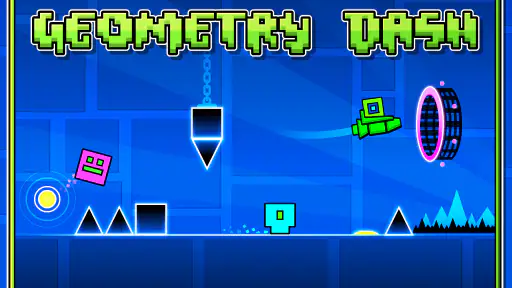
First off, let’s talk about the visuals. The graphics in Geometry Dash are nothing short of mesmerizing. They’re simple yet vibrant, and the fast-paced animations make each level a visual treat. But what truly sets this game apart is how seamlessly these visuals synchronize with its music. The soundtrack is an energetic blend of electronic beats that perfectly matches the game’s pace. It’s almost like the game isn’t just about jumping over spikes, but dancing through a neon-colored world.
That visual language is more than decoration: bright shapes and sharply changing scenery give each stretch a distinct feel, while the uncluttered look keeps the hazards readable at speed. The mood stays lively even when a run ends quickly. I wouldn’t mistake it for a game built around a detailed setting or character drama; its personality comes from color, motion, and the pressure of making the next move on time.
More From Our News Desk

Weather by Xiaomi Review: Clear at a Glance, Less Clear Up Close

X Under Pressure: Can It Recover When Posting Goes Wrong?

Clash of Clans Is Won Between the Battles

Android Auto Makes the Case for Quieter Car Software

MobiOffice: Transforming Mobile Productivity with Seamless Integration

EA SPORTS FC™ Mobile Soccer: Redefining Mobile Sports Gaming
How the visual world supports the challenge
The abstract look is a practical choice as well as an artistic one. The game doesn’t ask me to study a realistic landscape or follow a character through a story; I can keep my eyes on the geometry and the changes ahead. That clarity matters because even a small lapse can spoil a run. When the scenery shifts, it gives a section its own identity without turning the experience into a sightseeing tour.
There is a trade-off in that approach. Players who want detailed environments, a cast to care about, or a strong sense of place may find the world more like a sequence of animated designs than a setting. I enjoy that the visuals stay focused on movement, but I wouldn’t recommend it as a substitute for an atmospheric adventure. Its mood is energetic and abstract, not contemplative or story-driven.
Gameplay: A Test of Skill and Patience
Now, onto the gameplay. If you’re someone who enjoys a good challenge, this game is going to be right up your alley. Each level is meticulously designed to test your reflexes and timing. Trust me, you’ll find yourself hitting that replay button more times than you’d like to admit. The controls are intuitively simple—you just tap to jump—but don’t let that fool you. Mastering the timing of those taps is where the real challenge lies. And the feeling of finally nailing a tricky sequence? Absolutely exhilarating!
The rhythm is useful, but I don’t treat it as a substitute for watching the course. A beat can help me anticipate a familiar passage, yet visual cues and practiced timing matter most when the pattern changes. One practical habit is to notice exactly where a run goes wrong instead of tapping frantically through the whole section; that turns a frustrating failure into a specific timing lesson.
A second useful habit is to change just one thing after a mistake. If I think I acted too early, I wait slightly longer on the next attempt rather than altering my whole approach. This keeps practice purposeful and helps distinguish a timing problem from a moment when I simply lost focus. It is a small adjustment, but it makes repeated attempts feel less like guesswork.
For an everyday example, I might play during a short break, repeat one difficult passage, then stop once I’m getting careless. That works better than trying to force a long session after frustration sets in. Because a mistake can send you back to retry, this is satisfying when I’m in a patient mood, but a poor fit when I only want a gentle game that lets me make progress without repeating a challenge.
On a phone, I’d also give myself a comfortable grip and keep my tapping hand relaxed. Tensing up tends to make quick inputs less consistent, especially once I start anticipating a difficult moment. I find it more useful to pause briefly between attempts than to hammer the screen in irritation. The game asks for precise timing, so the quality of attention matters more than the length of a session.
That distinction helps answer whether it is playable in little pockets of time: yes, if those pockets are genuinely free of interruptions. A notification, conversation, or need to look away can break concentration at exactly the wrong point. If I know I’ll be pulled in several directions, I’d choose a game that tolerates pauses more generously. This one works best when I can focus on the course from one attempt to the next.
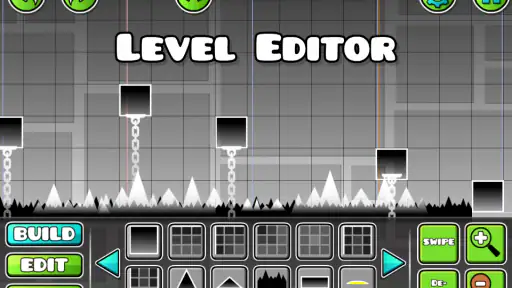
Geometry Dash also offers a level editor, allowing players to create and share their own levels. This means there’s essentially an infinite amount of content to explore, keeping the gameplay fresh and engaging.
The editor and shared creations give the game a different kind of staying power from an arcade platformer with only a fixed set of courses. They also change the experience: community-made levels can be a refreshing alternative once I want something beyond the built-in challenges, though their variety means the feel and difficulty can differ considerably. I’d treat browsing and trying creations as an option for when I want to explore, rather than assuming every level will suit my taste.
Making the most of the editor and shared levels
For me, the editor is most appealing when I want to understand a challenge from the other side. Trying to arrange a sequence makes me think about how visual cues and timing work together, rather than only reacting as a player. It is a different kind of engagement from simply replaying a course, and it gives creative-minded players a reason to stay interested after they have had their fill of the immediate arcade test.
When browsing community-made stages, I’d approach them with an open mind and a little patience. A level that feels too difficult or simply doesn’t match my mood is not a verdict on the whole game; another creation may offer a very different experience. The practical trade-off is that player-made variety can be exciting but less predictable than a curated set of familiar challenges. If you want every stage to have a consistent difficulty and style, sticking with built-in content may feel more comfortable.
Community and Updates: Always Evolving
One of the things I love about Geometry Dash is its community. Players are constantly creating new levels and sharing them online, which means you’ll never run out of new challenges. The developer, RobTop Games, regularly updates the app, adding new levels and features to keep the game exciting. It’s this kind of support that keeps players coming back for more.
RobTop Games’ arcade game has a 4.8 average from around 997,000 ratings, and it has over 5 million installs. It costs $2.99, is rated Everyone, and version 2.2.143 requires Android 5.0 or later. Its long-running release dates back to August 12, 2013, which helps explain why the community and player-made levels are part of its identity rather than a side attraction.
Those details make the purchase decision fairly straightforward for me: it is a paid game, so I’d buy it because the precise, retry-driven style appeals to me, not because I expect a casual free-time filler. The Everyone age rating makes it broadly accessible by age, though the demanding timing may still be a poor match for younger or less patient players. I’d think about the style of challenge I enjoy before spending, rather than assuming a simple control scheme means an easy experience.
Compared with many arcade games that rely on collecting items or gradually strengthening a character, this one puts the emphasis on timing and repetition. That focus is its clearest strength, but also its main limitation: if you dislike restarting after mistakes or want a slower pace, a more forgiving platformer is likely a better choice. I’d also avoid playing when I’m distracted; the brief inputs demand attention, and the music can make the pace feel even more insistent.
There is another useful comparison with rhythm games: the music gives the action a pulse, but I wouldn’t approach every obstacle as if sound alone tells me exactly when to act. Watching the course remains essential, and a visual change can matter more than counting beats. If what you want is a music game centered on listening and matching a track, a dedicated rhythm title may be a better fit. Here, sound and movement reinforce an arcade platforming challenge rather than replacing it.
Who should pick it up, and who may prefer another game?
I’d point patient players toward it if they enjoy seeing a mistake, adjusting, and trying again without needing a long setup. It also suits people who like sharing and sampling player-made challenges, or who appreciate a strong visual mood without a story demanding their attention. Its brief inputs make it easy to understand, but that simplicity should not be confused with forgiveness.
I’d steer away anyone who wants to relax without concentrating, dislikes repeated attempts, or prefers a game that rewards every short session with visible character growth. A slower platformer may be a better choice for someone who wants room to explore, while a story-led game is a better match if narrative is the main attraction. Geometry Dash is at its strongest when the challenge itself is the reason to play.
In conclusion, Geometry Dash is more than just a game—it’s a test of patience, skill, and rhythm. It’s the kind of game that frustrates you to no end, yet you can’t help but love it. So, if you’re looking for something that’s going to keep you entertained and on your toes, give Geometry Dash a try. Just be prepared to lose a few hours to this addictive little app!
Who will enjoy its particular kind of pressure?
I’d recommend it to players who like arcade challenges they can tackle in short attempts, and to creative players curious about making or sampling community levels. It is less suitable for anyone looking for a relaxed soundtrack-first experience, a forgiving route through levels, or a narrative to follow. The music and striking visuals create a coherent mood, but the moment-to-moment test remains precise timing.
If you’re deciding whether to buy it, the key question is whether repeating a demanding sequence sounds satisfying or tiresome. I find the game at its best when I can give it a little concentration, use each failed attempt to adjust, and take a break before impatience takes over. That makes its neon energy and rhythmic presentation feel like part of the play, not merely a backdrop.
Geometry Dash Frequently Asked Questions
Can I play Geometry Dash with one hand, and how responsive are its controls?
Geometry Dash uses simple tap-based controls, so its basic gameplay is easy to understand: tap to make your icon jump or change its movement through the level. The challenge comes from reacting at the right moment, not from learning a complicated control scheme. Because the stages move quickly, a responsive touchscreen and steady timing can make retries feel more manageable.
What kind of game is Geometry Dash, and is it mainly about rhythm or platforming?
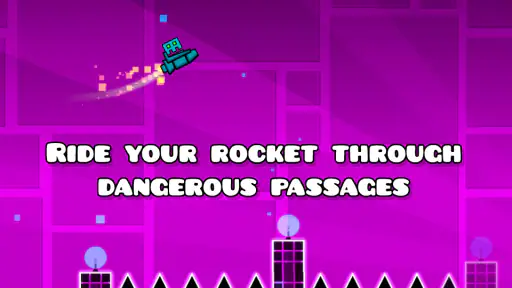
Geometry Dash combines arcade platforming with rhythm-based action. You guide an icon through hazards by timing jumps and other movements to the music, so the soundtrack helps establish the pace while the obstacles test your reactions. Players who enjoy either side of that combination can find plenty to engage with, though success depends on learning patterns and responding accurately.
Is Geometry Dash free to download?
The full Geometry Dash game costs $2.99 as a one-time purchase. It is a rhythm-based action platformer where you jump and fly through obstacle-filled levels, with music closely tied to the timing of each run. The full game includes its official levels and features, as well as a level editor for making and sharing custom challenges. It is not a subscription, so the purchase gives you access to the game without requiring a recurring payment.
How much does Geometry Dash cost, and what do I get for the purchase?
Geometry Dash costs $2.99 as a one-time purchase. It is a rhythm-based action platformer where you jump and fly through obstacle-filled levels, with music closely tied to the timing of each run. The full game includes its official levels and features, as well as a level editor for making and sharing custom challenges. It is not a subscription, so the purchase gives you access to the game without requiring a recurring payment.
What devices and operating systems can run Geometry Dash?
Geometry Dash is available for Android, and the listed minimum operating system is Android 5.0. Before downloading, check that your device runs a compatible version of Android and has enough room for the game. The game is developed by RobTop Games and is currently version 2.2.143. Compatibility can depend on the particular device as well as its operating system, so checking the download page on your device is a sensible final step.
Pros
- Challenging levels keep you engaged.
- Vibrant graphics enhance the gameplay.
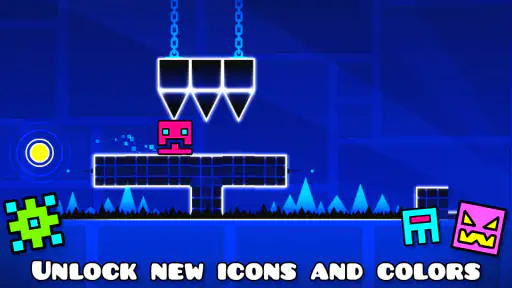
- Customizable character options.
- Regular updates with new content.
- Addictive rhythm-based gameplay.
Cons
- Can be frustrating for casual players.
- Limited free content available.
- In-app purchases can be costly.
- Requires precise timing and focus.
- Ads may interrupt the experience.
- Category
- Arcade
- Version
- 2.2.143