Bloons TD 6
- 63.62K
- 4.8
- Installs
- 5.00M
- Price
- $6.99

Screenshots
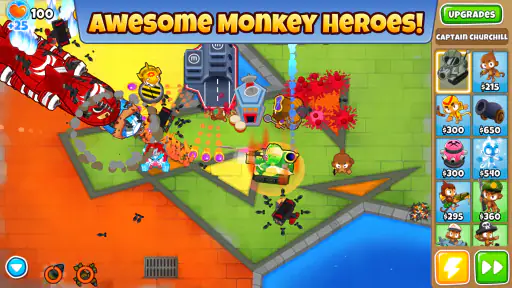
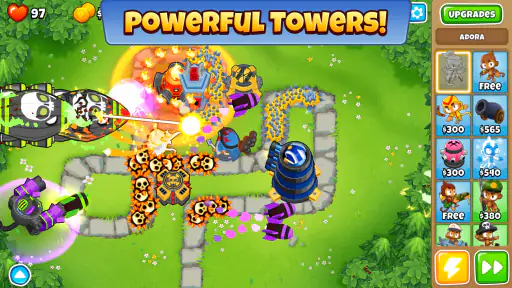
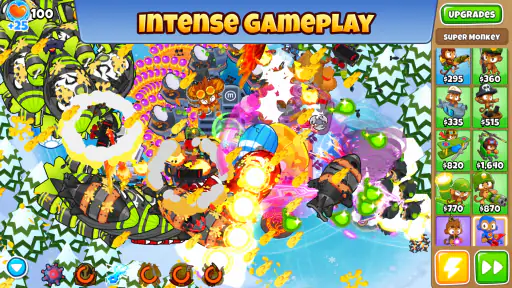
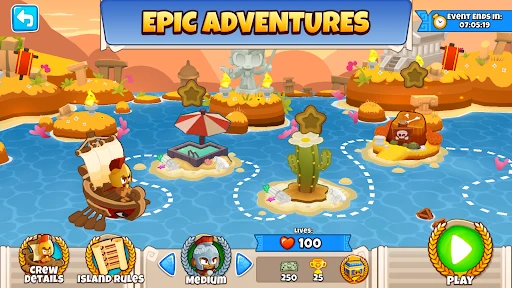
Analysis by Reviewed
I find Bloons TD 6 easiest to enjoy when I treat it as a game of observation, not just quick placement. A wave shows me what my defense can handle, and the next decision is whether to strengthen a weak spot or prepare for a different threat. That makes each run feel like a small problem to solve. It also means the game is a better fit for people who enjoy thinking between bursts of action than for anyone looking for a purely passive distraction.
Making the screen easier to read
One helpful way to settle into a new map is to pause and look at the route before placing anything. I try to notice where the track bends, where a tower might cover more than one stretch, and which spaces are too limited to support the plan I have in mind. This turns the map into a set of practical choices rather than a colorful scene to react to at speed. It is especially useful when I am still learning what each tower contributes.
That habit can also reduce visual guesswork. Instead of scanning the whole screen at once, I can check the route, then my towers, then the incoming wave. The game’s vivid presentation helps distinguish its key elements, but a well-filled battlefield naturally asks for more attention. I would avoid starting a difficult run while multitasking; a quieter moment makes it easier to notice whether my defense is actually working.
Readability, navigation, and learning by doing
The main strategic loop is understandable even if the range of choices takes time to learn. I place defenses, watch what gets through, and decide where an upgrade or a different tower could help. When I lose, it is tempting to change everything on the next attempt, but I get more useful feedback by changing one major decision at a time. If I moved a tower, for example, I can see whether its new position covers the troublesome stretch more effectively.
This is a good game for someone who likes learning through repeated attempts, but not necessarily for a player who expects every option to explain itself immediately. I would not try to memorize every tower and hero before playing. Instead, I’d pick a manageable map, make a simple plan, and notice which problem appears first. That approach keeps the choices readable and makes later experimentation feel earned rather than overwhelming.
Motor and sensory comfort in real play
The central interaction is less about precise aiming than deciding where defenses belong, which may suit players who find action games dependent on fast targeting frustrating. Still, choices need to be made as a wave unfolds, and the movement and effects can become visually busy. I would not assume that a strategy label automatically means a calm or low-demand experience. If moving scenes or a crowded screen are tiring for you, try a shorter, lower-pressure session first and see how it feels.
Sound can be part of the atmosphere, but the strategic decisions are also visible on screen. In a noisy place, I would focus on the route and the state of the defense rather than expect to follow a run by listening alone. Conversely, if visual activity is distracting, playing somewhere with fewer competing stimuli may help. These are practical ways to choose a better setting, not a guarantee that the game will suit every sensory preference.
More From Our News Desk

Weather by Xiaomi Review: Clear at a Glance, Less Clear Up Close

X Under Pressure: Can It Recover When Posting Goes Wrong?

Clash of Clans Is Won Between the Battles

Android Auto Makes the Case for Quieter Car Software

MobiOffice: Transforming Mobile Productivity with Seamless Integration

EA SPORTS FC™ Mobile Soccer: Redefining Mobile Sports Gaming
Strategy, pacing, and play styles
The gameplay is where Bloons TD 6 shines. It’s not just about popping balloons; it’s about strategy and planning. You have to place your towers wisely, upgrade them at the right time, and choose your hero carefully. With multiple maps and difficulty levels, the game offers a challenge for both newbies and seasoned players. The strategic depth is what keeps me coming back for more, as each level requires a different approach and keeps you on your toes.
A practical habit I’ve found helpful is to pause before spending on an upgrade and ask what problem it solves: coverage of a bend, a tougher wave, or a weak point in the current setup. That small check can prevent me from pouring resources into a tower that looks impressive but does little for the route I actually need to defend. It also makes retries more instructive, because I can change one decision and see how that affects the next attempt instead of rebuilding my entire plan at random.
Features that reward experimentation
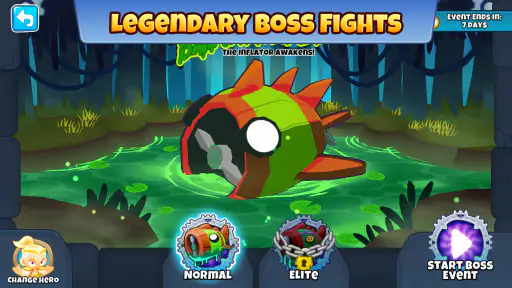
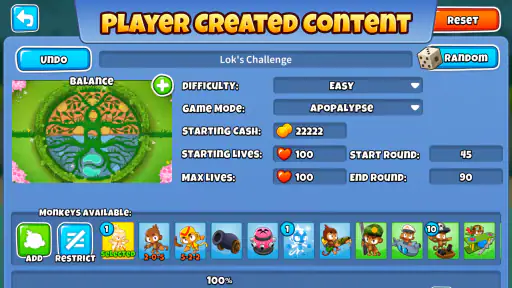
One of the standout features of the game is its variety of towers and heroes. Each tower type has its strengths and weaknesses, and the heroes come with unique abilities that can turn the tide of battle. This adds a layer of complexity that I find incredibly engaging. Plus, the game frequently updates, introducing new maps and challenges to keep things fresh.
There is a useful trade-off in that variety: it gives me room to develop my own approach, but it can also make an early run feel like a test of knowledge I have not built yet. I find it more productive to choose a small number of options and learn how they work together than to scatter placements across the map just because they are available. Once I know what my current setup cannot handle, I can experiment with a specific change and judge whether it helped.
Playing together, or keeping it solo
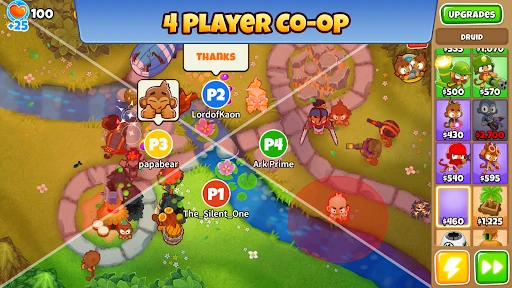
Another feature that I appreciate is the co-op mode. Playing with friends adds a whole new layer of fun and strategy. It’s always exciting to see how my tactics stack up against others and working together to overcome the balloon menace is incredibly satisfying.
Co-op makes the most sense when everyone is willing to coordinate rather than simply place towers wherever there is room. I find it helps to agree on who is covering which stretch of the route and to discuss upgrades before resources are spent. If I only have a short break and don’t want to arrange a shared session, solo play is the simpler choice; if I’m looking for a social strategy game, playing together gives the planning a different energy.
That distinction matters when choosing how to spend a spare moment. Solo play is easier to start on my own schedule, while co-op is more rewarding when friends can give the shared plan their attention. I would not pick a multiplayer session if I expected to be interrupted repeatedly; coordination is part of what makes it enjoyable, and interruptions can make it harder for everyone to follow the same strategy.
Price, age suitability, and everyday sessions
In terms of monetization, the game is fair. While there are in-app purchases available, they’re not necessary to enjoy the game. You can progress and unlock everything through regular gameplay, which is a big plus in my book. It’s refreshing to find a game where skill and strategy are prioritized over spending.
The game is a paid download at $6.99, with optional in-app purchases ranging from $0.99 to $49.99 per item. I’d think of that initial cost as the main decision: the optional purchases are not required for the core appeal, but players who dislike any extra spending prompts may still prefer a game with no in-app purchases at all. Its Everyone age rating makes it suitable for a broad audience, though the tactical choices will likely appeal most to people who enjoy thinking through a defense rather than tapping through a purely casual experience.
For an ordinary use case, I can see myself starting a map during a quiet part of the day, making a few placement decisions, then returning later when I have time for a more involved attempt. The key trade-off is that a run can demand sustained attention once the screen fills with action. It is not my first choice for a moment when I need to glance away constantly or play with sound and visuals competing for attention around me.
The game is also accessible to players of all ages. Its intuitive controls and helpful tutorials make it easy for anyone to pick up and play. Whether you’re a kid or an adult, Bloons TD 6 offers something for everyone.
For motor and sensory comfort, the straightforward tower-placement idea is easier to grasp than a game built around precise, rapid aiming, but it still expects timely choices as waves develop. I would not describe that as effortless for every player: quick decisions, moving effects and a crowded battlefield can create friction. Taking time to learn a map and favoring a manageable difficulty can make the experience less demanding; anyone who needs unusually large controls, reduced motion or specific accessibility settings should check those needs before buying rather than assume the game provides them.
How it compares with other strategy games
Compared with simpler tower defense games that mainly ask me to place a few defenses and wait, this one puts more weight on combinations, upgrades and adapting to each map. That extra depth is its strongest reason to choose it, but it also means it is less suited to someone who wants a very short, low-attention arcade round. If I want an uncomplicated pastime, I’d choose a lighter alternative; if I want to learn a map, refine a strategy and occasionally team up, this is the more rewarding fit.
It comes from ninja kiwi, and the game has a 4.8 average from around 377,000 ratings, with more than 5 million installs. It first arrived on June 13, 2018, and its current version is 45.3; it requires Android 7.0 or later. Those details make it a well-established choice, but I’d still check that a device meets the minimum requirement and consider whether a strategy game with repeated attempts suits the way I like to play.
For a practical comparison, I would choose a simpler tower defense game when I want to make a couple of quick placements and leave the outcome mostly to the game. Here, I get more satisfaction from studying how the route and my choices interact, but that asks me to stay involved. It is also a different kind of strategy experience from a game centered on direct unit control: the appeal here is shaping a defense and responding to the wave, not constantly steering characters around.
Where it fits—and where it does not
I’d point strategy fans toward this game if they enjoy testing different defenses and don’t mind learning through failure. It is also a good fit for friends who like to compare plans in co-op, or for someone who wants a colorful game with enough depth to revisit. I’d suggest skipping it if you mainly want an entirely hands-off game, dislike busy visual effects, or are not comfortable paying for a download before trying it. The same goes for players who want every session to be brief and predictable: the challenge is part of the appeal, but it can make a quick stop feel longer than expected.
It is also worth thinking about the context in which you will play. A quiet break at home gives me room to follow a wave and adjust a plan, while a crowded commute or a setting where I must keep looking away is less appealing for a demanding attempt. If I only have a few minutes, I can use that time to explore a map or make an early attempt, but I would not count on every run feeling neatly contained within a short break.
For families, the bright presentation and Everyone age rating make it approachable in subject matter, but the strategic layer may still be more interesting to some players than others. I would let a new player learn at their own pace rather than assume that the friendly look means every decision is immediately simple. If someone needs particular visual or motor accommodations, checking those needs before purchase is the sensible choice.
A measured recommendation
Overall, Bloons TD 6 is a delightful tower defense game that combines charming visuals, strategic gameplay, and engaging features to create an addictive experience. Whether you’re playing solo or teaming up with friends, you’ll find yourself immersed in this colorful world for hours on end. So, if you haven’t already, give it a try and see if you can handle the balloon-popping madness!
My recommendation is strongest for players who enjoy a puzzle-like rhythm: observe a problem, make a focused adjustment, and see what happens next. The appeal is not just the bright presentation but the satisfaction of improving a defense through judgment rather than luck alone. If a paid download and a busy late-game screen are acceptable trade-offs, it is an inviting strategy game to keep returning to. If low stimulation, very short sessions, or specific accessibility accommodations are essential, I would compare alternatives carefully before deciding.
Bloons TD 6 Frequently Asked Questions
Does Bloons TD 6 have a tutorial for new players?
Bloons TD 6 is a strategy game built around placing towers and responding to incoming waves, so new players can learn its main idea by trying different placements and upgrades as they play. Its layered mechanics leave room to develop more advanced strategies over time. If you are new to tower defense, expect some experimentation as you work out which choices suit each situation.
Can I save my progress and continue playing on another device?
If you plan to play Bloons TD 6 on more than one device, consider how you want to manage your progress before switching. The game is available on Android and iOS, and it is also available through Steam on Windows and macOS. Make sure you use the game’s available account or save options when setting up a device, so you can check whether your progress is available where you want to play.
How much space should I make available before downloading Bloons TD 6?
It is sensible to check your device’s available storage before installing Bloons TD 6, as games need room for installation and may require additional space to run comfortably. The game is a strategy title from ninja kiwi, and keeping some free space on your phone can also help avoid interruptions during installation or updates. If storage is tight, review other apps and files first.
What kind of gameplay should I expect from Bloons TD 6?
Bloons TD 6 is a strategic tower defense game where players aim to stop waves of balloons, or 'bloons', from reaching the end of a set path by strategically placing towers. Compared to its predecessors, Bloons TD 6 offers 3D graphics, new hero characters, and a variety of new towers and upgrades, adding more depth and complexity to the gameplay.
What is Bloons TD 6 and how does it differ from previous versions?
Bloons TD 6 is a strategic tower defense game where players aim to stop waves of balloons, or 'bloons', from reaching the end of a set path by strategically placing towers. Compared to its predecessors, Bloons TD 6 offers 3D graphics, new hero characters, and a variety of new towers and upgrades, adding more depth and complexity to the gameplay.
Pros
- Challenging strategic gameplay
- Vibrant and colorful graphics
- Regular updates and new content
- Wide variety of towers and upgrades
- Offline play available
Cons
- In-app purchases can be pricey
- Some levels feel repetitive
- Can be complex for new players
- Requires significant time investment
- Occasional connectivity issues
- Category
- Strategy
- Version
- 45.3