Bloons TD 5
- 31.33K
- 4.6
- Installs
- 1.00M
- Price
- $2.99

Screenshots
Analysis by Reviewed
The first thing I like about Bloons TD 5 is how quickly it turns a simple idea into a decision-making game. I place defenses along the route, watch the bloons approach, and find out whether my plan can handle the next wave. That clear action-and-response rhythm makes it easy to understand what I’m doing, while the rising pressure gives each round a reason to keep paying attention.
Small choices shape each defense
At the start, the challenge is not just choosing a tower I like; it is deciding where it can do the most useful work. A position with a long view of the path can help a defense contribute for longer, while a cluster of towers may leave another stretch poorly covered. I find it useful to pause before spending, look at the shape of the route, and build a plan rather than scatter defenses wherever there is room.
That makes this a good fit for players who enjoy learning through consequences. When a wave gets through, I can reconsider placement or upgrades on the next attempt instead of treating the setback as a mystery. Bloons TD 5 is less suitable if you want a game that asks for no planning at all: even its cheerful look sits on top of a strategy game that expects you to adjust.
The rhythm of action, feedback, and another try
During a round, I am constantly reading the result of earlier choices. A defense that seemed strong may not cover every situation, and an upgrade can change how I think about the rest of my setup. The feedback is immediate enough to make experimentation satisfying: I can see the effect of a decision in the flow of play, then use that result to shape what I do next.
One practical approach is to avoid upgrading every tower as soon as I can. I first check whether the current weak spot is range, coverage, or simply too few defenses in the right place. That small habit helps me spend with a purpose and makes a difficult run feel like a puzzle rather than a scramble. The trade-off is that players who prefer to watch without intervening may find the steady need to assess and respond more demanding than relaxing.
Monkey Business: Gameplay Overview
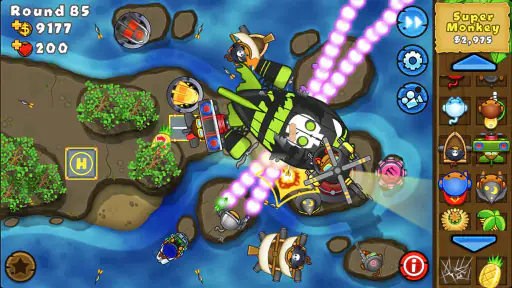
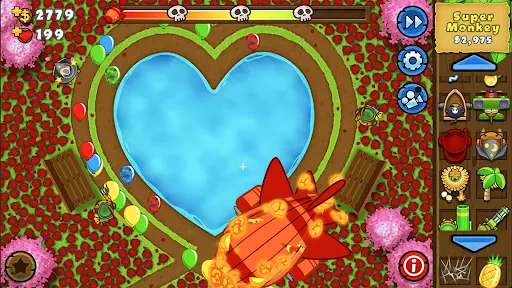
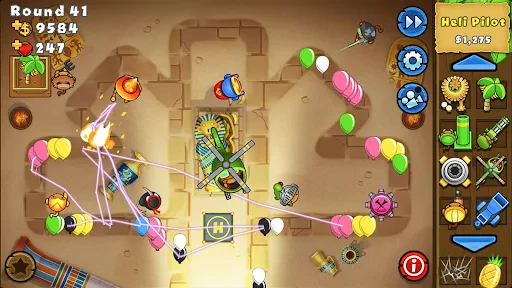
At its core, Bloons TD 5 is about defending your territory from waves of colorful balloons—yes, balloons!—using an array of monkey towers and other quirky defenses. The concept sounds simple, but don’t let that fool you. The game ramps up in difficulty pretty quickly, requiring you to think on your feet and strategize your tower placements.
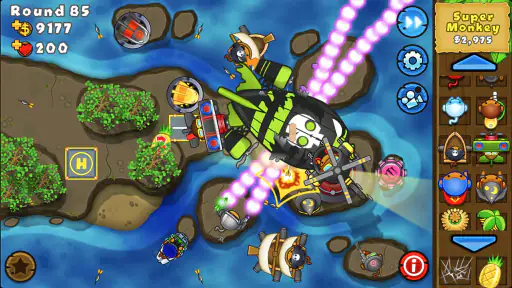
What keeps me coming back is the sheer variety of towers and upgrades available. From dart-throwing monkeys to powerful super monkeys with laser blasts, each tower has a unique role to play. You can upgrade them to suit your playstyle, whether that’s focusing on strength, speed, or range. Trust me, seeing your defenses obliterate waves of bloons is oddly satisfying.
More From Our News Desk

Weather by Xiaomi Review: Clear at a Glance, Less Clear Up Close

X Under Pressure: Can It Recover When Posting Goes Wrong?

Clash of Clans Is Won Between the Battles

Android Auto Makes the Case for Quieter Car Software

MobiOffice: Transforming Mobile Productivity with Seamless Integration

EA SPORTS FC™ Mobile Soccer: Redefining Mobile Sports Gaming
Graphics and Sound: A Feast for the Senses
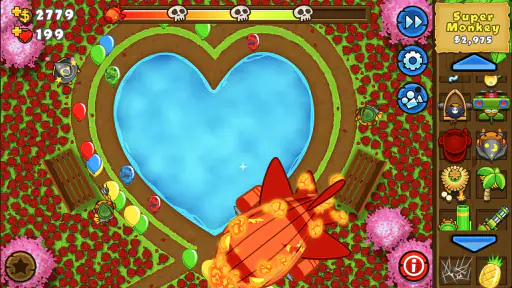
The graphics in Bloons TD 5 are bright, colorful, and downright charming. Each level has its own theme, ranging from serene beaches to bustling cities, making the game visually engaging. The animations are smooth, and the attention to detail is impressive for a mobile game. Plus, the sound effects and music are catchy enough that you might find yourself humming along as you play.
That bright presentation also makes it easy to follow the action at a glance, which matters when several defenses are firing and I am deciding where the next investment should go. The cheerful style softens the pressure without removing it; when a plan fails, I still have to work out what went wrong. I would not choose it for a quiet, story-led experience, but I do appreciate how clearly the visual feedback supports its strategy.
Reading the route before spending
One detail I pay attention to is how a tower’s position relates to the bends and longer stretches of the track. A defense placed where it can cover more of the route may contribute across several moments, while one near a brief section can be useful for a different reason. I try to judge the whole path before investing, then use the first part of a run to notice where the actual pressure builds. That is more reliable than copying the same opening setup everywhere.
This also gives me a simple way to learn without turning each attempt into a full redesign. If a gap is consistently the problem, I change coverage there first; if the route is covered but the response feels weak, I consider whether an upgrade would help more than adding another tower. The distinction matters because spending in the wrong place can make a defense look busy without fixing its real weakness.
Multiplayer Madness and Endless Fun
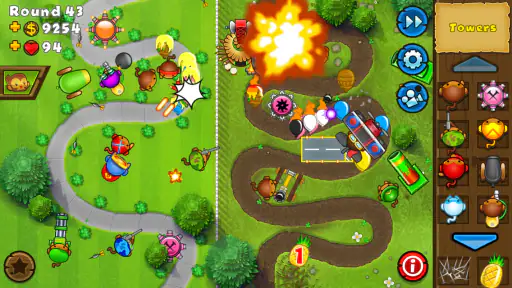
If you’re like me and love a bit of competition, you’ll appreciate the multiplayer modes. You can team up with friends or challenge them to see who has the superior strategy. The game also offers a co-op mode, which is perfect for those moments when you want to collaborate rather than compete.
For a shared session, co-op changes the feel of the game: instead of privately testing a setup, I can talk through a choice with a friend and see how our approaches fit together. That makes it appealing when I want a social strategy game rather than a solitary puzzle. If I am choosing mainly for competitive matchmaking or a large online community, though, I would look for a game built specifically around those priorities rather than assume this one is a dedicated esports-style experience.
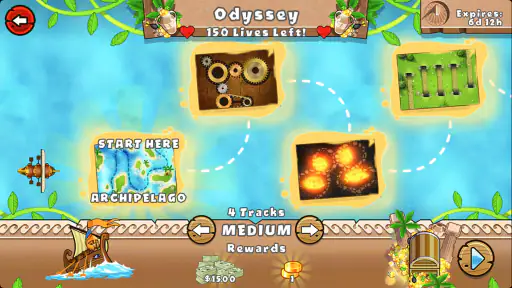
And let’s not forget about the endless mode. If you’re up for a challenge, this mode will test your limits as you face an infinite number of bloons. It’s a great way to hone your skills and see just how far your strategies can take you.
A session that fits between other plans
A realistic way I use a tower-defense game like this is to start a run when I have a little free time, then decide whether I want to continue based on how much attention the next stretch needs. It works better for a focused break than for playing while distracted: if I am checking messages every few seconds, I can miss the moment when my defense needs a change. The appeal is that each wave gives me a natural point to reassess, so I can play with intention instead of treating the game as background noise.
Endless play is the opposite kind of commitment. It suits me when I want to test how well a setup holds together, but it is not the mode I would choose when I need a neat stopping point. The useful trade-off is clear: shorter, goal-focused play is easier to fit into a busy day, while pushing a run further gives more room to experiment. I would not promise that every session will be brief, because the urge to improve a struggling defense can make “one more try” tempting.
How it differs from other strategy games
Many mobile strategy games ask me to expand a base, manage resources across a larger map, or keep up with a continuing competition. This one is more contained: the immediate problem is a route, the incoming waves, and the defense I have arranged around them. That focus means I can understand why a run is going well or badly without juggling a long list of separate systems. It is a useful alternative when I want tactical decisions without signing up for a sprawling management game.
The narrower scope has a cost. Players who want long-term world building, a story to follow, or persistent rivalry may find the tower-defense format too self-contained. I would also choose a more relaxed puzzle game if I wanted to make a move and then leave it alone, because the changing pressure here rewards staying attentive. The best comparison is not that it replaces every kind of strategy game, but that it offers a more immediate, track-focused challenge.
What it costs and who should choose it
This is a paid strategy game, priced at $2.99, with optional in-app purchases ranging from $0.99 to $48.99 per item. I would think of the initial purchase as the main decision and treat extras as optional rather than necessary to enjoy the core tower-defense loop. If you prefer to avoid optional spending altogether, check the purchase controls on your device before handing it to a child, even though the game is rated Everyone.
It has a 4.6 average from around 205,000 ratings, with more than 1 million installs, which suggests a broad audience has found its mix of accessible presentation and planning appealing. Ninja Kiwi has kept a long-running strategy series in circulation: the game first released on December 14, 2012, and its current version is 4.5. It requires Android 5.0 or later. Those details make it an approachable option for compatible devices, though I would still check that my phone has enough room and runs smoothly before buying any game I expect to keep installed.
I would recommend it most to someone who likes to make a plan, watch that plan meet a problem, and adjust without needing a complicated interface or a story to explain the stakes. It can also work for a parent and child who enjoy talking through choices together, though I would keep an eye on the optional purchase controls. Players who mainly want passive entertainment, a narrative campaign, or a broad competitive scene should probably look elsewhere. The cheerful art makes it approachable, but the strategy underneath still asks for attention.
Compared with many strategy games that emphasize building a base, managing a broader economy, or competing across long sessions, this one keeps the focus on defending a route with towers and upgrades. That narrower loop is a strength when I want a readable tactical challenge, but a limitation if I am looking for a sprawling campaign, a strong narrative, or a game whose main appeal is persistent online competition. I would choose it for compact rounds and careful placement, not for a deep management simulation.
Final Thoughts: Worth the Download?
In a sea of mobile games, Bloons TD 5 stands out with its unique charm and engaging gameplay. Whether you’re a seasoned tower defense player or a newcomer looking for something fun to pass the time, this game is sure to entertain. The combination of strategic depth, colorful graphics, and addictive gameplay makes it a must-try.
So, what are you waiting for? Grab your phone, download Bloons TD 5, and start popping those bloons! You won’t regret it.
Why the loop keeps working for me
The satisfying part is not simply watching bloons disappear; it is seeing a choice pay off, spotting where the next weakness might appear, and deciding whether I can improve the setup. A failed attempt gives me a reason to reset my approach, while a successful stretch invites me to see how far the same thinking can go. That action, feedback, reward, and fresh attempt is the real hook.
My recommendation is straightforward: if you enjoy tactical choices that are easy to read but still require attention, this is a strong pick from ninja kiwi. If you want a hands-off game, a story-first adventure, or a broad strategy sandbox, I would pick something else. For me, the best reason to return is that each run offers a small, satisfying problem to solve—and enough room to try a smarter answer next time.
Bloons TD 5 Frequently Asked Questions
What kind of game is Bloons TD 5?
Bloons TD 5 is a strategy game built around the ongoing battle between monkeys and bloons. Its tower-defense gameplay centers on choosing where to place defenses and how to respond as waves approach. If you enjoy planning, adjusting your approach, and trying to hold a route against increasingly demanding attacks, its core idea is easy to understand while leaving room for tactical decisions.
Who developed Bloons TD 5?
Bloons TD 5 is developed by ninja kiwi, the studio behind this entry in the Monkeys vs. Bloons series. The game’s focus is strategic tower defense, with players preparing defenses to stop bloons from making it through a level. Knowing the developer and the game’s central premise can help you decide whether this familiar, cartoon-styled strategy experience matches what you want to play.
Is Bloons TD 5 compatible with my device?
Bloons TD 5 is available for Android and iOS, and the Android version requires Android 5.0 or later. Before downloading, check that your device meets the operating-system requirement and has enough available storage for the game. The title is a strategy game from ninja kiwi, built around the ongoing battle between monkeys and bloons.
How much does Bloons TD 5 cost, and are there in-app purchases?
Bloons TD 5 is a paid game, priced at $2.99, rather than a free download. It also offers optional in-app purchases, with items priced from $0.99 to $48.99 each. That means the initial purchase gets you the game, while additional spending is a separate choice. If you prefer to avoid extra purchases, review your device’s purchase settings before playing.
What is the main objective of Bloons TD 5?
In Bloons TD 5, the primary objective is to prevent balloons, known as bloons, from reaching the end of a designated pathway. Players achieve this by strategically placing and upgrading various types of towers and heroes along the path to pop the bloons before they reach the exit. Each level presents new challenges and requires strategic planning to succeed.
Pros
- Addictive tower defense gameplay.
- Variety of towers and upgrades.
- Multiplayer co-op mode available.
- Regular updates and new content.
- Challenging levels and modes.
Cons
- In-app purchases can be pricey.
- Requires internet for some features.
- Repetitive gameplay over time.
- Graphics are somewhat dated.
- Can be challenging for beginners.
- Category
- Strategy
- Version
- 4.5