State.io — Conquer the World
- 18.48K
- 4.1
- Installs
- 50.00M
- Price
- Free

Screenshots

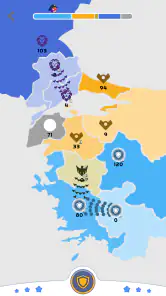
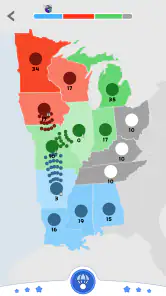





Analysis by Reviewed
When I want a strategy game that gets to the decisions quickly, State.io — Conquer the World is an easy one to reach for. Its territory-grabbing setup makes each match feel like a small planning problem: where to send your forces, what to leave guarded, and when to stop expanding. I find that focus more appealing than games that ask me to manage a long list of resources before anything happens.
Reading the map before committing
The useful question is not simply which neighboring territory I can attack, but whether taking it leaves me exposed elsewhere. Sending forces in several directions may look productive, yet spreading too thin can make a promising lead fragile. I try to make one move with a purpose, then reassess the board instead of treating every open border as an invitation.
That approach suits short breaks because the controls are straightforward, but it also gives a match a modest decision horizon: I can plan a few moves ahead without needing to memorize a complicated rulebook. If you enjoy thinking in terms of position and timing, this is more satisfying than tapping targets at random. If you want deep economic systems, elaborate unit customization, or a campaign built around detailed narrative, you may prefer a larger strategy game.
Who benefits from the compact format?
I think this game is at its best for someone who likes a clear tactical puzzle but does not want to spend the first part of a session learning a dense collection of rules. The core appeal is deciding how to distribute attention across a map, not building a long-term empire through menus. That makes it approachable for a newer strategy player, while still giving experienced players room to refine their timing and judgement.
It is also a reasonable choice for a brief, focused pause in the day. If I have a few spare minutes and can give the screen my attention, a match offers a more active alternative to scrolling through feeds. I would not launch it while carrying groceries, crossing a busy street, or trying to follow a conversation; quick controls do not mean that every moment is a good moment to play. The game asks for enough attention to notice a threat before a small opening becomes a problem.
Gameplay and Features
The premise of State.io — Conquer the World is simple yet engaging. It’s all about strategy — think Risk, but on your phone. You start with a single state or country, and your mission is to expand your territory by defeating other players. The game mechanics are straightforward, allowing you to drag and drop your armies to attack neighboring territories. It’s a game of wits where you must balance offense and defense to outsmart your opponents.
The game offers a plethora of levels that gradually increase in difficulty, ensuring you’re constantly challenged. I found myself quickly addicted, trying to conquer just one more territory before putting my phone down. What makes this game stand out is its minimalist design and easy-to-understand interface, which means you spend less time figuring things out and more time strategizing your next move.
More From Our News Desk

Weather by Xiaomi Review: Clear at a Glance, Less Clear Up Close

X Under Pressure: Can It Recover When Posting Goes Wrong?

Clash of Clans Is Won Between the Battles

Android Auto Makes the Case for Quieter Car Software

MobiOffice: Transforming Mobile Productivity with Seamless Integration

EA SPORTS FC™ Mobile Soccer: Redefining Mobile Sports Gaming
Choosing your risks
I get the best results when I treat an attack as a trade-off rather than a guaranteed gain. A quick push can create room to grow, but committing too much at once can leave other positions weak. When the board feels crowded, patience is often more useful than grabbing the closest territory. I also avoid making a chain of hurried moves just because the interface makes them easy; pausing to check which front matters most can prevent a small advantage from turning into a costly distraction.
For an everyday example, I might start a match while waiting for a kettle to boil. I can make a few deliberate decisions, put the phone down if needed, and return to the broader question of whether my position is improving. That makes the game convenient for spare moments, though it is less suitable when I need to stop instantly and cannot give a match any attention. The quick controls lower the barrier to entry, not the need to think.
Spend attention as carefully as forces
A useful habit is to check the vulnerable edges before selecting a new target. The tempting move is often the one that promises immediate expansion, but an exposed border can matter more than a nearby territory that looks easy to take. I try to ask two questions before committing: what does this gain, and what becomes harder to defend afterward? That is a simple way to avoid mistaking activity for progress.
When I fall behind, I find it more productive to narrow my goal than to make a desperate push everywhere. A smaller, defensible position can give me time to read the situation and choose a better opening. This is not a guaranteed comeback formula; it is a way to keep a poor position from getting worse through rushed decisions. The game’s compact structure makes each choice legible enough that I can usually identify what I was trying to do, even when the move fails.
Visuals and Design
While the graphics aren't the most sophisticated, they are charmingly simple. The clean design keeps you focused on the task at hand: total domination. I appreciate how the developers have kept it clutter-free, making it accessible for players of all ages. The animations are smooth, and the colors are pleasing, creating an overall relaxing experience even amid intense battles.
The uncluttered presentation is practical, not just decorative: I can read the territorial situation without learning a dense interface first. The trade-off is that players who want dramatic battle effects or detailed maps may find the look plain. For me, the pared-back style works when the main attraction is the decision itself, but it does not provide the sensory spectacle of larger, more elaborate strategy titles.
Multiplayer Experience
One of the highlights of State.io is its multiplayer mode. Competing against real-life players from around the world elevates the excitement to another level. The thrill of outsmarting a human opponent is immensely satisfying. Plus, the game’s matchmaking system is pretty decent, ensuring you’re paired with opponents of similar skill levels, which keeps the competition fair and enjoyable.
Human opposition changes what I pay attention to: a move that seems sensible against a predictable rival may invite a counterattack from someone watching the same borders. I try not to assume that a quiet opponent has stopped being a threat, and I keep enough flexibility to respond rather than spending every available force on one ambitious advance. That makes multiplayer a better fit for players who enjoy adapting under pressure than for anyone seeking a purely relaxed, predictable routine.
Strategy games often divide between sprawling, slower experiences and quick territory contests. State.io sits closer to the latter. Compared with a traditional board-game adaptation, it asks less of me in setup and rule learning, while giving up some of the deliberate pace and richer long-term planning that make those games rewarding. I would choose it for a brief tactical challenge; I would choose a more involved strategy game when I want a substantial session with more systems to master.
However, be prepared for some intense battles. The multiplayer aspect requires quick thinking and adaptability, as players often come up with unpredictable strategies. Trust me, winning a multiplayer match feels like a real achievement!
Learning to adjust mid-match
Adaptation here is less about memorizing an elaborate build and more about noticing when the board has changed. If an opponent threatens a position I assumed was safe, I need to revise my plan rather than continue expanding along the route I chose at the start. I find it helps to set a short-term priority, then revisit it after each meaningful exchange. That keeps a plan flexible without turning every decision into hesitation.
For anyone wondering whether the game rewards a fixed winning tactic, I would not approach it that way. The useful skill is reading the situation and changing course when an opponent’s actions make the original plan risky. I also try to separate a bad outcome from a bad decision: a sensible move can still fail, but repeatedly ignoring exposed territory is a habit I can correct. That distinction makes losses less frustrating and gives each match something to teach.
Who will enjoy the trade-offs?
I would recommend this to someone who likes quick territorial decisions, simple controls, and the tension of deciding whether to attack or protect a lead. It can also be a good first step for a younger player curious about strategy: it is rated for Everyone, and the interface does not bury the basic action under complicated menus. Players who prefer a thoughtful contest over flashy graphics may find its simplicity a strength.
I would skip it if you dislike competitive pressure, want every match to unfold at a slow, fully controlled pace, or need extensive strategic systems to stay interested. Even a clean presentation cannot make a fast-moving contest relaxing for everyone. If you are unsure, the game is free to start, while optional in-app purchases range from about fifty cents to around twenty-five dollars per item; I would decide whether I enjoy the core loop before spending anything.
What to expect from a first session
A first session is best treated as a chance to learn how the map communicates danger, rather than as a test of whether you can win immediately. I would start by making a small number of purposeful moves and checking what each one leaves exposed. Because the basic interaction is easy to grasp, the more useful learning question is not “which button do I press?” but “what changed after that move?” That focus helps the game feel like strategy instead of hurried tapping.
If you are deciding between this and a slower board-style strategy game, the choice comes down to the kind of attention you want to give. State.io is more suited to direct territorial decisions and brisk adaptation; a deeper alternative is preferable if you want a longer planning horizon, more systems to manage, or a session that rewards careful setup over rapid reactions. Neither format is automatically better. I reach for this one when I want a compact contest, not when I am in the mood to study a large campaign.
Depth, access, and staying power
Over time, the challenge is less about learning the drag-and-drop action than improving the decisions around it. A practical habit is to scan the whole map before sending forces, choose a priority, and check again after the move rather than issuing several attacks on autopilot. That small pause helps me notice when expansion is creating a weak edge. It is also a useful way to make losses informative: instead of blaming a single unlucky clash, I can ask whether I overcommitted or ignored another front.
CASUAL AZUR GAMES released the strategy game on November 27, 2020, and its current version is 1.12.6. It has an average rating of 4.1 from around 596,000 ratings, with about 18,000 written reviews and over 50 million installs. It runs on Android 6.0 or later, costs nothing to download, and is rated for Everyone. Those figures suggest a widely played, accessible title, but they do not decide whether its quick, competitive style suits you; that comes down to how much you enjoy repeated tactical choices.
One practical question is whether it works as a casual game or demands full attention. I see it as suitable for short sessions when I can keep an eye on a match, not as something to start during a task that needs uninterrupted focus. Another is whether spending is necessary: the free entry point lets you judge the core experience first, and purchases are optional. If your phone meets the Android minimum, you can try it without committing to a paid download; iOS players should check their device’s store page for compatibility.
Where it fits in a strategy rotation
I would not expect this to replace every kind of strategy game on my phone. It fills a narrower role: a map-based contest where I can concentrate on territory, exposure, and timing without first organizing a large economy or learning a sprawling set of systems. If I want a quieter puzzle, a turn-based game with more time between decisions may suit me better. If I want a long campaign with persistent development, a grand-strategy title is the more natural choice.
That contrast also helps set expectations about replay value. The appeal is in facing a changing board and making better choices, rather than unlocking a complicated personal playstyle through extensive customization. Players who enjoy improving their judgement through repeated tactical situations can get mileage from that loop. Players who need a steady stream of new systems or a detailed story to stay engaged may find the format too narrow after the initial novelty fades.
Final Thoughts
If you’re into strategy games and enjoy a bit of competitive play, State.io — Conquer the World is definitely worth a try. It’s easy to pick up, hard to master, and incredibly rewarding. Whether you’re looking to kill some time or dive into a more serious strategic conquest, this game has got you covered. So, are you ready to conquer the world? Give it a go and let the domination begin!
My recommendation is to approach it as a compact tactical game, not a substitute for a deep grand-strategy campaign. I like that I can understand the immediate goal quickly, then improve by thinking more carefully about exposure and timing. The main limitation is also the source of its appeal: the clean, brisk format leaves little room for the elaborate systems some strategy fans want. If that trade-off sounds right, I think it is worth trying; if you prefer slower planning and broader control, a more complex alternative will be a better fit.
State.io — Conquer the World Frequently Asked Questions
Is State.io — Conquer the World easy to learn for a new player?
The central idea is simple to pick up: direct armies to capture states and decide how to defend the territory you hold. The challenge comes from making those choices quickly and adapting as the map changes. That makes State.io approachable for someone new to mobile strategy games while still giving each clash a tactical element.
Can I play State.io — Conquer the World in short sessions?
State.io is built around quick decisions and clashes over territory, so its basic premise suits players looking for a focused strategy game on a mobile device. You can concentrate on sending armies, choosing targets, and protecting your states rather than learning a complicated set of rules first. How long a particular session lasts can vary with the game.
Is State.io — Conquer the World suitable for children?
State.io has an Everyone content rating, and its theme centers on strategic competition to capture territories. Families may still want to consider whether a war-game setting and competitive play suit a particular child. The game is about directing armies and controlling a map, rather than requiring players to engage with a complex strategy system.
What kind of strategy does State.io — Conquer the World require?
State.io is a strategy game built around quick decisions and territorial expansion. You send armies to capture states while trying to protect the ground you already control, so timing and choosing where to direct your forces matter. Its straightforward premise makes it easy to understand, while the push and pull of attacking and defending gives each clash a tactical focus.
What is State.io — Conquer the World about?
State.io — Conquer the World is a strategic mobile game where players aim to conquer territories by deploying their armies strategically. The game's objective is to dominate the entire map by capturing enemy territories while defending your own. It offers a mix of strategic planning and tactical execution, making it engaging for those who enjoy competitive and strategy games.
Pros
- Addictive strategic gameplay
- Simple
- intuitive controls
- Multiplayer mode is engaging
- Regular updates with new content
- Great for quick sessions
Cons
- Can become repetitive
- In-app purchases are pricey
- Ads can be intrusive
- Limited offline play
- Requires internet connection
- Category
- Strategy
- Version
- 1.12.6