Stick War: Legacy
- 64.97K
- 4.7
- Installs
- 100.00M
- Price
- Free

Screenshots
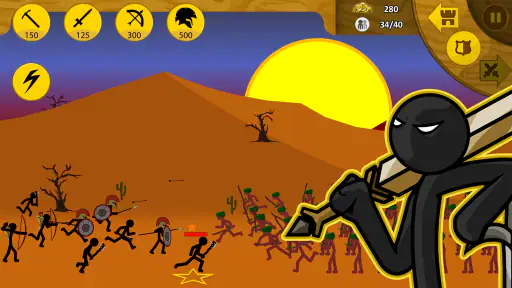
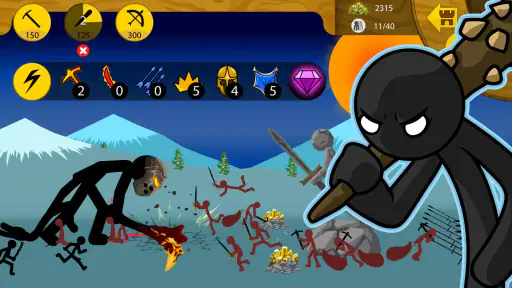
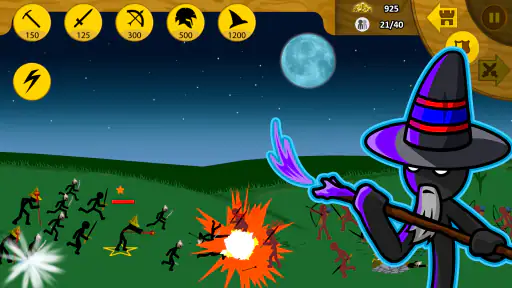
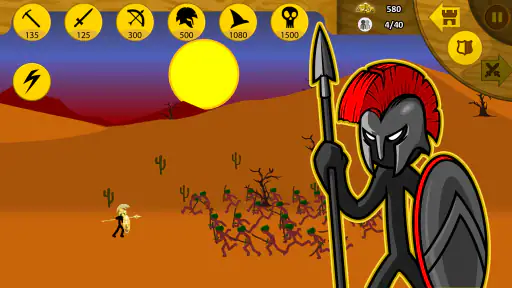
Analysis by Reviewed
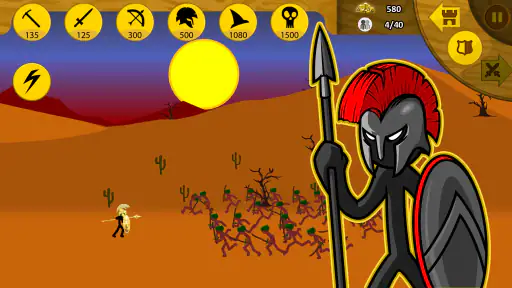
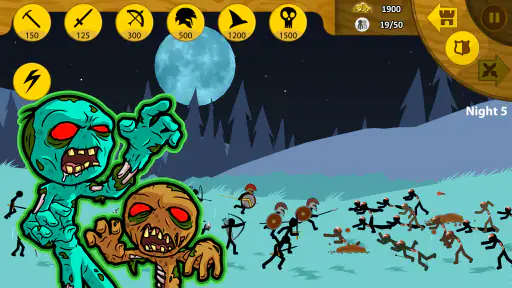
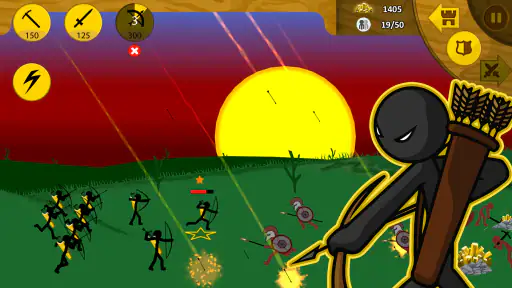
My first-week appeal comes from how quickly this strategy game gives me something to think about: build an army, decide how to spend your gold, and respond as the battle develops. The simple stick-figure presentation makes the action easy to read, while taking direct control of a fighter adds a more hands-on option than watching units clash. That mix is a big part of why Stick War: Legacy caught my attention.
A quick session still asks for a plan
On an ordinary break, I can focus on the immediate problem of funding and positioning my force rather than learn a complicated interface first. The basic unit choices already create trade-offs: archers can support a push from a distance, while sword units put pressure on the front. A mage adds another kind of threat, so the useful question is not simply which unit is strongest, but what the current fight calls for.
Direct control is worth treating as a tactical tool, not just a novelty. Taking over one unit can help me make a personal contribution at a key moment, but it also means I am no longer giving my full attention to every part of the battlefield. I get better results when I decide in advance whether I need to manage the army broadly or intervene with a single fighter. That small choice gives battles a satisfying rhythm.
Articles Related to Stick War: Legacy
Why it can last beyond the first week
After the initial appeal wears off, the game’s value depends on whether I enjoy adjusting my approach. It is a better fit for someone who likes revisiting a familiar tactical problem than for someone who needs a steady stream of new systems to stay interested. The pleasure is in noticing why a push failed, changing the balance of the army, and trying again with a clearer plan.
That makes it a useful choice when I have a little time and want an active game rather than a long story to follow. It also suits players who like strategy but find sprawling management games too demanding for a short session. Compared with many mobile strategy games built around broad progression or persistent competition, this one puts the emphasis on the battle itself and on immediate decisions. If I want a deeper simulation or a social competition to return to, I would choose something else.
Maintenance, friction, and fatigue
There is no complicated routine I need to keep up with to understand the core appeal: I can come back and focus on units, resources, and the next encounter. That low mental overhead is a genuine strength. Still, the same battle-focused loop can begin to feel repetitive if I play for long stretches, especially when I am not in the mood to rethink my tactics. I would use it in short visits rather than expect every session to feel dramatically different.
For a practical approach, I would avoid spending gold automatically on the unit I like most. First check what is actually stopping your attack: a weak front line, insufficient ranged support, or poor timing. Then adjust one thing at a time. That makes it easier to learn from a loss instead of changing the whole army and having no idea which decision helped. If you prefer passive play, the direct-control option may also feel like extra work rather than a bonus.
You May Like

MobiOffice: Transforming Mobile Productivity with Seamless Integration

EA SPORTS FC™ Mobile Soccer: Redefining Mobile Sports Gaming

How Microsoft OneDrive Became a Mobile Productivity Giant

How Google Translate Breaks Language Barriers Effortlessly

Why Google Sheets Is the Ultimate Mobile Productivity Tool

Unveiling the Dynamic World of My Talking Tom Friends
What the battles ask of you
The game’s small decisions are most satisfying when I treat each battle as a question rather than a checklist. If my army keeps getting pushed back, adding more of the same unit may not solve the problem. I try to identify whether the front is collapsing, my ranged support is exposed, or I am committing resources too slowly. That habit turns a defeat into useful feedback without requiring a long planning session.
Making each attempt more informative
A helpful way to experiment is to change one part of the plan at a time. I might keep my opening approach but alter the balance between close-range fighters and archers, then see whether the result changes. If I also change my spending, timing, and direct-control choices in the same attempt, it becomes difficult to tell what mattered. This is a simple discipline, but it helps the game feel more like strategy and less like guessing.
Direct control also has an opportunity cost that is easy to overlook. Taking charge of a fighter can make a crucial encounter feel immediate, but the rest of the army still needs attention. I use it when one intervention can influence the fight, rather than switching control simply because the option is there. Players who enjoy focusing on one character may prefer that personal involvement; players who like surveying the whole battle may be happier issuing broader decisions.
Where it fits among strategy games
Compared with a turn-based tactics game, Stick War: Legacy gives me less time to pause and weigh every move; the appeal is responding as troops meet and the battle unfolds. Compared with a large kingdom or city-management game, it keeps the focus tighter, with army choices and immediate combat taking priority over maintaining a wide network of systems. That makes it easier to approach during a short break, though it may feel limited to someone who wants a campaign built around diplomacy, extensive planning, or a detailed story.
It is also different from strategy games whose main attraction is competing socially over a long period. Here, the useful question is whether I enjoy the tactical encounter in front of me. I would choose a persistent competitive game instead if I wanted regular interaction with other players to be the reason I returned. The focused design is a real advantage for quick play, but it does not replace those other kinds of strategy experience.
Fits for short, ordinary gaps in the day
A realistic use case is a break between chores or a quiet stretch after dinner. I can start with a clear goal—try a different unit balance, or see whether taking direct control changes a difficult push—and stop when I have answered it. That gives the session a natural endpoint. If I open the game without a small goal and keep repeating the same approach, the battles are more likely to blur together.
The game is especially suitable for someone who wants active decisions without committing to a sprawling management routine. It can also serve as an approachable step into strategy for a player who is curious about unit roles but put off by dense menus. On the other hand, if I want a relaxed background game, a rich narrative, or realistic military detail, I would look elsewhere. Its clean visual style helps me read the action, but it is intentionally not a substitute for a simulation or story-led adventure.
Unpacking the presentation
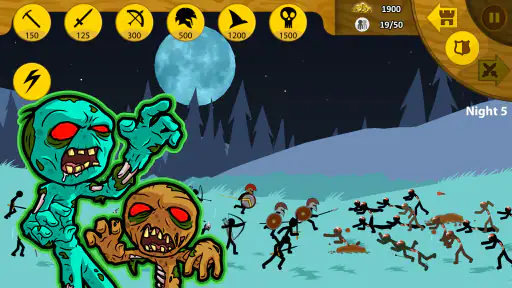
The stick-figure look is more than a visual novelty: it keeps the battlefield legible, so I can follow the main clash without having to parse elaborate character designs. I find that useful when several unit types are involved. The trade-off is that players who value detailed environments or expressive character animation may find the presentation spare. It serves clarity first, and that choice suits the tactical focus better than a more elaborate style might.
The sound adds weight to the fighting and helps mark the mood of a clash, while the simple visuals keep attention on what the units are doing. I would still keep the audio as a complement rather than the main reason to play. The lasting draw is deciding how to use the army; presentation supports that loop, but it cannot by itself prevent familiar encounters from feeling familiar.
Who should give it a chance
I would recommend it to players who enjoy making small decisions under pressure and seeing those choices play out on screen. It is a sensible pick for someone curious about strategy games but not ready for a dense interface full of menus. The Teen content rating gives families a useful age cue, though parents should still decide whether its battle-focused action suits their player.
I would skip it if my main reason for playing is a rich narrative, elaborate character development, or a realistic military simulation. The stick-figure style is deliberately spare, and the central appeal is command and combat rather than detailed world-building. It is also not my first choice when I want a relaxed game that asks almost nothing of me; the resource decisions and timing are part of the fun, but they do require attention.
Cost, version, and sensible expectations
The game is free to download, with in-app purchases ranging from $1.99 to $104.99 per item. I would start without spending and see whether the core battles hold my interest; paying is not a requirement for deciding whether this style of strategy suits me. It is made by Max Games Studios, has a 4.7 average from around 2.9 million ratings, and has passed 100 million installs, which suggests it has reached a broad mobile audience without telling me whether its particular loop will fit my taste.
It was released on January 31, 2016, and the current version is 2023.5.907, with Android 7.0 as the minimum operating system. Those details matter if I am checking an older device or deciding whether to install a game with a long history. I would also keep expectations grounded: a version number and years of availability do not make every session feel fresh, so I would judge it by whether I still enjoy tuning my army after the novelty fades.
The verdict after the novelty
For me, the strongest reason to keep it installed is that it makes a short stretch of spare time feel purposeful. A realistic routine might be opening it after dinner, playing until I have tried a different unit mix, then stopping before familiar battles begin to blur together. That is a healthier fit than treating every spare minute as a reason to grind through more of the same.
As a strategy game, it sits closer to direct battlefield command than to a broad empire-management alternative: I spend my attention on gold, troop choices, and tactical intervention, not on maintaining a sprawling set of systems. That focus is both its advantage and its limit. I can return without relearning a complicated structure, but players who need changing objectives or a strong social layer may find another strategy game more rewarding over months.
My lasting-space test is simple: after the first burst of curiosity, do I still enjoy asking what went wrong and making one deliberate adjustment? If yes, this is an easy game to keep nearby and revisit in short sessions. If I only want the novelty of commanding stick figures, or I tire quickly of repeating tactical decisions, I would uninstall without feeling I had missed a deeper experience. For me, its lasting value comes from focused battles that reward attention, not from endless variety.
Stick War: Legacy Frequently Asked Questions
Is Stick War: Legacy suitable for someone new to strategy games?
It can be approachable for newcomers: the game revolves around gathering resources, choosing units, and deciding when to attack or defend. Its controls are described as easy to understand, while the ability to control units individually gives experienced players room to make more detailed tactical choices. Expect to learn through play as you figure out how different forces work together.
What is the main objective during battles?
The central aim is to destroy the enemy statue while protecting your own. To do that, you gather resources, build units, and respond to the opposing army rather than relying on one fixed approach. The available forces include Sword, Spear, Archer, and Mage units, so choosing how to build and deploy your army is a key part of each battle.
Who developed Stick War: Legacy, and what kind of game is it?
Stick War: Legacy is a strategy game developed by Max Games Studios. It centers on commanding stick-figure forces, gathering resources, and making decisions about how to build and deploy an army. The store summary invites players to learn the way of the Sword, Spear, Archer, and Mage, with the aim of saving Inamorta.
What devices can run Stick War: Legacy?
Stick War: Legacy is available for Android and iOS devices. On Android, it requires version 7.0 or later, so it is worth checking your device’s operating system before downloading. The game is free to download, and its content rating is Teen. If you are choosing a device for a younger player, consider that rating along with your family’s preferences.
What is Stick War: Legacy?
Stick War: Legacy is a popular strategy game where players command an army of stick figures in a war against other nations. The goal is to destroy the enemy statue while defending your own. Players mine resources, build units, and strategize to conquer various territories. It's available on both Android and iOS platforms.
Pros
- Engaging gameplay with strategic depth.
- Variety of units and upgrades available.
- Smooth and intuitive controls.
- Offline mode is available.
- Frequent updates and new features.
Cons
- In-app purchases can be expensive.
- Graphics can seem outdated.
- Some levels are quite challenging.
- Advertisements can be intrusive.
- Limited multiplayer options.

- Category
- Strategy
- Version
- 2023.5.907