Associations Word Connections
- 3.35K
- 4.3
- Installs
- 5.00M
- Price
- Free
Screenshots
Analysis by Reviewed
I tend to reach for word puzzles when I want something more engaging than scrolling but don’t have the focus for a long game. Associations Word Connections is built around spotting relationships between words, so it gives me a small mental challenge that can fit into an ordinary break. Its central idea is easy to grasp, though the enjoyment depends on whether you like interpreting connections rather than finding a single obvious answer.
How the word puzzles feel to play
The appeal is in taking a group of words and asking what might link them. I find that a small shift in perspective can matter: a connection may be based on meaning, contrast, or a shared context rather than on spelling. That makes each puzzle feel less like a vocabulary test with one memorized rule and more like a prompt to consider how language works.
Readability and navigation
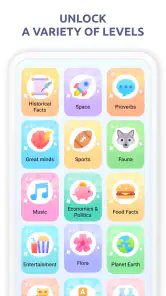
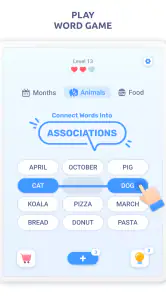
When you first dive into the app, you’re greeted with a clean and user-friendly interface. It’s super intuitive, so you don’t have to worry about getting lost in complicated menus. Just tap and play! The game offers a variety of levels, each one more challenging than the last. The initial levels are a breeze, perfect for getting the hang of things. But don’t be fooled, it ramps up quickly!
That straightforward start is useful if you’re handing the game to someone who doesn’t play many mobile games. There is little setup to learn before reaching the word challenge, and the basic loop—look over the words, make a connection, and see whether it fits—doesn’t require gaming experience. I’d still suggest trying a few puzzles together before assuming the clues will feel obvious to everyone: word familiarity and the way a person interprets an association can change how approachable a level feels.
For a first session, I’d focus on understanding the game’s way of grouping words rather than trying to rush through levels. When a connection seems uncertain, it helps to scan the whole set again instead of locking onto the first pair that looks related. That is a useful habit for this particular style of puzzle: a word can plausibly fit several ideas, but the challenge is to find the relationship that makes the group cohere.
If you’re choosing it for someone else, the best test is not whether they recognize every word immediately, but whether they enjoy exploring possible links. A player who likes explaining why two terms belong together may find the game engaging even when a puzzle takes a little thought. Someone who finds ambiguity frustrating may need to try it before deciding whether the format feels satisfying or simply unclear.
What the connections ask of you
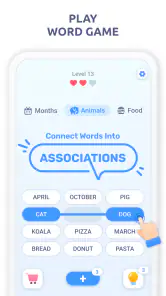
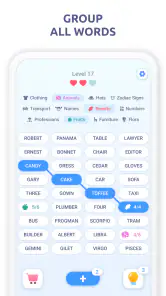
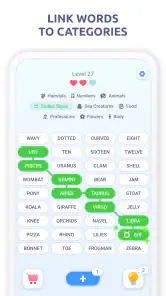
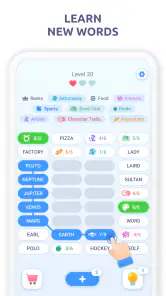
The core of the game lies in its puzzles. Each level presents you with a series of words, and your task is to link them correctly. The connections might be based on synonyms, antonyms, or even more abstract associations. It’s a true test of your vocabulary and lateral thinking skills. The satisfaction of seeing those words light up in green when you make a correct connection is downright addictive!
More From Our News Desk

Weather by Xiaomi Review: Clear at a Glance, Less Clear Up Close

X Under Pressure: Can It Recover When Posting Goes Wrong?

Clash of Clans Is Won Between the Battles

Android Auto Makes the Case for Quieter Car Software

MobiOffice: Transforming Mobile Productivity with Seamless Integration

EA SPORTS FC™ Mobile Soccer: Redefining Mobile Sports Gaming
One of the features I absolutely love is the hint system. Stuck on a particularly tricky level? No worries! You can use a hint to nudge you in the right direction. It’s a lifesaver without making the game too easy. Plus, the hints are cleverly designed to make you think rather than just giving away the answer.
A practical way to use a hint is to pause before tapping it and say what grouping you think you see. That gives you a chance to test your own reasoning first; if the hint then changes your angle, you can compare the two ideas rather than treating it as a shortcut. This makes the assistance more useful for learning how the game frames associations. The trade-off is that anyone who wants a completely unguided puzzle experience may prefer to leave hints alone.
Another useful approach is to set aside a word that seems to fit too many possible groups. Instead of repeatedly trying to force it into the first pattern you notice, look at the remaining words and ask which relationship accounts for the set as a whole. This can be especially helpful when a familiar word has several meanings or uses. It also makes a failed guess informative: rather than viewing it only as a mistake, you can use it to reconsider what kind of link the puzzle expects.
The game’s central idea makes it well suited to shared play, even if each person is using the same screen. One player can suggest a grouping, while another explains a different interpretation before anyone taps. That turns uncertainty into conversation and can help a newer player feel involved without taking over the puzzle. I’d use this as a relaxed, cooperative activity, not as a contest over who spots the answer first.
Motor, sensory, and situational access
The play style is based on reading words and tapping choices, which is less demanding than a game built around rapid movement or precise timing. That can make it a comfortable option for a short, calm session. Still, word puzzles place their own demands on attention: scanning several terms, keeping possible groupings in mind, and deciding between competing interpretations can feel tiring, especially when you are already mentally drained.
For a realistic everyday use, I can see opening it while waiting for an appointment or during a quiet part of a commute. A single puzzle gives that spare moment a clear focus, while the game’s increasing challenge means I would avoid starting a difficult level if I knew I had to stop immediately. If interruptions are likely, it may be smarter to use a hint or choose a more relaxed moment rather than rushing through and tapping at random.
Because the activity depends on reading, the experience will naturally suit people who can comfortably see and process the words on their device. I wouldn’t present it as a substitute for audio-led or hands-free play. Likewise, if tapping and scanning are uncomfortable for you, a spoken word game or a paper puzzle you can arrange at your own pace may be a better fit. The simple interaction helps, but it does not remove those basic demands.
The same distinction matters when choosing a place and time to play. A quiet pause lets me give the words proper attention; a noisy, hurried moment can make it harder to hold several possible connections in mind. If I have only a brief window, I would rather leave a tricky puzzle for later than guess just to finish it. That is a practical strength of this kind of game as a casual activity, but it also means it is not my choice when I want something that works well with divided attention.
For players who benefit from taking breaks, I’d treat each puzzle as a natural stopping point rather than assuming a session needs to continue. A brief pause can clear away an unhelpful first interpretation, and returning with fresh attention may make a connection easier to see. This is not a special accessibility feature; it is simply a way to match a word-based challenge to the player’s energy and circumstances.
Who will enjoy it—and who may not
If you’re someone who enjoys expanding your vocabulary and loves a good challenge, this app is right up your alley. It’s a fantastic way to keep your mind sharp and entertained at the same time. The game is perfect for a quick distraction during your commute or for when you need to unwind after a long day. And let’s be real, there’s something incredibly satisfying about mastering a challenging puzzle.
It is especially appealing if you enjoy debating why words belong together, since an association can be more interpretive than a straightforward spelling or definition question. Playing with a friend can turn a stuck moment into a useful conversation: each person can explain a possible grouping before deciding what to try. On the other hand, players who prefer strict word definitions, crosswords with familiar clue conventions, or fast-paced competition may find this style too open-ended or too quiet.
Compared with a standard crossword, the emphasis here is less on filling a grid from clues and more on noticing relationships among the words in front of you. Compared with a word-search, it asks for interpretation rather than visual scanning for a hidden spelling. That distinction is worth keeping in mind when choosing a game: this one is for flexible thinking, not for practicing spelling patterns or racing a clock.
It also occupies a different niche from word games built around making words from a fixed set of letters. Those can be a better fit if you want to practice spelling or find as many words as possible; this game asks you to decide why words already presented belong together. I’d choose it when I want to reflect on meaning rather than generate answers from letter combinations.
For a family or friend group, I would use it as a conversation starter rather than assume everyone will approach a clue in the same way. Different experiences and vocabularies can lead to competing but reasonable guesses, which is part of the fun when people explain their thinking. If one person is much more familiar with a particular term, it can help to invite them to describe the relationship plainly before the group decides what to do next.
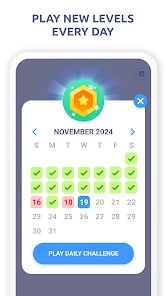
Moreover, the developers keep things fresh with regular updates and new levels, so you never run out of challenges. It feels like they genuinely care about their community of players, and that’s something I really appreciate.
Practical details and remaining barriers
Hitapps Games makes this word game available free to play, with optional in-app purchases priced from $3.49 to $5.49 per item. It is rated for Everyone, has a 4.3 average from around 89,000 ratings, and has been installed over 5 million times. The game was released on July 27, 2022; version 2.9.2 supports devices running Android 8.0 or later. Those details make it easy to judge whether it is a practical fit for your device and budget, though the optional purchase range is something to consider if you prefer to avoid spending inside games.
Since the game is free to start and includes optional purchases, I’d go in with a simple boundary if I’m trying to keep spending predictable: decide in advance whether I’m willing to buy anything, and treat the puzzles themselves as the reason to play. The listed purchase range is useful context, but it does not change the main question for a new player: do you enjoy the association format enough to return to it? I would try the free experience first rather than spend before knowing whether its style suits me.
One limitation of association puzzles is that a connection that feels natural to one player may not occur to another. When you disagree with a grouping, try naming the relationship aloud—such as shared meaning, opposite meaning, or a common context—before making another attempt. That small routine can reduce guesswork and makes the puzzle feel fairer, but it cannot make every clue equally intuitive to every player.
There is also a difference between a game being easy to begin and being effortless for every ability. The clear, tap-based approach lowers the learning curve, yet sustained reading and abstract reasoning remain central. I’d choose a different format for someone who wants spoken prompts, low-reading play, or a puzzle they can solve entirely without using touch.
That is the main barrier I’d keep in mind before recommending it: not complicated controls, but the combination of reading and interpretation. A player may understand how to tap and still find the word relationships demanding, particularly if the terms are unfamiliar or if several possible links compete for attention. I’d describe it as approachable in its basic interaction, rather than broadly effortless across different needs.
If you are unsure whether the game will suit you, a low-pressure trial is more useful than judging by the genre label alone. Try a few puzzles when you have enough time to think, and notice whether you enjoy reconsidering a word’s possible meanings. If the activity feels more like guessing what the game wants than reasoning through a connection, a crossword or a more definition-led word puzzle may be a better match.
My inclusive verdict
In a nutshell, Associations Word Connections is more than just a game; it’s a delightful mental exercise. It’s perfect for word nerds and puzzle lovers alike. So, if you’re ready to dive into a world where words connect in the most fascinating ways, give this app a try. Trust me, you won’t be disappointed!
My recommendation is strongest for players who enjoy taking a moment to consider several possible meanings, whether they play alone or talk through a puzzle with someone else. If you need a more accessible format with audio-first interaction, or simply want fixed clues and less ambiguity, another kind of word game may serve you better. For everyone else, it offers a welcoming way to turn a few spare minutes into a small exercise in language and perspective.
I’d be more cautious about recommending it to someone who wants a game that can be played without looking at the screen, or who finds open-ended word relationships stressful. In those cases, a format with spoken prompts, clearer definitions, or a slower paper-based layout may be more comfortable. Choosing a different game is not a failure to enjoy word puzzles; it is simply matching the puzzle’s demands to what feels rewarding.
For players who do like this style, my best practical advice is to slow down when a group seems almost right. Look for the relationship that explains all the words, not just the two most obvious ones, and use a hint only after you have considered your own theory if you want the challenge to remain yours. That small change in approach can make a difficult level feel more like a reasoning exercise and less like trial and error.
Happy puzzling!
Associations Word Connections Frequently Asked Questions
Who developed Associations Word Connections?
Associations Word Connections is a word game developed by Hitapps Games. If you enjoy puzzles built around language and finding relationships between words, its central idea is easy to understand before you start: connect words through their associations. The developer’s name can also help you distinguish it from other similarly named word games when you are browsing for an app to try.
When was Associations Word Connections released, and what is its current version?
Associations Word Connections was released on July 27, 2022, and its current version is 2.9.2. These details can help you identify the game when looking at app information or checking which version is installed. If you are considering a download, make sure you are choosing the game by Hitapps Games and that your device meets the operating-system requirement.
Is Associations Word Connections free to download and play?
Associations Word Connections is free to download, so you can try its word puzzles without paying upfront. Optional in-app purchases are available, priced from $3.49 to $5.49 per item. These purchases are separate from the free download, so consider your preferences before buying anything. The game is listed for players of all ages, making it an accessible option for a casual word-game session.
What devices can I use to play Associations Word Connections?
Associations Word Connections is available for Android devices that run Android 8.0 or later. Before downloading, check your device’s operating system version to make sure it meets that requirement. The game is a word-focused mobile puzzle from Hitapps Games, so it is intended for supported mobile devices rather than desktop play. Its simple word-connection premise makes it a straightforward choice for playing in short sessions on a compatible phone or tablet.
What is Associations Word Connections and how does it work?
Associations Word Connections is a word puzzle game designed to enhance vocabulary and cognitive skills. Players link words based on associations, creating chains that connect them in meaningful ways. The game offers various levels and challenges, encouraging users to think critically and creatively about word relationships, making it both educational and entertaining. Its store description presents it as a word connection game where you connect words through word associations.
Pros
- Engaging word puzzles.
- Enhances vocabulary skills.
- User-friendly interface.
- Regular updates.
- Offline mode available.
Cons
- In-app purchase prompts.
- Limited free levels.
- Ads can be distracting.
- Requires internet for hints.
- May drain battery quickly.
- Category
- Word
- Version
- 2.9.2