Associate Words: Solitaire
- 488.00
- 4.8
- Installs
- 1.00M
- Price
- Free
Screenshots
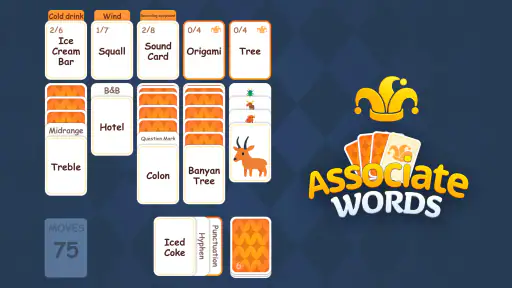
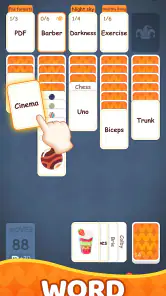
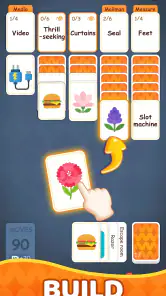
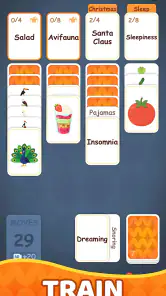
Analysis by Reviewed
Some word games test how quickly I can name things; Associate Words: Solitaire asks me to notice how ideas belong together. That small shift is the game’s defining appeal. It turns word association into a solitaire-style activity, making it a gentler choice for a spare moment than a timed vocabulary challenge. I find the premise most satisfying when I want to concentrate without feeling rushed, though it depends on enjoying the act of spotting connections rather than chasing a score or competing with other players.
Making connections is the point
The game is a word title from Astrasen Global, built around associating words. Instead of treating vocabulary as a test of definitions, it invites me to look for a relationship between terms and use that relationship to make progress. That can mean following a familiar connection, or pausing to consider a less obvious one. The pleasure comes from that brief moment when a group of words starts to make sense as a whole.
That focus gives it a different feel from a conventional crossword, where clues usually point toward a specific answer, or a word-search game, where the challenge is visual scanning. Here, the useful mental habit is flexible grouping: I ask what the words have in common, which association is strongest, and whether another interpretation fits better. It is a simple idea, but one that makes each decision feel more like a small act of reasoning than a spelling drill.
In my experience, this approach works best when I give a puzzle a little attention instead of tapping through it absent-mindedly. I try one connection, check whether the remaining words still make sense, and revise if they do not. That second look is valuable: it turns a quick guess into a miniature process of elimination. If you enjoy language but do not want a formal quiz atmosphere, that is the central reason to try it.
A calm puzzle, not a vocabulary exam
The solitaire framing suits short solo sessions. I can open the game when I have a few minutes, focus on one association problem, and leave without needing a rival or a long setup. The word mechanic also gives the pause a purpose: I am not just filling time, but practicing the kind of lateral thinking that comes from linking familiar concepts in a new arrangement.
It is worth setting expectations, though. This is not the best fit if what you want is a dictionary-led lesson, a spelling workout, or a social word contest. Association is looser than a single correct definition, and that looseness is part of the design’s charm as well as a possible source of frustration. Players who prefer unambiguous clues may find word relationships less satisfying than crossword answers with a clear target.
What a session feels like
A practical way to approach a puzzle is to read all the words before committing to a connection. I look for the most obvious pair or shared theme, then consider whether choosing it leaves a coherent set behind. This is more reliable than grabbing the first familiar link, especially when a word could plausibly fit more than one group. Treating each move as a small hypothesis makes the game feel fairer, even when an association is not immediately clear.
Another useful habit is to separate direct relationships from broad ones. Two words might be linked because they are commonly used together, while another pair may share a wider idea. When several possibilities compete, I mentally test each one against the other words rather than judging it in isolation. That simple check helps me avoid overvaluing a clever connection that does not fit the puzzle as a whole.
This is also where the game’s particular trade-off becomes apparent. Word association depends partly on a player’s language experience and personal sense of categories. A connection that feels natural to one person might not be the first one another person sees. I find that more interesting than a purely mechanical word search, but anyone who dislikes ambiguity should know that the pleasure here comes from interpretation, not just from recognizing a fixed clue.
When it fits into an ordinary day
Imagine waiting for a kettle to boil or sitting through a short break between tasks. A quick association puzzle is a reasonable way to use that interval because I can focus on a compact word problem rather than commit to a longer story or match. If I get stuck, I can step back and reread the terms instead of treating the pause as a deadline. For that kind of low-pressure moment, the format makes more sense than a competitive game that demands sustained attention.
It can also suit someone who likes to play alongside another person without turning the session into a contest. I might ask a friend how they would group the words, then compare reasoning. That is an informal way to make the puzzle conversational, not a claim that the game includes a dedicated multiplayer feature. The distinction matters: the title’s core appeal is a solo word challenge, while any shared discussion is something players can bring to it themselves.
For a more deliberate session, I would use the game as a warm-up before writing or reading. Trying to connect words encourages me to think about meaning and context, which can make it a pleasant mental reset. I would not treat it as a substitute for language study, since an association puzzle is not the same as learning definitions or systematically building vocabulary. Its value is in engaging familiar words from a different angle.
Where the format may lose you
The biggest limitation is also the premise: association-based puzzles are not equally compelling for everyone. If I want a clear right-or-wrong challenge with a visible standard of progress, a crossword or a spelling-focused word game may be a better choice. If I want an unfolding narrative, this format may feel too self-contained. And if I am tired enough that even a small ambiguity is annoying, I am more likely to enjoy a straightforward casual game.
There is a related difference between thoughtful play and random tapping. The game’s central idea rewards looking for relationships, so rushing through guesses can make it feel less rewarding. I recommend slowing down when a word seems to fit several possibilities and checking the effect of a choice on the rest of the puzzle. That is not a complicated strategy, but it makes the distinctive mechanic easier to appreciate.
The title is free to install, with in-app purchases listed from $0.99 to $99.99 per item. I would decide whether to spend only after trying the basic experience and deciding that the association format suits me; the range is broad enough that it is sensible to check an item’s price in the store before buying. If you are looking for a completely purchase-free experience, that detail is worth considering rather than assuming that free installation means every option costs nothing.
On Android, it requires version 6.0 or later, and its content rating is Everyone. The current version is 1.320. Those details make it easy to judge basic compatibility, but the more important question is whether the word mechanic itself matches your taste. A suitable device cannot make a loose association puzzle enjoyable if you would rather have strict clues or a head-to-head challenge.
Who is likely to enjoy it
I would recommend it to people who like word games but want something less conventional than spelling, anagrams, or clue solving. It is especially promising for players who enjoy making categories, spotting thematic links, and testing more than one possible interpretation. The solitaire setup is also a natural fit if you usually play alone and want a short mental diversion rather than a long session built around progression or competition.
It may be a weaker match for anyone who needs strong instruction, a structured vocabulary curriculum, or a social leaderboard to stay interested. I would also point crossword fans toward their usual format if they specifically value precise clues and a single expected answer. Associate Words is at its best when you are comfortable treating a word relationship as something to reason through, not merely a definition to retrieve.
The game has an average rating of 4.8 from around 37,000 ratings and has been installed over a million times. Those figures suggest that the idea has found an audience, but they do not replace the personal test: play a little and notice whether finding connections feels relaxing or bothersome. The title is rated for Everyone, which makes its general word-puzzle premise approachable, while the enjoyment still depends on individual patience with open-ended thinking.
My recommendation
Associate Words: Solitaire earns its place as a focused alternative to more familiar word puzzles. Its strongest quality is not a sprawling feature set but the way a simple association mechanic changes how I look at words: I scan for a shared idea, test a possible grouping, and revise when the rest does not line up. That makes it a good choice for quiet breaks and for players who like language as a set of connections rather than a set of answers.
I would try it if you want a solo word game that asks for a little lateral thought without turning the session into a high-pressure test. I would skip it in favor of crosswords, word searches, or competitive word games if you need precise clues, visual hunting, or direct rivalry. Astrasen Global’s game is most enjoyable when I let myself pause over a connection and treat uncertainty as part of the puzzle. If that sounds appealing, its free starting point makes it an easy way to find out whether this particular kind of word solitaire suits you.
Associate Words: Solitaire Frequently Asked Questions
What is Associate Words: Solitaire?
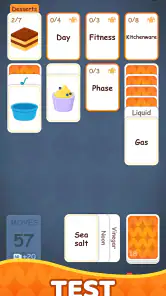
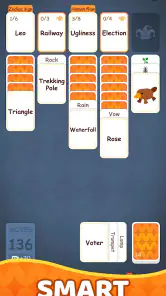
Associate Words: Solitaire is a word-association puzzle game with a solitaire-style structure. Instead of arranging cards, you work through groups of words and identify the connection between them, using those links to progress through the puzzle. It may appeal to players who enjoy vocabulary challenges and logic games, though the exact rules and available modes can vary by version.
How do you play Associate Words: Solitaire?
Gameplay centers on spotting a shared idea or relationship among words presented in a puzzle. You select or organize the words according to the game’s rules, then continue once the association is correct. Read each prompt carefully: some connections may be based on meaning, category, or common usage. If the game offers hints, they can help when a group is difficult to solve.
Is Associate Words: Solitaire free to download and play?
The game may be available to download without an upfront charge, but that does not necessarily mean every feature is free. Depending on the current release and platform, it may include advertisements, optional purchases, or other limits on play. Check the Google Play Store or Apple App Store listing for the latest pricing, in-app purchase details, and regional availability before installing.
Can I play Associate Words: Solitaire offline?
Offline access depends on how the current version handles its puzzles, advertisements, and other online features. Some word puzzles can be played without a connection once installed, while features such as syncing progress, loading new content, or displaying ads may require internet access. If offline play matters to you, check the store listing and test the game without a connection before relying on it.
Is Associate Words: Solitaire suitable for all ages, and what should I check before downloading?
Word-association puzzles are generally approachable for a broad audience, but difficulty, vocabulary, and age suitability depend on the specific content in the game. Before downloading, review the app’s age rating, privacy information, permissions, and in-app purchase disclosures in your device’s store. Also confirm that your phone meets the listed requirements and that the app is available in your region.
Pros
- Quick rounds make it easy to play during short breaks.
- Word-based clues add a fresh twist to familiar solitaire gameplay.
- Simple controls are approachable for casual players.
- Progression offers goals beyond simply finishing a card layout.
- Can help exercise vocabulary and pattern recognition.
Cons
- The word clues may feel difficult for players with limited English vocabulary.
- Solitaire layouts can become repetitive over longer sessions.
- Some levels may rely heavily on guessing unfamiliar words.
- Small card text may be hard to read on compact screens.
- Progress can feel slow if later stages require repeated attempts.
- Category
- Word
- Version
- 1.320