1 2 3 4 Player Games - Offline
- 1.03K
- 4.8
- Installs
- 50.00M
- Price
- Free

Screenshots







Analysis by Reviewed
I first reached for 1 2 3 4 Player Games - Offline as a way to fill a few spare minutes with friends, and that remains its clearest strength: it turns one phone into a shared arcade rather than asking everyone to download the same game. The appeal is immediate, but whether it deserves a regular spot on your device depends on how often you have people nearby who enjoy quick, casual competition.
Why the first session works
The early fun comes from how little preparation a group needs. You can pass around one device, choose a short challenge, and get started without setting up an online lobby or relying on mobile data. That makes it especially handy while waiting for food, sitting together before an event, or trying to keep a family gathering lively without putting on a longer game.
The one-phone format also changes the social feel. Players are close enough to watch one another’s turns, tease a narrow win, and immediately ask for another round. I find that more engaging than taking turns on separate screens, though it works best when everyone is comfortable sharing a device and can see it clearly.
Unplugged Fun for Everyone
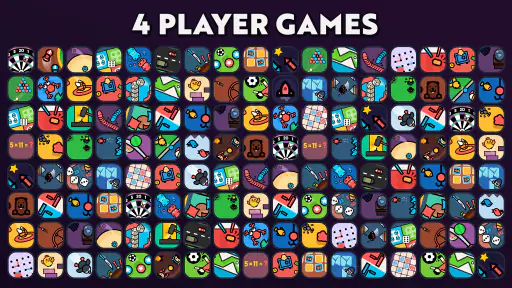
1 2 3 4 Player Games - Offline is like a treasure trove of mini-games designed to keep you and your friends entertained without needing an internet connection. I’ve spent countless hours exploring this app, and trust me, it’s a blast! Whether you’re flying solo or have a group of friends, there’s something here for everyone. From classic board games to quick reflex challenges, the variety is quite impressive.
All About the Gameplay
The beauty of this app lies in its versatility. You can play alone, or invite up to three other friends to join you. The games are simple yet addictive, making it perfect for short bursts of fun or longer gaming sessions. I particularly enjoyed the quick reflex games where you have to act fast to win. The controls are intuitive, and the interface is user-friendly, which means you can jump right into the action.
One of the standout features is the multiplayer mode. It’s perfect for gatherings, allowing up to four players to compete on the same device. It reminded me of old-school board games but with a modern twist. The competitive spirit it brings out is unmatched, and it’s a great way to bond with friends or family.
Making a group session smoother
A small practical tip: decide who is holding the phone before the first round, then keep the device on a steady surface if several people are playing. That avoids awkward handoffs during fast challenges and gives everyone a fair view. For a mixed-age group, I’d start with an easy-to-understand game, then let the group choose whether to switch to something more demanding. The Everyone age rating makes it broadly suitable for family play, though a particular mini-game may still suit some ages or temperaments better than others.
You May Like

Clash of Clans Is Won Between the Battles

Android Auto Makes the Case for Quieter Car Software

MobiOffice: Transforming Mobile Productivity with Seamless Integration

EA SPORTS FC™ Mobile Soccer: Redefining Mobile Sports Gaming

How Microsoft OneDrive Became a Mobile Productivity Giant

How Google Translate Breaks Language Barriers Effortlessly
It also helps to treat the collection as a party option, not as a substitute for a deep multiplayer game. The brief rounds are useful when guests have different attention spans or when you want a quick activity between conversations. If your group prefers long-term character progress, elaborate rules, or online play with friends who are elsewhere, a dedicated game built around those needs will probably hold attention better.
Visuals and Sound
While the graphics aren’t going to blow you away with high-definition visuals, they’re colorful and charming, adding to the overall fun atmosphere. The sound effects are quirky and add a playful element to the experience. It’s clear that the developers focused on creating a lighthearted and enjoyable environment for players.
The simplicity of the design ensures that the app runs smoothly on most devices, which is a huge plus for anyone with an older smartphone. No lags or crashes during my playtime, which is always a win in my book!
Keeping it in rotation
For lasting value, the key question is not how many mini-games are available but whether your household or friend group will actually return to them. I’d keep it installed if the phone regularly becomes the group’s shared screen on journeys, during waiting time, or at casual get-togethers. Solo play can help pass a quiet moment, but the social format is where I think it has the strongest reason to stay.
There is a trade-off to that variety: hopping between short games is entertaining, but it can also make the experience feel more like a sampler than one polished, focused game. Once your group finds a favorite, repeat rounds can become predictable. Rotating who picks the next challenge is an easy way to keep sessions from turning into the same contest every time.
As an arcade game from JindoBlu, it has a 4.8 average from around 78 thousand ratings and over 50 million installs. It is free, and version 2.18.1 supports Android 6.0 and later. Those details make it easy to try on a compatible Android device, while the bigger practical question is whether you often have people around to play with.
Why You Should Download It
Now, you might be wondering why you should give this app a try. Well, if you’re looking for a fun, engaging way to pass the time without the need for an internet connection, 1 2 3 4 Player Games - Offline is a top contender. It’s perfect for parties, long trips, or even just a bit of solo downtime. Plus, the variety of games ensures you won’t get bored easily.
So, what are you waiting for? Grab your friends, fire up the app, and let the games begin. Whether you’re aiming for a quick laugh or a fierce competition, this app has got you covered. Happy gaming!
My long-term take
I’d recommend it to people who want a no-fuss shared activity, especially families and friends who meet in person and like short, spirited rounds. It is less compelling if you mostly play alone, want a persistent challenge, or dislike crowding around one screen. The download is free, so trying it is a low-commitment way to see whether your group clicks with the format; the lasting payoff comes from making it part of an occasion, not from expecting it to replace a full-featured game.
My verdict is that it earns space as a useful social fallback rather than an everyday solo staple. When a group needs something simple to do together, the quick start and offline play are real advantages. When nobody is nearby, or when the novelty of familiar mini-games has worn thin, I’d reach for a more substantial single-player or online option instead.
A small ritual that helps the collection last
One way I’d make repeat visits feel less random is to give each person a simple role: one player chooses the opening challenge, another decides when to move on, and someone else keeps track of who has picked recently. That little routine gives quieter players a say without adding complicated rules. It also prevents the quickest person in the group from selecting the same familiar favorite every time.
For a casual evening, I’d use the game as a short intermission rather than the whole event. A few rounds while everyone waits for a meal or after a conversation naturally pauses can be more satisfying than trying to stretch a collection of quick challenges across an entire night. If the group is still enthusiastic, carry on; if attention drifts, put the phone away without feeling that the session needs a formal finish.
Choosing the right moment and group
The format is most comfortable with people who are physically together, have a little patience for sharing, and are happy to learn a challenge by trying it. It can be a good fit for siblings, a family waiting around, or friends who want something livelier than scrolling separately. The broad age rating makes it an easy option to consider across generations, but I would still choose the activity with the people in front of me: a fast reaction contest may not be as welcoming to someone who prefers slower turns.
It is less suited to a group where everyone wants to use their own phone, or where players are spread across different places. In those situations, an online multiplayer game is the more natural choice, since a shared handset cannot recreate the convenience of separate screens. Likewise, if one person wants a carefully paced solo campaign, a focused arcade title will usually offer a clearer sense of progress than dipping between bite-sized games.
A practical detail is that “offline” is especially useful as a fallback during travel or in places with unreliable service, but it does not make the group format effortless by itself. A crowded table, a small screen, or a phone that keeps being passed around can make turns harder to follow. I’d check that the screen is visible to everyone and settle on a stable place for it before starting; those small choices matter more here than they would in a game played individually.
What variety can and cannot solve
A collection gives a group more chances to find a challenge that suits its mood, but variety alone cannot guarantee that every person will like every option. I would not treat the number of choices as a reason to keep browsing indefinitely. Pick something quickly, give it a fair try, and switch if the rules or pace are not landing. That approach keeps the app serving the gathering instead of becoming the activity people spend their time selecting.
It also changes how I judge the learning curve. Simple controls help newcomers join without a long explanation, yet different kinds of mini-games can still ask for different instincts. Someone who enjoys quick reactions may take to one challenge immediately while another player needs a calmer option. Rather than declaring a winner after one mismatch, I’d let the group alternate between styles so that the same skill does not decide every round.
Keeping expectations realistic
People often wonder whether a shared-screen game can work with only two players. It can: the collection is not limited to a full group, and a pair can still make a quick contest out of a spare moment. The social energy changes, of course. With more people, watching and taking turns becomes part of the fun; with two, the appeal depends more on whether both players enjoy a rapid series of small challenges.
Another sensible question is whether it makes sense to install for solo use. I see that as a secondary reason to keep it, not the strongest one. Playing alone can fill a brief pause, but if you want a lasting personal routine, a game with a focused progression system or a single central mechanic may be more rewarding. I would download this for the possibility of sharing it, then judge its place on the device by how often that actually happens.
The current version is 2.18.1, and the Android requirement is version 6.0 or later, so compatibility is straightforward to assess before installing on an older handset. I would also remember that a free game still asks for a little social setup: people need to be nearby, willing to share the screen, and interested in short rounds. The low financial commitment is appealing, but the real cost is the space and attention it occupies if the group never returns to it.
The kind of habit it earns
I don’t think this needs to become a daily habit to justify staying installed. Its natural rhythm is occasional: bring it out when a group has a gap to fill, use it for a few rounds, and leave it alone until another suitable moment. That is a healthier fit than expecting constant novelty from a casual arcade collection. If it repeatedly saves an awkward wait or gives relatives an easy activity to share, it can earn its place through those small, recurring uses.
On the other hand, if you mostly want games for commuting alone, or your friends prefer separate online sessions, the shared-device idea may stay unused after the first try. I’d be honest about that before treating a large collection as automatic long-term value. For me, the lasting appeal is not that every visit feels new; it is that the game can make an ordinary stretch of waiting more sociable without demanding a plan, a connection, or a long commitment.
1 2 3 4 Player Games - Offline Frequently Asked Questions
Does 1 2 3 4 Player Games - Offline need a powerful phone or tablet?
It is designed as an arcade game with simple, quick-play activities, making it an approachable choice for casual gaming. The minimum requirement is Android 6.0, so check your device’s Android version before downloading. If it meets that requirement, you can try the game on your phone or tablet and see how it performs in your usual play sessions.
Can I play 1 2 3 4 Player Games - Offline with friends using separate phones?
The game is built around multiplayer on one device, so friends gather around the same phone or tablet rather than connecting separate devices for a shared match. Its setup is especially convenient for a quick game during a visit or family gathering, with players taking turns or competing side by side. Solo play is also available when you are on your own.
Is 1 2 3 4 Player Games - Offline suitable for children?
The game has an Everyone content rating, so it is presented as suitable for a broad audience. Its simple, pick-up-and-play format can make it an easy option for families and casual groups, while the shared-device setup encourages taking turns and playing together. Parents can still preview the game themselves to decide whether its collection of arcade-style activities suits their child.
Can I play 1 2 3 4 Player Games - Offline on my device?
The game is available for Android devices running version 6.0 or later. Before downloading, check your device’s Android version in its settings to make sure it meets that requirement. The game is free to download, and it is listed as an arcade game by JindoBlu. If your device meets the minimum system requirement, you can try it as a casual option for solo or shared play.
What is 1 2 3 4 Player Games - Offline?
1 2 3 4 Player Games - Offline is a mobile gaming app that offers a collection of simple yet engaging games designed for single and multiplayer experiences. The app allows players to enjoy a variety of games either alone or with friends, making it a perfect choice for gatherings or casual play. It is an arcade game developed by JindoBlu, with a free-to-download format.
Pros
- Engaging multiplayer modes.
- No internet required.
- Simple controls for all ages.
- Variety of mini-games.
- Low storage requirement.
Cons
- Limited game depth.
- Ads can be intrusive.
- Repetitive gameplay.
- Occasional bugs.
- Lacks online multiplayer.

- Category
- Arcade
- Version
- 2.18.1