StormWatch+
- 33.00
- 3.3
- Installs
- 10.00K
- Price
- Free

Screenshots
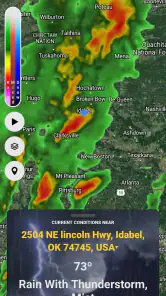
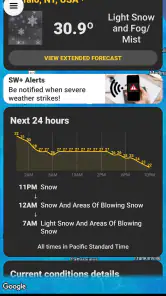
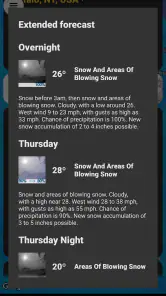
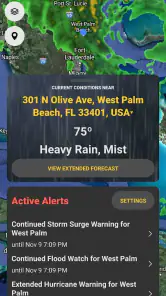
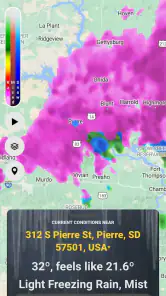
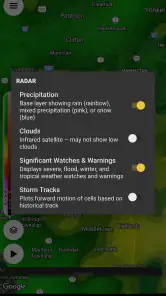
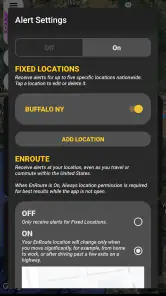
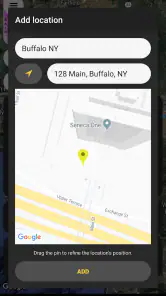
Analysis by Reviewed
StormWatch+ is the kind of weather app I would open when I want a focused look at conditions rather than a crowded dashboard full of unrelated extras. It comes from Cirrus Weather Solutions, LLC and sits in the weather category, with a clear emphasis on local conditions while still covering locations across the country. I tested it with a practical question in mind: can it become a dependable part of a normal day, especially when weather changes quickly?
My overall impression is mixed but useful. The app is free to download, rated for Everyone, and its current build is 8.2.2, so it is approachable for a wide audience. At the same time, its average rating of 3.3 from roughly 64 ratings suggests that the experience has not been equally satisfying for everyone. I would not treat that score as a reason to dismiss it, but I would treat it as a reason to use StormWatch+ alongside common sense and, during serious weather, official alerts.
How StormWatch+ feels during ordinary use
The first thing I pay attention to in a weather app is how quickly it gets me to the information I actually need. StormWatch+ presents itself as a local weather tool with nationwide reach, and that combination makes sense for people who move between a home location, a workplace, family addresses, or travel destinations. I find that more useful than an app designed only around one fixed neighborhood.
Speed expectations should remain realistic. Weather apps depend on current information being retrieved and displayed, so the experience can feel different depending on connection quality, device age, and the amount of information being loaded. In my use, the important advantage of a focused app is not necessarily that every screen appears instantly, but that I am not forced to work through a complicated entertainment-style interface before finding the forecast.
That simplicity matters in small moments. If I am deciding whether to walk to a nearby shop, leave a window open, or take a jacket before heading out, I want a quick check rather than a long session. StormWatch+ makes more sense in that role than as an app I would browse for hours. Its strongest performance impression comes from being a practical checkpoint in my routine.
One useful habit is to open the app before leaving home and again before starting the return trip when the weather looks unsettled. That two-check routine is more valuable than repeatedly refreshing every few minutes. It also reduces unnecessary battery and data use, because I am using the app to make decisions instead of treating it like a live feed that must remain open continuously.
What happens when weather becomes the main event
Heavy-use moments are where a weather app earns trust. A normal forecast check is easy; the harder situation is a day when I am switching between locations, checking conditions several times, and trying to decide whether an outdoor plan is still sensible. StormWatch+ is appealing here because its purpose is closely tied to changing weather rather than general news or social content.
More From Our News Desk

Clash of Clans Is Won Between the Battles

Android Auto Makes the Case for Quieter Car Software

MobiOffice: Transforming Mobile Productivity with Seamless Integration

EA SPORTS FC™ Mobile Soccer: Redefining Mobile Sports Gaming

How Microsoft OneDrive Became a Mobile Productivity Giant

How Google Translate Breaks Language Barriers Effortlessly
I would use it before a commute that crosses several areas, before a school pickup, or while deciding whether to postpone outdoor work. For a person who travels within the country, the nationwide scope is especially practical: the same app can remain part of the routine when the familiar home location is no longer the relevant one.
There is a trade-off, though. A weather app can help me understand conditions, but it should not replace official emergency communication when a dangerous storm is developing. StormWatch+ may be useful for checking the broader situation and making everyday choices, yet I would still follow local authorities for evacuation instructions, shelter guidance, or urgent warnings. That is not a criticism unique to this app; it is an important boundary for any consumer forecast tool.
During repeated checks, I would also avoid leaving multiple weather screens open in the background. A focused check, followed by closing the app, is a better workflow on a phone with limited battery. If I were monitoring a long outdoor event, I would plan charging in advance instead of assuming that any weather app can run all day without affecting resource use.
Another practical tip is to compare a local view with the destination before setting out. A bright sky at home can be misleading when the route or destination is already seeing different conditions. StormWatch+ is more useful when I treat it as a location-based decision tool rather than asking it to summarize an entire journey from one starting point.
Stability and recovering from interruptions
Reliability is not only about whether an app opens successfully. For me, it also means recovering sensibly after I switch to another app, lose a connection, or return to the phone after a while. Weather checks often happen in short bursts, so an app that handles those interruptions comfortably is more valuable than one that looks impressive during a long uninterrupted session.
StormWatch+ is best approached with a little patience when conditions or connectivity are changing. If information takes a moment to refresh, I would rather wait briefly and confirm what I am seeing than make a decision from a stale screen. This is particularly important when a forecast changes rapidly. Pressing ahead without checking the timestamp or context of the information can create false confidence in any weather application.
My recovery workflow is simple: reopen the app, confirm the selected location, allow the current view to settle, and then make the decision. If the app has been pushed out of memory on an older phone, restarting the check is less frustrating than expecting it to preserve every part of a previous session. That approach also helps reveal whether a problem is occasional or repeatable.
The public reception gives me another reason to keep expectations balanced. StormWatch+ has more than ten thousand installs, but its rating sits at 3.3, based on around 64 ratings and 33 written reviews. That is enough to show that people have had varied experiences, not enough to prove that every user will encounter the same issue. I would install it and judge it during ordinary use before relying on it for an important trip.
The developer, Cirrus Weather Solutions, LLC, is worth keeping in mind when evaluating the app over time. Weather information is a service that benefits from consistent maintenance, and the presence of a current version indicates that the app has an active release to use. Still, an update number alone does not guarantee perfect behavior on every phone, so I would test it on the device and connection I actually depend on.
Older phones, storage, and battery expectations
StormWatch+ supports Android 7.0 and later, which gives it a broad compatibility range. That is helpful if I am using an older handset or keeping a previous phone as a backup. Compatibility does not mean identical performance, however. A newer phone may open screens and refresh information more comfortably, while an older model may need more time when the connection is weak or several apps are competing for memory.
I would be especially careful with a phone that already struggles with battery life. Weather apps are usually opened briefly, but frequent refreshes, location changes, or extended monitoring can add up. I would not leave StormWatch+ running unnecessarily in the background. Instead, I would check it at the moments that matter, close it when finished, and keep a charger available for long days outdoors.
Storage is less likely to be the deciding factor for most users than overall phone health. The more relevant question is whether the device can handle a current weather app without routinely closing apps or slowing down. If my phone is already overloaded, I would remove unused software before blaming StormWatch+ for every delay. This is a small but useful distinction: perceived app speed is often a combination of the app, the operating system, and the condition of the device.
People using limited mobile data should also adopt a deliberate routine. I would avoid constant manual refreshing and use the app when I have a clear question. Checking before leaving a Wi-Fi connection can be sensible if I know I will be traveling through areas with unreliable service. That workflow does not turn the app into an offline forecast, but it reduces the chance that a rushed check becomes difficult because the connection is poor.
The Everyone content rating makes StormWatch+ suitable for a broad household audience, including families who want a straightforward weather reference. I would still teach younger users not to interpret a normal forecast as an emergency instruction. The app can support a weather conversation, but adults should remain responsible for decisions involving hazardous conditions.
Where it fits beside familiar weather alternatives
Compared with the default weather tool on a phone, StormWatch+ has a clear reason to exist: it is built around weather as its main purpose and offers a local-to-national perspective. The default option may be more convenient because it is already integrated into the device, while StormWatch+ may appeal more to someone who wants a separate weather destination and a consistent way to check different places.
Compared with a large weather platform packed with maps, videos, alerts, lifestyle content, and advertising, StormWatch+ may feel more focused. That can make routine checks less distracting. The compromise is that users who want deep radar analysis, extensive historical charts, or a highly customizable forecasting workspace may prefer a more specialized alternative. I would not choose StormWatch+ solely because it is free if my main need is advanced meteorological analysis.
The free price lowers the barrier to trying it, but the app includes in-app purchases ranging from $0.99 to $9.99 per item. I would use the free experience first and only consider spending money if the additional value is obvious in my own routine. A paid option should solve a real problem for me, not simply add another layer to an app I only open for quick checks.
That pricing structure also affects how I would recommend it to a family. Since the initial download does not require payment, each person can decide whether the basic experience is useful. Before making an in-app purchase, I would check exactly what it changes and whether that change matters for the intended use. For a simple morning forecast, extra spending may not be necessary; for a user who checks several locations regularly, it could be easier to justify if the upgrade removes a genuine limitation.
A realistic day with the app
Imagine I am leaving for work in the morning, collecting a child in the afternoon, and planning to spend an hour outside after dinner. I would first check the local conditions before leaving, then review the destination rather than assuming both places share the same weather. Before the afternoon pickup, I would check again if the sky has changed or the forecast looks uncertain. Later, I would make the final outdoor decision using the latest information available and common-sense observation.
In that scenario, StormWatch+ is useful because it becomes part of a sequence of small decisions. I am not asking it to predict every detail of the day with perfect certainty. I am using it to reduce avoidable surprises, choose appropriate clothing, adjust timing, and decide whether an outdoor plan deserves a backup. That is the level at which I find the app most convincing.
A different example is a short domestic trip. I would set up the places I expect to visit before departure, check the route and destination while I have a stable connection, and then use brief checks during the day. The important insight is to prepare locations before I am rushed. Searching for a destination while standing in a crowded station or dealing with weak service is exactly when a weather check becomes more stressful than it needs to be.
For outdoor workers, gardeners, cyclists, and parents, the app can be a convenient second opinion before committing to a plan. But I would not use it as the sole basis for high-risk activity. If the consequences of being wrong are serious, I would consult official local warnings and make a conservative decision.
Who should try it, and who should skip it
I would recommend StormWatch+ to someone who wants a dedicated weather app, checks more than one location, and prefers a practical tool over a media-heavy forecast experience. It is also a reasonable candidate for an older Android phone because the minimum operating system is Android 7.0 or later. The free entry point makes experimentation easy, and the Everyone rating means it can fit into a shared household routine.
I would be more cautious recommending it to someone who expects a flawless, highly detailed professional weather workstation. If advanced maps, extensive customization, or specialized storm analysis are the main priorities, another service may be a better match. I would also suggest skipping it if the phone is already unstable, the battery is severely worn, or the user refuses to make room for a second weather app when the built-in option already meets every need.
People who dislike in-app purchase prompts should examine the free experience before settling in. The presence of optional items does not automatically make the app poor, but it does mean the full experience may not be identical for every user. My advice is to decide based on actual daily value rather than assuming the paid elements are essential.
My performance verdict
StormWatch+ works best as a focused, repeatable weather check. I value its local emphasis, nationwide usefulness, broad Android compatibility, and straightforward role in everyday planning. Its perceived speed is most satisfying when I open it with a specific question, and its resource demands are easiest to manage when I avoid constant refreshing or leaving it active without a reason.
I also think the app deserves a measured recommendation rather than automatic praise. The 3.3 average and modest review volume point to an uneven public experience, while the availability of in-app purchases means I would test the basic version before paying for anything. Those are not deal-breakers for me, but they are important context for anyone expecting a polished replacement for every other weather source.
My practical verdict is simple: StormWatch+ is worth trying if you want a free weather companion for local checks and multiple destinations, but it should remain one part of your decision-making rather than your only authority during severe weather. I would keep it installed if it proves responsive and dependable on my own phone. If it feels slow, unreliable, or too limited during the first week of normal use, I would return to the built-in weather option or choose a more specialized alternative instead.
StormWatch+ Frequently Asked Questions
Is StormWatch+ free to download, and are there costs inside the app?
StormWatch+ is free to download, so you can try its weather tools without paying upfront. The app also offers in-app purchases ranging from $0.99 to $9.99 per item, which may unlock additional options. Take a moment to review any purchase screen before confirming a payment, especially if you are exploring features beyond the free experience.
Will StormWatch+ work on my phone or tablet?
StormWatch+ is available for devices running operating system version 7.0 or later. Check your device’s software version before downloading, and make sure you have enough storage and a reliable connection for installation. Keeping the app and your operating system up to date can also help with compatibility and smooth performance.
Is StormWatch+ suitable for children and families?
StormWatch+ has an Everyone content rating, making it suitable for a general audience. Families may find a weather app useful for checking conditions and discussing severe-weather awareness together. As with any app, adults should review its permissions, privacy settings, and any in-app purchase prompts, particularly when a child will be using the device.
What is StormWatch+ and what does it do?
StormWatch+ is a weather and severe-weather tracking app designed to help users monitor storms, alerts, radar activity, and changing conditions. After exploring its interface, the app is most useful for people who want weather information in one place, particularly during thunderstorms, hurricanes, tornadoes, or other hazardous events. Available features may vary by location, device, and subscription level.
Does StormWatch+ provide real-time severe weather alerts?
StormWatch+ can provide notifications about significant weather conditions, but the exact alerts depend on your selected location, local data coverage, notification permissions, and the app’s available services. Before relying on it, enable notifications and location access where appropriate, then review the alert settings. It should support everyday awareness, but it should not replace official emergency warnings.
Pros
- Clear storm alerts help users prepare before severe weather arrives.
- Radar and forecast tools make it easy to monitor changing conditions.
- Location-based updates provide relevant information for selected areas.
- Useful for planning travel
- outdoor activities
- and emergency preparations.
- Weather information is presented in a practical
- easy-to-understand format.
Cons
- Some advanced features may require a subscription or in-app purchase.
- Alerts can vary in accuracy depending on location and available weather data.
- Frequent notifications may become distracting during active weather systems.
- The app may use extra battery and data when tracking locations continuously.
- Coverage and forecast detail may differ significantly between regions.
- Category
- Weather
- Version
- 8.2.2