SkyCandy - Sunset Forecast App
- 137.00
- 3.2
- Installs
- 10.00K
- Price
- Free

Screenshots
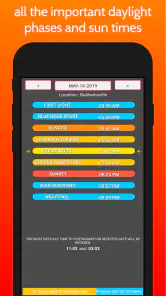
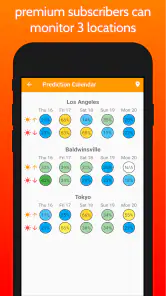
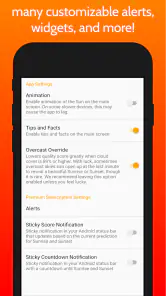
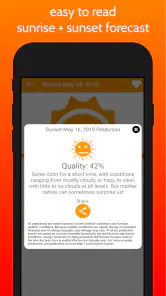
Analysis by Reviewed
I like weather apps that answer a practical question quickly, but SkyCandy takes a more specific route: it is built around the possibility of seeing a beautiful sunrise or sunset. That makes it less of an all-purpose forecast replacement and more of a planning tool for people who care about outdoor light, photography, walks, travel, or simply catching a colorful sky after work. In my experience, that focus is the reason to try it—and also the reason some users will find it too narrow.
SkyCandy is a free weather app from Dunbar Technology, LLC, designed to help you look ahead for vivid morning and evening skies. It is available for Everyone and supports devices running Android 7.0 or later. The current version is 2.8.0, while the app itself has been available since May 24, 2017. Those details matter because this is not a brand-new experiment; it has had time to settle into a clear purpose, even if its relatively modest audience suggests it remains a specialist choice rather than a mainstream weather essential.
How SkyCandy fits into everyday weather planning
A forecast for the sky, not just the temperature
Most weather apps lead with temperature, rain probability, wind, radar, and hourly conditions. Those tools are useful when I need to decide whether to carry an umbrella or what jacket to wear. SkyCandy approaches the same day from a different angle. Its central question is closer to, “Is this likely to be worth stepping outside for?”
That distinction gives the app a pleasant sense of purpose. If I am planning a short photo outing, choosing a place for an evening walk, or hoping to watch the sunset from a viewpoint, a conventional forecast can leave me doing the interpretation myself. I may need to combine cloud cover, timing, and general conditions before making a guess about the quality of the light. SkyCandy is aimed at reducing that mental work by presenting the forecast through the lens of sunrise and sunset color.
I would not install it as my only weather source. For severe weather decisions, commuting, hiking safety, or detailed precipitation planning, a full-featured weather service is usually the better companion. SkyCandy becomes useful when the question is visual and time-sensitive rather than purely meteorological.
The everyday scenario where it makes sense
Imagine finishing work on a clear afternoon and wondering whether it is worth taking a longer route home to a riverside path. Opening a standard weather app might tell you the temperature and whether rain is expected, but it may not make the sunset decision obvious. With SkyCandy, I would check the evening outlook before leaving, compare it with the location I have in mind, and decide whether the extra walk is likely to pay off.
The same workflow works for a parent planning a beach visit, a traveler choosing between two viewpoints, or someone who wants to photograph a city skyline without spending an hour waiting for a disappointing sky. The app does not remove uncertainty—weather can change, and forecasts can miss the exact mood of the clouds—but it gives the decision a more relevant starting point.
More From Our News Desk

Clash of Clans Is Won Between the Battles

Android Auto Makes the Case for Quieter Car Software

MobiOffice: Transforming Mobile Productivity with Seamless Integration

EA SPORTS FC™ Mobile Soccer: Redefining Mobile Sports Gaming

How Microsoft OneDrive Became a Mobile Productivity Giant

How Google Translate Breaks Language Barriers Effortlessly
Who will get the most from it
SkyCandy is a natural fit for casual photographers, landscape enthusiasts, runners who enjoy early or late outings, travelers, and anyone who treats sunrise or sunset as an event. It may also appeal to people who find regular weather interfaces cluttered. Instead of scanning many panels, they can focus on the visual opportunity they care about.
It is less suitable for users who need detailed radar, long-range trip planning, storm alerts, pollen information, air quality, or a complete hourly forecast in one place. I would also skip it if you only check the weather to decide what to wear. The app’s value depends on caring about the quality of the sky, not merely the conditions underneath it.
What the current release tells me
The current version, 2.8.0, is the clearest sign of the product’s present state. It shows that the app is still maintained as a defined sunrise-and-sunset forecast experience rather than being presented as a broad weather platform. I see that as a positive for focus: the concept remains easy to understand, and the app does not appear to be trying to become an overloaded dashboard.
At the same time, the version number alone should not be read as proof that every modern weather convenience is included. I would approach it as a focused utility and judge it by how quickly it helps me decide whether a particular morning or evening deserves my attention. That is a more realistic standard than expecting it to replace established forecasting tools.
What changed for people already using it
For existing users, the most important effect of a current release is continuity. Someone who installed SkyCandy earlier can continue treating it as a specialized companion for visual weather planning, rather than learning an entirely different product category. The stable concept is helpful: once I understand why I am opening it, the app has a straightforward place in my routine.
A practical way to get more from that continuity is to use it at two separate moments. I would check once in the morning if I am considering an early outing, then check again later in the day before committing to a sunset plan. That second glance matters because a forecast that looked promising hours earlier may be less convincing as the day develops. It also prevents me from treating one early prediction as a guarantee.
Another useful habit is to use SkyCandy as a filter, not a final verdict. If the app suggests an appealing sky, I would still consult my usual weather app for rain, wind, temperature, and any safety concerns. This two-step approach is more efficient than asking a general weather app to answer a visual question, while still preserving the information needed for a sensible outdoor decision.
Reading a colorful-sky forecast realistically
The biggest mental adjustment is remembering that a promising forecast does not mean a guaranteed postcard. Sunrise and sunset quality depends on changing cloud patterns, visibility, haze, and the way light interacts with the atmosphere at a particular location. Even when the broad conditions look favorable, buildings, trees, hills, and the direction of an open horizon can change what I actually see.
That is why I would avoid using the app to justify a long, expensive trip on its own. For a nearby walk, it can be a fun decision aid. For a dedicated photography excursion, I would combine it with a map, a general forecast, and a quick look at the horizon before leaving. The app is most valuable when it improves my odds, not when I expect certainty.
Three ways to use it more intelligently
- Plan around access, not only color. A strong-looking evening forecast is more useful when I already know where I can see an unobstructed horizon. Choosing the location first helps me act quickly when the outlook improves.
- Use the forecast to time a short outing. Instead of waiting outdoors for an entire sunset, I can check the app before leaving and arrive close to the period I actually want to photograph or watch.
- Keep a second weather source for risk. SkyCandy can guide the “is it visually promising?” decision, while a conventional weather app remains better for rain, wind, temperature, and changing conditions.
These habits reveal a useful trade-off. The app can save time because it narrows attention to a particular kind of forecast, but it cannot replace the broader context needed for safety or logistics. Its focused design works best when I give it a focused job.
Where it still feels limited
The clearest limitation is scope. A person opening a weather app may expect a complete set of tools, and SkyCandy’s sunrise-and-sunset emphasis will feel incomplete if that is the expectation. I would not want to depend on it for a day-long outdoor event without checking another source first.
There is also a natural limit to any app that predicts visual conditions. The sky is local and changeable. A forecast can point me toward a promising opportunity, but it cannot control cloud movement or guarantee that my chosen viewpoint will look dramatic. Users who prefer precise, conventional measurements may find a specialized visual forecast less satisfying than a detailed hourly chart.
The rating provides a useful signal here: SkyCandy holds a 3.2 average from around 558 ratings and has around 137 written reviews. That is not a reason to dismiss it, but it does suggest a mixed experience rather than universal approval. I read that as a reminder to test it against my own routine instead of assuming its narrow concept will suit everyone.
Free to start, with a point to consider
The app is free to download, which makes experimenting with it relatively easy. Its in-app purchases range from $0.99 to $99.99 per item, so I would pay attention to what is offered before approving any purchase. The broad range means the free experience and the optional paid elements may matter differently depending on how deeply I use the app.
For a casual user, the sensible approach is to begin with the free experience and see whether it actually changes outdoor decisions. If I only check a sunset once in a while, paying for extras may not be worthwhile. If the app becomes part of a regular photography or travel workflow, I would evaluate any purchase based on a specific benefit rather than buying simply because the feature is available.
How it compares with ordinary weather apps
A standard weather app is better when I need breadth. It usually makes more sense for checking today’s temperature, planning a commute, monitoring rain, or preparing for a full day outside. SkyCandy is better at giving visual conditions a central role. Its advantage is not that it knows every kind of weather information; it is that it frames the information around the experience of seeing sunrise or sunset.
There is also a difference in attention. General weather apps often encourage repeated checking of many metrics. SkyCandy can be more appealing when I want a quick yes-or-no prompt about whether a sky might be worth chasing. That simplicity is useful for a casual decision, but it becomes a weakness when I need detailed evidence or several kinds of alerts in one screen.
For photographers, I would treat it as a scouting aid rather than a complete planning suite. It can help decide when to look, while other tools can handle composition, route planning, exposure preparation, and safety. For everyday users, the choice is even simpler: keep a normal weather app for practical forecasts and add SkyCandy only if colorful skies are something you actively seek.
What I would watch going forward
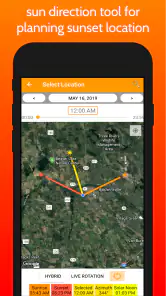
When I look at the app’s future, I would pay attention to whether its focused concept becomes more useful without losing its simplicity. The most valuable improvements would be those that help users turn a promising forecast into a practical plan: clearer context for changing conditions, better support for choosing a viewing location, and an easy way to understand how much confidence to place in the outlook.
I would also watch how the current version behaves on older supported devices. Because the minimum operating system is Android 7.0, the app remains accessible to people who are not using the newest phones. That broad compatibility is convenient, but a good experience still depends on the interface remaining responsive and readable across different screen sizes and hardware generations.
The install count is over 10 thousand, which places SkyCandy in the category of a smaller, specialized app rather than a dominant weather service. I see that as both a caution and an attraction. It may not have the broad ecosystem of a major weather platform, but its narrower purpose can make it easier to understand. People who want a dedicated colorful-sky forecast may prefer that clarity over a crowded alternative.
My recommendation after using it
I would recommend SkyCandy to a friend who regularly notices the sky and wants a quicker way to decide when it is worth going outside. It is especially appealing for short local outings, casual photography, sunset walks, and travel moments where timing matters. The free entry point makes it easy to see whether its style of forecasting fits your habits.
I would not recommend using it alone for serious weather planning. If your main concern is rain, storms, wind, temperature, or a detailed schedule, a conventional weather app should remain your primary tool. SkyCandy works best beside that kind of service, filling a specific gap rather than trying to replace everything.
My final view is positive but deliberately narrow: this is a focused weather companion with a clear reason to exist. Its success depends on whether you care about vivid sunrises and sunsets enough to check before heading out. If you do, the app can turn a vague hope into a more informed plan. If you do not, its specialized approach will probably feel unnecessary, and the usual all-purpose forecast will serve you better.
SkyCandy - Sunset Forecast App Frequently Asked Questions
Who is SkyCandy designed for?
SkyCandy is aimed at anyone who likes catching colorful skies, from casual sunset watchers to photographers planning an evening shoot. It can also help travelers and people arranging an outdoor outing decide when to make time for the view. Its focus is sunset and sunrise forecasts, so it is most relevant if you want to plan around changing sky conditions rather than use a general-purpose weather app alone.
What is SkyCandy - Sunset Forecast App?
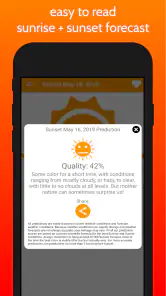
SkyCandy is a sunset-planning app designed to help users discover when and where they can enjoy attractive evening skies. It provides forecast information related to sunset conditions, including timing and expected visual quality, so you can decide whether it is worth heading outdoors with your phone or camera. It is particularly useful for photographers, travelers, walkers, and anyone who enjoys watching sunsets.
How accurate are SkyCandy’s sunset forecasts?
The app’s predictions are useful for planning, but they should not be treated as a guarantee that a perfect sunset will appear. SkyCandy relies on weather and atmospheric data, and conditions can change during the day. Cloud movement, haze, rain, visibility, and local weather differences may affect the final result. For the best experience, check the forecast shortly before sunset and remain flexible about your location.
Does SkyCandy show the exact sunset time and the best viewing period?
SkyCandy is intended to provide more than a simple sunset time. It helps users understand when sunset will occur and whether the surrounding conditions may create a colorful or visually interesting sky. Depending on the location and available forecast data, the app may also help identify the most promising viewing window. Remember that the best colors can appear before or after the official sunset time.
Can I use SkyCandy to plan sunset photography or outdoor trips?
Yes. SkyCandy can be useful when planning photography sessions, scenic walks, beach visits, hikes, dates, and short trips focused on sunset viewing. Before leaving, select or check your intended location, review the expected conditions, and allow enough travel time to arrive early. Photographers should also consider local terrain, buildings, trees, and viewpoints, since the app cannot fully predict how those surroundings will affect the scene.
Pros
- Shows sunset times and viewing conditions at a glance.
- Colorful forecasts make planning photo outings more enjoyable.
- Location-based forecasts help discover nearby sunset spots.
- Useful reminders can help users avoid missing golden hour.
- Simple interface is easy to understand for casual users.
Cons
- Forecast accuracy depends on the quality of local weather data.
- Some features may require location access to work properly.
- Cloud predictions can change quickly as weather conditions shift.
- Limited value for users who rarely watch or photograph sunsets.
- Frequent notifications may feel unnecessary if not customized.
- Category
- Weather
- Version
- 2.8.0