شرطة الاطفال العراقية المطورة
- 17.00
- 4.2
- Installs
- 100.00K
- Price
- Free

Screenshots


Analysis by Reviewed
شرطة الاطفال العراقية المطورة is a parenting app built around the idea of making a child-focused police role-play moment feel familiar to Iraqi Arabic-speaking families. I approached it less like a conventional game and more like a small tool parents may open during a difficult everyday situation. Its purpose is easy to understand, but the way it fits into family life depends heavily on when it is used, who is holding the phone, and whether the surrounding network conditions cooperate.
What immediately gives it a clear identity is its Iraqi dialect focus. That matters because a child is more likely to understand a familiar way of speaking than a formal or foreign voice. The app is listed as free, aimed at Everyone, and belongs to the Parenting category rather than being presented as a standard action game. In my view, that positioning is important: the value is not simply entertainment, but the possibility of helping a parent create a short, controlled conversation about behavior.
The developer is naif212, and the app has attracted over 100 thousand installs with an average rating of 4.2 from around 580 ratings. Those figures suggest that it has found a real audience, although they should not be treated as proof that every family will find the approach comfortable. A police-themed warning can be amusing for one child and unsettling for another, so the parent’s judgement remains more important than the app itself.
How the app fits into connected family moments
Network-dependent moments change the experience
The first practical question I would ask before using this app is not whether the concept sounds useful, but whether the phone is ready at the exact moment a parent needs it. A parenting tool is often opened during a rushed situation: a child is refusing to leave, becoming noisy in a public place, or ignoring a simple instruction. If the app needs a network connection for any part of the experience, waiting for a page, media element, or other content to load can make the moment feel less natural.
That is why I would not make it the only method in a parent’s discipline routine. I would prepare it before the difficult moment rather than discovering how it behaves while a child is already upset. Open it in a calm setting, check that the relevant screen responds, and keep the phone charged. This small habit turns connectivity from a surprise into something manageable.
The Iraqi dialect is one of the strongest reasons to choose this particular app over a generic police-simulation clip or a broad children’s entertainment app. Familiar language can make a short exchange feel more direct. At the same time, the same realism can make the tone stronger than intended. I would introduce it as pretend play, not as a real authority figure who can punish the child. That distinction protects the child’s trust and keeps the parent in control of the conversation.
For a child who enjoys imaginative play, the police theme may create an opening for discussion. A parent can ask what happened, why a rule matters, and what the child would do differently. Used this way, the app becomes a prompt rather than a replacement for explanation. If it is used only to end an argument quickly, the child may focus on fear or surprise and miss the lesson the parent wanted to teach.
A realistic mobile scenario
Imagine a family preparing to leave a relative’s home. One child keeps running between rooms and refuses to put on shoes. Instead of repeatedly raising their voice, the parent takes a moment to move aside, opens the app, and uses the police-themed interaction briefly. Once the child looks up, the parent immediately follows with a concrete instruction: shoes first, then the child can carry a small bag to the car.
That final step is essential. The app may help interrupt a cycle of arguing, but it does not complete the parenting task. The child still needs a clear choice, a reasonable expectation, and a calm explanation. I found the concept more useful when it was treated as a transition tool for a few seconds, not as a full behavior-management system.
Connectivity can also shape the social setting. In a quiet home, a short loading delay may be harmless. On a bus, in a waiting room, or outside a busy shop, it can draw attention to the phone and make the parent feel pressured. I would therefore use it most deliberately at home or in another place where there is time to stop and reset, rather than relying on it in every public situation.
Mobile contexts require careful handling
Because this is a phone-based parenting app, the screen is likely to be shared between adult and child. That creates a useful opportunity: the parent can hold the device and decide how much of the interaction the child sees. It also creates a limitation, because handing over the phone may lead the child to explore beyond the intended moment or ask for more screen time.
My preferred workflow would be short and predictable. I would open the app myself, show only the relevant interaction, put the phone away, and continue the conversation without letting the device become the reward. This keeps the focus on the behavior rather than on gaining access to a colorful or unusual phone experience.
Families with more than one child should also think about consistency. If one child is singled out with the police theme while another is not, the experience may feel unfair or embarrassing. It works better when the parent explains that the app is pretend and uses it sparingly with an agreed family rule. For older children, a direct conversation may be more respectful and effective than a police-style intervention.
What happens when the connection or timing fails
Every app used in a stressful moment needs a recovery plan. If a screen does not open promptly, I would stop trying rather than repeatedly tapping while the child waits. The quickest recovery is simple: put the phone away, state the instruction in plain language, and offer one realistic choice. That keeps a technical problem from becoming a second argument.
I would also test the app at home before taking it into a more demanding setting. This is not about expecting a complicated setup; it is about learning its rhythm. A parent should know where to tap, how quickly the interaction begins, and whether the child can understand the Iraqi wording. Familiarity reduces the temptation to use the app in an exaggerated way when time is short.
If the child reacts negatively, the recovery should focus on reassurance rather than repeating the police message. I would explain that the app is pretend, acknowledge that the sound or wording felt uncomfortable, and move to a normal conversation. This is one of the most important trade-offs: the same theme that makes the app memorable can also make it unsuitable for a sensitive child.
Another practical issue is interruption. A phone call, notification, weak signal, or a child simply losing interest can break the moment. I would treat that as a sign to return to ordinary parenting tools instead of trying to force the app to work. The app should support a parent’s judgement, not control it.
Using it without wasting mobile data
Connectivity also affects how responsibly the app fits into a family’s phone habits. Since the experience is being considered in network-related situations, I would avoid opening it repeatedly just to test whether a child will respond. That can turn a targeted tool into background phone use without adding much value.
A more data-conscious approach is to use it only when there is a clear reason, preferably when the phone is connected through a dependable home network if the experience requires online access. Parents should also avoid assuming that a screen that opened once will behave identically in every location. Testing at home and using it selectively is more practical than making it part of every outing.
This matters especially for families sharing one mobile plan. A short parenting intervention may be worthwhile, but repeated attempts during poor reception are not. If the app becomes slow or unreliable, the better option is to rely on a prepared verbal routine. I would keep two or three short phrases ready in Iraqi Arabic so the child receives the same boundary even when the phone cannot help.
There is also a privacy-minded reason to keep the interaction controlled. A parent does not need to give the device to the child for a long period to make use of the idea. Holding the phone personally limits accidental exploration and keeps the experience tied to the specific situation. I would not use it as an unattended distraction while doing another task, because that changes the app from a guided parenting prompt into unsupervised screen time.
Where it compares well with ordinary alternatives
The usual alternatives in this category are direct conversation, a reward chart, a timer, a story, or a general children’s game. Compared with those options, this app has a very specific advantage: its Iraqi police framing can capture attention quickly when a child understands that style of speech. A reward chart is better for long-term routines, while a story may be better for teaching empathy. This app is more suited to a brief interruption and reset.
It is also more culturally focused than a generic English-language behavior video or an international children’s app. That does not automatically make it better, but it can make the interaction feel less artificial in an Iraqi Arabic-speaking household. The trade-off is that its usefulness is narrower. A family looking for sleep routines, developmental activities, educational lessons, or a structured behavior program will need a different kind of app.
Compared with a normal game, it offers less reason for a child to return independently. I see that as a positive if the goal is to avoid creating another addictive screen habit, but it also means parents should not expect a rich entertainment experience. The app’s success depends on the adult’s timing, tone, and follow-up more than on the novelty of the screen.
Who should use it, and who should skip it
I would recommend trying it if you are raising a young child in an Iraqi Arabic-speaking environment, understand the police-play approach, and want a short attention-grabbing prompt rather than a complete parenting program. It may be especially useful for occasional transitions, such as leaving a place, stopping unsafe running, or shifting from noisy play to a calmer activity.
I would skip it if your child is frightened by uniforms, authority figures, loud warnings, or stories about being taken away. I would also avoid it for children who respond better to negotiation and explanation. Older children may see the tactic as childish or manipulative, and using it repeatedly could weaken its effect while creating resentment.
Parents should not use it to threaten arrest, claim that real police will come, or shame a child in front of other people. Those approaches can damage trust and make the app feel like intimidation rather than pretend play. The safest use is transparent: the parent presents it as a brief fictional role-play, then explains the real rule in their own words.
Version, access, and the everyday decision
The app’s current version is 8.0.0, and it supports devices running Android 5.0 or later. That makes it accessible to families using older Android phones, which is useful for a simple parenting tool that may be installed on a shared or spare device. Still, compatibility alone does not guarantee a smooth experience in every mobile context, so I would check it on the actual phone intended for family use.
It was released on April 13, 2023, and remains free to use. The free price lowers the barrier for parents who want to test the concept without committing money. I would still judge it by how calmly it fits into the household, not simply by the fact that it costs nothing. A free app that causes arguments about the phone is not automatically a good family tool.
After trying to view it through the lens of real parenting rather than novelty, my opinion is fairly clear. شرطة الاطفال العراقية المطورة works best as a brief, parent-led attention reset, not as a substitute for consistent boundaries. Its Iraqi dialect focus gives it a distinctive place among parenting apps, while its police theme demands sensitivity and restraint.
The connectivity question ultimately comes down to preparation. I would test it before relying on it, use it selectively, avoid handing over the phone for extended periods, and keep a non-digital alternative ready. If the child accepts pretend police play and the family speaks naturally in the Iraqi dialect, the app may be a useful addition for occasional difficult transitions. If the child is easily frightened or the situation requires a dependable offline routine, a calm explanation, timer, or reward system is likely the better choice.
For me, that balanced role is the right way to understand شرطة الاطفال العراقية المطورة. It is a focused free parenting app from naif212 with a recognizable local voice, a broad Everyone age label, and a practical place in some households. Its value comes from the parent’s judgement, especially when the network, the setting, and the child’s temperament do not line up perfectly.
Pros
- Child-friendly Arabic interface designed for Iraqi families.
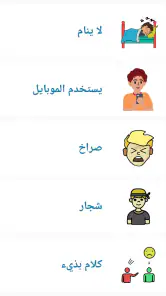
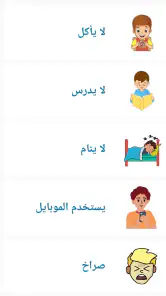
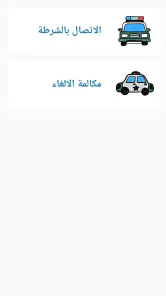
- Offers playful pretend-call scenarios for role-play and discipline.
- Simple navigation makes it easy for parents and children to use.
- Lightweight app that should run smoothly on many older devices.
- Useful offline for quick access without a constant internet connection.
Cons
- Repeated scenarios may become predictable after frequent use.
- Pretend police calls could frighten sensitive or younger children.
- May encourage discipline through fear instead of positive guidance.
- Arabic-only content limits accessibility for non-Arabic-speaking families.
- Audio playback may be disruptive in public or quiet environments.

- Category
- Parenting
- Version
- 8.0.0