Lucky Translate
- 64.00
- 4.6
- Installs
- 500.00K
- Price
- Free

Screenshots


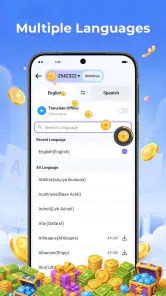



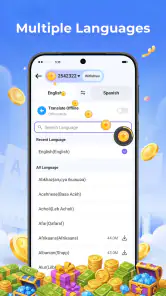

Analysis by Reviewed
I approached Lucky Translate with a simple question: can a translation app make language help feel useful enough to return to, rather than becoming another tool I open only in an emergency? After spending time with it, my answer is cautiously positive. Its appeal comes from combining translation with a reward-oriented experience, giving routine language tasks a more engaging reason to happen. That does not automatically make it the best translator for every situation, but it gives this free productivity app a distinct personality.
The app is developed by Digitnesia and is available to everyone at no cost. It has reached over 500 thousand installs and holds a 4.6 average from around 3 thousand ratings, which suggests that many users find the basic idea worthwhile. I would describe it as a lightweight companion for everyday translation, especially for people who enjoy small incentives and do not want a complicated language-learning platform. Its current version is 1.2.5, and it runs on Android 8.0 or later.
What makes Lucky Translate different in daily use
The central attraction is not simply converting one language into another. The store summary presents it as a way to translate and earn rewards, while the short description calls it Lucky Translate. That combination changes how I think about the app. A conventional translator is usually judged by speed, clarity, supported languages, and how well it handles context. Here, the motivation layer matters too: the app is trying to make repeated translation activity feel more rewarding.
That can be useful for someone who regularly encounters unfamiliar words but lacks the discipline to study from a formal course. For example, imagine reading product instructions, browsing a foreign-language social post, or checking a short message from an overseas contact. Instead of treating each lookup as an isolated chore, I can use the app as a small part of a daily routine. The reward element may encourage me to keep returning and notice language patterns that I would otherwise ignore.
I would not confuse that experience with a complete language course. Translation helps me understand a piece of text, but it does not automatically teach pronunciation, grammar, conversation, or cultural nuance. The app’s strongest role is as a bridge between a phrase I do not understand and a useful first interpretation. Users who want structured lessons, progress tracking, speaking practice, or detailed explanations may need a separate learning service.
One practical strength is the low barrier to trying it. Because it is free, I can test whether the reward approach fits my habits without committing to a subscription. That matters for casual users who only translate occasionally. It also makes the app easier to recommend to a friend who wants a simple starting point rather than a large, feature-heavy language suite.
A realistic workflow for short translations
My preferred way to use an app like this is to give it a narrow job. I might keep it available while planning a trip, reading a foreign recipe, or communicating in a group chat. I would first translate the complete sentence, then check the surrounding context before acting on the result. This two-step habit is important because a word can have several meanings, and a machine translation can sound acceptable while still missing the speaker’s intention.
More From Our News Desk

Clash of Clans Is Won Between the Battles

Android Auto Makes the Case for Quieter Car Software

MobiOffice: Transforming Mobile Productivity with Seamless Integration

EA SPORTS FC™ Mobile Soccer: Redefining Mobile Sports Gaming

How Microsoft OneDrive Became a Mobile Productivity Giant

How Google Translate Breaks Language Barriers Effortlessly
For travel, I would prepare a small personal list of phrases outside the app as well. Lucky Translate can help me understand signs or messages when they appear, but I would not rely on a last-minute translation for medical instructions, legal wording, or an important booking. In those situations, accuracy and context matter more than convenience or the possibility of a reward.
A less obvious benefit of this workflow is that it turns translation into a review exercise. After looking up a phrase, I can try to remember its meaning later instead of immediately translating the same sentence again. The reward system may provide the initial motivation, but the real value comes from using each lookup as a small learning opportunity. That is a better long-term habit than tapping through translations without noticing how the language is built.
I also recommend keeping the input short when the wording is informal. Slang, jokes, abbreviations, and mixed-language messages are difficult for any automated translator. Breaking a long paragraph into meaningful sentences can make the result easier to inspect. This is not a special button or hidden mode; it is simply the most sensible way to get more dependable help from a translation tool.
Where the reward angle helps, and where it does not
The reward concept is most useful when it encourages consistency. Someone who normally gives up after a few translations may be more willing to return if there is an additional reason to use the app. That makes Lucky Translate interesting for students building a habit, casual travelers preparing for unfamiliar places, and curious users who like experimenting with short phrases.
At the same time, rewards can become a distraction. If I start translating meaningless text only to chase an incentive, the app stops serving my language needs. I would judge the experience by whether it helps me understand something I genuinely care about, not by how often I can interact with it. Users who dislike gamified systems may find the extra layer unnecessary and prefer a direct translator that gets in and out of the way.
There is also a trade-off between speed and attention. A traditional translation app may feel better when I need an answer immediately, particularly if I already know exactly where its main controls are. Lucky Translate makes more sense when I am comfortable with a slightly more engaging process. That difference is small for casual use but noticeable when I am in a hurry.
Important limits before making it your main translator
My biggest reservation is that the reward promise can create expectations that are too high. “Earn” sounds attractive, but I would treat any reward as a secondary benefit rather than a dependable source of money or value. The app is better understood as a translation utility with an incentive layer, not as an income app. Anyone installing it mainly for financial returns may be disappointed if the practical translation experience is not already useful to them.
I would also be careful with sensitive material. Translation apps are convenient for ordinary phrases, but private conversations, identity documents, workplace information, and confidential business text deserve extra caution. Before entering anything personal, I would consider whether a general mobile translator is appropriate at all. That advice applies especially when the wording must be exact.
Another limitation is the gap between translated words and real communication. A literal result may not preserve politeness, humor, regional expressions, or implied meaning. If I am writing to someone important, I would use the translation as a draft and then ask a fluent speaker to review it when possible. Lucky Translate can reduce friction, but it cannot replace human judgment in emotionally delicate or high-stakes conversations.
The age rating of Everyone makes the app approachable for a broad audience, including families and younger users who need basic language help. Still, an all-ages rating should not be read as a guarantee that every translated result is suitable for every context. Parents and teachers should encourage children to check meanings rather than copying a translation blindly, particularly when a phrase has several possible interpretations.
How it compares with familiar alternatives
Compared with a standard translation utility, Lucky Translate stands out through motivation rather than a clearly different translation task. A conventional alternative may be preferable when I want the most direct route from input to output, especially for occasional lookups. It may also feel more natural if I already rely on a familiar interface and do not care about rewards.
Compared with a full language-learning app, Lucky Translate is more immediate but less educationally complete. A learning platform usually gives me lessons, exercises, repetition, and a planned path. This app is more suitable when my starting point is a real phrase in front of me. I would choose it for just-in-time understanding, then use structured lessons if my goal were fluency.
Compared with a dictionary, it offers a broader way to approach sentences and everyday communication, while a dictionary can provide richer definitions and usage detail for individual words. My choice would depend on the task: a sentence or message favors translation, while careful vocabulary study favors a dictionary. Lucky Translate works best when I do not want to assemble the meaning one word at a time.
The reward element is therefore both its clearest distinction and its main question mark. It gives the app a reason to return, but it should not be mistaken for proof that the translation itself is superior. I would install it alongside another trusted tool if language accuracy were important, using Lucky Translate for convenient everyday checks and the second tool for confirmation.
Who will get the most from it
I think the best audience is made up of casual translators, students, travelers, multilingual chat users, and people who enjoy light reward mechanics. It is particularly appealing to someone who wants a free way to turn occasional translation into a repeatable habit. The low cost makes experimentation easy, and the productivity category fits its practical role: it helps me complete small language-related tasks rather than asking me to commit to a full course.
It may also work well for someone who is beginning to explore another language but feels intimidated by formal study. Looking up a phrase from a song title, menu, game community, or short online post can be a gentler starting point than opening a textbook. Over time, those small encounters can reveal recurring words and sentence patterns. The key is to pause and learn from the results instead of treating each translation as disposable.
I would skip it if I need professional-grade translation, extensive offline preparation, advanced writing assistance, or a complete curriculum. I would also skip it if reward-based apps make me uncomfortable or encourage me to spend time on tasks that have no real purpose. In those cases, a focused translator, a specialist dictionary, or a structured language course would be a better match.
Before installing, I would ask myself three practical questions. Do I translate often enough to benefit from a motivation layer? Am I comfortable checking important results instead of accepting them automatically? And do I want a quick helper rather than a full language-learning system? If the answers are yes, the app has a clear place in my toolkit.
My final take after using the app
Lucky Translate is most convincing as a friendly everyday translation companion, not as a replacement for every language tool. Its free access, approachable audience, and reward-focused identity give it a reason to stand apart from ordinary productivity apps. I can see myself recommending it to a friend who wants to make translation practice more regular without signing up for an intensive course.
My recommendation comes with sensible boundaries. I would use it for short, ordinary language tasks, keep sentences clear, review results in context, and avoid treating rewards as guaranteed income. For important communication, I would verify the wording elsewhere or ask a fluent person. Those precautions do not cancel out the app’s usefulness; they define the situations where it can help safely.
Overall, Digitnesia has created an appealing option for users who want translation to feel a little less mechanical. The app will not satisfy everyone, and people seeking deep language instruction or maximum professional precision should look elsewhere. For casual, repeatable translation with an extra incentive to stay engaged, however, Lucky Translate is a worthwhile free app to try, especially on a compatible Android device running version 8.0 or later.
Lucky Translate Frequently Asked Questions
What languages does Lucky Translate support?
Language availability is an important thing to check before relying on a translation app for travel, study, or everyday conversations. Lucky Translate is designed for translation, but the languages and language pairs available to you may depend on the app version and the feature you use. Check the language selector after installing it and confirm that it covers the languages you need.
What is Lucky Translate, and what can I use it for?
Lucky Translate is a translation app designed to help users understand and communicate in different languages. Based on its available tools, it may support typed text, copied content, and, depending on the version and device, voice or camera-based translation. It can be useful for travel, studying, reading foreign-language messages, and handling everyday conversations, although results may vary with slang, accents, context, and complex sentences.
Is Lucky Translate free to download and use?
Lucky Translate is free to download, but users should check the current listing for advertisements, optional purchases, subscriptions, or limits on certain features. Free access may not include every translation mode, and some tools could require an internet connection. Before confirming a purchase, review the pricing details, trial terms, renewal conditions, and cancellation instructions shown in the Android or iOS store.
Does Lucky Translate work without an internet connection?
Offline availability depends on the app version, supported languages, and whether downloadable language packs are provided. Basic translation functions commonly rely on an internet connection, particularly voice, image, and less frequently used language pairs. If you plan to use Lucky Translate while traveling, test the required languages in advance and look for an offline option in the settings rather than assuming every feature will work without mobile data.
How accurate are translations made with Lucky Translate?
Lucky Translate can be helpful for everyday phrases, short messages, and general understanding, but no automatic translator is perfectly reliable. Accuracy may decrease with idioms, regional expressions, technical vocabulary, humor, names, poor audio, or text captured from an unclear image. For legal, medical, academic, or professional communication, treat the result as assistance and verify important wording with a fluent speaker or qualified translator.
Pros
- Supports multiple languages for quick everyday translations.
- Simple interface makes common translation tasks easy to start.
- Useful for translating short phrases while traveling or studying.
- Can help users understand unfamiliar words and basic sentences.
- Convenient alternative to switching between separate translation tools.
Cons
- Translation quality may vary depending on the language and phrase complexity.
- Some features may require an internet connection to work reliably.
- Literal translations can miss slang
- tone
- or cultural context.
- Privacy details should be checked before entering sensitive text.
- Ads or in-app limitations may interrupt frequent translation use.
- Category
- Productivity
- Version
- 1.2.5