Just a Baby: Become a parent
- 648.00
- 3.4
- Installs
- 100.00K
- Price
- Free

Screenshots
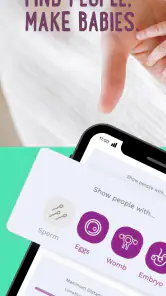

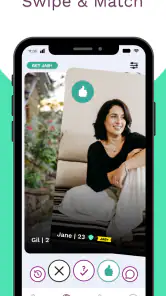


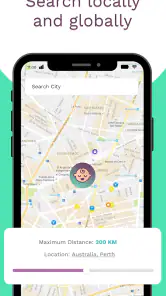


Analysis by Reviewed
I approached Just a Baby as a very different kind of parenting app. It is not a pregnancy tracker, a baby monitor, or a checklist for preparing a nursery. Its purpose is to help adults explore routes to parenthood by meeting potential egg or sperm donors, co-parents, and surrogates in different parts of the world. That makes it more personal, more sensitive, and considerably more complicated than the average app in the parenting category.
My first impression was that the app is best understood as a starting point for conversations, not as a complete family-building service. It can help someone discover people with similar intentions, but the important decisions still happen outside the screen: checking identities, discussing expectations, obtaining legal advice, and arranging medical support. If you keep that distinction in mind, the app becomes easier to judge fairly.
How the app fits into modern family planning
The developer, Just a Baby Inc., has built an app around a need that traditional parenting apps usually ignore. Many services assume that a user is already pregnant, already parenting, or following a conventional path toward having a child. This one focuses on the stage before that, when people may still be deciding whether donation, co-parenting, or surrogacy is the right direction for them.
That wider scope is its main appeal. A person who cannot or does not want to follow the usual route may find it useful to see several possibilities in one place. The app can also be relevant to people who have already made a decision and want to meet others who understand the practical and emotional weight of it.
At the same time, the broad audience creates a challenge. A sperm donor, an intended parent, a potential co-parent, and a surrogate may all arrive with completely different expectations. A profile that seems clear to one person can feel vague to another. I would therefore treat every interaction as an early conversation rather than an agreement.
The service is free to install, which lowers the barrier to looking around. There are in-app purchases ranging from $1.99 to $109.99 per item, so I would not assume that every useful action remains free after installation. Before paying, I would first spend time understanding what the free experience allows and whether the people available in my area match my needs.
What using it actually involves
The most useful way to approach the app is with a written plan. Before creating or browsing profiles, I would note the questions that matter most: Do I want a donor relationship, a co-parenting arrangement, or a surrogate? How involved should each adult be? What location limits are realistic? Am I prepared for legal and medical costs beyond the app itself?
This preparation is not busywork. It prevents a common mistake in social matching services: becoming interested in a person before deciding whether the underlying arrangement is workable. With family planning, emotional compatibility is only one part of the picture. Geography, timing, health information, legal parentage, communication style, and long-term responsibilities can all change the outcome.
I also recommend keeping early messages focused and respectful. A short introduction explaining your intentions is more useful than an overly personal life story. Ask whether the other person is seeking the same type of arrangement, but avoid treating a promising conversation as proof that the match is safe or suitable.
The international focus can be helpful when local options are limited, but it also makes practical questions more important. A cross-border arrangement may involve different laws, travel requirements, healthcare systems, and definitions of parenthood. The app can introduce people globally; it cannot make those differences disappear.
A realistic everyday scenario
Imagine someone working full-time who has spent months researching family-building options. They install the app in the evening, create a profile, and find several people whose goals appear similar. Instead of immediately moving a conversation off the platform or discussing money, they use the first exchange to clarify location, desired involvement, and whether both sides are looking for the same kind of relationship.
After a few conversations, the user creates a private checklist of unresolved issues. One person may be emotionally compatible but live too far away. Another may share the same timeline but have expectations about contact that do not fit. A third may seem promising, yet still require professional legal and medical guidance before any decision is possible.
In that scenario, the app has done something valuable even without producing an immediate match. It has helped turn a vague search into a more organized process. That is where I see its strongest everyday use: opening conversations and helping users identify what they need to ask next.
Where it differs from ordinary parenting apps
Compared with a pregnancy calendar or a fertility information app, this service is more social and less instructional. Those alternatives are usually built around content, reminders, health tracking, or appointments. Just a Baby is centered on meeting people, so the quality of the experience depends heavily on the community and on how clearly users describe themselves.
It also differs from a general dating app. The goal is not simply romance or companionship. A family-building arrangement can involve years of responsibility and may continue even when the adults are no longer close. Someone who approaches the service with a dating mindset may misunderstand what other users are seeking.
Specialist agencies or clinics may be a better choice for people who want structured screening, professional coordination, and a clearly managed process. They are often less casual and may be more expensive, but that structure can be important when legal, medical, and financial risks are high. I see this app as complementary to professional services rather than a replacement for them.
The current experience and its limits
The app has a modestly positive but not outstanding average rating of 3.4 from around 2.9 thousand ratings. I read that as a sign that the idea is meaningful to many users, while the execution or match quality may not work equally well for everyone. A social service can be difficult to judge by interface alone because location, timing, and the number of suitable profiles strongly affect each person’s experience.
Its reach is substantial, with over 100 thousand installs, but that does not guarantee a dense pool of relevant contacts in every region. A global audience can sound impressive while still leaving a user with few practical options nearby. I would be especially cautious about assuming that a search will produce an active, compatible community in a smaller city or country.
The mature age rating of 17 or older is appropriate for the subject matter. This is an adult service involving reproduction, relationships, and potentially sensitive personal information. It is not something I would recommend treating casually or allowing a younger person to explore without responsible adult guidance.
Privacy is another area where I would slow down. Profiles in this kind of app may reveal intimate intentions, family circumstances, location, or health-related details. I would share only what is needed to begin a conversation, avoid publishing identifying information too early, and move carefully when someone asks for documents, money, or unusually personal details.
How the product’s evolution matters
The current version is 25.4.0, which suggests an actively maintained product rather than an abandoned experiment. That is encouraging for existing users because a service built around communication needs ongoing attention. People depend on account access, profile visibility, and conversations continuing to work over time.
Still, a version number by itself does not tell me that the app has solved its biggest challenges. Maintenance can include technical fixes, compatibility work, or smaller refinements that users barely notice. I would judge the latest experience by whether browsing feels dependable, conversations remain usable, and the available community is relevant—not simply by the size of the version number.
For someone who used an earlier release, the safest expectation is continuity with gradual refinement rather than a completely new service. Existing users should review their profile wording after updating, check that their preferences still express what they mean, and avoid assuming that an old conversation reflects a person’s current intentions.
The minimum operating-system requirement is Android 7.0 or later. That keeps the app accessible to many older devices, although anyone using an aging phone should still expect the experience to depend on the device’s general performance and software support. I would update the operating system where possible before blaming the app for slow behavior or compatibility problems.
Three practical insights that are easy to miss
First, the best profile is not necessarily the most detailed one. In this context, a profile should make the arrangement understandable. State whether you are exploring donation, co-parenting, or surrogacy, describe the level of involvement you imagine, and identify broad location limits. This reduces conversations with people who are interested in a fundamentally different outcome.
Second, compatibility should be tested through small decisions before major emotional commitments. Ask how the other person prefers to communicate, how they imagine handling disagreements, and what involvement might look like after a child is born. Someone can appear kind and enthusiastic while still having expectations that are impossible to reconcile.
Third, treat the app as a discovery layer and create your own verification workflow. Keep notes about what has been discussed, confirm important claims through appropriate professional channels, and never let the convenience of messaging replace identity, medical, or legal checks. This is particularly important when users are in different countries.
A fourth useful habit is to set a stopping rule. If a conversation becomes pressuring, evasive, or focused on payment before basic trust has been established, end it. The desire to become a parent can make people overlook warning signs. Having a rule in advance makes it easier to protect yourself when emotions are running high.
Who is likely to benefit most
I think the app is most useful for adults who are still mapping out their options and want access to a broader community than their immediate social circle can provide. It may suit intended parents seeking a nontraditional route, people considering co-parenting, and donors or surrogates who want to understand potential arrangements directly with others.
It can also help users who already know their preferred path but need a place to begin meeting candidates. The value is greatest when the user is patient, communicates clearly, and is willing to do serious work away from the app. Someone looking for a quick, guaranteed result will probably find the experience frustrating.
I would not recommend relying on it alone for anyone who needs formal screening, clinical assistance, or contract management. A clinic, lawyer, licensed agency, or qualified counselor may be a better first stop when the situation involves medical complexity, international movement, or disagreement about parental rights.
It is also a poor fit for anyone uncomfortable with direct communication about reproduction and long-term responsibility. This is not a place to browse casually for entertainment. Even a friendly exchange can carry consequences, and users need enough emotional readiness to handle rejection, ambiguity, and difficult questions.
What I would like users to watch closely
When deciding whether to continue with the app, I would watch the quality of conversations rather than the number of profiles. A smaller group of people who clearly explain their intentions is more useful than a large collection of vague introductions. Pay attention to consistency: does someone’s profile match their messages, and do their answers remain steady when you ask practical questions?
I would also watch the balance between global reach and local feasibility. A distant match may be emotionally appealing, but travel, healthcare, legal parentage, and future contact can turn distance into the central issue. Before investing heavily in a relationship, calculate what regular communication and in-person involvement would realistically require.
Pricing deserves attention too. The app is free to download, but the range of optional purchases means users should understand what they are paying for before committing. I would avoid purchasing simply because a conversation feels urgent. A paid feature cannot compensate for an unsuitable match or replace professional safeguards.
Finally, watch how your own expectations change. The search process can make one route seem attractive because a particular person is appealing. I would periodically return to the original questions—what kind of family arrangement do I want, what responsibilities can I accept, and what support do I need? That reflection helps keep the decision grounded.
My final take
Just a Baby is a distinctive parenting app because it addresses the search for parenthood before the usual parenting tools begin. I appreciate its willingness to bring donors, co-parents, surrogates, and intended parents into the same conversation. For the right adult, it can make an isolated and confusing search feel more open and organized.
My recommendation comes with clear boundaries. Use it to find possibilities, compare expectations, and start respectful conversations. Do not use it as proof that a stranger is safe, as a substitute for medical care, or as a replacement for legal advice. The app can create an introduction; the serious work of building a secure family arrangement still requires independent checks and professional support.
With that mindset, the free entry point is worth exploring for adults who are genuinely considering these paths. People wanting a managed, clinically supervised, or legally structured process should look elsewhere or use this only as an early research tool. Its greatest strength is access to conversations, while its greatest weakness is that users must supply much of the judgment and verification themselves.
Pros
- Simple matching tools make it easy to connect with people seeking parenthood.
- Profiles can help users clarify parenting goals and expectations early.
- Useful for exploring different paths to becoming a parent.
- Private messaging supports conversations before sharing personal contact details.
- Clean interface is approachable for users unfamiliar with fertility apps.
Cons
- Matching does not guarantee serious intentions or long-term compatibility.
- Users may encounter incomplete
- outdated
- or misleading profile information.
- Discussing parenthood with strangers can involve sensitive emotional issues.
- Privacy settings should be checked carefully before sharing health or family details.
- The app may have limited value in areas with a small active user base.

- Category
- Parenting
- Version
- 25.4.0