Ever Accountable – Quit Porn
- 1.49K
- 4.5
- Installs
- 100.00K
- Price
- Free

Screenshots
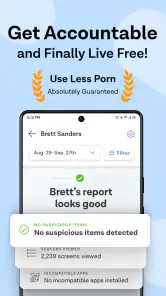
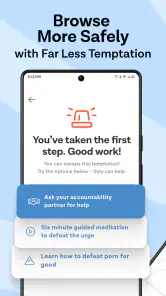
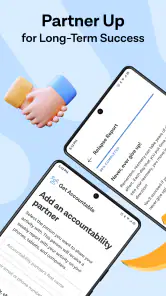
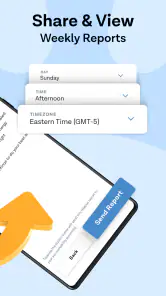
Analysis by Reviewed
Changing a private habit is rarely solved by downloading one more app and hoping motivation stays high. What I found useful about Ever Accountable – Quit Porn is that it treats the problem as something that benefits from structure and another person’s support, rather than pretending a reminder alone will fix everything. It is a free productivity app from Ever Accountable, aimed at people who want help monitoring pornography use and other unwanted habits with an accountability partner.
I approached it as a first-time user who wanted to understand the practical routine, not just the promise shown in an app store. The important question is whether the app can make an uncomfortable goal easier to discuss and easier to follow through on. My answer is cautiously positive: it can be a useful part of a recovery plan, especially when you already have a trusted person willing to participate. It is much less convincing as a completely private, self-contained solution.
What to expect before you begin
The central idea is accountability. Instead of relying only on willpower, you involve another person who can help you stay aware of your behavior and your intentions. That changes the emotional shape of the process. A private promise such as “I will stop tomorrow” can disappear when stress, boredom, or late-night phone use arrives. A shared commitment feels more concrete.
That does not mean the app acts as a therapist, counselor, or replacement for professional care. I would view it as a support tool in the productivity category: something that helps create a routine around a difficult personal goal. If your pornography use is connected to trauma, compulsive behavior, depression, anxiety, relationship harm, or safety concerns, professional help may be more appropriate alongside any tracking tool.
The app is available at no charge, with optional in-app purchases ranging from $3.99 to $149.99 per item. That makes it reasonable to try without immediately paying, but I would still check the purchase screens carefully before committing to anything. The free starting point is useful for discovering whether the accountability approach suits you, while the paid options mean you should not assume every part of the experience remains free.
Its age classification is Everyone, which describes the store’s general content rating rather than the personal subject matter. The topic itself is mature and sensitive, so I would not hand the phone to a child simply because the listing carries that rating. The app has been around since October 16, 2014, and its current version is 23-25-621-2026-08-24, with Android 11 or newer required.
Public response is encouraging without being a reason to skip your own evaluation: it holds a 4.5 average from around 5.5 thousand ratings, with roughly 1.5 thousand written reviews and over 100 thousand installs. I read those figures as evidence that the concept has reached a real audience, not as proof that it will fit every situation. Accountability is personal; the right partner and the right boundaries matter more than popularity.
More From Our News Desk

Clash of Clans Is Won Between the Battles

Android Auto Makes the Case for Quieter Car Software

MobiOffice: Transforming Mobile Productivity with Seamless Integration

EA SPORTS FC™ Mobile Soccer: Redefining Mobile Sports Gaming

How Microsoft OneDrive Became a Mobile Productivity Giant

How Google Translate Breaks Language Barriers Effortlessly
The right person matters more than a perfect routine
Before installing, decide who could realistically be your accountability partner. This might be a spouse, close friend, mentor, sponsor, or another adult you trust. The best choice is not necessarily the person you feel least embarrassed around. It is someone who can respond calmly, respect privacy, and avoid turning a setback into humiliation.
A useful conversation starts with boundaries. Explain what you want the person to do, what you do not want them to do, and how often you would like contact. For example, you might want a brief check-in after a difficult evening rather than a detailed interrogation. You might also agree that the partner should encourage honesty instead of demanding proof every time you report a problem.
This is one of the app’s less obvious trade-offs. Accountability can reduce secrecy, but it can also create pressure if the relationship is poorly chosen. Someone judgmental may make you hide a lapse rather than learn from it. Someone unreliable may leave you feeling abandoned. The technology cannot repair that mismatch, so invest more thought in the human arrangement than in the installation itself.
From first setup to a meaningful first win
Start with a narrow, honest goal
When I begin a habit-change tool, I prefer a goal that can guide a decision today. “Become a better person” is too vague. A more useful starting point is something like avoiding pornography during a particular vulnerable period, making contact with the accountability partner when an urge appears, or completing one evening according to a preplanned routine.
The app’s focus may tempt you to frame success as a flawless streak. I think that is risky. A streak can be motivating, but it can also produce an all-or-nothing reaction: one lapse becomes an excuse to abandon the entire effort. I would use the accountability structure to notice patterns and return to the plan quickly, not to treat one difficult moment as a complete failure.
During setup, be truthful about why you are using it. Is the main problem late-night browsing, loneliness, stress after work, conflict in a relationship, or an automatic habit when you are alone? The answer determines what kind of support you need. A person who struggles mainly with boredom may need a replacement activity. A person using pornography to numb distress may need emotional support that an app cannot provide by itself.
Make the first partner conversation specific
Your first meaningful action should not be opening the app repeatedly to inspect it. It should be having a clear conversation with the person who will support you. Tell them the goal in plain language, then agree on a simple response for difficult moments. A message such as “I am having a strong urge and need to talk for five minutes” is more useful than a vague promise to “keep me accountable.”
It also helps to decide what happens after a setback. Will you contact the partner the same day? Will you write down what triggered it? Will you pause and review the evening routine? Agreeing in advance prevents the shame spiral that often follows an unwanted behavior. The app can support the accountability process, but the plan has to be understandable when you are tired and emotionally uncomfortable.
For a realistic example, imagine someone who usually uses pornography after getting into bed with a phone. On the first evening, that person can put the phone outside the bedroom, tell the accountability partner that this is the plan, and use the app as part of the shared commitment. If an urge appears, the next action is already chosen: get up, contact the partner, and move into a different activity. The success is not merely “I did not look.” It is that the person interrupted the automatic sequence and practiced a repeatable alternative.
Use the app as a bridge, not a substitute for action
Accountability tools work best when they lead to behavior outside the screen. I would avoid turning the app into another form of checking: opening it repeatedly, worrying about how the activity appears, or waiting for the perfect motivational message. The practical value comes from using it to support honesty, preparation, and timely contact.
One advanced but simple workflow is to pair the app with an urge plan written in ordinary language. Keep three steps ready: identify the trigger, change your physical situation, and contact the partner if the urge remains. For instance, “I am lonely after midnight; I will leave the bed and sit in the kitchen; if the urge continues, I will send the agreed message.” This converts a vague struggle into a sequence you can follow while your judgment is under pressure.
Another useful approach is reviewing the context after an incident rather than only counting the outcome. Ask what happened in the hour beforehand: Was the phone already in bed? Had you been arguing with someone? Were you avoiding sleep? Did you feel bored after finishing work? These details can reveal that the real intervention belongs earlier in the evening. A tool centered on accountability becomes more powerful when the partner helps you examine those patterns without blame.
Common confusion about monitoring and privacy
Some first-time users may expect a simple blocker that automatically prevents every unwanted website or app. That is not how I would understand this product’s main value. Its identity is built around control and monitoring with an accountability partner, so the social commitment is central. If your priority is technical filtering, a dedicated content blocker or device-level control may be a better companion or a better fit.
That distinction matters because monitoring can mean different things to different people. One person may want a partner involved in regular progress conversations. Another may expect detailed technical surveillance. Before relying on the app, make sure you and your partner share the same understanding of what accountability involves. Do not promise access, reporting, or oversight that you are not comfortable maintaining.
I would also avoid assuming that the app can identify every trigger or solve every compulsive pattern automatically. A digital tool can make a commitment visible, but it cannot know whether you are using pornography because of stress, isolation, habit, or a deeper mental-health concern. If you keep repeating the same cycle despite sincere effort, that is a reason to broaden your support, not simply to blame yourself or search for a stricter setting.
What may feel difficult in everyday use
The biggest friction is emotional. You have to be honest with another human being, and that can feel harder than privately installing a blocker. If you are not ready to disclose the goal to anyone, the app may feel uncomfortable or ineffective. That discomfort is not necessarily a flaw, but it does mean the service is not ideal for someone seeking a completely private experience.
There is also a risk of making the partner responsible for your choices. Accountability should add support, not transfer control of your behavior to somebody else. If you miss a check-in, the answer should be to repair the routine, not to demand that the partner monitor you constantly. Healthy use leaves room for personal responsibility and treats the partner as a source of perspective and encouragement.
Another limitation is that the app may not be enough for people whose main need is broader habit management. Someone trying to organize study sessions, exercise, sleep, and finances may prefer a general habit tracker with flexible categories. Someone who wants therapy exercises may need a mental-health app or a clinician. Someone who only wants website blocking may be happier with a specialized blocker. Ever Accountable is most distinctive when the accountability relationship is the part you are missing.
Choosing a sustainable next step
After the first successful evening or day, do not immediately make the goal dramatically harder. Repeat the same workable routine and notice what made it possible. Was the phone out of reach? Did the partner respond quickly? Did you go to bed earlier? Did you replace scrolling with a specific activity? These observations are more valuable than simply congratulating yourself and moving on without learning anything.
I would schedule a short weekly conversation with the accountability partner, even if daily contact is unnecessary. Discuss what worked, where the routine broke down, and one adjustment for the coming week. Keep the meeting practical. The purpose is not to create a courtroom around your behavior; it is to make the next difficult moment easier to handle.
If you decide to explore the optional purchases, do so only after you understand the basic experience and know which problem you are trying to solve. Paying more does not automatically create motivation or guarantee a better relationship with your partner. The free entry point gives you a chance to test the central idea first, which is exactly what I would recommend.
For Android users, the minimum operating system requirement is Android 11, so checking compatibility before planning a routine is sensible. The developer is Ever Accountable, and the app’s established presence gives it more history than a brand-new habit experiment. Still, I would judge it by your own ability to use the accountability process consistently rather than by its age or store figures.
My recommendation for a first-time user
I recommend starting with one trusted partner, one clearly defined vulnerable situation, and one agreed response to an urge. Install the app, explain the purpose honestly, and use the first day to practice communication rather than chase a perfect record. If the arrangement makes you more open and more prepared, keep building it. If it makes you fearful, secretive, or dependent on constant surveillance, reconsider the partner or choose a different kind of support.
The strongest reason to try it is simple: it turns a private intention into a shared commitment. That can be powerful when secrecy and isolation are feeding the habit. The main weakness is just as clear: without a willing, respectful accountability partner, much of the app’s distinctive value disappears.
My final view is that Ever Accountable – Quit Porn is worth trying for an adult who wants a structured accountability relationship and is prepared to be honest about setbacks. It is not a magic shield, a substitute for therapy, or the best choice for someone who only wants technical blocking. Used thoughtfully, though, it can help you take the first concrete step, recover faster after a difficult moment, and build a routine that depends less on willpower alone.
Ever Accountable – Quit Porn Frequently Asked Questions
Is Ever Accountable suitable for someone who wants to change their porn habits without feeling judged?
Ever Accountable – Quit Porn is intended to support people who want to reduce or stop pornography use, with accountability and greater awareness of browsing habits at its center. Its approach may suit someone who values practical visibility and encouragement, but the app is not a substitute for professional counseling. Consider whether sharing progress with another person feels supportive and appropriate for you before installing it.
What should I consider before connecting an accountability partner?
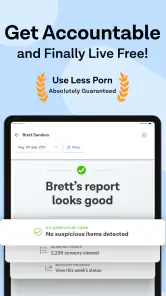
Think carefully about whom you trust with sensitive information before inviting an accountability partner. The app is built around accountability, and shared reports may make activity and progress more visible to that person. Discuss expectations and boundaries in advance, including what information you are comfortable sharing and how you want your partner to respond. That conversation can help keep accountability constructive rather than uncomfortable.
What is Ever Accountable – Quit Porn designed to do?
Ever Accountable – Quit Porn is designed to help people reduce or stop pornography use through accountability, activity monitoring, and personal awareness. After installation, the app focuses on making browsing habits more visible and encouraging users to stay consistent with their goals. It is better understood as a support and accountability tool rather than a guaranteed cure or replacement for professional counseling.
How does Ever Accountable monitor activity and support accountability?
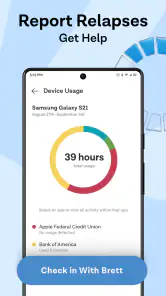
The app generally works by monitoring selected device or browsing activity and creating reports that can be shared with a trusted accountability partner. Depending on the platform and permissions granted, monitoring may involve accessibility, VPN, screen-time, or browser-related access. Before using it, review exactly what information is collected, who can see reports, and which permissions are required on your Android or iOS device.
Can I use Ever Accountable privately without an accountability partner?
You may be able to use some features on your own, but the service is primarily built around accountability with another person, such as a spouse, mentor, friend, or counselor. Sharing reports can make progress more transparent and provide encouragement when temptation appears. Users who prefer complete privacy should carefully check the current plan details, because certain features may depend on inviting or connecting with an accountability partner.
Pros
- Tracks browsing habits across devices for greater accountability.
- Accountability partner reports can encourage consistent progress.
- Simple dashboard makes activity patterns easy to understand.
- Supports users who want structured help quitting pornography.
- Monitoring may work across multiple browsers and platforms.
Cons
- Requires sharing sensitive browsing data with an accountability partner.
- Some features may require a paid subscription.
- Monitoring can raise privacy concerns for shared or family devices.
- Reports may create tension if legitimate private activity is flagged.
- The app may feel intrusive during everyday browsing.
- Category
- Productivity
- Version
- 23-25-621-2026-08-24