AirScope: Pollen & Air Quality
- 87.00
- 4.0
- Installs
- 10.00K
- Price
- Free

Screenshots
Analysis by Reviewed
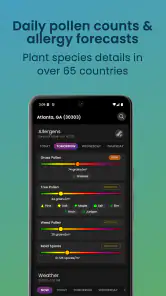
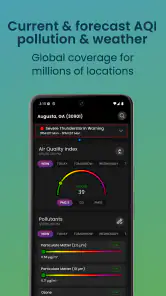
I started using AirScope: Pollen & Air Quality because ordinary weather apps often stop at temperature, rain, and wind. That is useful, but it does not answer the question I actually have on difficult days: is it sensible to run outside, open the windows, or take a long walk right now? AirScope, an app from Ingenio Productions, focuses on the air around those decisions, combining pollen information, air-quality forecasts, allergy alerts, wildfire smoke mapping, and radar in one weather-oriented tool.
My first impression is that it feels more like a practical health-and-outdoor planning companion than a replacement for a full-featured weather app. The free download makes it easy to try without committing money up front, while the combination of environmental information and conventional weather context gives it a clearer purpose than a simple pollen counter. Its average rating is 4.0 from around 300 ratings, with roughly 90 written reviews, and its audience has already passed 10,000 installs. Those figures suggest a small but meaningful user base rather than a mass-market weather service.
How AirScope fits into everyday weather decisions
The app’s central idea is straightforward: weather conditions and air conditions affect each other in practical life, but they are not the same thing. A mild, sunny afternoon can still be unpleasant for someone sensitive to pollen. A day that looks fine on a normal forecast can become a poor choice for outdoor exercise when smoke is present. AirScope brings those separate concerns into one place, which is the main reason I would keep it alongside, rather than automatically instead of, a general weather app.
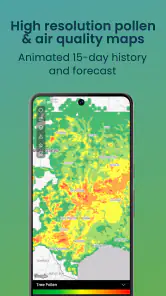
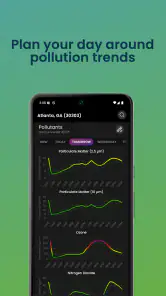
I found the pollen and air-quality focus most useful when planning activities several hours ahead. Instead of checking a weather forecast and then searching separately for allergy information or smoke conditions, I can use the app as a first screening step. That does not turn the forecast into medical advice, and I would not use it to make decisions about serious symptoms, but it can help answer everyday questions such as whether a morning walk is likely to be more comfortable than an afternoon outing.
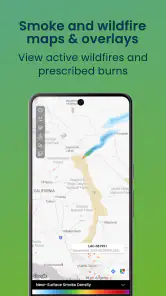
The wildfire smoke map adds another layer that many basic weather applications do not emphasize. A map is especially helpful when smoke is not obvious where I am standing but may be moving through a wider region. It encourages me to look beyond the sky directly above my home and consider nearby conditions before planning a drive, hike, outdoor event, or workout.
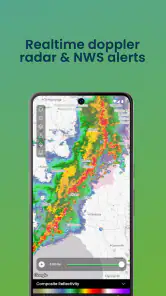
The weather radar is a useful complement rather than the star of the experience. Radar helps with immediate rain and storm awareness, while pollen and air-quality forecasts are more about exposure and planning. Having both in the same app reduces the need to switch between several tools, although people who already use a dedicated radar service may find this part less compelling.
What the free entry actually means
AirScope is listed as free, so I can install it and explore its core purpose without paying an upfront purchase price. That matters for an app built around personal relevance: pollen levels vary by location and season, and air-quality concerns are not equally important to everyone. A free starting point lets someone test whether the information is useful before deciding whether it deserves a regular place on the phone.
More From Our News Desk

Clash of Clans Is Won Between the Battles

Android Auto Makes the Case for Quieter Car Software

MobiOffice: Transforming Mobile Productivity with Seamless Integration

EA SPORTS FC™ Mobile Soccer: Redefining Mobile Sports Gaming

How Microsoft OneDrive Became a Mobile Productivity Giant

How Google Translate Breaks Language Barriers Effortlessly
The app also includes in-app purchases ranging from $0.99 to $4.99 per item. I would treat those purchases as optional paid value rather than part of the basic promise of the free app. The sensible approach is to use the free experience first, see whether the alerts, maps, forecasts, and radar fit your routine, and only then consider spending money on an item that solves a problem you actually have.
That pricing structure makes AirScope easier to recommend to curious users, but it also means I would pay attention to what appears behind any purchase prompt before confirming it. A low individual price can still become poor value if the feature is rarely used. For someone who checks air conditions only during occasional smoke events, the free access may be enough. For a person who relies on pollen and air-quality information every day, a paid option could be more reasonable if it improves the specific workflow they use most.
Where the app delivers more value than a normal forecast
The strongest value comes from combining several related signals instead of presenting pollen as an isolated number. A person with seasonal allergies does not only need to know that pollen is present. They may also want to know whether rain is approaching, whether smoke is affecting the area, and whether an outdoor plan can be moved to a more comfortable time. AirScope’s mix of alerts, forecasts, map information, and radar supports that kind of decision-making.
One practical routine I would recommend is checking the app before leaving for exercise, not after symptoms begin. I can look at the pollen outlook, inspect the air-quality situation, and use radar to see whether a route may be interrupted by rain. If conditions look unfavorable, I can shorten the outing, move it indoors, or choose a different time. The important insight is that the app is more useful as a planning tool than as a passive screen that I open only when the air already feels bad.
Another useful workflow is checking the smoke map before traveling between nearby areas. Local weather at the destination may look acceptable, while smoke conditions along the route or across the surrounding region tell a different story. The map does not replace official health guidance, but it gives me a visual reason to investigate further instead of assuming that clear conditions at home will continue throughout the trip.
Families may also find the combined view helpful when planning outdoor time. Parents can use the app to compare an intended activity with the day’s environmental conditions, especially when a child is sensitive to pollen or poor air. I would still treat the result as general awareness rather than a medical instruction. The value is in making the conversation more informed, not in turning an app alert into a diagnosis.
Alerts are useful only when they support a routine
Allergy alerts sound convenient, but their real value depends on how I respond to them. An alert that arrives without a clear action can become background noise. I get more from the feature when I use it as a prompt to check the detailed forecast, adjust an outdoor plan, or prepare for a day when symptoms are more likely. The alert is the beginning of a decision, not the decision itself.
I would also avoid treating every alert as equally urgent. Pollen sensitivity differs from person to person, and an air-quality warning may matter differently depending on age, health, activity, and time spent outdoors. AirScope can help me notice changing conditions, but it cannot personalize risk as precisely as a clinician or official public-health guidance. That distinction is important, particularly for anyone managing asthma or another respiratory condition.
A useful habit is to review the app at a consistent time rather than reacting to every notification. Checking before the day begins can help with clothing, exercise, commuting, and window-opening plans. Checking again before a longer outdoor activity adds a second layer of awareness. This makes the app feel less intrusive and turns its information into something I can use deliberately.
The tradeoff between convenience and specialist depth
AirScope’s biggest strength is also its main limitation: it brings multiple environmental tools together, but it is not necessarily the deepest specialist service in every area. A dedicated weather app may offer richer radar controls, a dedicated air-quality service may provide more technical pollutant detail, and a health-focused allergy tool may offer more personal tracking. AirScope is most convincing when convenience matters more than having the most advanced view of one particular category.
For example, someone who follows storms closely may prefer a radar-first application with extensive layers and controls. Someone who needs detailed information for a specific respiratory condition may want a source designed around clinical or public-health guidance. Someone who simply wants to know whether today looks comfortable for a walk may appreciate AirScope’s broader, simpler combination. The right choice depends on whether the user values one deep tool or several connected checks in one place.
The minimum operating-system requirement is iOS or Android version 12, so the app is aimed at relatively modern phones. That is not a concern for many current devices, but people keeping an older phone may need to check compatibility before planning around it. The current version is 2.0.1, which gives the app a clearly defined present release to look for when installing or updating.
The Everyone content rating makes the app broadly suitable from an age-classification perspective. That does not mean every alert or environmental condition is equally relevant to every person, but it does make AirScope approachable for households that want a shared weather and air-awareness tool without an age-restricted presentation.
Who is likely to get the most from it
I would recommend AirScope first to people whose daily plans are affected by pollen, smoke, or outdoor air conditions. Seasonal allergy sufferers are an obvious group, but the app also makes sense for runners, cyclists, dog walkers, gardeners, parents arranging outdoor activities, and anyone who spends long periods outside. The radar makes it more useful than a pollen-only utility because rain and air conditions often influence the same decision.
It is also a good fit for someone who is tired of jumping between a standard weather app, a separate radar, and a smoke map. The convenience is not just about saving taps. It changes the order in which I think about the day: first I consider whether the air is comfortable, then whether the weather supports the plan, and finally whether the timing needs adjustment. That combined workflow is the app’s clearest practical advantage.
I would be more cautious about recommending it to users who want a complete replacement for a mature weather platform. If you care about highly detailed forecasts, advanced storm analysis, long-term climate records, or extensive customization, a broader weather service may remain the better primary app. AirScope can sit beside it, but its focus is environmental awareness rather than being an all-purpose meteorological dashboard.
I would also skip it if pollen and smoke have little effect on your routine and you already have a weather app that covers the information you need. The free price removes much of the risk of trying it, but installing another app still adds another place to check and potentially another source of notifications. Its value is strongest when its specific focus changes what you do.
How I would use it without overcomplicating the day
My preferred setup would be simple. I would open AirScope in the morning to review pollen and air-quality conditions, check the smoke map when regional haze is possible, and use radar immediately before leaving for an outdoor activity. If an alert appears, I would use it as a reason to inspect the current conditions rather than assuming the warning tells the whole story.
For exercise, I would compare the planned duration with the environmental outlook. A short walk and a long run are not the same exposure, even if they happen under the same forecast. For gardening or outdoor chores, I would use the information to choose a more comfortable time instead of canceling automatically. For travel, I would look at the wider map rather than focusing only on the starting point.
The most important limitation to remember is that forecasts can change and environmental information should not be treated as a guarantee. AirScope helps me make a better-informed plan, but I still need to pay attention to how I feel, follow official warnings, and take medical advice seriously. That balanced use keeps the app helpful without asking it to do something it was not designed to do.
My final buying recommendation
After using AirScope as a focused weather companion, I see its value in the connection between information and action. It is not merely a pollen screen, and it is not trying to win every category of weather software. Its appeal comes from putting allergy awareness, air-quality forecasting, smoke mapping, and radar in one accessible place. For the right user, that can make everyday planning noticeably easier.
The free access makes the decision uncomplicated: try it during the season or situation when pollen, smoke, or outdoor air matters most. If the app helps you change plans intelligently, remember to check conditions, or avoid unnecessary exposure, then an optional purchase may be worth considering within the listed range of $0.99 to $4.99 per item. If you rarely use environmental information, there is little reason to pay simply because the option exists.
My verdict is positive but specific. AirScope is worth trying for allergy-sensitive outdoor planners who want several air and weather checks together. I would not choose it as my only weather app if radar depth or advanced forecasting is my priority, and I would never use it as a substitute for medical or official emergency guidance. For everyone else, the free starting point offers a low-risk way to find out whether its focused approach fits daily life.
Ingenio Productions has made a practical app for a real gap between ordinary weather forecasts and the environmental decisions people make around them. With its Everyone rating, support for operating-system version 12 and later, and current version 2.0.1, it is easy for many users to test. I would keep it installed when pollen season or wildfire smoke is a regular concern; otherwise, a familiar general weather app may be enough.
AirScope: Pollen & Air Quality Frequently Asked Questions
Is AirScope free to download, and are there optional purchases?
AirScope is free to download, with optional in-app purchases for users who want to explore paid features. These purchases range from $0.99 to $4.99 per item. You can try the app without paying upfront, then review any purchase details shown in the app before choosing whether an upgrade is worthwhile for your needs.
Which devices can run AirScope: Pollen & Air Quality?
AirScope is a weather app for devices running iOS 12 or later. Before downloading, check your device’s operating-system version to make sure it meets that requirement. Keeping your device’s software current can also help with compatibility and security. The app is developed by Ingenio Productions and is rated Everyone, so its content is intended for a general audience.
What is AirScope: Pollen & Air Quality used for?
AirScope: Pollen & Air Quality is designed to help users understand outdoor environmental conditions before leaving home. It typically combines air-quality information with pollen data, forecasts, and location-based readings so you can plan outdoor activities more comfortably. The app may be especially useful for people with seasonal allergies, asthma, or sensitivity to pollution, although its information should support—not replace—professional medical advice.
Does AirScope provide accurate, real-time pollen and air-quality information?
AirScope presents environmental data based on available monitoring stations, weather services, pollen models, and regional forecasts. Accuracy can vary depending on your location, the quality of local sensors, update frequency, and the availability of pollen monitoring in your area. Readings should therefore be treated as helpful guidance rather than an exact measurement of the air immediately around you, particularly in rural or poorly covered regions.
What information and alerts can I expect from the app?
Depending on your location and the features supported by the current version, AirScope may show air-quality levels, pollutant details, pollen intensity, allergy-related forecasts, weather conditions, and changes throughout the day. Notifications can help warn you about worsening conditions or high pollen periods. Before downloading, check which alerts are available in your country and whether notifications, background updates, or premium features are required.
Pros
- Clear pollen forecasts help allergy sufferers plan outdoor activities.
- Combines pollen levels with air-quality data in one convenient dashboard.
- Location-based updates make local conditions easy to check.
- Useful trend information can help users identify worsening conditions.
- Simple interface allows quick access to daily environmental readings.
Cons
- Coverage and forecast accuracy may vary significantly by location.
- Some detailed features may require a paid subscription.
- Pollen data may not include every allergen relevant to your area.
- Frequent alerts can become distracting without careful notification settings.
- The app depends on location access and an active internet connection.
- Category
- Weather
- Version
- 2.0.1