AI Video Generator - Pixaflow
- 58.00
- 4.5
- Installs
- 100.00K
- Price
- Free

Screenshots






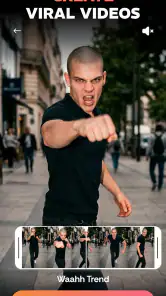
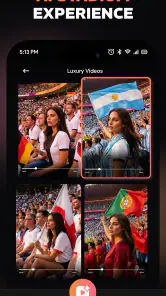
Analysis by Reviewed
AI video tools often look effortless until the first generation takes longer than expected, a source image produces an awkward result, or a finished clip does not match the idea in your head. I approached AI Video Generator - Pixaflow as a practical creation tool rather than a magic button. It is an Art & Design app from HITDEV AI, aimed at people who want to turn a simple concept into a shareable video with less manual editing. My experience is that its appeal comes from speed and experimentation, but the quality of the final result still depends heavily on the material and instructions you start with.
The app is free to install, with in-app purchases ranging from $5.99 to $39.99 per item. That makes it easy to try before spending anything, although anyone planning repeated generations should pay attention to the point at which the free experience stops being enough. It is rated for Everyone, and the current release is version 1.0.6. The app has reached over 100 thousand installs and holds a 4.5 average from around 6.1 thousand ratings, which suggests that many users find the basic concept approachable even if AI video creation naturally has uneven moments.
What using Pixaflow feels like in practice
The first thing I noticed is that Pixaflow is best understood as an idea-to-video playground. It is not a replacement for a full editor when I need exact cuts, carefully timed captions, detailed audio mixing, or frame-by-frame control. Instead, it is more useful when I have a visual prompt, a photo, or a short creative direction and want to see an animated interpretation quickly.
That distinction matters. If I want a polished product advert with consistent branding, I would still begin in a conventional editor or a more advanced production tool. If I want to test several visual ideas for a social post, create a playful clip from an image, or explore an AI dance concept without building the animation manually, Pixaflow makes more sense. The app’s store summary focuses on viral videos and dance creation, but I found the more valuable use to be rapid visual testing: generate an idea, inspect the movement, then decide whether it deserves a more controlled edit elsewhere.
The most common point of friction is also the most predictable one: expectations. AI-generated movement can look convincing in one part of a clip and strange in another. Hands, faces, clothing edges, crowded backgrounds, and fast changes are especially demanding for this kind of workflow. A clean source image with one clear subject usually gives the app a better chance than a busy photograph containing several people and overlapping objects.
I also learned not to treat the first result as a final result. The useful mindset is closer to sketching. I make a small number of focused attempts, compare them, and keep the version with the clearest motion rather than automatically choosing the most dramatic one. This saves time and makes the app feel less frustrating than repeatedly asking for a perfect result from an unclear starting point.
Where new users are most likely to get stuck
People usually get stuck in three places: choosing the wrong source material, writing a direction that is too broad, and assuming that a generation that appears slow has failed. These problems can look like app errors, but they often begin before the generation itself.
More From Our News Desk

Clash of Clans Is Won Between the Battles

Android Auto Makes the Case for Quieter Car Software

MobiOffice: Transforming Mobile Productivity with Seamless Integration

EA SPORTS FC™ Mobile Soccer: Redefining Mobile Sports Gaming

How Microsoft OneDrive Became a Mobile Productivity Giant

How Google Translate Breaks Language Barriers Effortlessly
For a first test, I recommend using one subject against a simple background. A portrait with good lighting is more useful than a group photo because it gives the animation system fewer competing details to interpret. If the goal is a dance-style clip, a full-body image with visible space around the person is a sensible starting point. Tight crops can make movement feel cramped, while a cluttered background can make it harder to tell whether an odd result came from the subject or the scene.
Instructions also work better when they describe one main action. “A person makes a short, energetic dance move while the camera gently follows” is easier to evaluate than a long paragraph containing several camera changes, moods, locations, and transitions. I prefer to change one element at a time between attempts. That way, I can tell whether the new image, the revised direction, or the altered style actually improved the result.
When a generation seems stuck, I avoid immediately tapping every available control. Repeated requests can make it harder to know which attempt is current, especially when I am working quickly. I first check whether the app is still responding, then give the process a little time before trying again. If the result eventually appears, I inspect it before starting another request rather than assuming the earlier attempt was lost.
Simple setup checks before creating a clip
A smooth session starts with a few unglamorous checks. I make sure the app is updated to the current version, 1.0.6, because creation tools can be sensitive to changes in their generation service. I also close other demanding apps when the phone is already struggling. This does not improve the AI itself, but it reduces the chance that the interface becomes sluggish while I am selecting media or reviewing an output.
My next check is the source file. I use an image that is easy to recognize, not an image that needs heavy correction before the app can understand it. If the photo is dark, heavily compressed, or filled with tiny details, I first choose a clearer alternative. Cropping can help, but I avoid cropping away the parts of the subject that need to move. For a person, keeping the relevant body area visible is more useful than making the face occupy the entire frame.
I also prepare the creative goal before opening the generator. Do I want a subtle motion effect, a lively dance moment, or a short visual joke? Having one answer prevents me from changing direction halfway through the process. This is one of the less obvious ways to reduce wasted attempts: the app can create quickly, but deciding what to create still benefits from a human plan.
Storage and connectivity are worth checking as well. AI generation normally depends on communication with an online service, so a weak or unstable connection can make a request appear unreliable even when the phone itself is fine. I prefer to create while connected to a dependable network and avoid switching between networks during a generation. If a clip does not appear, I check the connection before assuming the source image or prompt was rejected.
There is also a practical cost check. Because the app is free but offers paid items between $5.99 and $39.99 each, I would not begin a large batch of experiments without understanding what the app is asking me to purchase. I start with a small creative test, decide whether the style suits me, and only then consider spending money. This is particularly important for casual users who may only need one clip for a specific occasion.
A workflow that makes recovery easier
My preferred workflow is deliberately conservative. I begin with one image and one clear idea, review the first output for obvious problems, and then make a targeted adjustment. If the subject’s movement is unclear, I improve the source image. If the movement is acceptable but the mood is wrong, I change the wording. If the scene is visually confusing, I simplify the composition instead of adding more instructions.
This approach reveals a useful trade-off: more detail in a prompt does not automatically mean more control. A long description can introduce competing priorities. I get more predictable experiments by describing the subject, the main movement, and the general visual feeling, then leaving the rest alone. Once I have a workable result, I can add a small stylistic change for a second version.
When a result is nearly right, I save it before experimenting further. That sounds obvious, but it is easy to lose a usable version while chasing a better one. I treat every acceptable output as a checkpoint. If the next attempt produces distorted motion or a less appealing composition, I can return to the earlier choice rather than starting over mentally.
For social sharing, I also review the clip without sound and at a small size. A video that looks impressive when examined closely may lose its impact when viewed quickly on a phone. The main movement should be readable immediately. If it is not, I favor a simpler generation over a busier one. This is a practical test that store screenshots cannot answer, and it helps separate visual novelty from actual communication.
Pixaflow is especially useful in a two-stage workflow. I use it to produce the animated concept, then move the selected clip into a familiar editor if I need precise trimming, text placement, music timing, or a sequence of several shots. This combination is more realistic than expecting one AI app to handle every part of production. Pixaflow supplies speed and experimentation; a conventional editor supplies control.
When the app may not be the real cause
Not every poor result points to a software problem. If the same image creates awkward motion in several attempts, the image itself may be too complicated. A subject partly hidden behind another object, a dramatic pose, or a background with strong patterns can give the system too much to interpret. Testing a simpler image is more informative than immediately reinstalling the app.
A slow response can also come from the connection or the service handling the generation rather than from the phone. I look for patterns: if the interface is responsive but the result takes time, I wait and check the network; if the entire app freezes, I close and reopen it; if only one particular image causes trouble, I replace the image. These basic comparisons help identify the likely source without making unsupported assumptions.
It is also possible for a result to be technically complete but creatively disappointing. That is not necessarily a failure. AI video tools interpret a request rather than understand the personal intention behind it. A phrase that seems obvious to me may produce a different emphasis. The best response is usually to simplify the direction and make the desired action more concrete, not to add emotional language or unrelated visual details.
Users should also consider privacy and comfort before importing personal images. I would avoid using sensitive photographs for casual experimentation and would think carefully before uploading images of other people. This is general good practice for any online creative service. The app’s Everyone age rating makes it accessible to a broad audience, but accessibility does not remove the need for sensible choices about the material being used.
Who will enjoy it, and who should skip it
I can recommend Pixaflow to casual creators, social media users, students exploring visual ideas, and anyone who wants to animate a concept without learning a complicated timeline. It is also a good fit for a person who enjoys trying several variations and does not mind that some outputs will be more successful than others. The low entry barrier makes experimentation less intimidating than starting with professional animation software.
A realistic everyday example would be preparing a birthday message. I could choose a clear portrait, create a short celebratory movement, review the result, and then add a greeting in another editor. That workflow is faster and more playful than manually animating a still image, while still leaving room to correct the final presentation outside Pixaflow.
I would skip it if I needed exact character consistency across a long sequence, dependable commercial results, detailed control over every frame, or advanced audio and editing tools in one place. I would also be cautious if I disliked trial-and-error creation. The app can reduce the technical work, but it cannot guarantee that the first attempt will match a precise mental image.
Compared with ordinary video editors in the same broad creative space, Pixaflow is quicker at turning a visual idea into motion but weaker at exact adjustments. Compared with making a video entirely by hand, it is more accessible but less predictable. That balance is the central decision: choose it for speed and discovery, not for full production control.
My practical verdict
After using it as an idea generator rather than a complete studio, I found Pixaflow easy to appreciate. Its strongest quality is the short distance between having an image in mind and seeing an animated interpretation. The dance-focused angle gives it an immediately understandable starting point, while the broader Art & Design category makes it useful for playful visual experiments beyond that single format.
The limitations are just as important. Source quality matters, prompts need restraint, and unusual results are part of the process. Paid items also mean that frequent experimentation deserves a little planning. I would not spend money until I had tested the kind of output I actually want, and I would keep a conventional editor available for finishing work.
My recommendation is to treat Pixaflow as a fast creative sketchbook, not a guaranteed one-tap production suite. If you want quick animated ideas, short social clips, or a simple way to explore AI-assisted video, it is worth trying for free. If you need precision, repeatability, or a carefully controlled final film, another tool will serve you better. For the right user, that honest division of labor makes AI Video Generator - Pixaflow a useful addition rather than an unrealistic replacement for every other video app.
AI Video Generator - Pixaflow Frequently Asked Questions
Is AI Video Generator - Pixaflow suitable for beginners?
Pixaflow is aimed at making AI-assisted video creation approachable, so it may suit people who have little or no editing experience as well as more creative users. You can start with an idea or image and explore the available generation and editing tools. As with any AI app, getting a result you like can take some experimenting with prompts and settings.
Which devices can run AI Video Generator - Pixaflow?
Pixaflow is an Android app in the Art & Design category, developed by HITDEV AI. It requires Android 7.1 or later, so check your device’s software version before downloading. The app is free to download and is rated for Everyone. Its current version is 1.0.6, which can help you identify the release when checking compatibility.
What is AI Video Generator - Pixaflow, and what can it do?
AI Video Generator - Pixaflow is designed to help users create short videos from written prompts, images, or creative ideas with the assistance of artificial intelligence. Depending on the available tools and subscription level, you may be able to generate scenes, apply visual styles, animate still images, add transitions, and produce social-media-ready clips without needing advanced video-editing experience.
Is AI Video Generator - Pixaflow free to download and use?
The app is free to download, but some generation features, export options, premium styles, or higher-quality results can require in-app purchases. In-app purchases range from $5.99 to $39.99 per item. Free usage may also include limits such as credits, watermarks, advertisements, or slower processing. Before creating multiple videos, check the pricing page and purchase terms carefully so you understand any charges.
What kind of prompts or images produce the best results in Pixaflow?
For more consistent results, use clear prompts that describe the subject, action, setting, mood, camera movement, and visual style. Short but specific instructions generally work better than vague requests. If you upload an image, use a sharp, well-lit picture with the main subject clearly visible. Results can still vary because AI generation may interpret details differently from what you intended.
Pros
- Creates videos from text prompts with minimal editing skills.
- Offers quick generation for social media clips and short presentations.
- Includes creative styles and effects for varied visual results.
- Simple interface makes the main tools easy to find.
- Can help turn basic ideas into engaging visual content.
Cons
- Output quality may vary depending on the prompt and selected style.
- Video generation can take longer during busy periods.
- Advanced features may require a paid plan or extra credits.
- Some results may look generic without detailed prompt adjustments.
- AI-generated visuals can contain odd motion or inaccurate details.

- Category
- Art & Design
- Version
- 1.0.6