Wheel of Fame - Guess words
- 1.23K
- 4.6
- Installs
- 10.00M
- Price
- Free

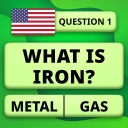
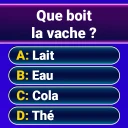
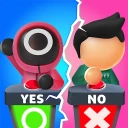
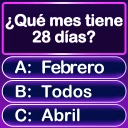
Screenshots


Analysis by Reviewed
I tend to enjoy word games most when they offer a clear idea in seconds but still make me pause before guessing. Wheel of Fame - Guess words has that quick, familiar appeal: spin, think through possible letters, and try to uncover the answer. It works best as a light diversion rather than a deep trivia course, and that distinction matters if you’re deciding what to install.
Where it fits among word and trivia games
As a trivia game from Senior Games, it sits between a conventional quiz and a crossword-style puzzle. A quiz usually asks you to know a fact outright; here, the wheel and partial word clues make deduction part of the fun. Compared with a crossword, there’s less emphasis on filling a grid and more on the suspense of choosing a letter. I’d pick it when I want short rounds and a little luck mixed with recall, not when I’m looking for a serious test of general knowledge.
The basic format is especially handy when people have different levels of trivia confidence. Someone can make a plausible guess from the visible letters without needing specialist knowledge, while a player who recognizes the topic may get an advantage. That makes it easier to pass around in a relaxed setting than a strict question-and-answer game, although the wheel’s luck element can sometimes outweigh who has the strongest vocabulary.
Small ways to make a round more satisfying
I’d treat each turn as a balance between pattern recognition and restraint. Before guessing, look at the word length and any revealed letters, then consider common letter combinations rather than jumping to the first word that comes to mind. If a category is available, use it to narrow the possibilities, but don’t assume that recognizing the subject guarantees the exact phrase. This kind of deliberate pause makes the wheel feel less like a random button and more like a useful prompt for reasoning.
It also suits brief pockets of free time: a few turns while waiting for someone, or a low-pressure round when family members are gathered and nobody wants to learn complicated rules. For a friendly group, I’d agree on a simple turn-taking routine before starting, so quicker players don’t dominate every guess. If you’re playing alone, treating a missed guess as a clue rather than a failure helps keep the pace enjoyable.
What the current version tells me
The game was released on January 14, 2020, and its current version is 2.2.5. That gives me a clear snapshot of the version available now, but it doesn’t by itself establish what has changed between releases. I wouldn’t assume that a particular feature is new or that older players will notice a specific improvement without release notes to support it. The useful takeaway is simply that this is an established game with a versioned release, rather than a concept still waiting to take shape.
Its audience figures suggest that plenty of people have tried it: it has over 10 million installs, an average rating of 4.6, and around 201,000 ratings. Those figures can help a new player gauge its reach, but they can’t tell you whether its style will suit your taste. I’d pay more attention to whether you enjoy wheel-based guessing than to popularity alone.
More From Our News Desk

Weather by Xiaomi Review: Clear at a Glance, Less Clear Up Close

X Under Pressure: Can It Recover When Posting Goes Wrong?

Clash of Clans Is Won Between the Battles

Android Auto Makes the Case for Quieter Car Software

MobiOffice: Transforming Mobile Productivity with Seamless Integration

EA SPORTS FC™ Mobile Soccer: Redefining Mobile Sports Gaming
Spinning the Wheel: What's It All About?
The concept behind Wheel of Fame - Guess words is refreshingly simple yet incredibly engaging. You spin a virtual wheel that dictates your next challenge, ranging from guessing letters to solving full phrases. The app’s interface is bright and cheerful, making it a joy to navigate through its various features.
One thing I absolutely love is the variety of categories available. Whether you’re a movie buff or a history enthusiast, there’s something in there for everyone. It’s like having a mini trivia night in your pocket!
Gameplay and Features
Once you launch the app, you're greeted with a user-friendly interface that even your grandma can figure out. You get to choose from a plethora of categories, and then it's game on! The wheel spins, and you’re tasked with guessing letters to form words or phrases. What really hooks you is the suspense as the wheel spins and the thrill of guessing the right letter.
The app also offers some nifty features like daily challenges and multiplayer modes. You can even invite your friends to play along and make it a competitive showdown. Trust me, it’s hilarious watching your friends struggle with a word you guessed ages ago!
Visuals and Soundtrack
The visuals in this app are nothing short of vibrant. The colors pop, and the animations are smooth, making the whole experience visually appealing. The soundtrack is upbeat and keeps your energy levels high, although you might want to turn it down if you’re sneaking in a game during a meeting!
Every spin of the wheel is accompanied by satisfying sound effects, which adds to the excitement. The developers have done a fantastic job in ensuring that both the visuals and audio complement the gameplay perfectly.
Costs, access, and who should try it
It is free to download, rated Everyone, and works on Android 6.0 or later. There are in-app purchases ranging from $0.99 to $15.99 per item, so I’d check the purchase prompts before tapping through if I want to keep spending under control. You can enjoy the basic appeal without treating every purchase as necessary; the sensible approach is to try the game first and decide whether anything offered is worth paying for.
I’d recommend it to casual players who like word patterns, familiar trivia topics, and rounds that are easy to explain. It is less suited to someone who wants a quiet, purely skill-based puzzle, a detailed learning tool, or a competitive quiz where knowledge alone determines the outcome. The wheel adds unpredictability, and that can be entertaining or irritating depending on what you want from a game.
Where the experience can fall short
The same simplicity that makes the game approachable can also limit its appeal over longer sessions. Once you understand the spin-and-guess rhythm, the novelty depends on how much you enjoy repeating it and whether the categories keep feeling fresh to you. I’d play in short bursts rather than expect a long, steadily escalating challenge. In a group, different reading speeds or familiarity with a topic can also make turns feel uneven, so it helps to keep the mood playful instead of treating every round as a serious contest.
If you’re choosing between this and a standard trivia app, ask yourself whether you want clues and letter deduction or direct questions with clear right-or-wrong answers. For a word puzzle with more independent solving, a crossword may be a better fit; for a knowledge-heavy head-to-head, a conventional quiz is the stronger choice. This game’s niche is the shared anticipation around each spin, and I find it most enjoyable when that is exactly what the group is after.
Making it work for different players
A useful way to introduce the game to a mixed group is to let the first round be about learning the rhythm, not keeping score. One person may spot familiar letter patterns quickly, while another may be better at recognizing a topic once a few clues are visible. Giving everyone a chance to contribute keeps the wheel from turning into a race between the fastest guessers. If the group is large, informal turns are less awkward than trying to make every person solve every clue.
It can also work as a shared activity when people want something more interactive than watching a screen but less demanding than a full board game. I’d use it during a relaxed visit or while waiting for a meal, rather than as the main event for a long evening. The small commitment is part of its appeal: people can join in, miss a guess, and follow along without needing to remember a complicated set of rules.
Choosing between solo play and company
Playing alone makes the guessing feel more deliberate. I can take time to consider the visible pattern and the topic instead of reacting to another person’s suggestion. That’s the better option when I want a small mental reset or prefer to solve at my own pace. In company, the social energy is stronger, but it can also make the game less even: a confident player may call out answers before others have had time to think.
For a fairer group round, I’d agree that people should wait a moment before calling out a solution. That simple pause gives quieter players room to join in and keeps the game from becoming a contest of volume. It also makes incorrect guesses less embarrassing; they become part of the shared process rather than a public test of who knows the most. The format is most successful when everyone treats a lucky spin as part of the entertainment, not proof that one person is the better player.
What to expect from its evolution
The available version number and release date help place the game in context, but they are not a changelog. A player returning after time away should judge the current experience on what is in front of them rather than assume the game has added or changed a particular mode. I find that distinction useful because an established title can still be enjoyable without every release representing a major shift. If future changes matter to you, checking the version notes when you update is a better way to understand them than reading meaning into the number alone.
For someone already playing, the practical question is whether the core loop still fits the way they like to spend a few minutes. If they enjoy revealing a phrase through letter guesses, the current version offers that basic kind of diversion. If they were hoping for a substantially different puzzle or a more demanding knowledge test, a version update by itself is not a reason to expect one. I’d keep expectations tied to the wheel-and-word format that defines the experience.
Limits worth knowing before you settle in
The game’s combination of chance and deduction is also its clearest trade-off. A good pattern-reading instinct can help, but the wheel contributes uncertainty, so a player who wants outcomes to reflect skill alone may find the format frustrating. The same applies to someone who prefers an uninterrupted solo puzzle: the spin creates anticipation, but it also makes the pace depend on a sequence of turns rather than on solving at whatever speed feels right.
There is a difference between having familiar topics and using a game as a dependable learning resource. I would not choose this as a structured way to study history, film, or general knowledge. Its value is in playful recall and word-spotting, not in explaining answers or building a course of study. For serious practice, a focused quiz or educational tool is the more sensible pick; for casual guessing with a bit of suspense, this is a better match.
A practical verdict
So, go ahead and give it a whirl. Who knows? You might just become the next word-guessing champion among your circle. Happy spinning!
Wheel of Fame - Guess words Frequently Asked Questions
What kind of gameplay should I expect from Wheel of Fame - Guess Words?
Wheel of Fame - Guess Words is a trivia-style word game centered on uncovering hidden words. You spin a wheel, choose letters, and use the clues and letters available to work out each answer. Its straightforward format makes it easy to understand before playing, while the mix of luck and word knowledge gives each puzzle a guessing-game feel.
Will Wheel of Fame - Guess Words work on my phone or tablet?
The game is available for Android and iOS, so you can look for it in the app store used by your device. On Android, it requires version 6.0 or later. It is designed for phones and tablets, making the wheel-and-letter format suited to a touch screen. Check your device’s operating system before downloading to make sure it meets the requirement.
Does Wheel of Fame - Guess Words take up a lot of storage or require a powerful device?
The game’s simple wheel and word-puzzle concept is approachable on a range of mobile devices, but available storage can vary with the device and its other apps. Before installing, it is sensible to check the space shown by your app store and leave room for normal app updates. The key compatibility point for Android users is having version 6.0 or later.
Can I play Wheel of Fame - Guess Words offline?
Wheel of Fame - Guess Words is a word puzzle game built around spinning a wheel, choosing letters, and solving hidden words. You can enjoy that core guessing activity as a casual solo experience. If you want to take part in online competition or use social features, those activities naturally require a connection, so it is worth considering how you plan to play before downloading.
Is Wheel of Fame - Guess Words suitable for children?
Wheel of Fame - Guess Words is rated Everyone, making it suitable for a broad audience, including families looking for a simple word game. Its trivia-style word puzzles can offer a playful way to engage with vocabulary and spelling. As with any game that includes optional purchases, parents may wish to review their device’s purchase settings before letting younger players play.
Pros
- Engaging word puzzles
- Multiplayer mode available
- Regular updates with new content
- User-friendly interface
- Great for vocabulary building
Cons
- Ads can be intrusive
- Limited free content
- Requires internet connection
- In-app purchases can be costly
- Occasional game crashes
- Category
- Trivia
- Version
- 2.2.5