Toca Boca Jr Kitchen NETFLIX
- 36.00
- 3.8
- Installs
- 1.00M
- Price
- Free

Screenshots



Analysis by Reviewed
I like children’s games that give a child something to do without turning every quiet moment into a contest. Toca Boca Jr Kitchen Netflix is a cooking game for kids, and its appeal is straightforward: it offers a playful space for trying out kitchen activities rather than asking young players to master a complicated set of rules. That makes it an easy title to consider for a short stretch of play at home, though it is not the right fit for every child or every parent’s idea of an educational game.
What gives a first session its direction
The first useful question is what a child is likely to do once the game is open. The store description frames it around cooking for kids, so the basic attraction is the pretend-kitchen theme. For a young player, choosing what to try and seeing what happens can be a goal in itself. That open-ended quality suits children who enjoy make-believe more than following a strict sequence of instructions.
I would introduce it as a shared activity rather than hand it over with an expectation that it will teach a particular cooking skill. An adult can ask the child what they want to make, encourage them to describe their choices, and let them lead. This turns a few minutes of tapping into a simple conversation about food and decisions, without requiring the game to provide a lesson plan.
That distinction matters because “educational” can mean very different things. Some games teach letters, numbers, or a clearly defined sequence of tasks. This one is better approached as playful exploration with a kitchen theme. If your child needs visible objectives, prompts, or a step-by-step learning path to stay engaged, you may want to choose a more structured activity instead.
The title is Toca Boca Jr Kitchen Netflix, a game in the educational category from Netflix, Inc. Its age rating is Everyone, which makes it broadly positioned for family use. I would still sit with a very young child at first: an age label does not tell you whether the pace, choices, or style will suit that particular child.
Small goals work best when adults keep them light
For a child who likes kitchen pretend play, a helpful early goal is not “finish everything” but “try one idea and talk about it.” Ask what they think belongs in a meal, or invite them to explain why they chose one action over another. These prompts add purpose without imposing a score or making the child feel that there is one correct way to play.
That approach is especially useful during a short wait or a quiet break. For example, before dinner, a child could spend a little time experimenting in the game while an adult prepares the real meal. The adult can then connect the play to something familiar on the table. I would keep that comparison conversational: the game is a starting point for imagination, not a replacement for cooking together or learning kitchen safety.
You May Like

Clash of Clans Is Won Between the Battles

Android Auto Makes the Case for Quieter Car Software

MobiOffice: Transforming Mobile Productivity with Seamless Integration

EA SPORTS FC™ Mobile Soccer: Redefining Mobile Sports Gaming

How Microsoft OneDrive Became a Mobile Productivity Giant

How Google Translate Breaks Language Barriers Effortlessly
Parents should also decide what “enough play” looks like before opening it. A brief session with a clear stopping point can work better than leaving a child to drift from one activity to another indefinitely. The game’s simple premise makes it easy to start, but that same ease means the adult may need to provide the session’s boundaries.
Progress is more about engagement than a checklist
Many children’s games make progress obvious through levels, collectibles, or a trail of completed tasks. I would not judge this title by how strongly it resembles those systems. Its cooking focus is more naturally suited to trying things out, and a child’s progress may show up as greater confidence in choosing an activity, explaining an idea, or returning to a type of play they enjoyed.
That can be a strength for a child who dislikes being corrected or ranked. A low-pressure play session leaves room for imagination, and an adult can notice the child’s own interests rather than steering them toward a particular result. The trade-off is that a child who wants a clear reward after every action may not find the same momentum they would in a game built around explicit objectives.
One practical way to make the experience feel satisfying is to let the child set a tiny personal aim before playing. They might decide to explore one kind of food or make up a meal to describe afterward. This is not a hidden game feature; it is a parent-led routine that gives an open-ended activity a beginning and an ending. It also helps adults tell whether the child is engaged or simply tapping because the screen is available.
The game has an average rating of 3.8 from around 1.3 thousand ratings, with 36 written reviews. That gives a prospective player some context, but ratings alone cannot tell a parent whether the experience fits their child’s temperament. I would put more weight on watching how the child responds during an initial session: do they make choices and talk about them, or do they quickly lose interest?
Challenge and pacing depend on the child
Cooking play does not need a steep difficulty curve to hold a young child’s attention. For some, the freedom to explore is precisely what keeps the experience comfortable. For others, especially children who enjoy solving puzzles or mastering increasingly demanding tasks, a gentle, loosely guided format may feel too quiet. In that case, a cooking game with clear recipes, timed rounds, or explicit goals could be a better match, provided those pressures suit the child.
I would be cautious about assuming that a child’s age alone predicts the right level of challenge. A younger player may happily invent stories around simple interactions, while an older child may want something more demanding. Try the game together and look for signs of frustration or restlessness rather than pushing through. If the child repeatedly asks what to do next, that may mean they prefer more direction, not that they are using this game incorrectly.
The same point applies to pacing. A relaxed kitchen theme can be welcome after a busy day, but it may not hold attention during a long trip or a situation where an adult needs uninterrupted time. I would treat it as one short activity in a rotation, not as a guaranteed way to occupy a child for an extended period. A book, a physical toy, or a hands-on cooking task may work better depending on the setting.
Compared with typical educational games that emphasize quizzes or school-style exercises, this is a more imaginative choice. Compared with cooking games built around speed and scoring, it is better suited to low-pressure pretend play. That difference is the main decision point: choose it for a child who enjoys exploring a kitchen theme, not for a child who needs measurable challenges or a clear learning sequence.
Keeping play enjoyable without turning it into a demand
Games can lose their charm when every session is treated as a route to unlocks or rewards. I would avoid promising a child that continued play will reveal particular content or produce a particular result. Instead, frame the activity around what they are curious about today. That keeps expectations grounded and avoids making progress pressure the reason to return.
There is also a useful balance between letting a child explore and staying involved. Sitting nearby at first helps you see whether the controls and activities make sense to them, while occasional questions can keep the play social. After that, you can decide whether independent use is appropriate for your household. The Everyone rating is reassuring as a broad content signal, but it does not replace an adult’s own judgement about screen habits and suitability.
For families already using Netflix, the game may be a convenient addition to a child’s set of activities. It is free to play, has reached over one million installs, and its current version is 1.0.2. The install figure signals that many people have tried it, not that it will suit every child. I would make the decision based on the child’s response to the kitchen play itself rather than popularity.
Who should choose it, and who may prefer something else
I would recommend giving it a try if your child enjoys pretend cooking, benefits from a calm digital activity, or likes to narrate what they are doing. It can also suit an adult who wants an easy prompt for talking about meals and choices without turning the conversation into a formal lesson. A short, shared session is likely to reveal more than a long explanation of what the game might offer.
I would look elsewhere if your main aim is to teach practical cooking steps, build a specific academic skill, or give a child a demanding progression path. Real kitchen participation with close adult supervision is better for practical skills, while a structured learning game is a stronger choice for targeted practice. A more goal-driven cooking title may satisfy a child who wants obvious challenges, though that style can be less relaxing.
My overall view is that Toca Boca Jr Kitchen Netflix is most appealing as a playful, low-pressure option, not as a complete educational program. The best way to get value from it is to keep goals small, let the child steer, and use conversation to make the pretend cooking meaningful. If that matches what your family wants from a children’s game, it is worth trying; if you need clear lessons, escalating challenges, or a long-lasting reward loop, another option will probably serve you better.
A practical way to decide whether it fits your routine
I would test it during a moment when an adult can stay nearby, rather than introducing it when everyone is rushed. A useful first session can be short: let the child choose what to explore, then ask them to tell you what they were trying to do. If they can turn the kitchen theme into their own little story, that is a better sign of fit than simply staying glued to the screen.
It is also worth thinking about what you want the game to do when a child is playing alone. This is strongest as a prompt for imaginative play and conversation; it is not a substitute for supervision, a real cooking activity, or a structured lesson. If you need a child to practice a specific skill without adult involvement, I would choose a tool designed around that purpose instead.
Small trade-offs that matter in everyday use
The open-ended approach has a practical upside: a child can bring their own idea rather than having to remember a prescribed sequence. The trade-off is that some children will look to an adult to supply the next prompt. Keeping a couple of simple questions ready—what would you make for breakfast, or what might go with that?—can help without taking over the play.
Another useful boundary is to connect the session to a natural transition, such as waiting for dinner or winding down before another activity. That gives the game a place in the day without making it the default solution whenever a child is bored. If the child wants more structure, a printed recipe to follow together or a puzzle-based game may provide a clearer sense of accomplishment.
What the progression style does—and does not—offer
For families wondering whether the game will keep adding pressure to play, I would approach it without expecting a reward ladder to provide the motivation. Its strongest reason to return is the child’s interest in kitchen-themed make-believe, not a promise of a particular unlock or escalating challenge. That makes it easier to keep play relaxed, but less compelling for children who thrive on visible milestones.
The release date is July 13, 2026, and the game is currently version 1.0.2 for operating systems 10 and newer. I would treat those compatibility details as practical checks before installing, while making the child’s response the deciding factor. Overall, its progression works best when the goal is to explore and invent; if your child needs a clear sequence of achievements, a more structured game is likely the better choice.
Toca Boca Jr Kitchen NETFLIX Frequently Asked Questions
What is Toca Boca Jr Kitchen NETFLIX?
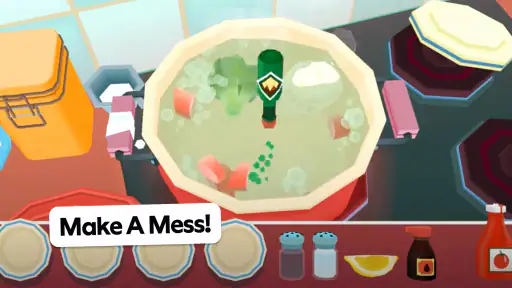
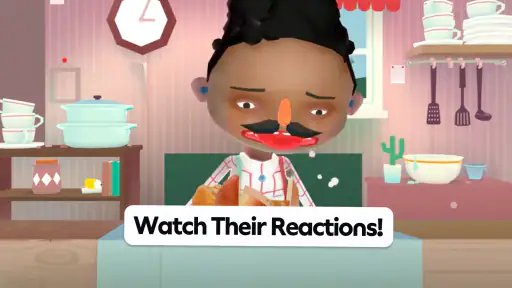
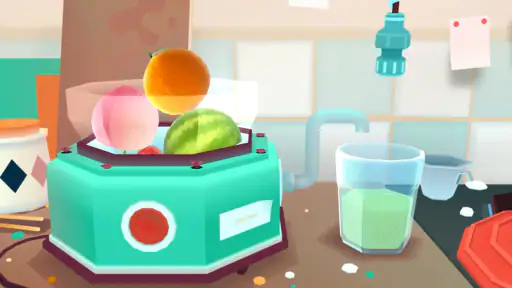
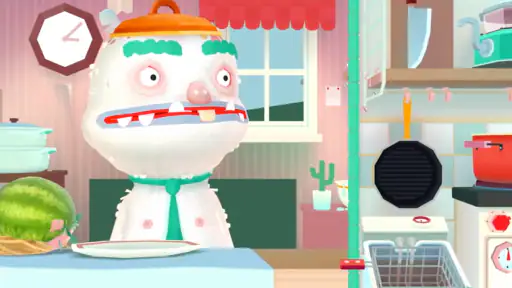
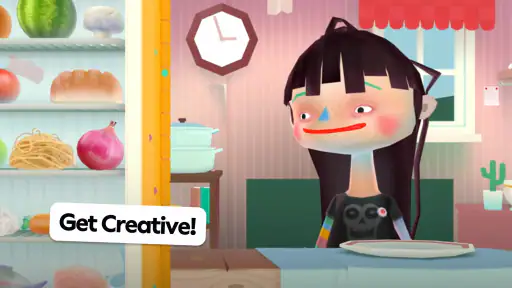
Toca Boca Jr Kitchen NETFLIX is a child-friendly cooking game in which kids can prepare food for quirky characters. Players choose ingredients, use kitchen tools, and decide how to cook and serve each dish. Rather than focusing on scores or strict recipes, the game encourages imaginative play and experimentation, making it suitable for relaxed, open-ended play sessions.
Do I need a Netflix subscription to play Toca Boca Jr Kitchen NETFLIX?
Yes. This edition is offered through Netflix Games, so access generally requires an active Netflix membership and signing in with a Netflix account. The game itself does not typically charge separately or show in-game ads, but availability and account requirements can vary by country, device, and Netflix plan. Check the app-store listing and Netflix account details before downloading.
Is Toca Boca Jr Kitchen NETFLIX suitable for young children?
The game is designed for children and offers a playful, low-pressure way to explore food preparation. There is no need to follow complex instructions or compete against other players, so younger users can experiment at their own pace. As with any app, parents should check the age guidance and device settings, and supervise play according to their child’s needs.
Does Toca Boca Jr Kitchen NETFLIX work offline, and what devices support it?
Device compatibility and offline access can depend on the current version, operating system, and Netflix app requirements. You may need an internet connection to download the game, sign in, or verify access; whether it remains playable offline can vary. Before installing, review the listing for supported Android or iOS versions, available storage, and any regional restrictions.
Are there ads, in-app purchases, or multiplayer features?
The Netflix Games edition is generally intended to provide play without third-party advertising or separate in-app purchases, with access tied to a Netflix membership. Toca Boca Jr Kitchen NETFLIX is primarily a solo, imaginative cooking experience rather than a competitive online game. Features and policies may change, so check the current store listing and in-game information before letting a child play.
Pros
- Kid-friendly cooking play encourages creativity and imaginative role-play.
- Simple touch controls are easy for young children to use.
- Bright visuals and playful animations make the kitchen inviting.
- Open-ended activities let children experiment without a strict score or timer.
- Suitable for short play sessions and parent-child interaction.
Cons
- Requires a Netflix membership to access.
- Some recipes and activities may feel repetitive over time.
- Younger children may need help navigating menus and choices.
- The game offers limited challenge for older kids.
- Availability and features may vary by device and region.

- Category
- Educational
- Version
- 1.0.2