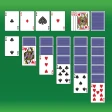
Solitaire Y
- 21.00
- 4.4
- Installs
- 50.00K
- Price
- Free
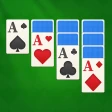
Screenshots
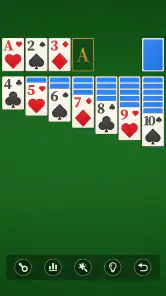
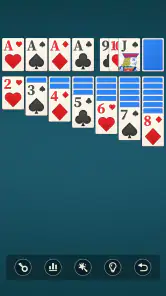
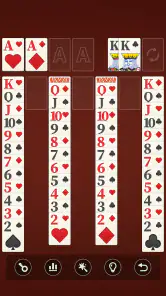
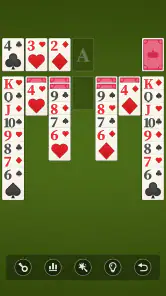
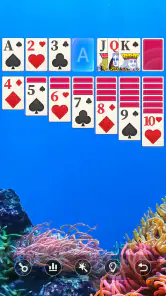
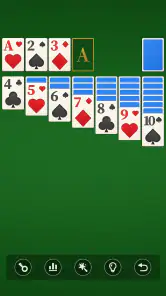
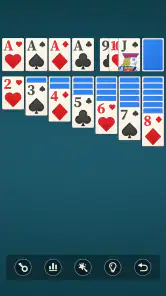
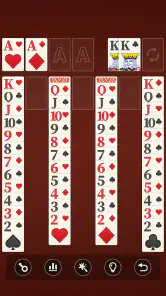
Analysis by Reviewed
I spent time with Solitaire Y as a straightforward card game for short breaks, quiet evenings, and those moments when I want something to do without learning a complicated system. It comes from HeartsNet and takes the familiar solitaire idea in a deliberately accessible direction. The appeal is easy to understand: open the game, deal a hand, and start playing without needing other people online or a large time commitment.
That simplicity is also the main thing to judge carefully. This is not the choice I would make if I wanted a deep competitive card experience, a large collection of modes, or a highly social game. I see it instead as a focused option for people who enjoy arranging cards at their own pace. It is free, rated for Everyone, and available for devices running Android 7.0 or later, which makes it approachable for users with older phones as well as newer models.
At the time of my review, the game is on version 1.6.6. It was released on August 19, 2025, and has passed 50 thousand installs with an average rating of 4.4 from 210 ratings and 21 written reviews. Those figures suggest a small but positive audience rather than a huge card-game community. I would treat that as a useful sign of general approval, while still remembering that a compact review base cannot tell every player’s story.
How Solitaire Y feels in everyday play
A familiar format that gets out of the way
The first strength is that the game does not ask me to invest much before playing. Solitaire works because its basic rhythm is immediately recognizable: reveal cards, build sequences, expose hidden options, and decide whether a move helps now or preserves flexibility for later. That makes it suitable for a quick session when I do not want a tutorial-heavy experience.
I particularly like this kind of game during small gaps in the day. Imagine waiting for an appointment with only a few minutes available. A round can give that time some structure without demanding the attention of a multiplayer match. If I need to stop suddenly, the game’s turn-based nature is naturally less stressful than a real-time card battle. That makes it a better fit for relaxed, interrupted play than many alternatives in the broader card category.
The familiar rules are also useful for mixed-age households. Since the content rating is Everyone, the game can sit comfortably on a family tablet or on a personal phone used by someone who wants uncomplicated entertainment. I would still explain the basic solitaire goal to a first-time player, but the learning curve should feel gentle compared with collectible card games, strategy card battlers, or casino-style apps that introduce more systems around the cards.
Why the simple design can be a real advantage
Many card games try to keep attention through missions, unlocks, events, or competition. Solitaire Y appears more appealing when judged by a different standard: how quickly it lets me settle into a calm mental routine. Sorting cards gives the mind a small puzzle to focus on, and the pace leaves room for thinking instead of reacting.
That makes it a reasonable companion for a quiet coffee, a train ride, or the end of a busy day. I would not describe every hand as exciting, but excitement is not always the point. Sometimes I want a low-pressure activity that is more engaging than scrolling and less demanding than a full game session. This is where the classic card format earns its place.
There is also a practical trade-off here. A narrow game can be easier to return to because I know what I am getting, but it may lose its appeal sooner if I need constant novelty. Players who enjoy repeating a familiar puzzle will likely appreciate that consistency. Players who measure value by the number of modes, decks, challenges, or social features may find the experience limited even if the basic play is pleasant.
Small decisions matter more than the theme
The most useful way to approach a solitaire round is not to move the first available card automatically. I get better results by looking for moves that reveal a hidden card or create a useful empty space, while avoiding choices that leave important cards trapped. That habit turns a casual round into a light exercise in planning.
A practical tip is to pause before filling an open column. An empty space can be valuable, especially when it lets a longer sequence move out of the way or gives access to a blocked card. Moving a stack simply because it is legal may feel productive, but preserving options is often more important than making the board look tidy. This is the kind of small strategic lesson that a short store description would not communicate.
I also recommend treating the game as a concentration tool rather than background noise. If I rush through every move, the experience becomes repetitive and I miss the satisfying part of the format: weighing an immediate gain against a better future position. That approach works especially well when I have ten quiet minutes and want something mentally active without the pressure of a score chase.
What the current version means for players
A recent release with a clear identity
The August 2025 release places Solitaire Y among relatively recent entries in the mobile card space. Its current version, 1.6.6, shows that the product has moved beyond its initial release build. I see that as evidence of ongoing iteration, but not as proof that every possible improvement has already arrived. A version number can tell me where the app is in its product life, yet the actual value still comes from how reliably the current build handles ordinary play.
For someone installing today, the important point is that this is not presented as an old, abandoned card title. The current build is the one I would judge, while future changes should be considered possibilities rather than promises. I would be happy to see continued attention to usability and stability, but I would not choose the game based on features that have not been confirmed.
The developer, HeartsNet, has kept the identity focused around a classic card pastime. That focus helps the game avoid the clutter I sometimes associate with mobile card apps. On the other hand, it means the product has less room to surprise me. Its evolution will matter most if later updates improve the parts that affect daily comfort: clear interactions, dependable sessions, and a smooth path from opening the app to starting a hand.
What existing users may notice over time
Players who already enjoy the game are likely to value continuity more than dramatic reinvention. With a solitaire title, a major change to the basic flow could be more disruptive than helpful. I would rather see refinements that preserve the recognizable card experience while reducing friction around starting, playing, and finishing a round.
This is also why I would approach updates with realistic expectations. The current version is a snapshot of the game’s present state, not a guarantee of a particular roadmap. Existing users should judge each update by whether it makes their regular sessions easier or more enjoyable, rather than assuming that a higher version number automatically means a larger game.
For new users, the advantage is that there is no need to understand a long history before beginning. I can install it, learn the central rhythm quickly, and decide after a few hands whether the calm, repetitive format suits me. That makes the game easier to evaluate than a complex card title where the first hour is mostly onboarding.
Where it compares well with other card games
Compared with collectible card games, Solitaire Y is far less demanding in preparation. I do not need to think about building a deck, learning a changing card pool, or matching my collection against another player’s. That is a strong reason to choose it when I want a self-contained puzzle rather than a hobby that grows over time.
Compared with multiplayer card games, it is also more forgiving of interruptions. There is no opponent waiting for my next turn in the experience I reviewed, so a pause does not carry the same social pressure. This makes it a better match for commuting, waiting rooms, or bedtime play than a competitive alternative.
Compared with other solitaire apps, the decision is more nuanced. A focused title can feel cleaner than one surrounded by daily tasks and extra systems, but a broader solitaire package may be better for someone who wants multiple rule sets or a stronger sense of progression. I would choose Solitaire Y for directness and choose a larger alternative when variety is the main requirement.
The gaps I would consider before installing
The biggest limitation is the same quality that makes the game approachable: there is not an obvious reason for every type of player to keep returning. If I need a campaign, social interaction, competition, or a wide range of card formats, a classic solitaire presentation may feel too narrow. This is not a flaw in the rules themselves; it is a mismatch between the game’s focused purpose and a player’s expectations.
I would also avoid assuming that “relaxing” means every hand will be effortless. Solitaire still includes moments where a poor choice early on can leave the board awkward later. That is part of the puzzle, but someone looking for completely passive entertainment may prefer a simple arcade game or a visual relaxation app instead.
Another trade-off concerns long-term motivation. Without relying on an elaborate progression structure, the game’s staying power depends heavily on whether I enjoy the act of solving hands. That is enough for a classic-card fan, but not necessarily enough for someone who needs new rewards or goals to maintain interest. I would test it during several short sessions rather than deciding from the first deal alone.
Who should try it, and who should skip it
I would recommend it to a person who already likes solitaire, wants a free card game, and prefers playing alone at a comfortable pace. It also makes sense for casual players who want something understandable on an Android device without committing to a large strategy system. The Everyone rating broadens its audience, while the minimum Android 7.0 requirement keeps it accessible to many older devices.
I would be more cautious if you want competitive matchmaking, rich deck construction, constant events, or a game that rewards mastery through a large set of distinct modes. In those cases, a multiplayer card title or a more feature-heavy solitaire collection may serve you better. The same applies if you dislike repeating a familiar format; this game’s appeal comes from refining your decisions inside a classic structure, not from changing the entire experience every few minutes.
What I would watch in future updates
For the next stage of the product, I would watch how HeartsNet balances the game’s clean identity with the needs of returning players. The best direction would be improvements that support the central card puzzle instead of burying it under unnecessary extras. Clearer interaction, comfortable session flow, and thoughtful refinements would matter more to me than a long list of additions.
I would also pay attention to whether the game remains welcoming to casual users while giving experienced solitaire players enough reason to continue. That balance is difficult: too little depth can make the app disposable, while too many systems can undermine the relaxing quality that attracted me in the first place. The current version gives the game a solid starting point, but its lasting appeal will depend on how carefully that identity develops.
My final view is positive but specific. Solitaire Y is best understood as a calm, focused card game rather than an all-purpose mobile gaming platform. I like it when I want a familiar puzzle, a free entry point, and the freedom to play in short pieces. I would not install it expecting a competitive community or an expansive collection of modes. For the right player, that restraint is exactly the benefit: the cards stay at the center, and the game asks only for a little attention in return.
Pros
- Simple controls make it easy for beginners to start playing.
- Short rounds are convenient for quick breaks or casual sessions.
- Classic solitaire rules provide a familiar
- relaxing experience.
- Runs well on many older devices with modest hardware.
- Offline play is useful when you have no internet connection.
Cons
- Limited variety may make the gameplay feel repetitive over time.
- Some features may be restricted unless you watch ads or upgrade.
- Ads can interrupt the experience between or during sessions.
- The interface may feel dated compared with newer solitaire games.
- Progression and customization options are relatively limited.
- Category
- Card
- Version
- 1.6.6