Solitaire Story - Ava's Manor
- 6.03K
- 4.8
- Installs
- 1.00M
- Price
- Free

Screenshots







Analysis by Reviewed
On a shared household device, I’d treat Solitaire Story - Ava's Manor as a game for taking turns, not as a shared account designed to keep everyone’s progress separate. One person can play a few TriPeaks rounds, then pass the tablet along; the manor and story give those short sessions a sense of direction. Before starting, I’d agree whose progress is being played, since story decisions and restoration advance through the game rather than belonging to separate players by default.
Taking turns without mixing expectations
For a family or couple sharing a tablet, I’d agree on whose progress is being played before opening the game. Story progress and manor restoration are linked to play, so alternating turns on one game could make it harder for each person to follow Ava’s choices and achievements as their own. If everyone wants separate progress, separate devices are the simpler arrangement; I wouldn’t count on a shared screen to provide individual boundaries.
A practical routine is to let one person finish a level before passing the device along. That keeps a session tidy and avoids handing over a game mid-puzzle. It also suits the format: the card rounds offer a natural stopping point, while the story gives you a reason to come back later. I’d avoid promising a child that a turn will unlock a particular room or reveal a specific secret; progress depends on playing through the game rather than on a guaranteed one-session outcome.
Where it fits among solitaire games
Compared with a plain solitaire app, the manor and its cast give each round a broader purpose. That is a real advantage when I want a light narrative alongside cards, but it also means the experience is less focused than a traditional solitaire game. If I’m looking only for an uncluttered card table, with no story or decorating thread to follow, a basic solitaire alternative may be a better fit.
The useful trade-off is that Ava’s story can make repeated card rounds feel connected, while players who mainly care about card strategy may prefer a game that keeps attention on the cards alone. I’d approach it as a story-led casual card game, not as a deep solitaire training tool. A small tip for household play: decide in advance whether you’re following the dialogue or simply moving through rounds, so players with different interests can take turns without feeling they have to engage with every part in the same way.
Age, spending, and device expectations
The game is rated Everyone, which makes it broadly suitable for a shared family setting, but an age rating isn’t a substitute for household rules. It is free to start, and it offers in-app purchases ranging from $0.99 to $99.99 per item. I’d make sure younger players know to ask before making a purchase and check the device’s purchase settings together. That matters especially on a device used by several people, where one person may not realize a payment choice affects the account holder.
Uken Games released it on September 22, 2020, and the current version is 48.5.1, with Android 6.0 as the minimum operating system. It has a 4.8 average from around 63,000 ratings and more than 1 million installs. Those figures suggest that it has found a substantial audience, but they don’t tell me whether its story-led pace suits every player. I’d choose it for someone who enjoys card rounds with a continuing narrative, rather than for a person who wants a purely competitive or stripped-back solitaire experience.
More From Our News Desk

Weather by Xiaomi Review: Clear at a Glance, Less Clear Up Close

X Under Pressure: Can It Recover When Posting Goes Wrong?

Clash of Clans Is Won Between the Battles

Android Auto Makes the Case for Quieter Car Software

MobiOffice: Transforming Mobile Productivity with Seamless Integration

EA SPORTS FC™ Mobile Soccer: Redefining Mobile Sports Gaming
Unpacking the Storyline
The game kicks off with Ava, a talented author who’s hit a bit of a creative block. She inherits her uncle's old manor, which is as mysterious as it is grand. As you dive into the game, you’re not only playing solitaire but also helping Ava restore the manor to its former glory. It’s like a two-for-one deal: you get to solve card puzzles while unraveling the secrets of the manor.
Gameplay Mechanics
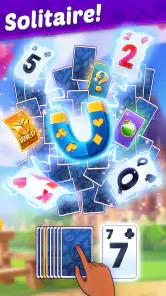
This isn’t just any old solitaire; it’s solitaire with a twist! Each level you complete helps Ava renovate a part of the manor. The mechanics are pretty straightforward, which is great because it allows you to focus on the story. You’ll find that each card game has its own little challenges, keeping you on your toes without being overly complex. It’s a smooth ride for both solitaire newbies and seasoned players.
What I love is the way the game rewards you. As you progress, you unlock new areas of the manor and bits of the story. It’s a clever way to keep you engaged, and honestly, it’s hard to put down once you start. The graphics are charming, with a vintage vibe that fits perfectly with the storyline.
Characters and Charm
Ava is a relatable character; she’s creative, curious, and a little bit quirky. As you help her navigate through the manor, you meet an array of interesting characters, each with their own backstories and personalities. It adds depth to the game, making it more than just about cards.
The dialogue is witty and often humorous, which adds a nice touch. It’s like getting a little chuckle every now and then as you play, making the game feel more personal and engaging.
In conclusion, Solitaire Story - Ava's Manor is more than just a card game; it’s an experience. The blend of solitaire and storytelling is done beautifully, making it a must-try for anyone looking for a casual game that still offers a bit of intrigue. Whether you’re a fan of solitaire, mysteries, or just looking for something new to try, this game is definitely worth a download. Trust me, once you start, you’ll be as hooked as I was.
A low-pressure fit for small pockets of time
I find the strongest everyday use for this game is a short break with a clear stopping point. If I have a few minutes while waiting for dinner or winding down before bed, a card level is easier to pick up than a long session-based game. The linked manor progress gives those rounds a reason to matter, but I would still think of the story as a gradual thread rather than something that has to be followed in one sitting.
That rhythm also makes it a plausible choice for a household where people have different schedules. One person can play after breakfast and another later in the day, provided everyone is comfortable continuing the same game. The trade-off is that a shared save means the next person inherits the current state of the story and renovation. If the fun for your household comes from comparing independent choices or keeping separate milestones, a single shared device is a poor substitute for individual play.
Who will enjoy the blend, and who may not
I’d recommend it most to someone who likes solitaire but appreciates a reason to continue beyond clearing a deal. The combination suits players who enjoy seeing a setting develop and meeting characters between card rounds. It also gives a newer solitaire player a welcoming context: the focus is on casual play and story momentum, rather than presenting itself as a serious way to study card strategy.
On the other hand, a player who wants fast, uninterrupted card play may find the narrative and manor restoration pull attention away from the table. Someone who prefers head-to-head competition, a minimalist interface, or a strict traditional solitaire experience should look elsewhere. I’d also hesitate to recommend it to a household member who dislikes decorating themes or story dialogue; those elements are part of the appeal, not merely a detachable wrapper around the cards.
For a mixed-age household, the best expectation to set is that this is a casual game with a continuing fictional story. The Everyone rating is reassuring as a broad content signal, but it doesn’t tell you whether each child will enjoy the pace or understand the purchase prompts. I’d introduce the game together, explain that the device owner should approve spending, and let the player decide whether the story is appealing rather than assuming the age label guarantees a perfect fit.
Making a shared session smoother
One small practical habit helps more than it might seem: pass the device only after the current level and any immediate story beat are finished. That gives the next player a clean starting point and makes it easier to remember who was following the dialogue. If someone in the household mainly wants cards, they can still take a turn without being expected to make choices on behalf of the person who cares about Ava’s story.
I’d also agree on whether the shared game is a communal project or belongs to one person. In the first case, players can treat manor progress as something they build together; in the second, everyone else should avoid advancing it without permission. This is not a substitute for separate profiles or account boundaries, and I wouldn’t assume the game provides household management tools. The decision is a simple social one, but making it upfront can prevent the more invested player from feeling that someone else has taken over their progress.
Another useful approach is to set a natural stopping rule rather than a time promise. A completed level is a clearer handoff than “just one more round,” especially when story progress makes it tempting to keep going. For children, that also makes expectations easier to manage without promising a particular reward or reveal. The game is better suited to flexible casual play than to a schedule where every short turn needs to end at a guaranteed story milestone.
Free to begin does not mean cost-free by default
Because the game is free to download, it is easy to try without committing to a purchase. The in-app purchase range is broad, however, so I’d view spending as something to discuss rather than an automatic part of play. On a shared device, the person enjoying the game may not be the person whose payment method is connected to it. Agreeing that purchases need the account holder’s approval is a sensible household boundary, especially for younger players.
I would not make the decision to install it based on the assumption that paying is necessary, nor would I promise that nobody will encounter a purchase option. A better approach is to begin with the free experience and decide together whether the game is enjoyable enough to keep. If your household prefers games with no in-app spending choices at all, this one may not match that preference, even though the initial download costs nothing.
What the audience numbers can and cannot tell me
Uken Games is the developer, and the game has earned a 4.8 average from roughly 63,000 ratings, with over 1 million installs. I take that as evidence that the mix has broad appeal, not as proof that every household will like its particular balance of cards, story, and restoration. A large audience can help reassure a curious player that this is an established casual title, but personal taste still matters more when deciding whether to keep playing.
The game first appeared on September 22, 2020, and version 48.5.1 lists Android 6.0 as the minimum system requirement. That gives Android users a basic compatibility check before installation; it doesn’t tell me how a particular older device will feel in use. If the household device is shared, I’d make sure it can run the game comfortably and has enough room for the app before making it the family’s regular pass-around option. iOS users should check compatibility on their own device before downloading rather than relying on the Android requirement.
My household verdict
As a shared-device choice, I like the game best when everyone understands that they are continuing one person’s story—or consciously treating that story as a joint project. The TriPeaks rounds make it easy to take turns, while Ava’s manor gives each session a bit more personality than a bare card table. Its casual tone and Everyone rating make it approachable for a broad household, but account boundaries and spending expectations still need to come from the people sharing the device.
I’d choose it for a family or couple that enjoys taking turns, chatting about the story, and accepting that progress belongs to the same ongoing game. I’d skip it if each player needs private progress, if the group wants a purely strategic card game, or if in-app purchases are unwelcome on the shared device. With those expectations in place, it is a pleasant option for filling small gaps in the day—just not a replacement for separate accounts or a traditional, no-frills solitaire app.
Solitaire Story - Ava's Manor Frequently Asked Questions
Who developed Solitaire Story - Ava's Manor, and what kind of game is it?
Solitaire Story - Ava's Manor is a card game developed by Uken Games. Its central activity is TriPeaks solitaire, paired with a story and home-design tasks. That combination may appeal if you want a familiar card-game format with additional goals between rounds. The game is free to download, though optional in-app purchases are available.
What age group is Solitaire Story - Ava's Manor intended for?
Solitaire Story - Ava's Manor has an Everyone content rating, so it is presented as suitable for a broad audience. Its core activity is solving TriPeaks solitaire boards, with story progression and manor design alongside the card puzzles. As with any game that offers optional purchases, it is sensible for parents and players to review purchase settings before playing.
What kind of solitaire gameplay does Solitaire Story - Ava's Manor offer?
Solitaire Story - Ava's Manor is a card game built around TriPeaks solitaire. You clear cards from the layout by choosing cards that follow the playable sequence, aiming to finish each board and move the story forward. If you enjoy familiar solitaire-style puzzles but want them tied to a longer game, this format gives each round a clear goal beyond simply completing a deal.
Is Solitaire Story - Ava's Manor suitable for casual players?
The game can suit casual players who enjoy short card puzzles alongside a continuing story and home-design tasks. Its TriPeaks rounds provide the main challenge, while completing levels helps unlock progress around the manor. The content rating is Everyone, so it is presented as a broadly accessible game; players should still consider whether its optional purchases fit their preferences before installing.
What is Solitaire Story - Ava's Manor about?
Solitaire Story - Ava's Manor is a delightful blend of classic solitaire gameplay and an engaging storyline. The game follows the journey of Ava as she restores her uncle's old mansion, uncovering mysteries and secrets along the way. Players solve solitaire puzzles to progress through the story, renovate various parts of the manor, and discover hidden chapters of Ava's family history. It's perfect for those who love card games with a narrative twist.
Pros
- Engaging storyline
- Beautiful graphics
- Addictive gameplay
- Variety of levels
- Free to play
Cons
- In-app purchases
- Requires internet connection
- Ads can be intrusive
- Battery consumption
- Occasional bugs
- Category
- Card
- Version
- 48.5.1