Prison Break: Stick Story
- 1.63K
- 4.8
- Installs
- 100.00M
- Price
- Free

Screenshots
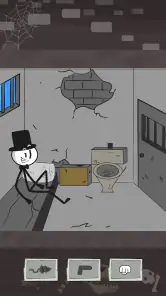
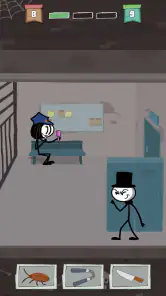
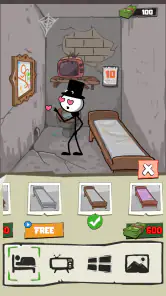
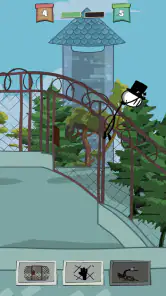
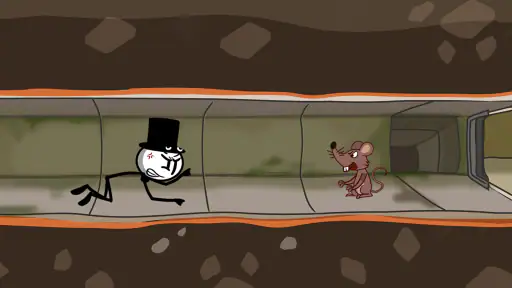

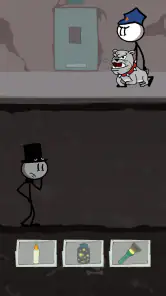
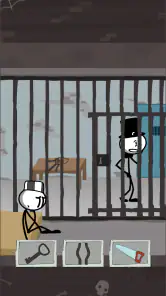
Analysis by Reviewed
I judge a small escape game by how quickly it lets me understand a situation and whether its choices make me curious enough to try another. Prison Break: Stick Story is built around that compact loop: a stick character faces a predicament, I weigh what might happen, and the next moment shows whether my decision helped or caused trouble. It is an adventure game, but not the sort that asks me to roam a broad map or manage a complicated prison. Its appeal is the brisk, playful rhythm of individual situations.
Reading the scenes and finding your way
The uncluttered stick-figure presentation gives each scene a simple visual focus, which can make the choices easier to follow than a busy adventure screen. I appreciate that directness when I want to play without learning a complicated interface. The trade-off is that minimal art offers fewer visual details to distinguish objects or characters; if you prefer rich environments that reward close inspection, this is likely to feel sparse rather than immersive.
As a practical habit, I would pause for a moment before choosing instead of tapping through every prompt quickly. In a situation-based game, noticing the context is part of the puzzle, and rushing can turn a clever decision into a guess. If a choice goes wrong, treating it as a chance to understand the scene—not as a reason to get annoyed—fits the game’s light, trial-and-error spirit.
Reads About Prison Break: Stick Story
Motor and sensory comfort
The simple visual style and straightforward controls make the game approachable for casual players who do not want to manage a complicated control scheme. Still, “easy to pick up” does not mean it will suit every player equally. The challenges can call for timing and precise actions as they progress, so anyone who finds quick interactions difficult may prefer a slower puzzle game with less emphasis on timing.
The stick characters are visually clear in broad strokes, but minimalist scenes can also leave less room for subtle distinctions. Players who rely on detailed visual cues, or who need strong control over sound and sensory intensity, should judge the experience on their own device before settling in for a longer session. I would not assume that a stripped-back look automatically makes a game accessible; simplicity helps in some ways, but it does not remove every barrier.
Choosing the right moment to play
The quick premise makes it tempting to open the game whenever I have a spare minute, but the timing-dependent moments are a reason to choose that minute carefully. Waiting in a quiet queue, sitting at home, or taking a short break with my attention free is a better fit than playing while walking or listening for an announcement. A brief session can still be interrupted; I would avoid starting a tricky moment when I know I may have to put the phone away instantly.
This is also a useful distinction for younger players or anyone sharing a device. The broad age rating does not tell me whether a particular person will enjoy a prison-escape setup, rapid choices, or learning through failed attempts. I would let a new player try a few scenes while I am nearby, then see whether the humor and pace suit them rather than judging from the simple drawings alone.
More From Our News Desk

Android Auto Makes the Case for Quieter Car Software

MobiOffice: Transforming Mobile Productivity with Seamless Integration

EA SPORTS FC™ Mobile Soccer: Redefining Mobile Sports Gaming

How Microsoft OneDrive Became a Mobile Productivity Giant

How Google Translate Breaks Language Barriers Effortlessly

Why Google Sheets Is the Ultimate Mobile Productivity Tool
Making retries feel useful
When a choice leads to a setback, I would change one thing at a time on the next attempt. If I rush through the same scene repeatedly, I learn little; if I pause to notice what the situation emphasizes and then try a different response, the retry has a purpose. That small habit is especially helpful for players who enjoy figuring out a joke or twist, but it will not suit someone who expects every answer to be obvious without experimentation.
I would also keep my expectations modest about what a short escape scenario can deliver. The pleasure is in the decision and its consequence, not in building a detailed strategy over many hours. If I am looking for a long narrative to follow across sessions, a story-led adventure is a better use of my time; if I want a contained puzzle that can be sampled between other tasks, this format makes more sense.
What the escape is like in everyday play
From the moment I launched Prison Break: Stick Story, I was thrust into a world of stick figures, each with their own quirky personalities and roles in this grand escape plan. The storyline is simple yet engaging. You're the main character, a stick figure unjustly imprisoned, and your mission is to outsmart the guards and make your way to freedom. The game does a fantastic job of setting the scene with its minimalist graphics, which surprisingly add to the charm and tension of each scenario.
That premise also makes it an easy game to sample in a short break: the goal is immediately understandable, and you do not need to study a complicated backstory before making a decision. For example, I could imagine opening it while waiting for a bus, playing through a situation, then putting my phone away without needing to remember a long chain of plot details. It is a better fit for spare moments than for someone looking for a large world to explore over a long evening.
Gameplay Mechanics
Now, onto the gameplay! It’s a blend of puzzle-solving and strategy, which kept me on my toes. Each level presents a new challenge, requiring a mix of timing, decision-making, and sometimes good old trial and error. I found myself chuckling at the clever animations and unexpected twists; it’s like the developers knew exactly when to throw a curveball my way. The controls are intuitive, making it easy for even the most casual gamers to pick up and play. But don’t be fooled; as you progress, the difficulty ramps up, demanding quick thinking and precise actions.
One useful way to approach those choices is to think about what a scene is asking you to notice before acting: the situation, the possible consequence, and whether the moment seems to call for speed or deliberation. That mindset can make repeated attempts feel like learning rather than blind tapping. The trade-off is that trial and error may frustrate players who expect every puzzle to have an obvious, carefully signposted solution on the first try.
How it compares with other adventure games
Compared with the usual adventure game built around exploration, dialogue trees, or a large inventory, this one keeps its focus on compact prison-escape situations. That narrow scope is a strength when I want a clear objective and a quick dose of playful problem-solving. It is also the reason I would choose another game if I wanted a substantial story, persistent character development, or a world where wandering and discovery matter as much as the next decision.
It also occupies a different niche from a conventional logic-puzzle game. Rather than asking me to sit with one elaborate problem and solve it through a long chain of deductions, its appeal is a sequence of brisk choices and animated outcomes. That makes it easier to dip into, but less satisfying if I want a puzzle that rewards careful note-taking or steadily builds a complex system. The right comparison is not simply “easy versus hard”; it is quick, comic decision-making versus sustained exploration or deduction.
The game is free to start, with in-app purchases listed at $2.99 to $6.99 per item. I would decide whether to spend only after seeing how the free experience suits me; the listed purchase range does not, by itself, tell me what an item changes or whether it is necessary. FARM STUDIO is the developer, and the game has a 4.8 average from around 367,000 ratings, alongside over 100 million installs. Those figures suggest a widely tried title, but they cannot tell you whether its brief, choice-based format matches your taste.
Where it fits—and where it may not
It is a sensible pick for someone who likes humorous escape scenarios, uncomplicated controls, and puzzles that can be approached in short sessions. I would be more cautious about recommending it to players who dislike retrying after a poor choice, need consistently slow-paced interactions, or want detailed environments and a long campaign. The Everyone age rating makes its intended audience broad, but personal comfort with the prison setting and the game’s challenge style still matters.
For a first try, I would play when I have a few uninterrupted minutes and pay attention to whether the choice-based rhythm feels entertaining or merely trial-and-error. If I am sharing a device with a younger player, I would also sit nearby at first and see how they respond to the escape theme and the timing demands. That is a more useful test than assuming a simple art style will automatically suit every age or ability.
Sound and Visuals
While the graphics are simple, they're effective in creating an immersive environment. The stick figure style might seem basic at first glance, but it's this simplicity that allows for quick, fluid animations that make every action feel dynamic. The sound design complements the visuals perfectly. Subtle background music maintains the tension, and the sound effects add a layer of realism to your every move, from the clinking of keys to the distant chatter of guards.
Sound can add atmosphere, but it should not be the only reason to follow an action; I would keep my attention on the scene itself, especially when playing somewhere noisy or with audio turned down. On the other hand, a quiet setting can make the soundtrack and effects more noticeable, so the game may feel livelier at home than during a rushed, distracted moment. That makes the setting of a session part of the experience, not just the length of it.
Practical details and lasting appeal
The game is free, is rated Everyone, and runs on Android 6.0 or later; its current version is 1.61.1. It was released on March 17, 2021. Those basics make it straightforward to consider on a compatible Android device, while the in-app purchases are worth keeping in mind if you prefer games with no optional spending. I would check the purchase prompt carefully rather than assume every feature or choice requires payment.
That purchase detail matters most for people who hand a phone to a child or prefer to keep spending tightly controlled. I would review any prompt before confirming it and treat the free entry point as a chance to decide whether the core style is enjoyable, not as a promise that every optional item will be needed. On the practical side, the Android requirement gives owners of older devices a clear compatibility check before they plan a session.
Its lasting appeal depends less on technical spectacle than on whether the individual escape situations keep surprising you. I enjoy that focused premise, but I would not expect it to replace a richer adventure game when I want hours of exploration. The best way to judge it is to try a few decisions and ask whether the playful twists make me curious about the next one.
A clear-eyed recommendation
In a digital world crowded with complex, high-definition games, Prison Break: Stick Story stands out with its straightforward yet engaging gameplay. It's a reminder that sometimes less is more. Whether you're a fan of puzzle games or just looking for something light-hearted yet challenging, this game is worth a try. Plus, it's a great way to test your strategic thinking skills in a fun, risk-free environment.
For me, the recommendation is conditional rather than universal: try it if a compact, humorous escape puzzle sounds appealing, and move on if retries or timing-sensitive moments quickly stop being fun. That distinction matters more than the broad adventure label. The game is at its best when I want a simple premise, a few decisions, and an animated payoff without committing to a full-scale campaign.
So, if you're ready to channel your inner escape artist and embark on a stick figure adventure, download Prison Break: Stick Story today. Trust me, it’s a breakout experience you won’t want to miss!
Prison Break: Stick Story Frequently Asked Questions
Does Prison Break: Stick Story have a simple premise for new players to understand?
Yes. Prison Break: Stick Story centers on a stick boy and a prison escape, so the basic idea is easy to grasp before you begin. It is a situation-choice adventure game: you face scenarios and choose how the character should respond. The appeal is in thinking through those choices and seeing how they help the stickman pursue an escape.
What kind of gameplay should I expect from Prison Break: Stick Story?
Expect an adventure built around prison-escape situations and choices rather than a sprawling role-playing experience. You guide a stickman through scenarios by selecting responses, with the aim of finding a way out. The straightforward setup makes the game approachable, while the choices give each situation a small puzzle-like quality. It suits players looking for casual, decision-focused entertainment.
Who developed Prison Break: Stick Story, and what type of game is it?
Prison Break: Stick Story is an adventure game developed by FARM STUDIO. Its stickman character and prison-break theme shape the experience, which focuses on choosing what to do in different situations. If you enjoy compact games with an escape premise and decisions to make, this setup may appeal to you. It is available as a free-to-download game.
Is Prison Break: Stick Story free to download, and what does it cost to play?
Prison Break: Stick Story is free to download, so you can try its prison-escape puzzles without paying upfront. It also offers optional in-app purchases, with individual items priced from $2.99 to $6.99. The game can be enjoyed without buying those items, though purchases may offer additional convenience for players who choose to use them.
Which devices can run Prison Break: Stick Story?
Prison Break: Stick Story is available for Android devices running Android 6.0 or later. Before downloading, check the operating-system version on your device to make sure it meets that requirement. If it does, you can install the game and try its stickman escape puzzles; the game is categorized as an adventure title and is developed by FARM STUDIO.
Pros
- Engaging storyline with unexpected twists.
- Challenging puzzles that stimulate the mind.
- Visually appealing graphics and animations.
- Intuitive controls for seamless gameplay.
- Regular updates with new levels and features.
Cons
- Ads can be intrusive during gameplay.
- Some puzzles may be too difficult for beginners.
- Limited lives can slow down progress.
- In-app purchases can be expensive.
- Requires an internet connection to play.
- Category
- Adventure
- Version
- 1.61.1