NumMatch: Logic Puzzle
- 4.79K
- 4.6
- Installs
- 10.00M
- Price
- Free

Screenshots
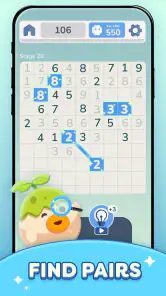

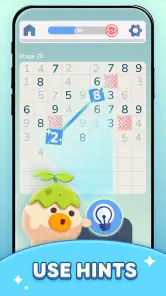

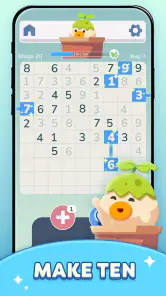
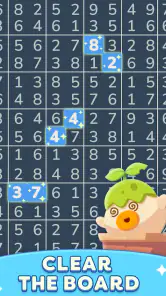
Analysis by Reviewed
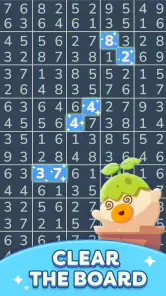
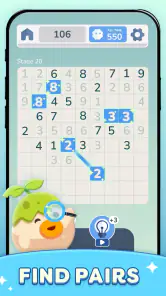
Before I choose a number puzzle, I ask myself what I want from a quick game: a simple rule I can remember, enough decisions to hold my attention, and a pace I can control. NumMatch: Logic Puzzle is built around clearing a board by pairing numbers, so it makes sense when I want a focused little challenge rather than a story, a sprawling strategy game, or a complicated set of rules.
A quick test for the right kind of puzzle
The key question is whether matching numbers feels satisfying to you. This is a board game for people who enjoy scanning a layout, spotting a possible pair, and thinking about what that move might leave behind. If I’m after a puzzle I can pick up without learning a long rulebook, that direct premise is appealing. If I prefer wordplay, spatial puzzles, or a competitive game with other people, a different kind of board game will probably suit me better.
It is free to download, with in-app purchases listed at $9.99 per item. I’d treat that as a reason to decide how I feel about optional spending before settling into a long session, rather than assuming I need to pay to enjoy the basic idea. The game is rated Everyone, which makes it a broadly approachable choice for casual play, though the best fit still depends on whether number matching is your kind of mental break.
What I look for in the first few sessions
I wouldn’t judge a number-matching game by one board alone. The useful test is whether I start noticing choices before I feel stuck: can I scan the arrangement, identify a promising pair, and consider what the remaining layout might look like? That small planning step is where the puzzle earns its name. If I’m only tapping obvious matches without thinking ahead, the routine may not hold my attention for long.
For a fair trial, I’d play once when I’m alert and again during a low-energy break. Number patterns can feel pleasantly absorbing when I have a little focus to spare, but they can also feel like another task when I’m already mentally worn out. That difference matters more than whether I usually enjoy puzzles in general.
Getting Started with NumMatch
The first thing you notice when you open NumMatch: Logic Puzzle is its clean and straightforward interface. It’s like the developers knew exactly what we needed—a no-frills, easy-to-navigate game that lets you dive right into the action without any unnecessary distractions. Whether you’re a seasoned puzzle aficionado or someone just getting started, this game is designed for all skill levels.
Gameplay and Features
The essence of NumMatch lies in its simplicity. The game challenges you to match numbers in a grid format—sounds easy, right? But don’t let that simplicity fool you. As you progress, the levels become increasingly complex, requiring strategic thinking and planning. It’s like a mental gym session, but way more fun!
More From Our News Desk

Clash of Clans Is Won Between the Battles

Android Auto Makes the Case for Quieter Car Software

MobiOffice: Transforming Mobile Productivity with Seamless Integration

EA SPORTS FC™ Mobile Soccer: Redefining Mobile Sports Gaming

How Microsoft OneDrive Became a Mobile Productivity Giant

How Google Translate Breaks Language Barriers Effortlessly
One of the standout features is the game’s hint system. Stuck on a level? No worries! The hints are there to nudge you in the right direction without giving too much away. This balance keeps the game challenging yet accessible, perfect for those moments when you need a little help but still want to feel accomplished.
Small habits that make the puzzle more satisfying
I get more out of a board when I resist tapping the first pair I notice. A quick scan of the rest of the grid can reveal another choice that leaves a cleaner set of numbers behind. That doesn’t mean there is always one perfect move; it simply gives me a reason to think about consequences instead of treating every match as interchangeable. The pleasure comes from making a decision, then seeing how the board changes.
When I’m unsure, I use the hint as a checkpoint rather than a routine. I first look over the board from a different angle, then reach for help only if I’m genuinely out of ideas. That keeps the hint useful without letting it make every decision for me. It is a modest difference, but it changes the feel of a puzzle from following prompts to working out the pattern myself.
A practical boundary helps too: I avoid opening a board when I have only a moment before I need to respond to someone. A quick puzzle can be a good waiting-room companion, but my attention still needs to be available when the real-world interruption arrives. I prefer to start when I can either finish comfortably or stop without feeling pulled back into the game.
Where this sort of game fits
In my experience, the useful question is not whether a number puzzle is “better” than every alternative, but what I want to do with a spare few minutes. Compared with a word puzzle, this asks me to notice numerical relationships rather than search for vocabulary; compared with a traditional board game, it is easier to approach alone and in short bursts. If I’m looking for a social match or a richer tactical contest, those alternatives are a better fit. NumMatch’s appeal is the compact, self-contained thinking.
A realistic moment for it is waiting for a meeting to start: I can open a board, concentrate on finding pairs, and put the phone away when I’m called in. A small practical tip is to pause before using a hint and scan the remaining numbers again; the extra look can turn a seemingly stuck board into a solvable one while keeping the decision mine. I would also avoid starting when I need to give someone immediate attention, since a puzzle that feels quick can still tempt me to finish the board first.
Choosing between number puzzles and other pastimes
The closest alternative is another solo logic or number puzzle, and the choice between them often comes down to the kind of thinking I want. Here, the central pleasure is reading a grid and finding pairs. A word game is a better pick when I want language to do the work; a spatial puzzle suits me more when rotating or fitting shapes is the challenge I’m after. Those categories can all provide a short mental break, but they don’t scratch the same itch.
Compared with a physical board game, this is more convenient when nobody else is available and I want to begin without setting anything up. The trade-off is that it doesn’t provide the conversation or shared decisions that make tabletop play enjoyable. Likewise, a competitive game is a better choice when I want an opponent and a clear social outcome, while this is a more private activity. I’d choose based on the company and mood I want, not just on which game is easiest to open.
It may also suit someone who wants a single familiar mechanic rather than a collection of unrelated mini-games. That focus makes it easier to settle into a rhythm, but it can become a limitation if I need novelty to stay engaged. If I tend to abandon puzzles once I understand their basic pattern, I would try it as an occasional option instead of expecting it to become my main game.
Why You’ll Love It
What truly sets NumMatch apart is its ability to engage without overwhelming. The game’s gradual learning curve ensures that you’re always improving while having fun. It’s perfect for those short breaks or when you need a quick distraction from reality.
Additionally, the game’s design is visually appealing. The developers have kept it minimalistic, ensuring that the focus remains on the gameplay itself. And let’s not forget the soothing background music, which adds a calming effect, making your puzzle-solving experience even more enjoyable.
Who will get the most from it
I think it is most appealing to people who enjoy quiet, self-directed puzzles and like the feeling of spotting a useful relationship in a field of numbers. It is also an easy option to keep in mind for a commute break, a few minutes in a queue, or a pause between chores, as long as the player is comfortable giving the board their attention. The straightforward premise means I don’t need to make a big commitment before finding out whether it suits me.
It is less suited to someone who wants a narrative that unfolds over time, a regular stream of different puzzle types, or a shared challenge with friends. I’d also look elsewhere if I dislike revisiting the same basic action even when the arrangement changes. The key distinction is not “easy versus hard”; it is whether repeating a clear number-matching routine feels calming and absorbing or simply samey.
For a household deciding whether it is suitable for different ages, the Everyone rating is a helpful starting point. I’d still base the decision on the individual player’s interest and comfort with number puzzles. A broad age rating doesn’t make the game equally engaging for every person, and someone who prefers pictures, words, or hands-on play may be happier with another activity.
Practical trade-offs before you settle in
The main trade-off is that a clean number grid can feel repetitive if you want changing themes, a narrative, or a strong sense of competition. I’d choose a different puzzle game if variety of subject matter is what keeps me engaged. The hint system is useful as a nudge, but relying on it too quickly can take away the satisfaction of finding a pairing yourself; I’d save it for a genuine dead end rather than treat it as the first move.
If I were deciding whether to keep it installed, I’d try a few sessions at different times: one when I have a quiet break and one when I’m tired. That gives me a better sense of whether the number patterns feel relaxing or like extra work. The game is from BRAINWORKS PUBLISHING PTE. LTD., has a 4.6 average from around 52,000 ratings, and has passed 10 million installs. It was released on January 4, 2024, and version 1.13.2 requires Android 7.0 or later.
Thinking about the cost and the commitment
Because downloading it is free and purchases are optional, I can test the core appeal before deciding whether I want to spend anything. I’d keep the listed $9.99-per-item purchase figure in mind and avoid treating any purchase as necessary just because I’ve played for a while. The sensible approach is to see whether I return to the puzzles naturally; if I don’t, paying would not fix the mismatch between the game’s format and my preferences.
Switching away is straightforward in practical terms: if the number grid stops being enjoyable, I can turn to a word, spatial, or tabletop game that offers a different kind of challenge. The more meaningful cost is attention. A board can invite me to keep going when I meant to take only a brief break, so I try to choose a moment when a few focused minutes won’t interfere with something else.
For players choosing a device, the stated Android requirement is version 7.0 or later. That is useful to check before downloading on an older Android device. The game is also available as an iOS title, so people deciding between phone platforms can consider their own device rather than assuming that the Android requirement applies across both systems.
Final Thoughts
In a world filled with complex and often cluttered games, NumMatch: Logic Puzzle is a breath of fresh air. It’s engaging, challenging, and most importantly, fun. Whether you’re looking to kill a few minutes or dive into a full-on puzzle marathon, this game has got you covered.
So, if you’re ready to give your brain a delightful workout, why not give NumMatch a try? Trust me, it’s one of those games that will quickly become a staple on your device. Happy puzzling!
My recommendation
I’d recommend NumMatch to anyone who likes solo number puzzles, wants an easy-to-understand activity for a short break, and is happy to repeat the same basic kind of reasoning as boards change. I’d skip it if I need multiplayer, a deep campaign, or a puzzle that constantly switches between different mechanics. Its 4.8K reviews suggest plenty of players have taken time to share their experience, but the best test is still whether the board-clearing routine clicks for you. Try it free, keep spending optional, and decide based on how it feels in your own everyday routine.
NumMatch: Logic Puzzle Frequently Asked Questions
Is NumMatch: Logic Puzzle suitable for a quick game during a break?
Yes. NumMatch: Logic Puzzle is built around finding number pairs and clearing the board, so its central activity is easy to pick up when you have a little time. You can focus on the available numbers and decide which pairs to remove, making it a straightforward option for a short puzzle session as well as longer play when you want to keep working through the board.
What kind of game is NumMatch: Logic Puzzle?
NumMatch: Logic Puzzle is a number-matching game in the board-game category. Its store summary describes the basic idea as finding pairs to clear the board, with the choice framed as “Ten or Pair?” If you enjoy puzzles that ask you to inspect numbers and make deliberate matching decisions, this simple premise is the main thing to know before downloading.
Is NumMatch: Logic Puzzle free to download, and what should I know about purchases?
NumMatch: Logic Puzzle is free to download and play, so you can try its number-matching puzzles without an upfront purchase. Optional in-app purchases are available, with items priced at $9.99 each. These purchases are not required to enjoy the core puzzle experience, but it is worth checking purchase settings if you share a device or want to manage spending.
What is NumMatch: Logic Puzzle and how do you play it?
NumMatch: Logic Puzzle is a challenging numerical game designed to test your logic and problem-solving skills. The objective is to match numbers on the board by finding and connecting pairs that sum up to a specific target. Players must strategically plan their moves to clear the board, offering hours of engaging mental exercise.
Is NumMatch: Logic Puzzle suitable for all ages?
Yes, NumMatch: Logic Puzzle is designed to be accessible for players of all ages. It has an Everyone content rating. While the puzzles can be challenging, the game gradually increases in difficulty, making it suitable for both younger players looking to improve their math skills and adults seeking a captivating brain workout.
Pros
- Engaging and challenging gameplay.
- Helps improve logical thinking skills.
- Simple and intuitive interface.
- No in-app purchases required.
- Suitable for all age groups.
Cons
- Can become repetitive over time.
- Limited hints available.
- No multiplayer mode.
- Ads can be distracting.
- Requires internet connection.
- Category
- Board
- Version
- 1.13.2