Mall Blitz
- 71.00
- 3.8
- Installs
- 500.00K
- Price
- Free

Screenshots
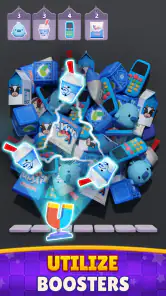


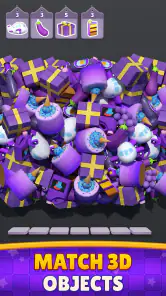
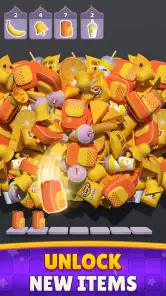
Analysis by Reviewed
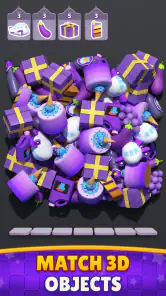
I spent time with Mall Blitz as a casual board game built around sorting and matching objects in a busy supermarket setting. The idea is easy to understand: look across a three-dimensional shopping scene, find three matching items, and use those matches to complete orders. That simple loop makes it approachable within seconds, but the real question is whether it stays comfortable during repeated play, especially when the screen becomes crowded and the available moves become harder to spot.
My overall impression is that this is best viewed as a short-session puzzle game rather than a deep strategy title. It suits the moments when I want something visual and uncomplicated, such as waiting for an appointment, taking a break from work, or winding down without learning a complicated ruleset. At the same time, its free-to-play structure and the pressure that can build in a packed shopping area mean it will not satisfy everyone. I found the strongest experience came from treating each level as a small observation challenge instead of rushing through it.
How the matching loop feels in real play
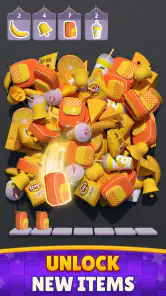
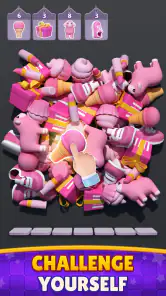
The central task is familiar to anyone who has played a triple-matching puzzle, but the supermarket presentation gives it a more tactile feel than a flat grid. I scan shelves and displays, select identical objects, and try to create groups of three before the temporary holding space becomes awkward. Completing orders gives the session a clear purpose, so I am not merely removing tiles for its own sake. There is a useful sense of progress whenever a cluttered section starts to open up.
The three-dimensional layout is also the source of the game’s main appeal and its main difficulty. Objects can be visually close together, partially obscured by other items, or placed at angles that require a slower inspection. I learned quickly that the fastest-looking move is not always the safest one. A match may be available, but taking it immediately can expose a less helpful arrangement or leave several unrelated objects competing for limited space.
That makes the game more thoughtful than its bright, casual presentation first suggests. I do not need long-term planning across a complicated board, yet I do need to recognize which objects are currently accessible and which matches should wait. The best habit is to scan the whole visible area before tapping. This reduces the chance of filling the selection area with attractive but strategically inconvenient pieces.
Where the game feels quickest
Early interactions feel naturally fast because the rules are obvious and the objects are easy to distinguish. A short session can begin without a tutorial-heavy barrier, which is valuable for a game designed for casual breaks. I can pick it up, make a few matches, and understand the immediate objective without committing to a long play period.
Perceived speed changes when the scene becomes dense. The game itself may still respond promptly, but my own decision-making slows because I have to inspect more objects and consider the order of removal. That distinction matters: a pause before a move is not automatically a performance problem. In Mall Blitz, some of the slower moments come from visual decision-making rather than from waiting for the interface.
More From Our News Desk

Clash of Clans Is Won Between the Battles

Android Auto Makes the Case for Quieter Car Software

MobiOffice: Transforming Mobile Productivity with Seamless Integration

EA SPORTS FC™ Mobile Soccer: Redefining Mobile Sports Gaming

How Microsoft OneDrive Became a Mobile Productivity Giant

How Google Translate Breaks Language Barriers Effortlessly
I found that playing with a deliberate rhythm made the game feel smoother. Instead of tapping every obvious trio as soon as I saw it, I checked whether another item of the same type was hidden nearby and whether the move would leave room for the next few selections. This approach is especially helpful during a quick break, because a rushed attempt can turn a manageable board into a frustrating one before I have even noticed what happened.
What happens during longer or heavier sessions
Repeated play puts more emphasis on visual stamina than on reflexes. The supermarket theme can create a lot to inspect, and the challenge becomes keeping track of several item types at once. I started mentally grouping objects by location rather than by color alone: items near one shelf, items in the foreground, and items that might become visible after a match. That small change made crowded stages easier to read.
Heavy use also exposes the game’s natural repetition. The matching action remains pleasant for a while, but players looking for a broad campaign, competitive interaction, or a large variety of puzzle rules may eventually want more than this format provides. Its strength is the clean repeatability of finding groups of three, not constant reinvention.
For a realistic everyday scenario, I would use it during a ten-minute commute break or while waiting for food. I would not start a session when I needed to concentrate on another task at the same time, because the later boards reward attention. A notification, conversation, or quick interruption can make it easy to forget which items were safe to select. The game works best when I can give it a small but complete pocket of attention.
One practical tip is to avoid spending the first moments of a level on the most visually obvious matches without looking at the surrounding layout. The first few moves are often valuable for creating space, not just for scoring immediate progress. I also found it useful to remember the location of a pair after selecting one item, rather than immediately searching randomly for a third. That reduces frantic scanning and helps preserve the available selection room.
Stability and recovery after interruptions
In normal use, the experience feels straightforward enough for casual play, but interruptions are an important consideration for any game intended for short sessions. I would treat it as a game to pause deliberately rather than one to leave running indefinitely while switching between several demanding apps. If I had to put the phone away unexpectedly, I would prefer to finish a move or reach a natural stopping point before leaving it.
Recovery is also tied to how much progress a player is willing to risk. A careful player can make the game easier to resume by keeping track of the current board state and avoiding impulsive selections immediately before leaving. That is not a substitute for a dedicated recovery system, but it is a useful habit when playing in fragmented moments.
The current version is 1.6.8, which tells me the game has received ongoing iteration rather than remaining at its initial launch state. It first appeared on August 15, 2024, and that relatively recent history makes it sensible to keep the app updated through the normal store process. I would not interpret the version number as a guarantee that every device will behave identically, but it does give the game a current, actively maintained feel from a user’s perspective.
The public response is mixed but respectable: Mall Blitz has an average rating of 3.8 from around 686 ratings, alongside roughly 71 written reviews. I read that as a sign that the core idea works for many players while leaving room for personal disagreement about pacing, difficulty, monetization, or presentation. A rating in this range makes me recommend trying it personally rather than assuming it will suit every puzzle fan.
Device demands and practical expectations
Mall Blitz is listed as free and supports devices running Android 7.0 or later. That broad compatibility makes it accessible to people who are not using a recent flagship phone. Still, compatibility is not the same as identical comfort on every handset. A newer device will generally be the safer choice for a visually busy three-dimensional puzzle, while an older phone may feel less comfortable during extended play even if it meets the operating-system requirement.
I would be especially cautious about long sessions on a phone that already struggles with visually rich games or has limited free storage and memory. The supermarket scenes ask the device to display many objects at once, so the practical experience can depend on the phone’s age and general condition. Keeping other demanding apps closed is a sensible way to avoid unnecessary friction, particularly if the game is being used during a long break rather than for a single quick round.
Resource demands also matter for battery-conscious players. I would not choose a three-dimensional puzzle as my first option when the phone is already close to empty and I need it for navigation or an urgent call. For ordinary short play, the format feels more suitable than a graphically intense action game, but I would still judge it by the same everyday rule I use for any mobile title: if battery life matters more than entertainment, play briefly and close it afterward.
The Everyone content rating is another reason the game is easy to recommend in a family setting. The concept is uncomplicated and does not depend on mature themes. That does not mean every family member will enjoy the same pace, though. Younger players may enjoy identifying the objects, while adults who prefer word puzzles, logic grids, or classic board games may find the repeated triple-matching loop too narrow.
How the free model changes the experience
There is no purchase required to start, which lowers the barrier to testing the game. The in-app purchase range runs from $4.99 to $99.99 per item, so I would approach optional spending carefully. The important practical point is that a free download can still become expensive if a player buys repeatedly without setting a personal limit.
I recommend deciding in advance whether the game is only for no-cost casual play or whether optional purchases are acceptable. That decision is easier before a difficult board creates pressure. If I were introducing it to a child, I would use the device’s purchase controls and discuss the rule beforehand. The game’s matching loop is accessible enough that I would first see how far I can get through ordinary play before considering any paid shortcut or convenience.
This is also where Mall Blitz differs from traditional board games. A physical matching game has a fixed cost and a clearly bounded session, while a free mobile title can invite repeated play and optional spending. On the other hand, a physical game lacks the convenience of carrying a supermarket puzzle in a pocket. The better choice depends on whether I value instant access and short solo sessions or prefer a more complete, one-time tabletop experience.
Who will enjoy it, and who should look elsewhere
I would recommend Mall Blitz to players who like visual sorting, quick objectives, and the satisfaction of clearing a crowded arrangement. It is particularly suitable for people who want a puzzle that can be understood immediately but still rewards patience. The supermarket setting gives the matching task a recognizable context, and the order-based goal helps the session feel more directed than an abstract tile remover.
I would be less likely to recommend it to someone seeking a serious board-game simulation. Although it belongs to the board category, it does not replace the negotiation, planning, or social interaction found in tabletop strategy games. It is also not the best fit for players who dislike free-to-play economies, repeated visual scanning, or puzzles where a poor selection order can make the remainder of a level feel unnecessarily constrained.
Compared with a conventional match-three game, this title asks me to inspect a three-dimensional arrangement rather than simply follow rows and columns. Compared with a classic solitaire-style board game, it is more object-focused and less dependent on card sequencing. Compared with a hidden-object game, it adds a firm matching rule and a more immediate failure risk. Those differences make it a good middle ground for someone who wants more involvement than tapping obvious combinations but less complexity than a full strategy board game.
Small techniques that improve the experience
My first useful technique is to treat the selection area as a resource. A pair is not automatically progress if choosing it prevents a safer trio elsewhere. I try to identify the third item before committing to the first two, especially when the board is crowded. This simple check is more valuable than tapping quickly.
My second technique is to use newly exposed space as information. After a match disappears, I pause and rescan the area instead of continuing with the plan I made a moment earlier. The board has changed, and a newly visible object can alter the best order. This makes the game feel less like a fixed search and more like a sequence of small layout adjustments.
My third technique is to separate recognition from action. I first note several possible matches, then choose the one that improves access to the rest of the board. This is particularly useful when two groups look equally easy. The better move is often the one that opens a blocked area or avoids leaving a difficult single item stranded.
These habits also make the game more manageable on a smaller screen. Rather than trying to inspect everything through rapid taps, I use short pauses and focus on one region at a time. That does not remove the challenge, but it reduces accidental selections and makes the experience feel calmer on an older or compact device.
My final performance verdict
As a performance-focused review, I see Mall Blitz as a lightweight idea with a visually busier workload than its simple rules suggest. Its perceived speed is strongest during short, uncomplicated rounds, while dense scenes shift the burden toward careful observation. The game is most comfortable when the phone is reasonably modern, other demanding apps are not competing for resources, and I am willing to play with attention rather than treat every move as a reflex.
Its reliability appeal comes from the clarity of the basic loop: find matching objects, complete groups, and make room for the next decision. That clarity makes it easy to return to after a break, although I still prefer ending at a natural point before switching away. The broad Android compatibility and Everyone rating make it approachable, while the free entry point makes trying it low risk. The optional purchase range is the main area where I would advise restraint.
My recommendation is positive but specific. If you want a solo board-style puzzle for short breaks and enjoy sorting crowded visual scenes, Mall Blitz is worth trying. If you want deep strategy, social play, a fixed-price experience, or a game that demands almost no visual concentration, another option will suit you better. For me, its best quality is the small tactical decision hidden inside each match: the fastest move is not always the best move. That gives the simple supermarket setting enough substance to keep a casual session interesting without pretending to be something more complex.
Mall Blitz Frequently Asked Questions
What kind of game is Mall Blitz?
Mall Blitz is a board game built around a supermarket-themed, three-dimensional matching puzzle. The central task is to find objects and match three of the same kind to fulfil orders. That makes it a casual option for players who enjoy spotting items and completing small objectives, rather than a traditional board played with pieces on a fixed grid.
Who develops Mall Blitz, and what should I know about its availability?
Mall Blitz is developed by BRAINWORKS PUBLISHING PTE. LTD. It is free to download, has an Everyone age rating, and has reached over 500,000 installs. Its listed release date is August 15, 2024, and the current version is 1.6.8. Before installing, check that the game is available in your region and is compatible with your device.
What is Mall Blitz and how is the gameplay structured?
Mall Blitz is a fast-paced shopping and time-management game in which you complete customer-related tasks, manage activity across a busy mall, and work toward higher scores or rewards. Gameplay is generally divided into short sessions, making it suitable for quick play. As you progress, objectives can become more demanding, requiring faster decisions and better use of available resources.
Is Mall Blitz free to download and play?
Mall Blitz can typically be downloaded and played without an upfront purchase, although the exact availability may depend on your Android or iOS region. Like many free mobile games, it may include optional in-app purchases, such as extra resources, boosts, cosmetic items, or faster progression. Check the store listing and purchase settings before downloading, especially if children may use the device.
Does Mall Blitz require an internet connection?
The connection requirements may vary depending on the version and the feature you are using. Basic gameplay may work in some situations without a constant connection, but online access can be necessary for advertisements, cloud saves, events, updates, leaderboards, or purchases. If you plan to play while traveling, test the game offline first rather than assuming every feature will remain available.
Pros
- Fast-paced matches make it easy to enjoy the game in short sessions.
- Colorful mall-themed visuals give the game a cheerful
- polished look.
- A wide variety of items keeps the matching gameplay feeling fresh.
- Simple controls are suitable for both casual and younger players.
- Progression and unlockable content provide motivation to keep playing.
Cons
- Later levels can become noticeably difficult without careful planning.
- Frequent rewards and prompts may feel distracting during gameplay.
- Some upgrades or boosters may take time to earn without purchases.
- The core matching mechanics can feel repetitive over longer sessions.
- Performance may vary on older devices with limited memory.

- Category
- Board
- Version
- 1.6.8