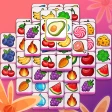
Find Triple Ball: Match Triple
- 113.00
- 4.6
- Installs
- 50.00K
- Price
- Free
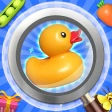
Screenshots




Analysis by Reviewed
I went into Find Triple Ball: Match Triple expecting a simple board game for passing time, and that is exactly where its appeal lies. The game asks me to match identical three-dimensional objects while searching through a busy visual scene. It is easy to understand, quick to start, and pleasantly calming when I want something more active than scrolling but less demanding than a strategy game.
My overall view is positive, with one important qualification: this is best treated as a focused casual puzzle rather than a deep game with a large learning curve. Its strongest quality is the way it turns visual sorting into a short, repeatable routine. I can play for a few minutes, put it down, and return later without having to remember a complicated story, control scheme, or set of rules.
How the matching experience feels in everyday play
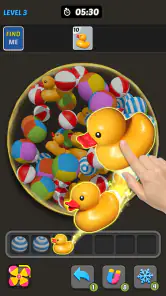
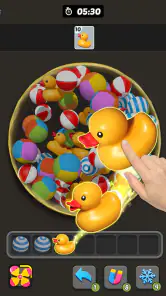
The central task is straightforward. I look across a collection of hidden or partially obscured objects, identify three matching items, and bring those together. The three-dimensional presentation gives the search a more tactile feeling than a flat list of icons. I am not only checking colors or symbols; I am also scanning shapes, angles, and small visual differences.
That distinction matters because the game’s challenge comes less from learning rules and more from managing attention. At first, I tend to notice the largest or most obvious objects. After a few moments, the scene becomes a visual inventory, and I start grouping possibilities in my head. A useful habit is to scan from one side to the other instead of tapping randomly. That reduces repeated searching and makes it easier to remember which objects I have already considered.
The triple-match structure also creates a small but satisfying rhythm. Finding the first two objects feels like preparation; discovering the third completes the thought. When several matches are visible, I prefer to finish the set that is easiest to confirm before chasing a less obvious possibility. This is a practical way to keep the board readable and avoid wasting attention on uncertain guesses.
For a game in the board category, it is notably more visual than traditional board titles. It does not ask me to plan a route, manage a hand of cards, or compete through a long turn sequence. Compared with classic matching games built around a grid, the three-dimensional object hunt feels more like sorting a cluttered drawer. That makes it a good fit for people who enjoy observation puzzles but do not want a conventional memory game.
The store summary describes it as a relaxing way to match and find hidden objects, and that is a fair description of the intended mood. I can play slowly when I want a quiet break. However, the search itself still demands concentration, so “relaxing” does not mean completely passive. If I am tired, the objects can begin to blend together, especially when I rush.
More From Our News Desk

Clash of Clans Is Won Between the Battles

Android Auto Makes the Case for Quieter Car Software

MobiOffice: Transforming Mobile Productivity with Seamless Integration

EA SPORTS FC™ Mobile Soccer: Redefining Mobile Sports Gaming

How Microsoft OneDrive Became a Mobile Productivity Giant

How Google Translate Breaks Language Barriers Effortlessly
Why the three-object rule works so well
Matching pairs can become repetitive because each discovery is only half complete. Requiring three objects gives every successful move a little more weight. I have to hold a possible match in mind while continuing to inspect the scene, which creates a modest memory challenge without turning the game into a test that feels punishing.
This structure is also useful for short sessions. I do not need to commit to a long chain of moves before feeling progress. One completed group provides a clear moment of satisfaction, and the next search begins immediately. That makes the game suitable for a coffee break, a short wait, or a quiet few minutes before bed.
My practical tip is to avoid clearing the most visible items automatically. Sometimes an obvious object is part of a useful group, but sometimes it is better to keep it in mind while looking for a harder-to-see companion. I found that treating the board as a set of possible groups, rather than as isolated objects, made the experience more controlled.
The visual search is the real source of difficulty
There is no need to master complicated controls. The challenge is deciding what deserves attention next. Objects can be easy to recognize individually but difficult to compare when several similar shapes are close together. I often found myself checking details such as a rounded edge, a different color accent, or the direction in which an object was turned.
This is where the game differs from a basic tap-to-match diversion. It rewards a deliberate scanning method. I get better results when I inspect the scene in sections, mentally reserve objects that already have one or two possible matches, and only then make a move. That approach is especially helpful when the board becomes visually crowded.
Another useful workflow is to separate “certain” matches from “maybe” matches. I complete a group only when all three objects look convincing. If I am unsure about one item, I continue searching instead of forcing the decision. This keeps the session calmer and prevents the kind of frantic tapping that can make a relaxing puzzle feel unnecessarily stressful.
Where the game fits among casual alternatives
Against a standard match-three game, this feels less tactical and more observational. Traditional match-three titles usually emphasize arranging pieces, creating combinations, and planning the next move. Here, my attention is directed toward finding objects that already belong together. Someone who enjoys chain reactions and board manipulation may find this experience too quiet.
Compared with hidden-object games, the triple requirement gives the search a clearer purpose. I am not simply locating everything on a scene; I am building complete groups. That makes the objective easier to understand, although it also means the experience may feel narrower than a story-driven hidden-object adventure.
It is also different from a memory-pair game. I do not need to flip cards and remember a fixed position in the same way. The emphasis is on visual recognition and grouping. For me, that makes it a better choice when I want a puzzle that uses observation more than recall, while people specifically looking for a memory-training format may prefer another kind of board game.
The game’s free price lowers the barrier to trying it, which suits this casual format. At the same time, in-app purchases range from $0.99 to $99.99 per item. That is worth keeping in mind before treating the game as a completely cost-free experience. I would approach any optional purchase carefully and decide in advance whether the basic play loop is enjoyable enough without spending.
What may frustrate regular players
The same simplicity that makes the game approachable can limit its long-term appeal. If I want a strong sense of character progression, a story, competitive play, or complex strategy, this is not the right destination. The satisfaction comes from completing visual groups, not from building a larger plan across many different systems.
Visual clutter can also become a genuine weakness. When too many similar objects compete for attention, the task may feel less like a relaxing search and more like trying to organize a crowded desktop. My solution is to slow down, inspect one area at a time, and avoid tapping based only on a quick color impression. Players who dislike busy screens or who need very clear visual separation may find the presentation tiring.
Another limitation is that the game’s appeal depends heavily on whether I enjoy repetition. The basic activity remains consistent: inspect, identify, match three, and continue. That consistency is ideal for a dependable break, but it may not hold the attention of someone who needs frequent changes in mechanics. I would not choose it as my only game if I wanted constant novelty.
The game is rated for Everyone, which reflects its accessible premise. Even so, accessibility in practice depends on the player’s comfort with small visual distinctions and crowded object arrangements. Younger players can understand the goal quickly, while older players may appreciate the relaxed pace, but anyone with difficulty distinguishing similar shapes or colors should try a session before deciding whether it feels comfortable.
Who I think will enjoy it most
I would recommend it to people who like quiet object-search puzzles, simple board games, and short sessions with a clear goal. It is particularly suitable for a player who wants something more engaging than a passive app but does not want to learn a complicated ruleset. The game also works well for anyone who enjoys organizing visual information and gets satisfaction from completing small groups one after another.
A realistic use case is a short commute or waiting-room break. I can open the game, focus on a few object groups, and stop without losing the thread of a campaign. It also fits a relaxed evening routine when I want light concentration rather than a competitive match. Because the controls are simple, I do not need a long warm-up before playing.
I would be more cautious about recommending it to people who want multiplayer competition, elaborate progression, or a story that gives every session a different purpose. Fans of complex board games may find the decisions too limited, while players who prefer fast reflexes may find the deliberate searching too slow. In those cases, a strategy board game, an action puzzle, or a more narrative hidden-object title would probably be a better match.
It is also a reasonable choice for families looking for an approachable visual puzzle, but I would still play alongside younger users at first. The rules are easy to explain, yet the best approach is not always obvious. Showing how to scan systematically, save uncertain objects mentally, and complete reliable triples can make the first sessions less frustrating.
Device and version details worth knowing
The game comes from BRAINWORKS PUBLISHING PTE. LTD. and is available as a free title for Android users whose device runs Android 8.0 or later. Its current version is 2.0.1. I would check the operating-system requirement before trying to install it on an older phone, especially if the device has not received recent software updates.
The game has passed fifty thousand installs and holds a 4.6 average from 578 ratings, alongside 113 written reviews. Those figures suggest that it has found a receptive audience, although they should not replace personal testing. A high average can tell me that the core experience works for many players, but it cannot predict whether I will enjoy the visual style or the repeated matching loop.
Since the content rating is Everyone, the game is positioned as broadly accessible rather than aimed at a mature audience. That makes the simple object-matching premise easier to share across a household. The main decision is not suitability of theme; it is whether the search-based gameplay feels satisfying enough for the intended player.
Before installing, I would also consider storage and attention rather than only compatibility. A player who wants a deep, long-form board experience should set expectations accordingly. This is a focused casual game, and its value comes from being easy to pick up, not from replacing a full tabletop collection.
Small habits that make each session better
My first recommendation is to establish a scanning route. I usually begin at one edge, move across the scene, and then check the remaining areas instead of jumping between random objects. This sounds minor, but it reduces the chance of overlooking the third item in a group because I have already searched that area too quickly.
Second, I try to identify the most distinctive object in a possible triple before looking for its companions. A unique shape or strong color contrast is easier to remember than a generic item. Once I have that anchor, I can search for matching details without repeatedly reconsidering the entire board.
Third, I delay uncertain taps. If two objects look similar but the third is unclear, I treat the group as unfinished and keep scanning. This protects the relaxed character of the game and helps me avoid turning visual uncertainty into rushed play.
Finally, I use the game as a short reset rather than forcing a long session. When my attention starts to fade, the objects become harder to distinguish and the search loses its pleasant rhythm. Stopping at that point is better than assuming I need to push through. The game is strongest when played as a compact mental break.
My final recommendation
Find Triple Ball: Match Triple succeeds because it understands the appeal of a small, clear task. I look, compare, group, and complete. The three-dimensional objects give the familiar matching idea enough texture to feel more involving than a plain list, while the simple rules keep the game welcoming from the first session.
Its limits are just as clear. The repeated search may not satisfy players who need deep strategy, social competition, or constant mechanical change. Busy visual arrangements can also test patience, and the presence of in-app purchases means “free” should be understood as free to start rather than a promise that every optional element costs nothing.
For me, the best way to judge it is as a calm, observation-focused board game for spare moments. I would recommend it to a friend who likes finding hidden objects, enjoys completing small visual goals, and wants a game that can be started and stopped easily. I would point a strategy enthusiast or a player seeking a rich campaign elsewhere.
My verdict: choose it for relaxed visual matching, not for deep board-game strategy. Within that narrower purpose, it is approachable, satisfying, and easy to return to when I want a few quiet minutes of focused play.
Find Triple Ball: Match Triple Frequently Asked Questions
Who developed Find Triple Ball: Match Triple, and what kind of game is it?
Find Triple Ball: Match Triple is a board-style puzzle game developed by BRAINWORKS PUBLISHING PTE. LTD. Its focus is matching objects rather than competing in a fast-paced action game, making it a fit for players who enjoy visual search and simple puzzle mechanics. The game’s store description invites players to match and find hidden 3D objects while relaxing and having fun.
What is Find Triple Ball: Match Triple and how is it played?
Find Triple Ball: Match Triple is a casual matching puzzle game centered on finding three identical ball items and combining them to clear the board. After installing it, you can tap or select matching objects, plan the order of your moves, and complete each level before the available space or objectives become a problem. The gameplay is easy to understand, but later stages usually require more careful observation and strategy.
Is Find Triple Ball: Match Triple free to download and play?
The game is free to download, allowing players to begin without paying an upfront purchase price. Optional in-app purchases are available, with items ranging from $0.99 to $99.99 each. Check the purchase settings on your device before handing it to a child or anyone else who might make purchases, and consider whether optional spending fits your preferences.
What age rating does Find Triple Ball: Match Triple have?
Find Triple Ball: Match Triple has an Everyone content rating, so its store age classification is intended for a broad audience. The simple tap-based controls and colorful visual design can make it approachable for younger players as well as adults. Parents may still want to review the game themselves and set suitable purchase controls, since optional in-app purchases are available.
Does Find Triple Ball: Match Triple require an internet connection?
The basic matching levels may be playable without a continuous internet connection, which is convenient when traveling or when mobile data is unavailable. Nevertheless, some features can depend on connectivity, including advertisements, cloud synchronization, special events, updates, leaderboards, or purchases. If offline play is important to you, test the game in airplane mode because requirements can change after future updates.
Pros
- Simple matching rules make it easy for new players to start.
- Short levels fit well into quick breaks or casual play sessions.
- Colorful ball designs make the board easy to scan.
- Increasing difficulty provides a gradual challenge as you progress.
- Offline play is convenient when you have no internet connection.
Cons
- Later levels can feel repetitive once the basic matching pattern is familiar.
- Limited move options may make some puzzles feel dependent on luck.
- Frequent ads can interrupt the flow between levels.
- Small balls may be difficult to distinguish on compact screens.
- Power-ups may be limited unless you watch ads or make purchases.
- Category
- Board
- Version
- 2.0.1