My Monster Album - Collect & T
- 42.00
- 4.4
- Installs
- 50.00K
- Price
- Free

Screenshots
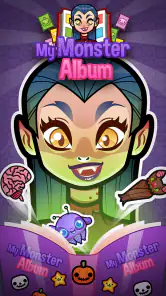

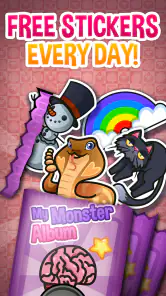
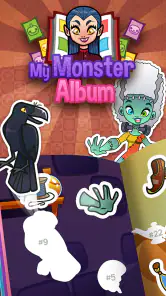

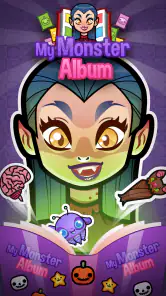

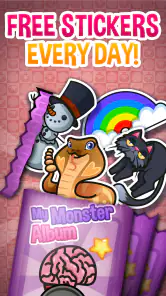
Analysis by Reviewed
I went into My Monster Album expecting a light sticker-collecting game, and that is exactly where its appeal lies. It does not try to be a complicated adventure or a demanding strategy title. Instead, it turns familiar monster characters into a small collecting routine: find stickers, complete parts of an album, and keep an eye out for the next missing piece. The result is easy to understand within moments, but it also depends heavily on whether you enjoy gradual collection more than active gameplay.
Developed by Tapps Games, this free educational game is aimed at Everyone and works on devices running Android 8.0 or later. Its average rating is 4.4 from over 600 ratings, while its reach has passed 50 thousand installs. Those figures suggest that it has found a modest but interested audience, although I would not mistake it for a large, content-heavy game. My experience is closer to opening a digital sticker album for a quick break than settling in for a long play session.
How the collecting loop feels in practice
When I return to the album, I find it helps to decide what would make a session feel complete before I begin: a clearer sense of the collection, a shared moment with a friend, or simply a few relaxed minutes. That small intention keeps the loop from turning into aimless checking and makes the game’s gentle pace easier to enjoy. It also helps me tell the difference between a slow session and a genuine snag.
The first action is simple, and that is intentional
The first thing I liked is that the game gives the collection idea room to speak for itself. You are not asked to learn a complicated control scheme or memorize a long list of objectives. The central action is about interacting with the album and working toward more monster stickers. That makes the opening approachable for younger players and for anyone who wants something casual rather than another game demanding constant attention.
The monster theme also gives the album a clear personality. A plain checklist can feel like household administration, but a sticker album creates a sense of ownership. Each addition feels like it belongs to a growing personal display, even when the underlying task is simply filling a gap. I found that the visual idea does more work than a traditional achievement list would because the collection is something I can imagine completing, not merely a percentage rising on a screen.
This is also where the educational category needs a little context. The game is suitable for an Everyone audience, but I would describe its learning value as informal rather than academic. It encourages recognition, sorting, attention, and persistence through collecting. It is not the kind of title I would choose when a child needs help with reading, mathematics, or a specific school subject. Its educational quality comes from the habits around completing an organized collection.
Feedback arrives through visible progress
The strongest part of the experience is the feedback rhythm. I take an action, see the album become more complete, and immediately understand why that small success matters. The reward is not necessarily a dramatic event; it is the satisfying reduction of empty spaces and the feeling that the album is moving toward a finished state. For a casual game, that clarity is valuable because there is little confusion about what I am working toward.
More From Our News Desk
Weather by Xiaomi Review: Clear at a Glance, Less Clear Up Close

X Under Pressure: Can It Recover When Posting Goes Wrong?

Clash of Clans Is Won Between the Battles

Android Auto Makes the Case for Quieter Car Software

MobiOffice: Transforming Mobile Productivity with Seamless Integration

EA SPORTS FC™ Mobile Soccer: Redefining Mobile Sports Gaming
That rhythm works especially well in short bursts. If I have only a few minutes, I can check the collection, focus on what is missing, and stop without feeling that I have abandoned a complicated mission. The game is therefore a natural fit for waiting rooms, quiet travel, or a short wind-down before bed. It does not require the same concentration as a puzzle game with a timer, and it does not punish me for treating it as a small daily habit.
There is a trade-off, though. The more familiar I become with the collecting pattern, the less surprising each action feels. Players who need constant movement, combat, exploration, or a strong narrative may find the feedback too gentle. The album gives progress a visible shape, but it does not transform every collection step into a major event. That restraint is good for accessibility and less appealing for people who want intensity.
Why the reward can keep another session going
Sticker collections create a particular kind of temptation: one completed section makes the next incomplete section more noticeable. I often found myself returning not because I had a large objective in mind, but because the album had shown me a small unfinished task. That is the reason another session begins. The game turns “I am almost there” into a gentle invitation to come back.
The social idea in the game’s concept also matters. Collecting is more interesting when it can be discussed or compared with friends, and the possibility of trading gives the album a purpose beyond private accumulation. I would treat this as a reason to play alongside people who already enjoy sticker albums, rather than assuming it will replace a full multiplayer game. The appeal comes from sharing the collection experience, not from fast competitive action.
One practical tip is to avoid treating every missing sticker as equally urgent. I get more enjoyment by viewing the album in sections and choosing a small target instead of mentally demanding instant completion. That keeps the reward cycle pleasant. If I focus too much on finishing everything quickly, the experience starts to feel like repetitive maintenance rather than a playful collection.
The reset is what makes the game casual
Every short session eventually reaches a natural stopping point. I look through what has changed, notice which stickers or spaces still need attention, and put the game down. That reset is important: the next time I open it, I have a clear sense of where I left off without needing to reconstruct a complicated story or remember a precise strategy.
This makes the game friendly to irregular players. Someone who plays once a day, once a week, or only when bored can understand the basic goal again quickly. I see that as a genuine strength for families sharing a device or for players who do not want a game to become another obligation. The album format preserves continuity without demanding a long uninterrupted commitment.
At the same time, the reset can expose the limits of the design. If the collection itself does not feel meaningful to you, reopening the game may not create much anticipation. There is no guarantee that a new session will feel different from the previous one, because the core pleasure comes from the next addition rather than from a changing world. Players who prefer fresh levels, evolving stories, or increasingly difficult challenges may be better served by a traditional puzzle or educational title.
Where the free model affects the decision
The game is free to download, which makes it easy to try without committing money at the start. It does include in-app purchases ranging from $1.99 to $14.99 per item. That is worth considering before handing the game to a child, particularly because collecting games can make completion feel more attractive when a desired item is close. I would establish a simple rule in advance: play for the enjoyment of collecting, and do not treat a purchase as the automatic solution to an incomplete album.
For me, the best way to approach the paid options is to regard them as optional convenience rather than part of the basic reason to install the game. If you enjoy the slow process of building a collection, waiting and returning can be part of the fun. If you only care about seeing a finished album as quickly as possible, the free experience may feel less satisfying and the purchase structure may become more noticeable.
That distinction also helps parents decide whether it is suitable. The Everyone age rating makes the theme broadly accessible, but age suitability and spending suitability are not the same thing. I would still use the device’s purchase controls and explain that the game’s reward is the collecting process itself. That conversation is more useful than simply assuming a child-friendly appearance removes every concern.
How it compares with ordinary alternatives
Compared with a standard educational quiz, this game feels less like a lesson and more like a reward-based activity. A quiz usually tests recall through questions and gives a correct-or-incorrect result. Here, the motivation comes from building an album and recognizing progress visually. I would choose this title for a child who resists formal exercises but enjoys categorizing, collecting, and looking at themed characters.
Compared with a conventional sticker album outside a phone, the digital version is more convenient because it is always available and can connect the collecting habit with a friend-oriented exchange. The physical alternative, however, may feel more tangible and may avoid the distraction of a screen. If the joy comes from handling stickers, swapping them at school, or keeping a real album on a shelf, a mobile version may not provide the same emotional weight.
Compared with a deeper collection game, this one is easier to enter but likely offers less variety in moment-to-moment activity. That is not a flaw for its intended use. I would recommend it to someone who wants a compact monster-themed collection and a low-pressure routine. I would skip it in favor of a more active title if I wanted exploration, combat, strategic decisions, or a story that changes substantially from session to session.
Small strategies that improve the experience
My first useful strategy is to treat the album as a visual map rather than tapping randomly. I look for a manageable area to work on, then use the next session to continue from that point. This gives the otherwise simple loop a little structure and prevents the collection from becoming a blur of disconnected additions.
My second is to use the social element selectively. Trading or comparing collections makes more sense when the other person is genuinely interested in the same monster theme. It is less useful as a forced objective. The game works best when sharing makes the album feel like a conversation, not when it becomes another task to manage.
My third is to judge progress by enjoyment, not only by completion. A nearly finished album can create pressure, but the game’s strength is its relaxed pace. I get more value when I allow a session to end after a satisfying discovery instead of continuing simply because an empty space remains. That approach protects the game’s casual character and makes returning feel voluntary.
There is also a useful family scenario here. A parent could let a child spend a few minutes identifying which monster stickers have already been collected, choosing a small section to focus on, and then explaining what remains. The child is practicing attention and organization without the activity being presented as homework. I would keep the session short and supervise any trading or purchase decisions, but the album format gives the conversation a concrete object.
Who should install it, and who should pass?
I think this game is a good match for younger players, casual collectors, and friends who enjoy comparing themed albums. It is also suitable for people who want a game that can be opened briefly without demanding a full campaign. The low entry barrier and Everyone rating make it approachable, while the monster theme gives the collection enough identity to avoid feeling like a completely generic checklist.
I would be more cautious recommending it to adults looking for substantial educational content. The game may support attention and collection habits, but it should not be confused with a structured learning tool. I would also steer action-focused players elsewhere. If your ideal session includes difficult levels, quick reflexes, tactical planning, or a story payoff, the sticker loop may feel too narrow after the initial novelty fades.
Players who dislike in-app purchase prompts should also think carefully before installing. The free starting point is helpful, but the presence of item purchases means the experience is not entirely separate from spending decisions. Someone who prefers a single upfront purchase or a completely purchase-free educational game may find a different format more comfortable.
My final view of the loop
The game’s complete cycle is easy to see: I interact with the album, receive the satisfaction of a new piece or visible progress, notice what remains incomplete, and return when I want another small goal. That action, feedback, reward, and reset pattern is the whole reason it works. It does not need complicated systems to be enjoyable, but it also cannot hide from the fact that repetition is its main source of momentum.
My honest recommendation is to try it if you like sticker albums, monster characters, and relaxed collection. Keep expectations modest, set sensible boundaries around purchases, and judge it as a casual educational game rather than a full adventure. For the right player, the unfinished album is enough to make another session appealing. For everyone else, especially those seeking deep lessons or constantly changing gameplay, the same simplicity may be the reason to move on.
With its free entry, approachable design, and clear collection focus, My Monster Album is easy to understand and easy to revisit. Tapps Games has built its appeal around a small but recognizable habit: add something, enjoy the fuller album, stop, and come back when the next gap starts bothering you. The best reason to play is not speed or complexity, but the quiet satisfaction of watching a personal monster collection take shape.
My Monster Album - Collect & T Frequently Asked Questions
What age rating does My Monster Album - Collect & T have?
My Monster Album - Collect & T is rated Everyone, making it broadly suitable for players of different ages. The game centers on collecting monsters and filling an album, so its appeal is more about casual progression than intense action. As with any mobile game, parents may still want to review how a child uses the app and manage device settings for purchases and play time.
What is My Monster Album - Collect & T?
My Monster Album - Collect & T is a collection-focused mobile game in which you discover, obtain, and organize a variety of monsters in a personal album. The main appeal comes from completing sets, checking your collection progress, and unlocking new entries through regular play. It is aimed at casual players who enjoy collectible games, light progression, and short sessions rather than complex action gameplay.
How do you collect new monsters in the game?
New monsters are generally obtained by progressing through the available activities, completing objectives, and using the game’s collection or reward systems. Depending on the current version, some entries may appear through random rewards, special events, or limited-time opportunities. Players should check the in-game instructions carefully, because collection requirements and reward availability can change with updates or seasonal content.
Is My Monster Album - Collect & T free to download and play?
The game is free to download, so you can try its main collection features without an upfront purchase. It also offers optional in-app purchases, which can provide extras or make progression more convenient, but they are not necessarily required to explore the game. Parents should review purchase settings before allowing children to play, especially if payment details are saved on the device.
What devices can run My Monster Album - Collect & T?
The game requires Android 8.0 or later, so check your device’s operating-system version before installing. It is a mobile game developed by Tapps Games, and compatibility can depend on the device as well as the software it runs. Confirm that your device meets the minimum requirement and has enough available storage for the download and any updates.
Pros
- Relaxing collection gameplay suitable for short play sessions.
- Large variety of monsters keeps album completion engaging.
- Simple controls make it accessible for casual players.
- Progression gives collectors clear goals to work toward.
- Colorful artwork adds personality to the monster collection.
Cons
- Some rare monsters may require considerable time or luck to obtain.
- Repetitive tasks can become less engaging after extended play.
- Frequent notifications may feel distracting for some players.
- Limited interaction with collected monsters reduces long-term depth.
- Progress can feel slower without optional in-app purchases.
- Category
- Educational
- Version
- 1.0.17