Differences - Find Differences
- 1.04K
- 4.9
- Installs
- 500.00K
- Price
- Free
Screenshots
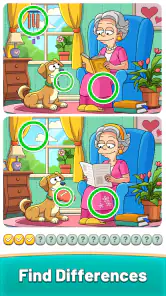
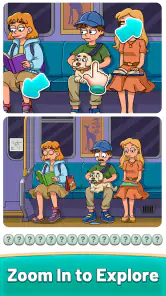
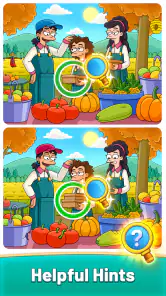
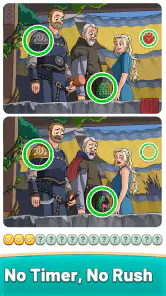
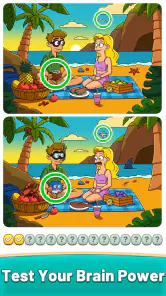

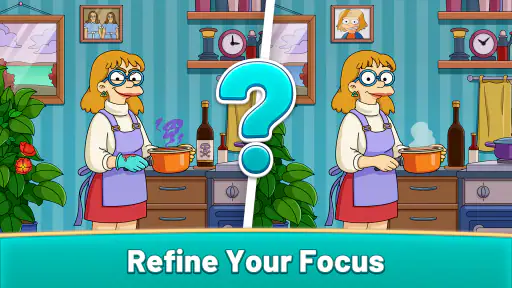
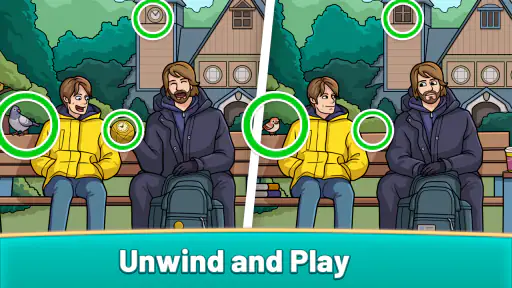
Analysis by Reviewed
I expected a simple spot-the-difference game, and that is exactly what I found in Differences - Find Differences. The appeal is immediate: look at two images, tap the detail that does not match, and keep going while your eyes become more attentive. It is a puzzle game from Italic Games, free to play and suitable for Everyone, but its real strength is not complexity. It is the clean little loop of observation, confirmation, satisfaction, and another attempt.
After spending time with it, I see it as a good companion for short breaks rather than a game designed to dominate an entire evening. You do not need a complicated tutorial or a long explanation before starting. The first puzzle tells you what to do almost instantly, and the attraction comes from noticing something that initially blends into the picture. That makes it easy to recommend to someone who wants a calm visual challenge without the pressure of a competitive action game.
How the spot-the-difference loop feels in practice
I find the most useful way to approach a tricky scene is to compare matching areas rather than sweep back and forth across both pictures. That keeps the search organized and makes it easier to stop before a short break turns into eye strain. It also raises a practical question: how does that simple routine hold up once the initial novelty wears off?
The first action is simple, but not mindless
The opening move is always visual: I compare the two scenes, scan for an unusual shape or missing detail, and tap where I think the change is located. This sounds basic, yet the game works because it turns ordinary looking into an active task. Instead of passively viewing an illustration, I divide it into areas, compare edges, and check whether small details line up.
My preferred approach is to work from one side of the image to the other. I first inspect the sky or background, then move through the main subject, objects near the center, and finally the corners. This is more reliable than jumping randomly between details. It also makes the game feel less like guessing and more like a repeatable visual method.
That method matters when a difference is subtle. A quick glance can reveal an obvious missing object, but less noticeable changes ask for patience. I found myself comparing outlines, counting repeated elements, and checking whether colors or patterns stayed consistent. Those small habits are the most useful part of the experience because they make each puzzle feel like a short exercise in concentration rather than a tap-fest.
The best way to play is to scan systematically before tapping. When I rushed, I often revisited the same areas and wasted attention. When I slowed down and mentally divided the picture into zones, progress felt much smoother. This is a practical tip for younger players too, since it turns a potentially frustrating search into a clear sequence of small checks.
More From Our News Desk
Weather by Xiaomi Review: Clear at a Glance, Less Clear Up Close

X Under Pressure: Can It Recover When Posting Goes Wrong?

Clash of Clans Is Won Between the Battles

Android Auto Makes the Case for Quieter Car Software

MobiOffice: Transforming Mobile Productivity with Seamless Integration

EA SPORTS FC™ Mobile Soccer: Redefining Mobile Sports Gaming
Feedback keeps the search moving
Every tap carries a small decision: did I identify a real difference, or am I reacting to a visual illusion? Correct discoveries provide the feedback needed to continue, while an incorrect guess reminds me to inspect the scene more carefully. That exchange is what gives the game its rhythm. I look, decide, tap, receive an answer, and immediately know whether to move forward or change my method.
The feedback is especially important because the central action could otherwise become repetitive. Without a clear response, comparing two pictures would quickly feel like staring at a screen. Instead, each confirmed find gives the search a sense of progress. The puzzle gradually changes from a broad image into a checklist of details I have already verified and details that still need attention.
I also like that the feedback does not require a complicated control scheme. This is comfortable on a phone because the interaction is direct and understandable. Someone unfamiliar with puzzle games can begin without learning gestures, character movement, or a collection of menus. That simplicity makes it suitable for a quick break, a quiet moment before bed, or a shared activity with a child who enjoys visual challenges.
There is a trade-off, though. Players who need constant novelty may find the basic interaction too restrained. The game does not transform into a strategy adventure or a narrative mystery after a few rounds. Its pleasure comes from refining observation, not from unlocking a radically different type of play. I consider that a strength for relaxed sessions and a limitation for anyone looking for deeper systems.
Why finding one more difference feels rewarding
The reward is not only reaching the end of a picture. I get a small burst of satisfaction from identifying a detail that had been hiding in plain sight. A missing mark, an altered object, or an inconsistent pattern can seem obvious after discovery, but before that moment it remains part of the visual noise. That change in perception is the central pleasure of the game.
The most satisfying puzzles are the ones that make me doubt my first impression. An easy find creates momentum, while a harder one encourages a more careful second pass. The result is a gentle escalation of attention: I start by searching for anything unusual, then become more precise as the remaining possibilities shrink.
This makes the game useful in situations where I want entertainment without mental overload. I can play while taking a short break from work, when I want something quieter than a fast arcade game, or when I need a screen activity that does not demand a long commitment. The free price also lowers the barrier to trying it, especially for families deciding whether this style of puzzle suits them.
At the same time, I would not describe the reward as deep or dramatic. There is no need to pretend this is a complex brain-training program or a story-driven journey. Its reward is immediate and modest: I noticed something, solved a small visual problem, and can begin another. That honesty is part of why the game works. It does one thing clearly instead of surrounding a simple idea with unnecessary complexity.
The reset is what makes another session tempting
Once I finish a puzzle, the experience naturally resets around a new image and a fresh search. That reset is important because it prevents one solved scene from becoming the whole experience. I do not need to remember a plot, manage resources, or prepare a strategy for the next attempt. I simply return to the same familiar action with a different visual problem in front of me.
This structure is ideal for interrupted play. If I have only a few minutes, I can complete a small challenge and stop without feeling that I have abandoned a larger mission. If I have more time, I can continue because the next puzzle offers another chance to test my attention. The game therefore fits both a single short session and a longer relaxed stretch, although its appeal depends on enjoying repetition with variation.
A useful personal routine is to stop after a puzzle that required extra concentration rather than continuing automatically. That keeps the experience calming instead of turning it into a tiring hunt. I also found that taking a brief pause between scenes helped me return with fresher eyes. When I stared continuously, similar colors and shapes began to blur together, making the search less enjoyable.
The reset also reveals who may not enjoy this format. If you need a strong sense of permanent progression, character development, or a changing world, the repeated visual-search structure may feel thin. A traditional logic-puzzle collection might be a better choice if you prefer numbers, rules, and deductions. An adventure game would suit you more if discovery needs to be connected to exploration or story. This title is specifically for the pleasure of comparing images.
Small techniques that improve difficult searches
My first practical technique is to avoid staring at both images as a whole. I compare corresponding sections instead. I look at the upper area of one image, immediately check the same area in the other, and continue downward. This reduces the number of details my attention has to hold at once and makes small mismatches easier to recognize.
My second technique is to check repeated objects. If a scene contains several similar items, I compare their number, spacing, shape, and color. Repetition creates useful reference points, and a single inconsistency often becomes visible when the surrounding pattern is understood. This is more effective than waiting for a difference to announce itself.
My third technique is to change the order of inspection when I become stuck. Instead of zooming mentally into the same suspicious corner, I move to the background or the opposite edge. A short change of focus can expose a detail that became invisible through over-familiarity. I also avoid tapping just because an area feels slightly strange; I look for a specific reason first.
These habits show that the game has a little more depth than its short description suggests. It does not require advanced knowledge, but it rewards disciplined attention. That makes it more engaging for adults than a purely casual glance-and-tap toy might be, while remaining approachable for children and occasional players.
Who will get the most from it
I think this game is particularly well suited to people who like quiet puzzles, visual comparisons, and short sessions with a clear objective. It can work as a family-friendly activity because the rules are easy to explain: compare the pictures and identify what changed. It is also a reasonable option for someone who wants to reduce the intensity of their usual mobile gaming without giving up the satisfaction of solving something.
For a realistic everyday example, imagine waiting for an appointment with only a little time available. A long role-playing game may be inconvenient because it asks you to remember where you were and what you were doing. Here, I can start a visual search, focus on the image, finish or pause naturally, and put the phone away. The same structure works during a commute break, provided I am in a safe place to use the screen.
It may also appeal to players who enjoy improving their own observation rather than competing against others. I can treat each scene as a small concentration exercise and notice whether I become less impulsive over time. That does not turn the game into formal training, but it gives the activity a useful personal angle beyond simply filling time.
On the other hand, I would skip it if my priority were multiplayer competition, elaborate progression, or a demanding puzzle system with several interacting rules. The game’s identity is deliberately narrow. That makes it accessible, but it also means there is less variety in the kind of thinking required. People who become bored by repeated visual comparison should choose a broader puzzle collection instead.
How it compares with familiar puzzle alternatives
Compared with match-three games, this experience is less about planning combinations and more about careful perception. There is no need to arrange pieces quickly or build a chain of moves. Compared with word puzzles, it does not depend on vocabulary or spelling. Compared with traditional logic games, it offers a more immediate challenge because the answer is located directly in the picture rather than derived through several written clues.
That difference makes it a strong choice when I want low-pressure engagement. I can begin without warming up, and a moment of distraction does not usually destroy a long strategy. The cost is that the mental variety is narrower. A sudoku-style puzzle may offer more structured deduction, while a word game can challenge memory and language in ways this visual format does not.
In other words, I would not replace every puzzle game with this one. I would keep it for the moments when I want observation, a clear target, and a gentle reset after each completed scene. Its best competition is not the most sophisticated puzzle app; it is the temptation to scroll aimlessly when I would rather do something small and focused.
Practical details before installing
Differences - Find Differences is free, carries an Everyone content rating, and runs on Android devices using version 6.0 or later. It was released on February 13, 2025, and the current version is 2.7.1. Those details make it accessible to a broad range of Android users, including people using older compatible phones rather than only recent hardware.
Its public reception is notably strong, with an average rating of 4.9 from around 30 thousand ratings and roughly 1 thousand written reviews. The game has passed 500 thousand installs, which gives me useful context: it is not an obscure experiment with no audience, but it is also not presented as a massive mainstream platform. I would still judge it by whether I enjoy visual searching, because popularity cannot change the basic nature of the loop.
Before installing, I would ask myself one straightforward question: do I enjoy finding small inconsistencies in images? If the answer is yes, the free entry makes trying it easy. If I prefer action, narrative, or complex deduction, the same simplicity that makes this welcoming may make it feel limited. The age rating is reassuring for family use, but an adult seeking a serious long-form challenge should set expectations accordingly.
Where the experience can lose momentum
The main friction is repetition. The action of comparing, tapping, confirming, and moving on is satisfying when I am in the right mood, but it does not constantly reinvent itself. After several scenes, I may want a different kind of puzzle or a break from visual concentration. That is not a flaw in execution so much as the natural boundary of the concept.
Another limitation is that visual searching can become tiring. Small differences demand focus, and extended sessions may cause me to overlook details simply because my attention has weakened. I found that the game is better in compact portions than as an uninterrupted marathon. Treating it as a series of short challenges preserves the reward and reduces the feeling of work.
There is also a personal tolerance issue around uncertainty. When I cannot locate the remaining difference, I want guidance, but a hint can reduce the satisfaction of solving the puzzle myself. My advice is to give each area one deliberate second pass before seeking help through whatever in-game assistance is available. That preserves the central discovery without turning frustration into aimless tapping.
My verdict on the complete loop
The action is clear: compare two images and tap the detail that changes. The feedback confirms whether my observation was accurate. The reward is the satisfying moment when a hidden mismatch becomes obvious. The reset presents another scene without demanding preparation. Together, those steps create a dependable reason to begin one more session.
That loop is why I would recommend the game to a friend who wants a free, family-friendly puzzle for short breaks. I especially like its low entry barrier and the way it rewards a careful scanning method rather than frantic input. It is easy to understand, but not entirely mindless when the differences become less obvious.
I would not recommend it as a replacement for every puzzle style. Players who need story, competition, deep strategy, or constant mechanical change will probably find the format too focused. For everyone else, especially those who enjoy visual details and calm challenges, it offers a pleasant form of screen time with a clear beginning, a small achievement, and a natural stopping point.
My final view is simple: this is a focused spot-the-difference game that understands the value of a small, repeatable challenge. I return when I want to sharpen my attention for a few minutes, not when I want an expansive adventure. If that matches what you are looking for, Italic Games has made a straightforward puzzle that is easy to start, satisfying to complete, and comfortable to pick up again later.
Differences - Find Differences Frequently Asked Questions
Is Differences - Find Differences a good fit for casual puzzle fans?
Differences - Find Differences is a puzzle game built around visual observation, so it may suit players who enjoy calm, focused challenges rather than fast action. You compare similar images and look for small changes, making it easy to pick up for a short play session. If you find careful searching satisfying, its straightforward format is likely to feel approachable.
What kind of gameplay does Differences - Find Differences offer?
The game centers on comparing pictures and noticing details that have changed. Its store summary describes a relaxing spot-the-difference experience, so the main appeal is taking your time and examining each image closely. Players who prefer narrative adventures, combat, or complex controls may find this simpler puzzle format less engaging, while fans of visual-search games should recognize the core idea immediately.
What devices can run Differences - Find Differences?
Differences - Find Differences is a puzzle game for Android devices running Android 6.0 or later. It is a straightforward option for players who want to compare images and spot small visual changes on a compatible device. Before downloading, check your device’s operating system version so you know it meets the game’s minimum requirement.
Who developed Differences - Find Differences, and how popular is it?
The game is developed by Italic Games and has attracted a substantial audience of puzzle fans. It has more than 500,000 installs and around 30,000 ratings, with an average rating of 4.9. Those figures suggest that many players have tried it, though individual enjoyment will depend on whether you like careful visual-search challenges.
What is Differences - Find Differences?
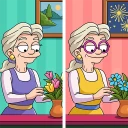
Differences - Find Differences is a visual puzzle game in which you compare two similar images and identify the details that are not the same. The differences may include missing objects, altered colors, changed shapes, or small additions that are easy to overlook. It is designed for casual play and offers a relaxing way to test observation, concentration, and visual memory.
Pros
- Simple gameplay that is easy to understand for players of all ages.
- Many visual puzzles provide a relaxing way to pass the time.
- Hints can help when a difference is difficult to spot.
- Short levels make it convenient for quick gaming sessions.
- Bright artwork makes details clear and pleasant to inspect.
Cons
- Some levels may feel repetitive after extended play.
- The difficulty can vary noticeably between individual puzzles.
- Hints or extra assistance may be limited without watching ads.
- Small differences can be hard to notice on smaller phone screens.
- Progress may feel slow for players who prefer fast-paced games.
- Category
- Puzzle
- Version
- 2.7.1