Bottle Jump 3D
- 7.32K
- 4.5
- Installs
- 100.00M
- Price
- Free

Screenshots
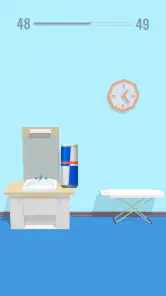
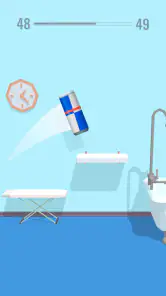
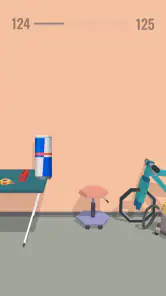
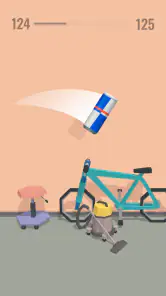
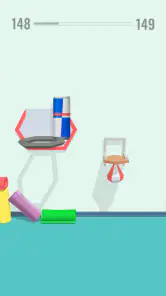
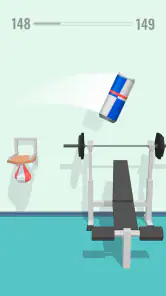

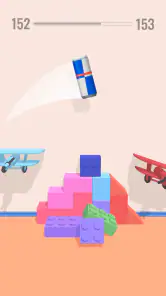
Analysis by Reviewed
I find Bottle Jump 3D easiest to understand when I treat it as a small timing challenge rather than a game that asks for long sessions. Its central task is to send a bottle from one surface to another and judge the flip so it lands safely. That direct premise makes it approachable, though the later obstacles can turn a quick attempt into a test of patience.
Who will enjoy this kind of arcade challenge
This suits people who like brief, repeatable arcade games and enjoy improving through trial and error. I would reach for it while waiting for an appointment or taking a short break: one attempt gives me a clear goal, and a failed landing makes it obvious why I want another try. It is less suitable if you want a story, a deep strategy system, or a calm game that never punishes a mistimed move.
Compared with many arcade games built around rapid tapping, bottle flipping puts more emphasis on judging timing and landing space. That can feel satisfying when a tricky jump works, but it also means progress may come in small increments rather than through a steady stream of easy wins. I find it helps to focus on the next landing instead of trying to rush through a level.
Making play fit the moment
For a realistic everyday use, I would open it during a short, low-stakes pause when I can give the screen my attention. It is not a good match for playing while walking, crossing a street, or doing another task that needs focus: judging a landing is still a visual and timing demand, even though the game is simple to pick up. If I have only a moment, I can try a few flips and stop; if I am already frustrated, taking a break is probably more useful than repeating the same attempt impatiently.
A practical tip is to make each retry deliberate. Notice whether the bottle fell short or travelled too far, then adjust your timing rather than making the next move at random. The game’s changing surfaces and obstacles make that observation more useful than relying on one rhythm for every jump. This also sets expectations: a familiar movement may not work equally well when the landing area changes.
Gameplay That Hooks You In
From the moment I opened Bottle Jump 3D, I was drawn in by its simple yet addictive gameplay. The objective is straightforward: flip the bottle and make it land on various surfaces. It sounds easy, right? But as you progress through the levels, you quickly realize that precision is key. The game cleverly ramps up the difficulty, introducing moving platforms, narrower landing spots, and even bouncing pads that test your skills to the limit.
Graphics and Sound
Visually, the game is a treat. The graphics are vibrantly colorful, which adds to the overall fun vibe of the game. Each level is designed with a different theme, keeping things fresh and exciting. The sound effects complement the gameplay perfectly, with satisfying "plop" sounds when you successfully land a flip and a comical "thud" when you miss. The background music is upbeat, ensuring you stay motivated even when a level gets challenging.
You May Like

Clash of Clans Is Won Between the Battles

Android Auto Makes the Case for Quieter Car Software

MobiOffice: Transforming Mobile Productivity with Seamless Integration

EA SPORTS FC™ Mobile Soccer: Redefining Mobile Sports Gaming

How Microsoft OneDrive Became a Mobile Productivity Giant

How Google Translate Breaks Language Barriers Effortlessly
Features That Stand Out
One of the standout features of Bottle Jump 3D is its variety of bottle designs. As you advance, you can unlock new and quirky bottle skins, adding a personal touch to your flipping endeavors. Moreover, the game offers daily challenges and rewards, enticing you to come back day after day. The leaderboard feature also adds a competitive edge, pushing you to improve your score and climb the ranks among your friends and players worldwide.
My Personal Take
Playing Bottle Jump 3D has been a delightful experience. It’s the perfect blend of challenge and entertainment, making it an ideal game to play when you have a few minutes to spare or need a quick break from the daily grind. The controls are intuitive, and the levels are designed to be progressively more challenging, keeping you engaged throughout.
However, be warned: it's highly addictive! Once you start flipping, it’s hard to stop. But that’s part of the charm. Whether you’re looking to kill time or seeking a bit of competition, this game delivers on all fronts. It’s a trip down memory lane with a modern twist, and I highly recommend giving it a spin – quite literally!
Controls, comfort, and access
The uncomplicated premise lowers the learning barrier, but it does not make every attempt equally comfortable for every player. The main challenge depends on seeing the bottle and its landing area, then timing an input; anyone who finds small visual targets, repeated precise taps, or quick visual decisions tiring may find longer sessions frustrating. I would try a brief session first and stop when accuracy starts dropping rather than treating repeated retries as a test of endurance.
The colorful presentation and sound effects give each landing clear character, but they can also make the experience more stimulating than someone looking for a quiet, low-sensory break may prefer. A useful personal check is to try a few rounds in the setting where you expect to play and see whether the motion, pace, and audio feel comfortable. I would not assume that the same approach works for every player or every situation.
What to know before downloading
CASUAL AZUR GAMES makes this free arcade game, which is rated for Everyone. It has a 4.5 average from around 381,000 ratings and over 100 million installs, a reach that suggests the bottle-flipping idea has broad appeal without guaranteeing that its particular timing challenge will suit you. The game was released on June 30, 2019; version 1.19.27 requires Android 6.0 or later. Optional in-app purchases range from $0.99 to $35.99 per item, so I would check the purchase prompts carefully if I wanted to keep spending controlled.
If you are choosing between this and a more relaxed puzzle game, I would pick the puzzle when I want time to think without repeated timing attempts. If I want a quick arcade task with a visible target and room to improve, the bottle-flipping format is a better fit. My inclusive verdict is that it is easy to approach but not automatically easy to play: the best match is someone comfortable with visual timing, short retries, and a little frustration, while players who need slower, less precision-driven play may be happier elsewhere.
Keeping a short session satisfying
I get more out of this kind of game when I decide what counts as a good stopping point before I begin. That might be clearing one awkward jump, making a few measured attempts, or simply playing until my attention shifts. Without a small boundary, the quick-retry structure can turn a spare minute into a longer stretch of repetition, especially when I feel close to landing a flip. Setting a personal limit does not change the game; it helps keep the break enjoyable rather than letting frustration take over.
There is also a useful difference between practicing and chasing progress. When I am practicing, I pay attention to the relationship between the launch and the landing, and I accept that a miss can teach me something. When I am only trying to advance, I can start tapping quickly and lose track of what changed. The first approach makes the challenge feel more thoughtful, while the second may suit a player who simply wants a burst of arcade action and is not bothered by repeated failures.
Choosing it over other quick-play games
Against an endless runner, this bottle-flipping game feels more focused: rather than reacting continuously to a stream of hazards, I can concentrate on a particular gap and the next landing. That makes each attempt easier to read, but the precision can make a failed move feel more personal than a mistake in a busy runner. A match-three or other turn-based puzzle is the better pick if I want to pause between decisions or play at my own pace. I choose this one when I want the satisfaction of a physical-feeling timing task rather than a chain of strategic choices.
It also differs from casual games that rely mainly on rapid taps or collecting items. Here, the entertaining part is judging whether the bottle will reach a surface, not just keeping my fingers moving. That is a welcome change when I am bored of reflex-heavy tapping, although it is still not a hands-free or low-attention option. The screen needs to stay in view, and the timing needs my focus, so I would not treat it as background entertainment while reading or talking through something important.
Small habits that make retries more useful
When a jump fails, I try to name the result before pressing again: short, long, or poorly aligned. That simple mental note prevents me from making the same guess repeatedly. If a surface is narrower or moving, I give myself an extra moment to read where it is before acting, rather than assuming the timing from an earlier landing will transfer. These are not complicated techniques, but they help turn a string of attempts into a sequence of decisions instead of a reflexive loop.
I would also avoid using a high score or a leaderboard as the only measure of whether a session went well. Competition can give a familiar challenge extra purpose, but it can also make a casual break feel like an obligation to keep improving. For me, unlocking a bottle design or getting through a section can be satisfying on its own. If comparison makes the game less fun, I would ignore that part and treat the main appeal as the moment-to-moment flipping.
Comfort across different players and settings
The straightforward goal may make it easy to explain to someone else, but ease of explanation is not the same as ease of play. A person can understand what to do and still find the visual judgment, repeated timing, or colorful movement uncomfortable. I would introduce it with a couple of attempts rather than assuming that everyone will enjoy a longer turn. For a shared casual session, taking turns can make the game social without requiring anyone to keep playing once the timing stops being fun.
In a quiet waiting room, I would keep the volume at a considerate level or play without sound if that fits the situation; the visual feedback still gives me a sense of whether a landing worked. At home, the music and effects can make a short session feel livelier. The right setting depends on the player and people nearby, and I would not choose it for an environment where even brief bursts of visual attention could distract me from a responsibility.
Spending, persistence, and expectations
The game costs nothing to start, which makes it easy to try before deciding whether its timing style is for me. Optional purchases are worth noticing, particularly if a child is playing or if I am trying to avoid accidental spending. I would review purchase prompts before handing over a device, and use the device’s own spending controls where appropriate. The Everyone age rating describes its broad audience, but it does not mean every child will find the timing challenge comfortable or that spending choices need no supervision.
For Android users, the current version is 1.19.27 and the minimum operating system is Android 6.0. That gives a practical compatibility check before installing, while iOS players should check the requirements shown for their device in its app store. The game’s large audience—more than 100 million installs and a 4.5 average from around 381,000 ratings—can help a new player see that it is widely tried, but popularity is not a substitute for testing whether its pace and precision suit their own hands and eyes.
When I would choose something else
I would skip this if my main goal were a gentle game with no pressure to react, a story that rewards longer play, or a puzzle where I can study each move without a timing demand. It is also a poor choice when I cannot safely look at the screen, when repeated small inputs are uncomfortable, or when bright movement makes it harder for me to concentrate. In those situations, a slower turn-based game or an audio-first activity is a more sensible fit than trying to force this particular arcade format to work.
On the other hand, if I want a compact challenge that is easy to pick up and gives me a clear reason to try again, the bottle-flipping idea works well. I can play a few attempts while seated during a break, pause when the moment is over, and return later without needing to remember a complicated plan. That combination makes it useful for small pockets of free time, provided I am comfortable with the visual timing and the possibility that a difficult landing will take several tries.
My inclusive verdict
What I appreciate most is the gap between the simple explanation and the more demanding execution: anyone can quickly understand the goal, yet success still asks for observation, timing, and patience. That gives the game an inviting starting point without making it universally accessible in practice. I would describe it as approachable rather than effortless, and I would encourage players to judge comfort by trying a short session instead of relying on its uncomplicated premise alone.
For me, Bottle Jump 3D is a good choice for focused, bite-sized arcade play, especially when I want a concrete challenge rather than a story or a slow puzzle. Its main trade-off is clear: a simple action can become repetitive or frustrating when timing is difficult, and the lively presentation will not suit every context. If that balance sounds enjoyable, it is an easy free game to sample; if you need gentler pacing or less visual precision, choosing another style is not missing out so much as picking a better fit.
Bottle Jump 3D Frequently Asked Questions
Can I play Bottle Jump 3D in short sessions?
Yes. Bottle Jump 3D is built around a simple, repeatable action: tap to flip the bottle and try to land safely on platforms. That makes it easy to pick up for a quick arcade session without needing to learn complicated controls. The challenge comes from timing each flip and avoiding a fall, so even a brief attempt can give you a clear goal.
Is Bottle Jump 3D difficult to learn?
The basic controls are easy to understand: tap to make the bottle flip, then aim for a safe landing. Getting consistent results takes more care, since the timing of each tap matters and obstacles become more challenging as you progress. It is approachable for new players, but the precision required can still make later attempts feel demanding.
Is Bottle Jump 3D suitable for children?
Bottle Jump 3D is an arcade game with an Everyone age rating, so its bottle-flipping challenge is presented for a broad audience. The basic idea is easy to understand: tap to flip a bottle and try to land it safely on platforms. Parents may still want to review the game themselves and consider its advertisements and optional in-app purchases when deciding whether it is right for a child.
Who makes Bottle Jump 3D, and is it still updated?
Bottle Jump 3D is developed by CASUAL AZUR GAMES. The game was released on June 30, 2019, and its current version is 1.19.27. It has attracted a large audience, with over 100 million installs and an average rating of 4.5 from around 381,000 ratings. Those details can help prospective players identify the game and see that it has reached many people.
What is Bottle Jump 3D and how does it work?
Bottle Jump 3D is an engaging and fun hyper-casual game where players flip a bottle to avoid obstacles and reach the end of each level. The game mechanics are simple: tap to make the bottle flip and land on platforms without falling. As the levels progress, the obstacles become more challenging, requiring precise timing and coordination to succeed.
Pros
- Engaging and addictive gameplay.
- Simple controls are easy to learn.
- Colorful and vibrant graphics.
- Varied levels with increasing difficulty.
- No intrusive ads during gameplay.
Cons
- Limited level variety over time.
- In-app purchases can be costly.
- Some levels require precise timing.
- Occasional glitches in gameplay.
- Lacks a multiplayer mode.

- Category
- Arcade
- Version
- 1.19.27