Understood: Support ADHD Kids
- 158.00
- 4.4
- Installs
- 50.00K
- Price
- Free

Screenshots

Analysis by Reviewed
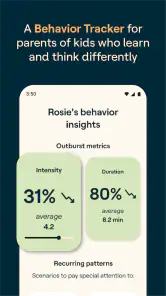
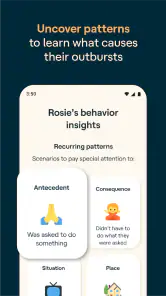
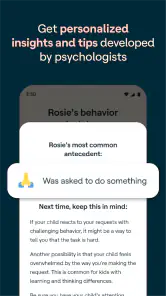
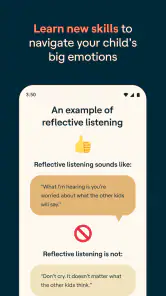
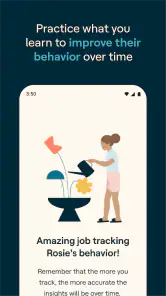
Parenting an ADHD child often involves a difficult gap between what happened and what you can remember later. A rushed morning, a difficult homework session, or a surprisingly calm bedtime can blur together by the end of the day. Understood: Support ADHD Kids approaches that problem as a behavior-tracking app rather than another general parenting planner. I found its most useful idea to be simple: make observations easier to record so patterns can become visible over time.
The app comes from Understood for All, Inc., an organization focused on learning and thinking differences, and it sits in the parenting category. Its specific focus is children with ADHD, with guidance and tracking developed by psychologists for parents. It is free to use, carries a Teen content rating, and supports devices running Android 10 or later. That combination makes it accessible to many families, although the age label is worth noticing if a younger child might use the phone directly.
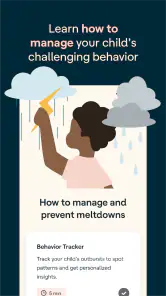
My overall impression is that this is best treated as a calm observation tool, not an instant behavior fixer. It cannot replace a clinician, school support, or a conversation with your child. What it can do is give a parent a more organized way to notice what is happening, especially when memory and stress make every day feel like an isolated event.
What using the tracker feels like in everyday parenting
A quick start is more valuable than a complicated system
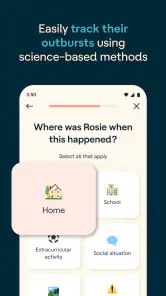
The strongest reason to try this app is that behavior tracking only works when a parent can keep doing it. A system that demands long written notes after every incident quickly becomes another responsibility. A focused app for ADHD-related behavior has a better chance of fitting into real family life because it starts with a specific question: what happened, and what might help us understand it?
I would use it after a small number of meaningful moments rather than attempting to document every minute. For example, after school I might note whether the transition into homework was smooth, difficult, or unusually long. Later, I could record how the evening routine went. This approach keeps the record useful without turning parenting into constant data entry.
There is also an important emotional benefit to tracking selectively. When a child has several hard days in a row, parents can unintentionally describe the situation in absolute terms: “nothing works” or “every evening is a battle.” A record encourages more precise thinking. Was the difficulty mainly during transitions? Did sleep, hunger, noise, or a change in routine seem relevant? Even when the app cannot answer those questions by itself, it can help you ask them more carefully.
A realistic school-night workflow
Imagine a child returning home already tired. The first request about homework leads to an argument, but a snack and a short break make the second attempt easier. Instead of remembering only the argument, I would use the app soon afterward to capture the sequence while it is still fresh. At bedtime, I might add another brief observation about the routine.
The next day, the useful comparison is not simply “good day” versus “bad day.” It is whether the same transition repeatedly causes trouble, whether a pause helps, and whether the pattern changes on less demanding days. That is the kind of insight a behavior tracker can support. The real work remains with the parent: choosing one adjustment, observing what follows, and avoiding the temptation to change five things at once.
One practical tip is to decide in advance what you are trying to learn. If the concern is homework, track the start of homework for a week. If mornings are the problem, focus on getting dressed, eating, and leaving. Recording unrelated details can create a fuller-looking history but a less useful one. The app is more valuable when the parent uses it to investigate a specific routine.
Speed expectations: light enough for short check-ins
For this kind of tool, perceived speed matters less than the number of steps between noticing a behavior and recording it. I would expect the app to feel most useful during short check-ins, when a parent has only a moment to preserve an observation. If opening it becomes a long interruption, the record will naturally become selective in the wrong way: only the most dramatic incidents will be saved.
That means I would not approach it like a full journal. A detailed narrative may be helpful occasionally, but daily use should stay focused. The app’s value is in creating a repeatable habit, not in producing a perfect account of family life. Parents should also allow a little time to learn the layout and decide which observations deserve attention before judging the workflow.
My advice is to test it during a relatively ordinary week rather than waiting for a crisis. A calm trial shows whether the interaction fits your routine. It also prevents the app from becoming associated only with conflict, which can make both parent and child feel that the tracker is a record of failures.
Heavy-use moments reveal the real trade-off
The demanding moments are likely to be less about one entry and more about repeated use: several transitions in one day, multiple caregivers contributing observations, or a parent reviewing a longer stretch of behavior. This is where any focused tracker has to balance detail with effort. More information can help identify patterns, but too much detail can make the process feel clinical and exhausting.
I would use a simple division of labor. During the day, record only the observation that will matter later. At a quiet time, review the entries and write down one possible pattern or question. This separates quick capture from thoughtful interpretation. It also reduces the risk of trying to analyze a difficult incident while emotions are still high.
A second useful habit is to keep observations descriptive. “Refused everything” is emotionally understandable but difficult to compare. “Needed three prompts to begin brushing teeth” is more concrete. The app cannot make a vague observation precise for you; the quality of the result depends on how the parent describes the moment. This is a subtle but important limitation of behavior tracking in general.
For families sharing care, consistency matters more than volume. If one parent records every small difficulty and another records only major events, the history may look more dramatic or more peaceful depending on who was holding the phone. Agreeing on what counts as worth recording can make the information easier to discuss with a pediatrician, therapist, or teacher.
Reliability means trusting the habit, not treating every entry as a diagnosis
The app has a strong practical purpose, but parents should keep its role in perspective. A behavior record can reveal recurring situations; it cannot establish why a child behaves a certain way. ADHD may interact with anxiety, learning differences, sensory sensitivities, sleep problems, family stress, or ordinary developmental changes. A pattern in the app should lead to better questions, not a quick conclusion.
I would be comfortable using the tracker as preparation for a professional conversation. Bringing specific examples is usually more helpful than saying that a child has been “worse lately.” Still, I would avoid showing the record to a child as evidence in an argument. Tracking should support understanding and planning, not become a scoreboard or a source of shame.
Reliability also depends on recovery after an interruption. Parents miss days. Phones run out of battery. A family routine changes during travel or illness. The best way to use this app is to resume without trying to reconstruct every missing detail. A partial record with honest gaps is more useful than invented precision. If a week is incomplete, simply begin again with the next meaningful observation.
Because the developer presents the app as psychologist-developed support for parents, I see it as more purposeful than a blank notes application. Even so, that does not turn it into medical advice. A notes app may be enough for a parent who already has a clear tracking method, while this app is more appealing to someone who wants a dedicated ADHD-oriented structure.
Device constraints and privacy-minded use
The minimum operating system requirement is Android 10, so families using older phones will need to check compatibility before planning around it. The current version is 2.20, which suggests the app has an established release history rather than being a brand-new experiment. I would still keep the operating system updated where possible, because an older device can affect the experience of any modern app through limited storage, background slowdowns, or an aging battery.
This is not the kind of app that should require a powerful phone for its basic purpose. Behavior notes are generally less demanding than video editing or games, and I would expect the main constraint to be convenience rather than raw hardware. A parent using an older supported device may notice slower app launches or less comfortable typing, but the more important question is whether recording remains easy enough to do consistently.
There is a device-related trade-off in handing the phone to a child. The Teen content rating does not mean the app is designed as a child entertainment product. I would keep the tracker primarily in the parent’s hands and explain its purpose openly if the child notices it. That protects the relationship around the record and avoids making the child feel watched without context.
Another practical tip is to choose one primary device for regular entries whenever possible. Switching between phones can make a routine feel fragmented, particularly in a busy household. If more than one caregiver needs access, decide how each person will contribute before starting. The goal is a shared understanding, not a competition over who documented the most.
Where it beats ordinary alternatives
A paper notebook is flexible, private, and easy to customize, but it can become hard to search or compare. A general notes app is faster for free-form writing, yet it leaves the parent responsible for creating a useful structure. A calendar can show when problems occurred, but it is not naturally designed for comparing behavior with routines and triggers. A spreadsheet offers control but often demands more effort than a tired parent wants to give.
This app makes the most sense between those extremes. It is more focused than a blank note and less demanding than building a personal tracking system from scratch. Its ADHD-specific purpose is the main reason to choose it, not advanced productivity features or entertainment. If your priority is a broad family organizer, medication schedule, school calendar, or shared household task list, another category of app will probably serve you better.
It is also not the right choice for someone who wants a complete clinical record. Parents needing detailed timestamps, extensive free-form documentation, formal reports, or a system built around several conditions may prefer a specialist health journal or a clinician-provided method. The focused design is an advantage for everyday observation, but focus always means leaving some needs outside the app.
Who should use it, and who should skip it
I would recommend giving it a fair trial if you are a parent of a child with ADHD who keeps having the same conversations with teachers or healthcare professionals but struggles to remember concrete examples. It can also suit a family testing one change at a time, such as a different homework transition, a revised morning sequence, or a clearer bedtime cue.
It may be especially helpful when the child’s behavior varies sharply by setting. Comparing home routines with school feedback can reveal that a difficulty is tied to a particular transition rather than being constant. The app will not collect the teacher’s perspective automatically, so the parent still needs to communicate with school staff, but it can give that conversation a more specific starting point.
I would skip it if tracking itself increases your anxiety or makes you focus only on problems. Some parents need a planning tool, a shared calendar, or a simple reminder system more than a behavior record. Others may already have a trusted paper method that the whole family uses consistently. Adding another app is not automatically progress; it is worthwhile only if it reduces confusion rather than adding another obligation.
Cost, audience, and the practical decision
The app is free, which removes the most common barrier to trying a specialized parenting tool. It has passed the threshold of fifty thousand installs and holds a 4.4 average from roughly five hundred ratings, with more than one hundred written reviews. Those figures suggest that it has attracted a meaningful audience, but they should not replace a personal test: a tracker succeeds only when its workflow fits your household.
The Teen content rating deserves a practical explanation. I would read it as a reminder to treat the app as a parent-support resource rather than a toy for children. Parents should also be thoughtful about what they record, especially when notes involve sensitive behavior, school experiences, or emotional moments. Keeping entries respectful and purposeful is good practice regardless of the device or app involved.
Before committing to long-term use, I would set a modest goal: record one routine consistently for several days, then review whether the information changed what you did next. If the answer is no, adjust the question or stop using the tracker. The point is not to build the largest history. The point is to make one family decision clearer.
Performance verdict: useful when restraint is part of the method
My performance verdict is positive, with an important condition. Understood: Support ADHD Kids appears most valuable when it stays a small part of the day: open it, capture a meaningful observation, close it, and return later with a clearer question. That restrained workflow is more realistic than expecting a parent to document every behavior or analyze every entry immediately.
Its strengths are its narrow parenting focus, free access, psychologist-developed purpose, and suitability for turning vague frustration into concrete observations. Its limitations are equally important: tracking takes consistency, records can be misinterpreted, and a focused behavior tool cannot replace professional guidance or a broader family-management system.
If I were recommending it to a friend, I would say this: try it when you want to understand a recurring ADHD-related routine, not when you expect an app to solve the routine for you. Use short, descriptive entries, compare one change at a time, and let missed days go without guilt. Used that way, it can become a practical bridge between daily family life and more informed conversations with the people supporting your child.
Pros
- Practical tools help children understand and manage ADHD-related challenges.
- Activities are designed to encourage positive habits and emotional awareness.
- Parent-friendly guidance can support conversations at home.
- Content is presented in a clear
- approachable format for young users.
- Useful resource for reinforcing strategies recommended by professionals.
Cons
- Some features or content may require a subscription or in-app purchase.
- It should complement
- not replace
- professional ADHD assessment or treatment.
- The advice may not suit every child’s age
- needs
- or learning style.
- Children may need adult guidance to use the app consistently.
- Content availability and usefulness can vary by device or region.

- Category
- Parenting
- Version
- 2.20