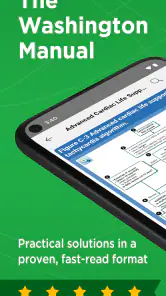
The Washington Manual
- 6.00
- 4.9
- Installs
- 10.00K
- Price
- Free

Screenshots
Analysis by Reviewed
Medical reference apps are only useful when they help me think more clearly under pressure, and The Washington Manual makes a strong case for keeping a trusted clinical handbook close at hand. I found it most valuable as a compact companion for reviewing therapeutic approaches, checking terminology, and organizing my next question before turning to a fuller source or a supervising clinician. It is not a substitute for professional judgment, but it can make a busy study or ward routine more efficient.
The Washington Manual is a free medical app from Unbound Medicine, Inc. It has earned a 4.9 average from around 180 ratings and has passed 10 thousand installs, which suggests that it has found a focused audience rather than trying to be an all-purpose health app. Its Everyone age rating makes it broadly accessible, although the subject matter is clearly aimed at people who are comfortable with clinical language.
What makes this medical reference useful
The biggest strength is its purpose. Instead of presenting itself as a symptom checker for casual health questions, the app centers on the Washington Manual of Medical Therapeutics. That distinction matters. When I use a general medical search tool, I often have to sort through patient education pages, advertisements, and unrelated results before reaching a practical clinical explanation. A handbook-style app starts closer to the decision-making context I actually need.
I see the app working best as a fast orientation tool. Before reading a longer guideline, I can use it to refresh the broad therapeutic framework for a condition, identify the relevant area of medicine, and decide which details deserve closer verification. That workflow is more realistic than expecting a mobile reference to carry every nuance of a complicated case.
Its compact format also suits short gaps in the day. A student could review a topic between classes, while a resident might use the app to prepare for a discussion or revisit a treatment concept after rounds. I would not treat a quick glance as the end of the process, but it can be a useful first pass when opening a large textbook feels impractical.
The current version is 2.8.52, and the app has been available since November 7, 2013. That long presence gives it the feel of an established reference rather than a newly assembled collection of medical pages. For me, that is reassuring in one sense: the product has had time to become recognizable within its narrow role. At the same time, a long-running reference deserves careful attention to how current its clinical material remains, especially in areas where recommendations change quickly.
A practical workflow for study and clinical preparation
My preferred way to use this kind of resource is not to browse aimlessly. I start with a specific question, such as wanting to review the general treatment approach to a familiar condition or clarify which clinical topic I should read next. I then use the relevant section as a map. The important step is to write down what still needs confirmation rather than assuming that a concise reference has answered every patient-specific question.
More From Our News Desk

Clash of Clans Is Won Between the Battles

Android Auto Makes the Case for Quieter Car Software

MobiOffice: Transforming Mobile Productivity with Seamless Integration

EA SPORTS FC™ Mobile Soccer: Redefining Mobile Sports Gaming

How Microsoft OneDrive Became a Mobile Productivity Giant

How Google Translate Breaks Language Barriers Effortlessly
That approach turns the app into a preparation layer. For example, before a teaching session, I might spend a few minutes reviewing the therapeutic outline, then consult a more detailed guideline for contraindications, monitoring, local protocols, or special populations. The manual helps me arrive prepared; the second source handles the details that a compact handbook may not emphasize.
A less obvious benefit is that it can reduce the temptation to search by vague symptoms. Searching the open web for a phrase such as “best treatment” often produces a mixture of professional and nonprofessional material. A structured medical manual encourages a more disciplined question: what condition am I considering, what treatment principle applies, and what patient factors could change the plan? That shift in mindset is more valuable than simply finding an answer quickly.
I also think it can help with vocabulary. Medical learners regularly recognize a concept but hesitate over the exact terminology used in a discussion or note. Revisiting a concise therapeutic reference can make later reading easier because the language becomes familiar. This is particularly useful for students moving from classroom explanations to clinical documentation and specialist conversations.
Where it fits beside other medical resources
The Washington Manual occupies a middle ground between a full printed textbook and a general internet search. A printed book can offer a more comfortable reading experience and may be easier to annotate, but it is less convenient when I am carrying only a phone. A broad search engine is faster for obscure questions, yet it requires more judgment to separate reliable medical material from simplified or outdated content.
Compared with a dedicated guideline database, this app is better suited to quick orientation than to exhaustive evidence review. A guideline platform is usually the stronger choice when I need carefully defined recommendations, detailed evidence grading, or a policy that must match a particular institution. The manual is more appealing when I want a portable overview before deciding which specialist source to open.
It also differs from consumer health apps. Those products often focus on symptoms, reminders, wellness, or patient-facing explanations. This reference is more appropriate for someone who already understands that medical treatment depends on diagnosis, context, and professional assessment. If I wanted plain-language advice for managing a minor everyday complaint, I would choose a patient-oriented resource instead.
The free download lowers the barrier to trying it, but the presence of in-app purchases ranging from $79.99 to $99.99 per item changes how I evaluate it. I would install it first to understand the available experience, then decide whether the paid material fits my studies or work. That price range is significant, so a casual user should not assume that installing a free medical reference means the complete reference content will also be free.
Strengths, limitations, and the people who should use it
The strongest case for keeping it installed
The app’s clearest advantage is focus. It is built around one recognizable medical reference instead of trying to combine medication reminders, symptom triage, appointment booking, and wellness tracking. That narrow purpose makes it easier for me to decide when to open it. If I am reviewing therapeutics, the app is relevant; if I need a blood-pressure log or a patient handout, it is not pretending to be the right tool.
Another strength is portability. Medical books can be expensive, heavy, and inconvenient to carry through a long day. A phone-based reference is available in the moments when a physical volume is on a shelf or in another room. That does not make the digital version automatically superior, but it changes the practical balance for learners and clinicians who move between classrooms, clinics, libraries, and homes.
I also appreciate the potential for a two-stage reading habit. The first stage is fast orientation inside the app. The second is deliberate verification elsewhere. This is a better use of mobile medical content than treating a short entry as a complete answer. In my experience, the most responsible benefit is not instant certainty; it is knowing what to investigate next.
One useful habit is to pair each lookup with a patient-specific checklist. After reviewing a treatment topic, I would ask myself whether age, pregnancy, kidney or liver function, allergies, interactions, severity, and local policy could alter the decision. The app may help frame the therapeutic subject, but that checklist prevents a general reference from being mistaken for individualized prescribing advice.
The meaningful friction before paying
The main limitation is the tension between a free installation and expensive individual purchases. Someone looking for a quick medical reference may reasonably expect to explore the core experience before committing a substantial amount. Because the listed purchase range is high for a casual app user, I would recommend testing navigation and relevance carefully before spending anything.
That cost also affects who should choose it. A medical student with access to a library, school subscription, or institutional resources may already have comparable material through another route. In that situation, the app is worth considering for convenience, but not automatically worth buying simply because it is portable. A professional who needs current local protocols may get better value from an institution-approved database instead.
There is also a conceptual limitation: a therapeutic manual cannot replace clinical context. Even an excellent reference cannot examine a patient, interpret the full history, account for local resistance patterns, or know which monitoring resources are available. I would be uncomfortable using any mobile handbook as the sole basis for a treatment decision, and this one should be approached with the same discipline.
Another trade-off is depth versus speed. A concise reference can help me find the shape of an answer, but a difficult case may demand primary literature, specialty guidelines, formularies, or consultation with an experienced clinician. If I need citations for an academic assignment or a detailed explanation of competing treatment options, I would move beyond the app rather than forcing it to do a job it was not designed to do.
Who will get the most from it
I would recommend it most strongly to medical students, residents, nurses in clinically focused training, and other health professionals who already know how to interpret medical terminology. It is especially suitable for someone who wants a portable therapeutic reference to support revision and preliminary clinical preparation.
A realistic example would be a resident preparing for a morning discussion after encountering a treatment question during the previous shift. The resident could use the app to refresh the relevant therapeutic framework, note the points that need checking, and then compare them with the hospital formulary or current guideline before speaking with the team. In that scenario, the app saves orientation time without encouraging the dangerous idea that one short lookup settles the case.
It may also suit a student who learns better through repeated short reviews than through occasional long reading sessions. A few focused visits can reinforce the structure of a subject, particularly when followed by notes or questions for a lecturer. The key is active use: I would not simply scroll through entries, but would connect each topic to a case, lecture, or revision objective.
I would tell patients and general users to look elsewhere unless they have a specific educational reason to use a professional medical manual. The Everyone rating describes broad access, not broad suitability. Clinical language can be confusing without training, and a patient searching for reassurance may find a therapeutic handbook more alarming than helpful.
I would also suggest skipping it if your priority is a continuously updated local treatment system, medication interaction checking, or patient-friendly explanations. A specialized tool may be better for each of those jobs. The Washington Manual makes the most sense when the need is a respected, focused reference that sits between a quick web search and a full clinical information service.
How I would decide whether the paid content is worthwhile
I would begin by identifying the exact problem I want the app to solve. If I only need occasional background reading, the purchase may be difficult to justify. If I repeatedly review therapeutic topics and value having the material in a dedicated mobile reference, the convenience may matter more.
Before paying, I would compare it with resources already available through school, hospital, or library access. I would also check whether the depth matches my level. Beginners may need explanations and diagrams, while advanced users may need detailed evidence, dosing references, and update transparency. A manual can be excellent for one stage of training and insufficient for another.
Most importantly, I would treat the purchase as access to a study and reference aid, not as permission to make unsupervised treatment decisions. That distinction protects the value of the app. Used thoughtfully, it can make preparation more efficient; used carelessly, its concise format could create false confidence.
My final recommendation
After weighing its focused purpose against its cost structure, I see The Washington Manual as a useful specialist companion rather than an essential app for everyone. Its strongest contribution is speed: it gives medically trained users a practical starting point for therapeutic review without the bulk of a physical handbook. The free entry point makes it easy to investigate, while the paid items require a deliberate decision rather than an impulse purchase.
I would recommend trying it if you are studying or practicing in a clinical environment and want a portable reference for orientation, revision, and preparation. I would not recommend relying on it alone for patient care, and I would steer casual health users toward clearer patient-facing resources. For current local protocols, detailed evidence, or complex cases, a guideline database, formulary, or qualified clinician remains the better choice.
My overall view is positive but measured. The app earns its place when I use it as the first step in a careful workflow: identify the therapeutic topic, review the general framework, record the uncertainties, and verify the final decision with an appropriate authoritative source. That is the right way to get value from this app: use it to sharpen clinical thinking, not to replace it.
The Washington Manual Frequently Asked Questions
What devices can I use The Washington Manual app on?
The Washington Manual is a medical app from Unbound Medicine, Inc. It is available for Android and iOS, with a minimum operating-system requirement of version 9. Before downloading, check that your device meets that requirement and has enough available storage for the app and any content you choose to access.
What is The Washington Manual app used for?
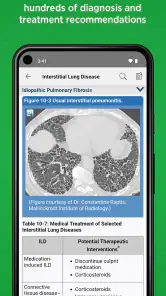
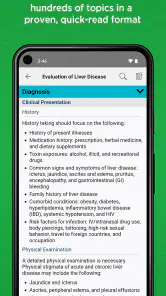
The Washington Manual app is designed as a clinical reference for medical students, residents, nurses, and other healthcare professionals. It summarizes practical information about diagnosis, treatment, common diseases, medications, and inpatient care. Its concise format makes it useful during study sessions, ward rounds, or quick reviews, although it should support—not replace—professional judgment and current institutional guidelines.
Does The Washington Manual app work offline?
Offline availability may depend on the specific edition, platform, and subscription version you install. Some content may be downloaded for access without an internet connection, while account verification, updates, or certain multimedia features may still require connectivity. Before relying on it in a hospital or classroom, download the available content and test the app in airplane mode.
Is The Washington Manual app free to download?
The app is free to download, but access to the complete reference may involve in-app purchases priced from $79.99 to $99.99 per item. The available purchase and included content can vary between platforms and editions. Check the purchase details, any trial terms, and renewal conditions shown in your app store before paying so you know what access you are getting.
How current and reliable is the medical information in the app?
The Washington Manual is a well-known medical reference, but the usefulness of its content depends on the edition and the date of the latest update available in the app. Medical recommendations can change as evidence and guidelines evolve. Use it as a convenient educational and clinical reference, then confirm important decisions with current guidelines, local protocols, and qualified supervisors.
Pros
- Concise
- clinically focused reference for quick bedside consultations.
- Covers a broad range of internal medicine topics in one portable resource.
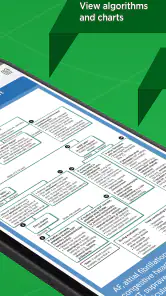
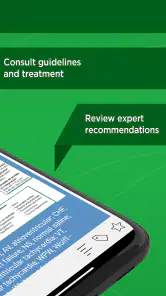
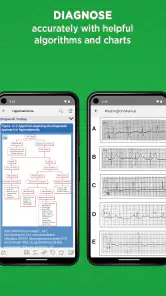
- Useful tables
- algorithms
- and treatment summaries support fast decision-making.
- Search tools make it easy to locate conditions
- drugs
- and clinical guidance.
- Regularly updated editions help reflect changes in medical practice.
Cons
- Primarily designed for healthcare professionals
- not general readers.
- Some content may require medical knowledge to interpret correctly.
- Full access may require a purchase or subscription.
- Text-heavy presentation can feel less engaging than visual learning apps.
- Offline availability and features may vary by edition or platform.
- Category
- Medical
- Version
- 2.8.52