The Family Core
- 14.00
- 4.6
- Installs
- 10.00K
- Price
- Free

Screenshots





Analysis by Reviewed
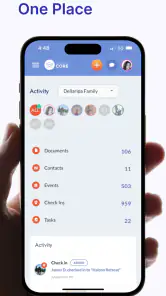
Managing a family usually means juggling messages, plans, reminders, school details, and small decisions that somehow become urgent at the busiest moment of the day. The Family Core is a free parenting app from The Family Core, LLC that aims to make that shared organization feel less scattered. I approached it as a practical family-management tool rather than as another social app, and that distinction matters: its value depends less on entertainment and more on whether it helps everyone work from the same household plan.
My first impression is that this is best considered by families who want a central place for coordination. It is not automatically the right choice for every household, especially if a simple calendar, a group chat, or a notes app already covers the way people communicate. The useful question is not whether a dedicated family app sounds appealing. It is whether your family is losing time because information is spread across too many ordinary tools.
How I Would Decide Whether It Fits Our Family
I would begin with the family’s actual source of friction. Are parents repeatedly answering the same questions? Do children miss changes because plans live in a private conversation? Does one person carry most of the mental load because nobody else can easily see what needs attention? If those problems sound familiar, a shared management app has a clear purpose. If the household mainly needs occasional reminders, adding another app may create more work than it removes.
The Family Core sits in the parenting category, so I see it as a household coordination layer rather than a replacement for every communication tool. That makes the setup decision more practical. Before inviting everyone, I would agree on what belongs there: recurring family responsibilities, important schedule information, and updates that affect more than one person. Keeping that boundary clear is one of the best ways to prevent a family-management app from becoming a second, messier inbox.
I also pay attention to adoption. A tool can be well designed, but it only helps if the people responsible for updating it actually use it. Parents may be willing to learn a new system, while children or relatives may ignore anything that feels like administrative homework. For that reason, I would introduce The Family Core around one specific routine instead of asking the whole family to move everything at once. A shared weekly plan is a better starting point than a complete household overhaul.
There is also a useful distinction between visibility and control. Families often want everyone to know what is happening without making every person responsible for managing every detail. A good workflow should reduce repeated explanations, not turn children into full-time users or make one parent monitor every action. I would therefore test whether the app supports the level of participation that feels natural in our home, rather than assuming that more shared information is always better.
A realistic weeknight test
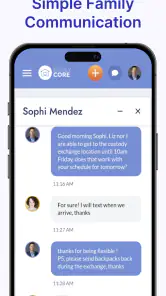
Imagine a parent finishing work while a child has an activity, another child needs a pickup, and dinner depends on who gets home first. With a normal group chat, the details may be buried among unrelated messages. With separate calendar entries, the information may be visible but disconnected from the family conversation. I would use The Family Core for the household plan itself, then check whether each person can understand what matters without asking the same question again.
More From Our News Desk

Clash of Clans Is Won Between the Battles

Android Auto Makes the Case for Quieter Car Software

MobiOffice: Transforming Mobile Productivity with Seamless Integration

EA SPORTS FC™ Mobile Soccer: Redefining Mobile Sports Gaming

How Microsoft OneDrive Became a Mobile Productivity Giant

How Google Translate Breaks Language Barriers Effortlessly
The important test is not whether the app can hold a plan. It is whether the plan remains understandable when the day changes. If a practice time moves or a pickup arrangement changes, the family needs a clear current version rather than several competing messages. I would judge the app on that moment of change, because that is where a centralized system can earn its place.
What I would set up first
My advice is to start with a small, repeatable workflow. Add the family members who genuinely need access, establish the main routine, and use the app for a week before expanding its role. This approach reveals whether the household benefits from a dedicated hub or simply needs better habits with tools it already owns.
A second practical tip is to decide who maintains shared information. If everybody assumes somebody else will update it, the system becomes unreliable. If one person does everything, the app may reinforce the very mental load it is supposed to reduce. I would assign ownership by type of information where possible, then keep the process simple enough that updates do not feel like a formal task.
A third tip is to treat old conversations as temporary references, not as the official record. When a plan is agreed in a chat, move the final version into the family workflow immediately. That small habit prevents the common problem of remembering that a decision happened while forgetting where it was written.
Where This App Wins and Where Another Category May Be Better
The strongest case for The Family Core is consolidation. Instead of expecting parents to combine a calendar, scattered messages, handwritten notes, and reminders mentally, it offers a purpose-built place to think about family coordination. That focus is valuable for households with several moving parts, particularly when the same information must be understood by more than one person.
Its appeal is also reflected in its reception. The app holds a 4.6 average from around 142 ratings and has passed 10K installs, which suggests a real user base without making it one of the unavoidable mainstream platforms. I read that as a reason to approach it with realistic expectations: it has enough adoption to be worth considering, but your decision should still come from your family’s workflow rather than popularity alone.
The app is free to install, which lowers the barrier to a trial. It is marked for Everyone, making the positioning feel broad and family-oriented rather than aimed at a narrow parenting stage. The current version is 2.123, and it runs on Android 6.0 or later. Those details matter when a household includes older devices, because a family system is only useful if the people who need it can access it.
Where it wins over a basic calendar is context. A calendar is excellent at dates and times, but family life often includes responsibilities, handoffs, and changes that do not fit neatly into an appointment title. Where it wins over a group chat is persistence: a chat is fast and familiar, but important details can disappear beneath newer messages. Where it wins over a notes app is shared purpose; a general note can become a dumping ground, while a parenting-focused tool starts with a clearer reason for existing.
That does not mean it replaces those alternatives completely. A calendar may still be better for formal appointments, work commitments, or personal schedules. A messaging service may remain the quickest way to handle an unexpected change. I would use The Family Core as the family’s coordination center only if it makes those other tools easier to manage, not if it forces every kind of information into one place.
The trade-off for families who already have a system
If your household already uses a shared calendar consistently, updates it promptly, and communicates changes clearly, the benefit may be modest. In that situation, a new app has to offer more than a fresh interface. It must remove a specific pain point, such as unclear responsibility or information being split between adults and children.
Families who prefer minimal technology may also want to skip it. A paper planner on the kitchen wall can be more visible than a phone app for some households, and a simple conversation may be enough when schedules are light. I would not recommend adding The Family Core merely because parenting feels busy. I would recommend testing it when the current method is repeatedly failing.
There is another important trade-off: centralization creates a dependency on shared participation. If only one parent uses the app, it may become a private planning tool rather than a family-management system. That can still be useful, but it changes the value proposition. Before committing, I would ask whether the other people in the household are willing to check one central place and whether the app fits their devices and routines.
Understanding the free model before committing
The app is free, but it includes in-app purchases priced at $9.99 per item. I would treat the free entry point as an opportunity to evaluate the workflow, not as a promise that every useful part of long-term use will necessarily remain free. Before building the entire household around it, I would identify which parts of our routine depend on paid items and whether that expense feels worthwhile for the time saved.
This is also where I would avoid a common mistake: paying before the family has formed a habit. A premium option cannot solve an adoption problem. I would first see whether everyone understands where information belongs, whether updates are noticed, and whether the app reduces repeated conversations. Only then would I consider spending money on additional value.
What switching really involves
Moving from a group chat or ordinary calendar is not just a download. The real cost is deciding what to migrate, teaching everyone the new routine, and resisting the temptation to keep two competing systems alive forever. I would begin with active information only. Recreating every old detail makes the transition feel larger than it needs to be and can bury the current plan under history.
For a smoother switch, I would choose a clear starting date, tell the family which app is now the source of truth, and keep the first week deliberately narrow. During that period, I would watch for three things: whether people can find the latest plan, whether changes are recorded promptly, and whether anyone still needs private explanations because the shared view is unclear.
If those tests go well, expand gradually. Add another routine only after the first one feels natural. If they go badly, that is useful information too. The problem may be the app, but it may also be unclear ownership or an unrealistic expectation that every family member will interact with the system in the same way.
Who should choose it, and who should pass
I would recommend The Family Core to parents who feel that their household information is fragmented and who want a dedicated place for shared management. It is especially worth trying when multiple people need the same current information and ordinary tools keep producing misunderstandings. The free starting point makes a controlled trial sensible, provided the app works on everyone’s devices.
I would be more cautious for a small household with a stable routine, for people who dislike adding apps, or for families already satisfied with a shared calendar and dependable communication habits. I would also pass if nobody is prepared to maintain the information. A central hub with stale details is worse than a simple system that everyone trusts.
Because the app is from The Family Core, LLC and has been available since October 15, 2021, I see it as an established enough option to test rather than an idea that exists only on paper. Still, the right decision depends on daily fit. The age rating of Everyone makes it broadly approachable, but suitability in practice comes from how your household shares information, not from the label alone.
My final recommendation is to try it as a focused experiment. Use it for one recurring family workflow, involve the people who need the information, and judge whether it reduces questions and duplicated effort. If it becomes the place where everyone can quickly see the current plan, it may earn a permanent role. If it simply duplicates a calendar and a chat, staying with the simpler tools is the smarter choice.
In my experience, the best family-management app is not the one with the longest feature list. It is the one people remember to open, understand, and trust. The Family Core has a convincing reason to exist for families that need more structure than ordinary communication tools provide, but its success depends on disciplined setup and shared use. Try it to solve a specific coordination problem, not to collect another parenting app.
The Family Core Frequently Asked Questions
How much does The Family Core cost, and are there in-app purchases?
The Family Core is free to download, so you can try the app without paying an upfront price. In-app purchases are listed at $9.99 per item, which may apply to optional features or content. Check the purchase details shown in the app before confirming anything, and review your device’s purchase settings if children or other family members use the same device.
Which devices can run The Family Core?
The Family Core requires Android 6.0 or later, making it suitable for devices running that operating system version or a newer one. Before downloading, check your device’s software version and available storage so installation can proceed smoothly. The app is also available for iOS, though device compatibility can depend on the operating system version supported by the particular release.
What is The Family Core, and what is it designed for?
The Family Core is a family-focused application intended to help parents and household members organize everyday activities, communication, and shared responsibilities in one place. Depending on the features available in your version, it may support family planning, reminders, schedules, shared information, or coordination between relatives. Before downloading, review the official description carefully because available tools can vary by platform, region, account type, or subscription plan.
Is The Family Core suitable for children, or is it mainly intended for parents?
The Family Core appears to be primarily useful for parents, guardians, and adults managing family routines, although some functions may be designed for children or teenagers to participate in shared plans. Parents should check the minimum age requirement, account rules, and privacy settings before inviting younger users. It is also important to explain what information is shared and configure permissions according to each family member’s age and needs. The app has an Everyone content rating, but adults should still decide how its features fit their household.
Does The Family Core require an account or paid subscription?
You may need to create an account to use The Family Core, especially if the application synchronizes information between multiple family members or devices. Some basic functions may be available for free, while advanced organization tools, additional users, storage, or premium features could require a subscription or in-app purchase. Check the current pricing, trial terms, renewal policy, and cancellation instructions in the official app store listing. The app is free to download, with in-app purchases listed at $9.99 per item.
Pros
- Centralizes family schedules
- tasks
- and important information in one place.
- Shared access helps parents coordinate responsibilities more efficiently.
- Useful reminders can reduce missed appointments and everyday chores.
- Encourages children to participate in age-appropriate household tasks.
- A family-focused design makes collaboration easier than general productivity apps.
Cons
- Some features may require every family member to install and use the app.
- Initial setup can take time when adding routines
- tasks
- and family profiles.
- Notifications may become overwhelming if too many reminders are enabled.
- Limited customization could make it less suitable for complex family arrangements.
- Privacy settings should be reviewed carefully before adding sensitive family details.
- Category
- Parenting
- Version
- 2.123