Teasing Simulator Home App
- 10.00
- 4.6
- Installs
- 10.00K
- Price
- Free

Screenshots
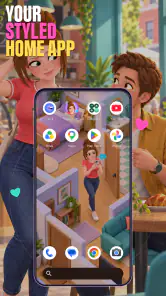


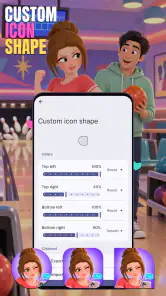
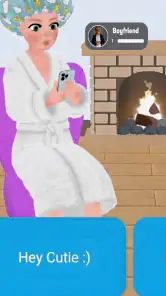
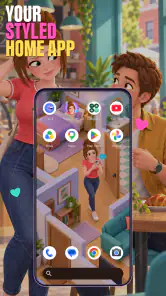


Analysis by Reviewed
I would approach Teasing Simulator Home App as a playful personalization download rather than a conventional chat, dating, or relationship app. Its stated premise is simple: try out a teasing style and see whether that kind of playful charm appeals to you. That narrow idea may be just what makes it interesting, but it also means you should keep expectations modest. I would not install it expecting a full social experience or a detailed guide to flirting.
What matters most before downloading is whether you enjoy experimenting with a light, teasing tone for its own sake. The app’s name and short description point in that direction, while offering little reason to assume it will suit someone looking for practical relationship advice. I find it easiest to judge it as a small, personality-led diversion: potentially enjoyable for curious users, but not automatically useful simply because it has “simulator” in its name.
A focused idea, with room to prove itself
What the current release tells me
This is a free Android personalization app from Hadiz Studio, currently at version 1.0. It has a Teen content rating, and its stated minimum operating system is Android 8.0. The listing also shows a 4.6 average from around 760 ratings and more than 10,000 installs. Those figures suggest that people have tried it and that the overall response is favorable, though they cannot tell me whether its style will work for every user.
The important practical point is that the available product identity is compact: a teasing simulator presented as a home app. That is not enough to infer a particular set of screens, prompts, customization controls, or social features, so I would avoid treating any of those as guaranteed. Instead, I would assess the app by the experience it promises at a high level: a playful way to explore charm, framed around personalization.
That framing also sets a useful boundary. A simulator can be entertaining without teaching someone how to communicate well in a real conversation. If you are hoping to become more confident with a partner or to resolve an awkward exchange, I would pair any playful experimentation with ordinary judgment and respect for the other person’s comfort. A teasing tone can be fun when it is mutual; it can land badly when it is not.
Why the first release matters
The release date is September 15, 2026, and version 1.0 is the current version. In other words, this is a first-version product rather than an app with a long visible history of revisions. That gives the app a clear starting point, but it does not provide evidence of what may change next. I would separate that fact from any hope for future additions: updates may improve or expand the experience, but no particular feature or schedule should be assumed.
For someone deciding whether to try it, version 1.0 suggests a sensible approach: treat the download as a low-commitment experiment, not as a mature toolkit you will rely on every day. Since it is free, the direct cost is not the main trade-off. Your time and expectations are. I would spend a few minutes checking whether the app’s tone and presentation feel enjoyable, then keep it only if it offers something you actually want to revisit.
The version number also matters to existing users. If you already have it, it is reasonable to think of your experience as tied to this early release rather than as part of a settled, feature-rich platform. I would not plan a routine around it or assume that saved preferences, continuity, or a particular workflow will carry through future changes. That is not a prediction that anything will break; it is simply a cautious way to use a new app when its longer-term evolution is not yet established.
A realistic way to try it
Imagine you have a quiet break between errands and want something lighter than scrolling through social feeds. This app may be worth opening if the idea of testing a teasing persona sounds amusing. I would use that moment to see whether the central interaction feels natural to me, rather than forcing myself to turn it into a serious self-improvement exercise. If the tone feels awkward after a short try, that is useful information: the concept may not match your sense of humor.
A second practical use is as a conversation starter with a friend who enjoys playful banter. You could compare reactions to the general idea and talk about where teasing stops being fun. That is a way to make the premise social without assuming the app itself connects users or shares content. I would keep any private or personal material out of that experiment unless I had first checked how the app handles it and felt comfortable with those terms.
One small but important tip is to test the app in a low-pressure setting. A playful tone that seems entertaining while you are alone may not suit a real message to someone else. I would treat anything learned from the experience as inspiration, not as a script to copy and send. The useful skill is noticing how a style feels, then adapting it to the person and context—not using a simulator as permission to push past someone’s boundaries.
Who is likely to enjoy it
I can see the appeal for users who like niche personalization apps, enjoy playful themes, and are curious about a teasing style without expecting a deep lesson. The Teen rating gives families and younger users a useful age signal, though it is not a substitute for a parent or guardian deciding whether the app’s tone is appropriate for a particular person. The best fit is someone who can approach the concept as entertainment and judge the experience for themselves.
It is less suitable if you want a conventional messaging service, a real dating platform, or structured coaching about communication. Those are different needs. A dedicated learning resource is a better choice for practicing respectful conversation, while an established chat app is more appropriate when your goal is simply to talk with people you already know. I would also skip this download if you dislike flirtatious or teasing themes; the central premise is unlikely to become appealing just because the app is free.
There is another sensible reason to pass: if you want a personalization app with a clearly defined practical outcome, this concept may feel too narrow. Some people enjoy an app precisely because it offers one playful angle; others quickly run out of reasons to return. I would not interpret a high average rating as a promise that the experience has enough depth for long-term use. Ratings help with a first impression, but they cannot replace your own test of whether the tone works for you.
How it compares with familiar alternatives
Compared with general-purpose personalization apps, this one appears to have a more specific personality hook. A broad customization tool usually earns its place by serving several everyday tastes; a teasing simulator has a narrower reason to exist. That focus can make it feel more memorable if the theme clicks, but it also gives it less room to appeal to someone who wants neutral customization or a practical utility.
Compared with social or dating apps, the distinction is even more important. The premise is about trying a style, not necessarily meeting people or carrying on a conversation with them. I would not choose it as a substitute for a platform whose main purpose is connecting users. In the other direction, a social app may be too public or distracting for someone who just wants a private, light experiment. The right choice depends on whether you want to explore a tone or interact with other people.
There is also a difference between playful simulation and advice. A guide or course can explain context, consent, and how to read a response; a themed app may be better at offering a quick diversion. If you are trying to improve an actual relationship, I would favor direct, considerate communication over rehearsing clever lines. The simulator’s strongest possible role is a small prompt for curiosity, not a replacement for listening.
What remains uncertain for a careful user
With a first-version release, I would pay attention to the basic experience before investing much time: whether the app is easy to understand, whether its tone stays comfortable, and whether it gives you a reason to reopen it. Those are practical checks rather than claims about specific controls or features. They help answer the question that matters more than a feature checklist: does the app do enough for you to keep it?
I would also make a deliberate privacy check before entering anything personal. Because teasing can involve intimate context, avoid sharing names, private messages, or identifying details unless you have read the relevant in-app information and are comfortable with it. This is a general precaution for any app handling personal expression, not an assertion about this app’s data practices. Keeping an experiment fictional or generic makes it easier to enjoy without exposing someone else’s private conversation.
Another point to consider is how the app fits into your phone use. If you are trying to reduce distractions, even a free novelty app can become clutter when it has no lasting purpose. I would try it when I am genuinely curious, then make a simple decision: keep it if I return to it because I enjoy the specific idea; remove it if I only opened it once out of curiosity. That approach is more useful than expecting every download to become a daily habit.
What I would watch as it develops
Because the current release is version 1.0, the most useful signal over time will be whether later versions make the core idea clearer and more satisfying without changing its playful character into something else. I would look for evidence of thoughtful refinement, especially around ease of use and a comfortable tone. Those are areas that matter for this particular concept, but they are things to watch rather than changes I can claim have already happened.
The rating and install figures offer a starting snapshot, not a guarantee of future quality. A 4.6 average and a user base above 10,000 indicate that the app has attracted interest, while the number of written reviews remains relatively small at around 10. I would therefore read the broad rating as encouraging but not conclusive. A handful of detailed, recent comments can sometimes explain the experience better than a star average, especially for an app with such a specific theme.
For existing users, I would keep expectations flexible and judge each update on what it actually changes. For newcomers, I would install only if the premise itself sounds fun, rather than waiting for imagined features. That is the fairest way to approach an early release: appreciate what is present, avoid assuming a roadmap, and decide based on your own experience.
My recommendation
I find Teasing Simulator Home App easiest to recommend as a casual, niche experiment for people who like playful personalization and understand that a simulated teasing style is not the same thing as real-world communication advice. Its free price removes a purchase decision, and its Teen rating gives a clear age category to consider. Still, the app’s narrow concept will not be a match for everyone, and its first-version status makes me cautious about treating it as a polished, established daily tool.
If you are curious, try it with a light touch: keep personal details out, notice whether the tone feels natural to you, and do not confuse a playful idea with a script for approaching someone. If you want genuine social connection, structured guidance, or broad customization, a different kind of app will serve you better. For the right person, though, this is a small and inexpensive way to explore a specific style of charm; I would keep it only if that brief experiment leaves me wanting to return.
Teasing Simulator Home App Frequently Asked Questions
What is Teasing Simulator Home App?
Teasing Simulator Home App is presented as a casual simulation experience centered on playful teasing in a home setting. Before downloading, check the app’s store description and screenshots to confirm what its current version actually includes, since titles and features can change over time. It may be designed primarily for entertainment rather than offering a detailed home-building or life-simulation experience.
Is Teasing Simulator Home App suitable for children?
Suitability depends on the app’s content, presentation, and age rating in your region. The word “teasing” can refer to harmless jokes, but it may also involve behavior that some families consider inappropriate. Review the store’s age classification, screenshots, content notes, and any available parental guidance before letting a child install or play, and consider supervising younger users.
Does Teasing Simulator Home App require an internet connection?
Whether the game can be played offline may depend on its version and the features you use. Some casual apps work without a connection after installation, while advertisements, online services, updates, or other features may require internet access. Check the listing and test the app’s behavior before relying on offline play, especially if you plan to use it while traveling.
Is Teasing Simulator Home App free, and does it include in-app purchases or ads?
The price and monetization model can vary by platform, country, and release version. A free download may still include advertising, optional purchases, or other paid features. Before installing, review the current Google Play or App Store listing for pricing details and purchase disclosures. If children will use the device, consider enabling purchase approval or other parental controls.
What should I check before downloading Teasing Simulator Home App?
Confirm that the app is available for your device and operating-system version, and check its publisher, recent update date, permissions, privacy information, and user reviews. Store listings and features can differ between Android and iOS, so use the official app store for your platform. If the app asks for permissions that seem unrelated to its gameplay, review them carefully before proceeding.
Pros
- Quick interactions make it easy to start playing without a lengthy tutorial.
- A casual format suits short play sessions.
- The teasing theme gives the game a distinct
- playful premise.
- Simple controls are approachable for players new to simulation games.
- It can offer a light diversion when you want an uncomplicated game.
Cons
- The teasing humor may not appeal to every player.
- Gameplay may feel repetitive after extended sessions.
- The premise may offer limited depth for players seeking a complex simulator.
- Some content or features may be less suitable for younger players.
- Check the app’s permissions and privacy details before installing.

- Category
- Personalization
- Version
- 1.0