Sword Health: AI Care
- 1.06K
- 4.7
- Installs
- 100.00K
- Price
- Free

Screenshots



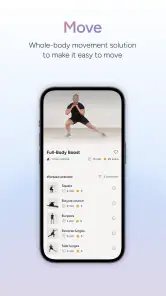
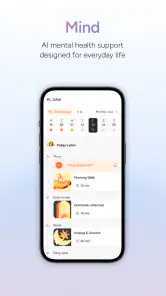
Analysis by Reviewed
I approached Sword Health: AI Care as a medical app rather than another wellness download, and that distinction matters. Its purpose is to support people who are trying to feel better through guided care, so the value is not in keeping me entertained for a few minutes. It is in making a health routine easier to start, easier to repeat, and easier to fit around ordinary life. Developed by Sword Health, the app is free and available to everyone, which makes the first step relatively simple for someone curious about this style of care.
My overall impression is that the experience is built around reducing friction. Instead of treating recovery as something that only happens during a scheduled appointment, the app encourages a more regular relationship with guided exercises and health support. That can be useful when pain, stiffness, or limited mobility makes it difficult to maintain momentum on your own. At the same time, I would not treat it as a universal replacement for a clinician, an urgent assessment, or a carefully tailored in-person program. The right expectations are important from the beginning.
How Sword Health: AI Care feels in everyday use
A quick start is valuable when motivation is low
The strongest part of a digital care app is often not a dramatic feature but the ease of returning to it when you are tired, busy, or uncomfortable. Sword Health: AI Care is aimed at that exact moment. If I have finished work with a sore back or I am trying to rebuild a routine after a period of limited movement, a guided app feels more approachable than searching through random videos and hoping I have chosen the right exercise.
The app’s medical positioning also changes how I judge its speed. I am less interested in flashy transitions than in whether the experience lets me move from opening the app to understanding what I should do next without unnecessary confusion. A recovery tool should feel calm and purposeful. When an app makes me hunt through menus, read long explanations, or repeatedly make decisions, it can turn a manageable session into another task to postpone.
That is where Sword Health: AI Care makes sense for people who need structure. The app is not simply a library that leaves me to assemble a program from scratch. Its appeal is the idea of guided care supported by technology, with the routine acting as a bridge between professional advice and what I can realistically do at home. I still need to pay attention to my body, but I am not starting from a completely blank screen.
What I would expect during a normal session
In a typical everyday scenario, I might use the app after a long period at a desk. My goal would not be to push through pain or complete the most demanding routine available. I would want to open the app, follow the assigned guidance at a comfortable pace, and finish with a clearer sense of what movement is appropriate that day. That makes it more useful for consistency than for one-off bursts of effort.
A practical tip is to use it at a predictable point in the day rather than waiting until I feel highly motivated. A short routine attached to an existing habit, such as finishing work or preparing for bed, is easier to maintain than a vague promise to exercise later. This is a small but important trade-off: the app can organize the care experience, but it cannot create discipline on my behalf.
I would also keep a simple mental note of how I feel before and after a session. If a movement repeatedly increases discomfort, causes unusual symptoms, or feels unsafe, I would stop rather than assuming that completing the routine is always better. Digital guidance can improve access and consistency, but it does not remove the need for personal judgement.
Speed is more than opening time
When I think about perceived speed here, I consider three things: how quickly I understand the next step, how smoothly a session progresses, and how little mental effort is needed to return later. A medical app can technically open quickly and still feel slow if the path through care is unclear. Conversely, a slightly more deliberate screen can feel efficient when it explains what matters at the right moment.
Sword Health: AI Care benefits from being focused on a specific health purpose. I am not navigating a social feed, a large entertainment catalog, or a crowded marketplace before reaching the useful part. That focus should help the experience feel more direct for someone who already knows why they installed it. New users may still need time to understand how the care process fits their situation, but that is a worthwhile pause rather than empty delay.
The main speed limitation is personal rather than technical. Guided recovery should not be rushed. A session that asks me to pay attention to form, breathing, discomfort, or range of motion naturally takes longer than scrolling through a generic exercise clip. I see that as a healthy constraint, although people expecting a rapid workout may find the approach slower than a conventional fitness app.
Where heavier use can expose friction
The demanding moments are likely to come when the app is used as an ongoing care companion rather than opened once for a quick look. Repeated sessions require the experience to remain understandable, and any small point of confusion becomes more noticeable after several returns. If the app is helping me follow a longer recovery process, I want progress and guidance to feel coherent instead of making every visit feel like the first.
This is also where the distinction between medical guidance and general exercise becomes important. A fitness app can often get away with broad categories such as strength, stretching, or mobility. A care app has to feel more attentive to the individual situation. If my needs change, I would expect to reassess whether the current guidance still makes sense rather than blindly continuing because a routine is already familiar.
One useful workflow is to treat the app as part of a wider recovery plan. I would use its guidance during the designated session, but I would not turn every spare moment into another exercise opportunity. Recovery is not improved simply by accumulating more activity. Rest, professional advice, and gradual progression still matter. The app is most helpful when it gives structure to appropriate movement, not when it becomes a reason to overdo it.
Stability matters more than visual polish
For this type of product, reliability means more than avoiding crashes. I want the app to preserve a sense of continuity: the instructions should remain clear, the care path should not feel unpredictable, and the experience should support a routine I can trust. A medical tool that looks impressive but leaves me uncertain about what to do next would not earn a place in my daily habits.
The public response around Sword Health: AI Care is encouraging. It holds a 4.7 average from around 8.9 thousand ratings, with roughly 1.1 thousand written reviews, and it has passed 100 thousand installs. Those figures suggest that many people have found the app worth trying and rating. They do not guarantee that every user will have the same experience, especially because health needs, devices, and expectations vary widely.
I would judge reliability over repeated use rather than after the first launch. Does the app remain useful when I am having a better day and when I am having a worse one? Does the guidance still feel relevant when my schedule changes? Does the routine encourage me to continue without making unrealistic promises? Those questions matter more to me than whether the interface has the newest visual style.
There is also a human reliability question. An app can guide movement, but it cannot observe every detail of my posture or understand every medical complication in the same way a clinician can. I would be comfortable using Sword Health: AI Care as a structured support tool, but I would not rely on it to interpret serious or rapidly changing symptoms. That boundary is not a flaw unique to this app; it is a basic limitation of app-based care.
Device constraints and the home environment
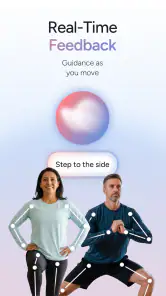
Even a well-designed care app depends on the device and the room around me. A small phone screen may be adequate for instructions, but it can be harder to follow while moving than a larger display positioned at a comfortable viewing angle. I would set the device somewhere stable, visible, and out of the way rather than holding it during exercises. That reduces distraction and helps me focus on movement.
The room matters just as much. A crowded floor, poor lighting, or furniture placed too close to the exercise area can make a guided session feel awkward or unsafe. Before starting, I would clear enough space to move without rushing and keep the phone where I can see it without twisting repeatedly. This preparation takes little time, but it makes the app feel more usable and reduces the temptation to skip a session because the environment is inconvenient.
People with older or less capable devices should also think about comfort, not just installation. A medical app needs to stay readable and responsive enough that I am not distracted by delays or a screen that is difficult to follow. If the phone becomes warm, the battery is low, or the display keeps locking during a session, the experience can lose its calm rhythm. Those are practical device issues rather than evidence that the care itself is ineffective, but they still affect whether I will keep using the app.
Another constraint is attention. I would avoid using the app while multitasking, answering messages, or watching television. Guided care works best when I treat the session as a brief appointment with myself. The app may make the appointment easier to access, but it cannot make divided attention safe or productive.
Who will get the most from it?
I think Sword Health: AI Care is a strong fit for someone who wants guided support at home and needs help turning recovery into a repeatable routine. It may suit people who find generic exercise content too vague, who struggle to remember what they were told during an appointment, or who want a more organized alternative to choosing random movements online.
It can also be useful for someone whose main obstacle is consistency. When the hardest part is deciding what to do, a focused medical app can remove that daily negotiation. The benefit is especially clear for people willing to follow a gradual process rather than searching for instant relief. In my view, the app’s greatest strength is not that it makes recovery effortless; it makes the next sensible step easier to identify.
I would be more cautious if I needed hands-on assessment, immediate diagnosis, or close supervision because of complex symptoms. Someone who wants competitive training, detailed gym programming, or a broad collection of high-intensity workouts may prefer a dedicated fitness platform. Likewise, a person who already has a highly personalized plan from a clinician may find the app less useful if its guidance does not match that plan. In that situation, the clinician’s instructions should take priority.
How it compares with familiar alternatives
The usual alternative is a search engine or a video platform. Those options offer plenty of choice, but choice is not the same as suitable guidance. I can find an exercise quickly, yet still have no reliable way to know whether it matches my condition, current ability, or stage of recovery. Sword Health: AI Care is more appealing when I want a care-oriented path instead of a collection of disconnected demonstrations.
Another alternative is a conventional appointment. In-person care has advantages that an app cannot reproduce, including physical assessment, direct conversation, and immediate adjustment based on what a professional observes. Sword Health: AI Care is better understood as a way to extend access and routine between those moments, particularly for people who need support at home. It is not automatically better than seeing a clinician; it is simply more convenient for certain parts of the process.
Compared with a general fitness app, this product feels more appropriate when the goal is recovery or symptom-aware movement rather than performance. A fitness app may offer more variety, stronger motivational elements, or broader training categories. The trade-off is that it may not provide the same focused medical context. I would choose based on the problem I am trying to solve, not on which app has the longest feature list.
Small habits that improve the experience
I would begin by choosing a consistent time and preparing the space before opening the app. That prevents the routine from becoming dependent on perfect circumstances. I would also keep my expectations modest during the first sessions. The goal is to understand the guidance, notice how my body responds, and build familiarity, not to prove that I can complete the hardest possible routine.
A second useful habit is to separate discomfort from ambition. If I feel tempted to add extra exercises because a session seems easy, I would pause and consider whether that supports the intended recovery plan. More activity is not automatically more progress. A structured app is most valuable when I respect its pacing rather than using it as permission to improvise aggressively.
Finally, I would review my routine whenever life changes. Travel, a new work schedule, poor sleep, or a flare-up can alter what is realistic. If I cannot maintain the same pattern, I would rather adjust my expectations and return consistently than abandon the app after missing several days. That flexibility is a more useful measure of success than an unbroken streak.
My performance verdict
Sword Health: AI Care performs best as a focused, repeatable companion for guided recovery. Its free access and Everyone age rating lower the barrier to exploring it, while the strong average rating and broad install base show that it has attracted substantial interest. The developer, Sword Health, has positioned it in the medical space rather than presenting it as a generic exercise product, and that focus gives the experience a clearer purpose.
My reservation is not about wanting more spectacle. It is about remembering what an app can and cannot do. The experience may help me follow a plan, but it does not replace clinical judgement, physical examination, or urgent care. It also depends on a suitable device, a safe space, and the willingness to use it consistently. Those conditions are easy to overlook when downloading a free app.
My recommendation is to try it if you want structured, home-based support and are prepared to treat recovery as a gradual process. I would skip it in favor of a clinician or a more specialized alternative when my needs require direct assessment, close supervision, or performance-focused training. For the right user, Sword Health: AI Care earns its place not by promising a shortcut, but by making a sensible routine easier to begin and maintain.
Pros
- Personalized digital therapy plans adapt to your progress.
- AI guidance can make exercises easier to follow at home.
- Motion tracking may help improve exercise form and consistency.
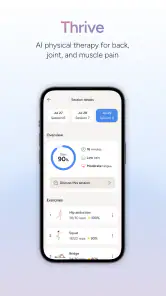
- Useful progress tracking encourages regular rehabilitation routines.
- Can reduce the need for frequent in-person therapy visits.
Cons
- Requires compatible devices and a suitable space for movement exercises.
- Some features may require a paid membership or insurance eligibility.
- AI feedback may not replace assessment by a licensed physical therapist.
- Tracking accuracy can vary with lighting
- clothing
- or camera placement.
- Availability and covered services may depend on your location and plan.

- Category
- Medical
- Version
- Varies with device