Spark: Daily Learning Puzzles
- 192.00
- 4.5
- Installs
- 100.00K
- Price
- Free
Screenshots

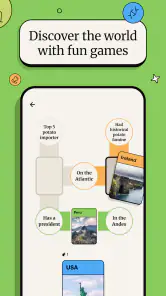
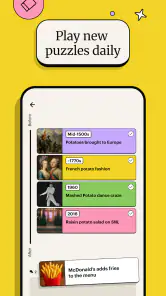
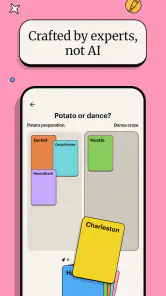


Analysis by Reviewed
Spark: Daily Learning Puzzles is an education app built around a simple promise: make learning feel small enough to fit into an ordinary day. I found that idea appealing immediately. Instead of asking me to reserve a long study session, it presents learning as a puzzle-sized activity, which makes it easier to open during a spare moment and less intimidating than a traditional course.
The app is free to download and suitable for Everyone, so it has a broad audience. The Mind Company is the developer, and the current release is version 1.41.0 for devices running Android 10 or later. Its average rating is 4.5 from around 2.8 thousand ratings, while the app has passed 100 thousand installs. Those figures suggest that Spark has already found a modest but interested audience, although popularity alone does not prove that people keep using it.
My main question was not whether the first few puzzles were pleasant. They were. The more important question was whether this kind of bite-sized learning could survive the novelty phase. After using it with that in mind, I see Spark as a useful habit tool rather than a replacement for a textbook, a full course, or a serious reference app. Its value depends heavily on how deliberately you use the short sessions.
What the first week feels like
The first week is where Spark makes its best impression. The short-puzzle format lowers the barrier to starting, especially when I am tired or have only a few minutes available. I do not have to prepare a notebook, choose a long lesson, or decide how much time I can spare. Opening the app and completing one focused activity feels manageable, which is exactly the kind of design that can turn good intentions into a repeatable routine.
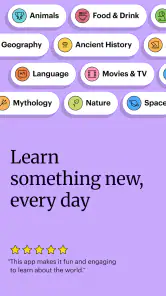
The store summary describes the experience as learning something new one puzzle at a time, and that description captures the basic rhythm without needing to make the app sound more complicated than it is. I would not approach it expecting a complete academic curriculum. I would approach it as a compact mental workout that can introduce, reinforce, or refresh ideas in a lighter way.
A realistic use case is a commute with a few quiet minutes, a lunch break, or the period before bed when I want something more constructive than endless scrolling. Spark fits those moments because the commitment feels limited. Even when I do not feel ready for concentrated study, a small puzzle can still get me thinking.
That convenience is also the first important trade-off. A short activity is easier to begin, but it can create the impression that exposure equals mastery. It does not. If I finish a puzzle and immediately move on, I may remember the satisfaction of solving it more clearly than the idea itself. I get better results when I pause afterward and explain the answer to myself in plain language.
More From Our News Desk

Clash of Clans Is Won Between the Battles

Android Auto Makes the Case for Quieter Car Software

MobiOffice: Transforming Mobile Productivity with Seamless Integration

EA SPORTS FC™ Mobile Soccer: Redefining Mobile Sports Gaming

How Microsoft OneDrive Became a Mobile Productivity Giant

How Google Translate Breaks Language Barriers Effortlessly
How I would use it during a normal day
My preferred workflow is to treat the puzzle as a prompt rather than the entire lesson. I complete it once without rushing, identify the part that required the most thought, and then spend another minute recalling the reasoning without looking back. That tiny second step makes the app more useful than simply tapping through an activity.
For someone trying to build a learning habit, I would recommend choosing a consistent trigger instead of relying on motivation. Opening Spark after breakfast or during a daily break is more dependable than promising to use it whenever there is free time. The app is at its strongest when it occupies a small, predictable place in the day rather than competing with every other source of entertainment.
Another useful approach is to keep expectations narrow. I would choose one broad area of curiosity at a time and judge progress by consistency, not by how much information I can recite after a single session. This protects the experience from becoming a rushed collection of disconnected facts.
The app is particularly suitable for casual learners, students who want a lighter supplement, adults returning to regular learning, and anyone who enjoys the satisfaction of solving a compact challenge. It may also work well for families because of its Everyone content rating, although I would still treat it as an individual learning aid rather than assume that every activity matches every age or ability level equally well.
Where the novelty starts to fade
After the initial excitement, the central question becomes whether the format continues to feel meaningful. Puzzle-based learning has a natural advantage: it gives each session a clear finish line. That structure can keep the experience approachable. The risk is that the finish line becomes the goal, and the learning becomes secondary.
I noticed that the app is most satisfying when I use it with a purpose. If I want a short mental reset, it delivers. If I expect a carefully sequenced course with deep explanations and measurable progression, I am likely to feel that the experience is too light. This distinction matters because Spark can be enjoyable for months while still not being the right primary tool for a demanding subject.
Compared with a conventional educational app, Spark appears better suited to quick engagement than extended study. A full course normally gives me longer explanations, structured units, exercises, and a clearer path toward a defined outcome. Spark’s appeal is the opposite: less setup, less pressure, and a smaller daily commitment. I would choose the conventional course when I need certification, exam preparation, or a systematic foundation. I would choose Spark when I want to keep curiosity active without turning every session into homework.
Month-to-month value and the work of keeping it useful
Long-term value depends on whether the puzzles continue to provide a reason to return after the first-week novelty disappears. In my view, Spark earns recurring space when I use it as a maintenance habit. It can keep learning present in my routine, refresh my attention, and encourage me to investigate topics further elsewhere. It is less convincing as a standalone system for reaching advanced competence.
The best monthly pattern is not necessarily daily completion at all costs. If I use the app mechanically, the activity can become another box to tick. A better routine is to alternate between quick sessions and occasional deeper follow-up. For example, I might complete a puzzle one day, write down the question it raised, and use another source later to explore that question properly. This turns Spark into a doorway rather than a closed room.
That workflow reveals one of the app’s less obvious strengths: it can help me decide what deserves more attention. A compact puzzle may expose a gap in my knowledge or introduce a subject I had never considered. The value is then not limited to the answer inside the app. It is the nudge that sends me toward a book, lecture, article, or conversation.
There is a corresponding limitation. If I want a dependable record of detailed progress, I would prefer a more formal learning platform. A puzzle format can make improvement feel pleasant without making it easy to measure. Users who need clear milestones, extensive review tools, or a defined syllabus should consider Spark a companion rather than their main study environment.
Who should keep it installed
I would keep Spark installed if I wanted a low-friction way to protect a small daily learning habit. It is a good match for people who often say they want to learn but struggle to begin. The short format gives those users a practical entry point, and the free price makes trying it straightforward. In-app purchases range from $2.99 to $79.99 per item, so I would pay attention to what is included before treating the free experience as a complete long-term plan.
The purchase range is especially relevant for families or anyone trying to keep app spending predictable. I would begin with the free experience and decide whether the routine itself is valuable before considering any optional purchase. Paying does not automatically solve the deeper question of whether the learning style suits me. If I dislike short puzzle sessions after a fair trial, additional content is unlikely to change that basic preference.
I would also keep it for moments when concentration is limited. A long lesson can feel impossible after a demanding workday, while a small activity may still be realistic. That does not make Spark a shortcut to expertise, but it does make it useful for preserving continuity. In learning, returning regularly can matter more than having an ambitious plan that I abandon after a week.
Who should choose something else
I would skip Spark as a primary tool if my goal were to pass a difficult exam, learn a technical skill through guided practice, or follow a curriculum from beginner to advanced level. In those situations, I need depth, explanations, correction, and a progression that is easier to inspect. A puzzle-centered app can support those goals, but it should not carry them alone.
I would also look elsewhere if I wanted long reading sessions, detailed note-taking, or rich project work. Spark is built around compact engagement, so users who prefer to settle into one subject for an hour may find the short format fragmented. The app’s simplicity is an advantage for casual use and a limitation for sustained study.
People who are motivated mainly by visible achievement may need to be careful as well. The satisfaction of completing a puzzle can encourage frequent opening, but completion is not the same as retention. I would judge the app by whether I can recall and apply what I encountered later, not just by whether I maintained a streak-like routine.
Maintenance burden and recurring friction
The maintenance burden is fairly low in practical terms because the app asks for small sessions rather than a large time commitment. The harder part is mental maintenance: keeping the activity intentional. Without a personal method for reviewing or connecting ideas, the experience can become passive consumption.
My strongest tip is to create a tiny “follow-up rule.” Whenever a puzzle surprises me, I note one question it creates. I do not need a complicated study system. That single question gives the session a second life and helps separate genuinely interesting learning from momentary amusement.
A second tip is to stop before the format becomes tiring. Because each activity is short, it is tempting to continue simply because another puzzle feels easy to start. I would rather finish while the experience still feels fresh and return later than turn it into a long, unfocused sitting. This is particularly important for users who are trying to build a habit instead of chasing a large amount of activity in one day.
A third tip is to use Spark at different energy levels. On a busy day, I might complete one puzzle and leave it there. On a quieter day, I can use the puzzle as a warm-up before reading more deeply about its subject. This flexible approach makes the app easier to sustain because it does not demand that every session look identical.
There is also a practical cost in switching between Spark and other resources. If I frequently leave the app to investigate every interesting idea, the experience can become scattered. I solve this by collecting questions and reviewing them together later. That keeps the app’s quick rhythm intact while preventing every session from becoming a chain of distractions.
What may cause fatigue over time
The first source of fatigue is repetition in the interaction pattern. Even enjoyable puzzles can feel similar when the surrounding routine never changes. I reduce that feeling by varying when I use the app and by treating some sessions as discovery while treating others as review. If every opening has the same purpose, the habit can lose its sense of choice.
The second source is shallow confidence. A correct answer can feel like firm knowledge even when I would struggle to explain it later. That is why recalling the reasoning after the puzzle matters so much. Spark works better when I add a little active effort instead of allowing the app to do all the thinking.
The third source is expectation mismatch. Someone may install an education app hoping for a complete personal curriculum and then become disappointed when short activities do not deliver that depth. I think the fairest way to use Spark is to value it for regular mental stimulation and curiosity, while using more specialized resources for serious mastery.
Finally, optional purchases can affect how comfortable the long-term experience feels. Since the app is free but offers in-app items from $2.99 to $79.99, I would make a spending decision slowly. The free starting point is helpful, but users should decide based on actual learning value rather than the pressure to unlock everything.
My long-term verdict
After the novelty fades, Spark remains worthwhile for a specific reason: it makes returning to learning unusually easy. That is not a small benefit. Many educational tools fail because their ideal session is too demanding for real life. Spark accepts that people may have only a brief window and gives that window a clear purpose.
Its lasting value is strongest when I use it as a habit anchor, a source of questions, and a warm-up for deeper learning. It is weaker when I expect it to replace structured instruction or prove that I have mastered a subject. The app rewards curiosity and consistency more than intensity.
The Mind Company has created an approachable education app with a clear identity. The free entry point, Everyone rating, and compact puzzle approach make it easy to recommend to casual learners. At the same time, the in-app purchase range and the natural limits of bite-sized learning mean I would not present it as a complete solution for demanding academic goals.
My honest recommendation is to keep Spark if you want a small, repeatable learning ritual, not if you need a full course in disguise. Give it a fair trial, use the puzzles actively, and connect the best questions to deeper resources. Used that way, it can earn a permanent place on a phone—not because every session is profound, but because it makes the next useful session easy to begin.
Spark: Daily Learning Puzzles Frequently Asked Questions
What devices can run Spark: Daily Learning Puzzles?
Spark: Daily Learning Puzzles is available for Android and iOS devices that meet its operating system requirements. It is currently version 1.41.0 and requires Android 10 or later. Before downloading, check that your device’s software is up to date enough to install it, and make sure you have space available for the app and its updates.
Who developed Spark, and how popular is it?
Spark: Daily Learning Puzzles is an education app from The Mind Company. It has a 4.5 average rating from around 2.8K ratings, with 192 written reviews and over 100K installs. These figures offer a useful snapshot of its reception, though individual experiences can differ depending on the puzzles users enjoy and how they prefer to learn.
What is Spark: Daily Learning Puzzles?
Spark: Daily Learning Puzzles is a casual educational app built around short, daily brain-training challenges. Instead of presenting long lessons, it encourages users to learn through quick puzzles that may test logic, memory, language, numbers, or general knowledge. Its bite-sized format makes it suitable for a morning routine, a study break, or anyone who wants a more engaging alternative to traditional quizzes.
Is Spark: Daily Learning Puzzles free to download and use?
Spark is free to download, while optional in-app purchases range from $2.99 to $79.99 per item. That means the basic download does not necessarily include every paid feature or piece of content. Check the purchase details shown in your app store before buying, and review any payment prompts carefully so you know what you are selecting.
How much time do the daily puzzles take to complete?
Spark: Daily Learning Puzzles is designed for short sessions rather than extended gameplay. Most daily challenges can generally be completed in only a few minutes, although the actual time depends on the puzzle type and your familiarity with the subject. This makes the app convenient for users with busy schedules, while the daily format also encourages consistent practice instead of occasional, lengthy study sessions.
Pros
- Short daily sessions fit easily into busy routines.
- Covers several puzzle formats to keep practice varied.
- Helpful hints can prevent difficult rounds from becoming frustrating.
- Clean interface makes the app easy to navigate.
- Daily challenges encourage a consistent learning habit.
Cons
- Some puzzles may feel too easy for experienced players.
- Progress can depend heavily on maintaining a daily streak.
- Hints may reduce the challenge for users seeking pure problem-solving.
- Limited daily content may not satisfy users wanting longer sessions.
- Certain features or puzzle packs may require in-app purchases.
- Category
- Education
- Version
- 1.41.0