SleepCircle
- 323.00
- 4.6
- Installs
- 100.00K
- Price
- Free

Screenshots
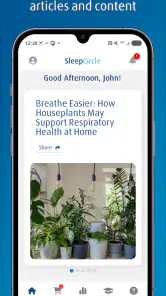
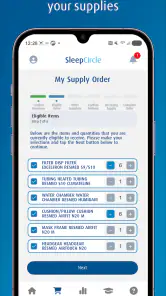
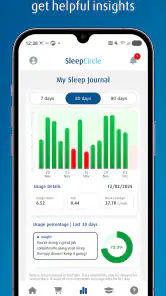
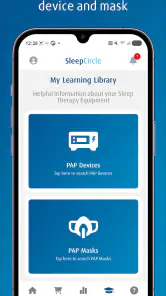
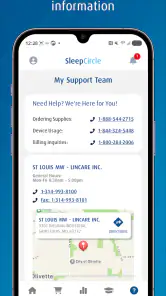
Analysis by Reviewed
Managing sleep therapy is rarely difficult because of one dramatic problem. The harder part is keeping small tasks consistent: checking what happened overnight, remembering what needs attention, and staying connected with the service that supports your treatment. SleepCircle is a medical app from Lincare Holdings Inc. built around that everyday responsibility. I found its appeal less in entertainment or novelty and more in the possibility of putting sleep-therapy information and routines in one place.
That focus makes it a very different proposition from a general sleep tracker. A phone’s built-in health tools may estimate sleep duration, while a wearable may turn bedtime into charts and scores. SleepCircle is aimed at patients managing therapy, so its value depends on whether you already use the related Lincare service and want a more convenient digital companion. It is best understood as a therapy-management tool, not a diagnosis app or a replacement for clinical advice.
How SleepCircle fits into a connected therapy routine
My first impression is that the app makes most sense when treated as one link in a chain: the patient, the therapy equipment, the provider, and the phone all need to work together. That connected design can make routine care easier, but it also means the experience is not completely independent of network access or the surrounding service. If you open it expecting a standalone sleep diary that works like a simple notes app, you may find the emphasis different from what you wanted.
The app is free, carries an Everyone age rating, and is listed for Android devices running version 7.0 or later. Its current version is 2.0.0, and it was released on March 14, 2025. Those details make it approachable for people using an older compatible phone, although compatibility alone does not guarantee that every connected part of a therapy setup will behave identically on every device.
SleepCircle has also built a noticeable audience for a specialized medical tool: it has more than 100 thousand installs, a 4.6 average from roughly 3.4 thousand ratings, and 323 written reviews. I would not treat those figures as proof that it will suit every patient, but they do suggest that the concept is resonating with people who want a digital way to stay involved in sleep therapy.
When the network becomes part of the experience
The most important practical point is that connectivity shapes how useful the app feels. Anything involving a service account, therapy information, communication with a provider, or the movement of information between equipment and phone can be affected by the quality of the connection. At home, that may be invisible because the app simply opens and presents the information you expect. In a basement bedroom, a hotel, a hospital waiting area, or a house with unreliable Wi-Fi, the same interaction can feel slower or less predictable.
I would therefore avoid making the app part of a rushed morning ritual where every second matters. A better habit is to open it when you have a stable connection and a few quiet minutes. That gives the app time to load the relevant information and gives you a chance to read it rather than glance at a screen while preparing for work. The distinction matters: a connected therapy tool rewards deliberate checking more than impulsive tapping.
There is also a useful trade-off here. Centralizing therapy information can reduce the need to remember separate steps, but centralization creates a point where access depends on the connection between several systems. If the information does not appear immediately, I would first check the network and wait before assuming that the therapy itself has failed. That simple pause can prevent unnecessary worry and avoid repeated actions that do not solve the underlying connection issue.
Using it in ordinary mobile situations
A phone-based medical app has to fit around real life, not an ideal schedule. SleepCircle is particularly relevant for people who move between bedroom, workplace, clinic, and travel situations while still needing to keep track of therapy. The phone is already the object most people carry, so using it as the place to review therapy-related information can be more practical than relying on memory or a paper notebook.
Imagine a weekday morning after a restless night. You have a commute ahead, but you also want to understand whether last night’s therapy routine needs attention. Instead of trying to reconstruct the night from memory, you can make checking the app part of a calmer sequence: wake up, connect to a dependable network, review what is available, and note anything that should be discussed with the provider. The benefit is not that the phone magically explains every sleep problem. The benefit is that it gives the conversation a more organized starting point.
Travel is a more complicated case. A patient may change rooms, networks, or daily routines, and the phone may not have the same connectivity it has at home. I would treat the app as useful for staying oriented, but I would not depend on it as the only place where important therapy instructions exist. Before leaving home, it is sensible to know the basic routine and keep any essential provider guidance accessible through the usual channels. That is not a criticism unique to SleepCircle; it is a sensible boundary for any connected medical app.
Another mobile scenario is a clinic visit. The app can help you arrive with a clearer sense of what you have been observing, rather than offering a vague report such as “sleep has been bad lately.” Still, the app should support a conversation with a qualified professional, not replace it. A chart, status, or therapy-related detail may be useful context, but it should not be used to change treatment settings or interpret symptoms without appropriate guidance.
What to do when information is delayed or a session goes wrong
Connected apps need a recovery mindset. If SleepCircle does not show what you expected, I would use a simple sequence: confirm that the phone has a working connection, close and reopen the app, and give the connected service time to update before trying again. If the problem continues, record the approximate time and what you observed, then contact the appropriate Lincare support or clinical channel instead of repeatedly refreshing without a plan.
This approach is especially helpful because sleep therapy can make people anxious. A missing update can feel like evidence that something went wrong overnight, even when the issue is only a delayed connection or a temporary service problem. Separating “the app has not displayed the information yet” from “the therapy did not work” is an important mental safeguard. SleepCircle can organize information, but the screen alone cannot answer every clinical question.
I also recommend avoiding rushed conclusions after one unusual night. Sleep is influenced by routine, illness, stress, room conditions, and many other factors. If the app highlights something that concerns you, use it as a prompt to look for a pattern and speak with a professional when needed. The strongest use of a therapy app is often not instant interpretation; it is helping the patient notice what deserves a better conversation.
Recovery also includes phone-related problems. If the device is nearly out of battery, has aggressive background restrictions, or changes networks frequently, connected activity may be less smooth. I would keep the app updated through the normal app-store process and avoid testing it for the first time on the morning of an important appointment. A short, calm check at home is a much better way to learn how it fits your routine.
Being thoughtful about personal health information
Sleep therapy information is personal, so I would use SleepCircle with the same care I give any medical app. A shared phone, an unlocked screen, or casual screenshots can expose more than intended. The practical habit is simple: use a device lock, avoid leaving the app open where other people can read it, and think twice before sending images of therapy information through ordinary messaging.
Connectivity also changes the privacy conversation. When information moves between a phone and a connected service, convenience is tied to data exchange. I would read the app’s current privacy and account guidance before relying on it heavily, especially if you are using a family device or a phone managed by an employer. I would not assume that a free price means there are no privacy considerations; “free” describes the cost to download, not the importance of understanding how a medical service handles information.
One useful discipline is to separate necessary checking from curiosity. Opening the app repeatedly may not provide more insight, particularly if the relevant information depends on a later update. Checking at a consistent time can reduce unnecessary phone use and make changes easier to notice. It also gives you a cleaner personal record of what you saw, which is more helpful than a series of anxious refreshes.
For households, account boundaries matter. If more than one person uses the same phone, I would make sure the correct patient profile is active before relying on anything displayed. A medical app is not the place for guesswork, especially when names, equipment, or therapy details could be confused. If the app is being used on a replacement phone, I would take the same careful approach: confirm the account and the displayed patient information before treating it as a reliable part of the routine.
Who will get the most from it
SleepCircle is a strong candidate for patients who already receive sleep-therapy support through Lincare and want a more convenient way to stay engaged between conversations with their care team. It may be especially helpful for someone who dislikes paper notes, forgets details from one night to the next, or wants a phone-centered routine rather than several disconnected reminders.
It can also suit family members who help an adult patient stay organized, provided the patient’s privacy and account access are handled appropriately. The app’s Everyone rating makes it broadly accessible from an age-classification perspective, but that should not be confused with clinical suitability for every person. The right question is whether it matches the patient’s therapy relationship and daily needs.
I would be more cautious about recommending it to someone looking for a general wellness app. If your main goal is meditation, bedtime alarms, ambient sound, or broad lifestyle coaching, a dedicated wellness tool may be a better fit. Likewise, people who want detailed wearable-based sleep staging may prefer a device ecosystem designed around those measurements. SleepCircle’s purpose is narrower, and that narrowness is part of its usefulness.
It is also not the right choice as a substitute for medical care. Someone with new or worsening symptoms should not rely on an app screen to decide what to do. The app can help organize a therapy-related experience, but a clinician remains the right person for diagnosis, treatment changes, and urgent concerns.
Small habits that make the app more useful
I found three habits particularly valuable for a connected medical app like this. First, check it at a repeatable time instead of whenever worry appears. A consistent routine makes the information easier to compare and reduces the temptation to interpret every delay as a problem. Second, keep a short note of symptoms or unusual circumstances alongside what you see in the app. A therapy-related result has more meaning when you can remember that you were ill, traveling, or dealing with a disrupted schedule.
Third, use the app to prepare questions rather than manufacture answers. If something looks different across several checks, write down the question you want to ask Lincare or your clinician. This turns the phone into a better communication aid. It also prevents a common mistake: treating a convenient digital display as permission to make changes that should be discussed professionally.
A fourth habit is to test the routine before you need it. Open the app at home, understand where you normally look, and notice how it behaves when the connection is less immediate. That small rehearsal is more valuable than discovering on travel day that you do not remember your login process or do not know how to react when information takes time to appear.
How it compares with familiar alternatives
Compared with a paper diary, SleepCircle offers a more connected experience and less dependence on remembering to write everything down. Paper still has one advantage: it is available without a phone, battery, or network. For a patient who wants a personal symptom journal, paper may remain the simpler companion, while SleepCircle is more useful for therapy information tied to the provider relationship.
Compared with a smartwatch or general sleep tracker, the difference is purpose. Wearables are often better at presenting lifestyle trends, movement, bedtime consistency, and sleep-oriented scores. Those tools can be motivating, but their measurements are not automatically the same thing as therapy data. SleepCircle is the more relevant choice when the priority is managing a supported sleep-therapy routine rather than collecting broad wellness metrics.
Compared with calling a provider for every small question, an app can make routine checking less disruptive. The trade-off is that a phone interface cannot offer the nuance of a conversation, and a network-dependent update may not be immediate. I see SleepCircle as a middle layer: more structured than memory, less complete than professional care, and more therapy-specific than a generic health dashboard.
My connectivity verdict
SleepCircle is a focused medical app that makes sense when your sleep therapy already connects you with Lincare Holdings Inc. Its strongest quality is practical organization: it gives patients a phone-based way to remain involved in an ongoing routine instead of treating each night as an isolated event. The free download and broad device compatibility make it easy to try for eligible users, while its solid rating and growing install base indicate that many people find the approach worthwhile.
The main limitation is also central to its design. The experience is shaped by the connection between phone, service, and therapy workflow, so it should not be treated as an all-purpose offline record or an independent medical authority. Delayed information needs calm troubleshooting, and important clinical decisions still belong with the appropriate professional.
My recommendation is straightforward: if you are a Lincare sleep-therapy patient who wants a connected way to stay organized, SleepCircle is worth exploring. Use it at a stable time, protect the health information it presents, and treat unusual results as prompts for better questions rather than instant conclusions. If you only want relaxation tools, wearable-style sleep scores, or a simple private diary, another category of app may serve you better.
Pros
- Combines sleep tracking with relaxing sounds and bedtime tools.
- Simple interface makes daily sleep data easy to understand.
- Sleep trends can help identify changes in your routine.
- Supports gentle reminders for maintaining a regular schedule.
- Useful for users seeking a non-invasive alternative to wearables.
Cons
- Some tracking features may require compatible phone sensors or permissions.
- Sleep estimates may be less accurate than data from dedicated wearables.
- Advanced insights or content may be limited behind a subscription.
- Background audio can drain battery during overnight use.
- Results depend heavily on keeping the phone positioned consistently.

- Category
- Medical
- Version
- 2.0.0