شناسایی شماره ناشناس انلاین
- 383.00
- 4.0
- Installs
- 500.00K
- Price
- Free

Screenshots
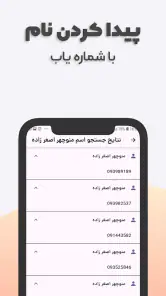
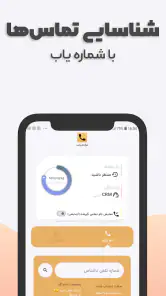
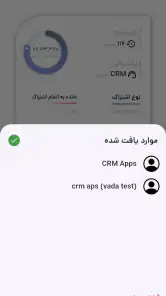
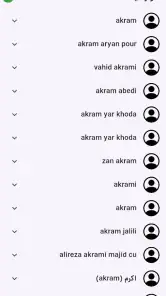
Analysis by Reviewed
When an unfamiliar number appears on my screen, I want a quick clue about who might be calling—not a complicated setup or a promise that every caller can be identified. شناسایی شماره ناشناس انلاین is an event-category app from Developers group focused on identifying unknown numbers. Its purpose is narrow, which makes it easy to understand, but it also means its usefulness depends on whether you are comfortable using a caller-identification tool and judging its results with care.
I see its strongest fit in everyday situations where answering an unknown call is inconvenient or potentially disruptive: waiting for a delivery, managing calls while working, or deciding whether to return a missed call. The app is free and rated for Everyone. It has a 4.0 average from around 9,700 ratings, and has been installed over 500,000 times. Those figures suggest a sizeable audience, but they do not guarantee that a particular number will be recognized or that every identification will be accurate.
Making an unfamiliar number easier to assess
Readable purpose, straightforward expectations
The app’s central task is clear: help identify an unknown number. That focus can be a relief compared with broader phone utilities that mix caller tools with unrelated features. In my view, the best way to approach it is as an extra source of context—not as an authority that decides whether a call is safe, legitimate, or worth answering.
The app’s name is in Persian, and its store summary is also in Persian. That is worth considering before installing: if you prefer an English-language interface, or need all instructions and labels to be in English, check the app’s presentation on your device before relying on it. A tool can have a simple purpose yet still be difficult to use if its language is not one you read comfortably.
I would also keep the decision process simple. When a caller is unfamiliar, first look at whatever identification the app provides, then weigh it against the timing and context of the call. If the number claims to represent a bank, government office, or delivery service, use that organization’s official contact route rather than trusting an incoming caller’s identity alone. Caller identification can help you decide what to investigate; it cannot prove who is speaking.
The current version is 3.1.12-GP, and the stated minimum Android requirement is 7.0. That gives Android users a concrete compatibility check to make before installing. The release date is Dec 22, 2021, so I would treat it as an established app rather than something newly launched, while still checking that it behaves well on my own device and suits my language needs.
Motor and sensory considerations in real use
Caller-identification tools are most useful when they reduce the need to handle a phone repeatedly. In a practical routine, I would check an unknown number when I have a moment, decide whether it deserves a callback, and then return to what I was doing. That is less demanding than repeatedly switching between a call screen, search results, and notes to work out who contacted me.
You May Like

Clash of Clans Is Won Between the Battles

Android Auto Makes the Case for Quieter Car Software

MobiOffice: Transforming Mobile Productivity with Seamless Integration

EA SPORTS FC™ Mobile Soccer: Redefining Mobile Sports Gaming

How Microsoft OneDrive Became a Mobile Productivity Giant

How Google Translate Breaks Language Barriers Effortlessly
For someone with limited dexterity, the value of the app depends on how much interaction its actual screens require. I would test the basic task before making it part of an essential workflow: can I open the app, find the relevant number, and understand the result without a long sequence of taps? I would not assume that an app is accessible simply because its purpose is straightforward. If tapping, scrolling, or reading small text is difficult, trying it on the phone in the conditions where calls usually arrive is more useful than relying on its description.
Sensory context matters too. A person who avoids loud alerts may prefer to review missed calls later rather than react immediately, while someone who depends on visual information may want to know whether the app’s result is easy to distinguish from the phone’s normal call details. I cannot recommend treating any caller label as a substitute for a clear, usable phone interface. If you rely on a particular assistive setup, test this app alongside it before depending on it to screen calls.
A useful, non-obvious habit is to separate identifying a number from deciding what to do about it. If a result looks familiar, I would still compare the number with an existing contact or a known official source before sharing personal information. If it looks suspicious, I would avoid calling back through an unfamiliar route. This keeps the app in a supporting role and reduces the chance of letting an uncertain label drive an important decision.
Where it fits into a busy day
Picture a missed call arriving while you are helping a customer, carrying groceries, or getting a child ready for school. You may not have time to answer, and calling back immediately could be awkward. A caller-identification app can make the later check more informed: review the number when you are free, decide whether it seems worth following up, and avoid interrupting the moment just to satisfy curiosity.
This kind of workflow is also useful for people who receive calls from numbers outside their contacts but still need to stay reachable. Rather than automatically ignoring every unknown caller, you can use an identification tool as one piece of context. That distinction matters: a blanket block may silence a genuine appointment or service call, while an identification app is intended to help you assess the caller instead.
Compared with the usual alternatives, the app occupies a middle ground. Your phone’s built-in call history is often the simplest choice if you only need to see a number and do not want another app. A web search may help with a number you can copy, but it adds steps and can lead to unreliable pages. A call-blocking tool is a better match if your main goal is stopping repeated nuisance calls, though blocking and identifying are different jobs. I would choose this app when the question is “Who could this be?” rather than “How do I prevent this number from reaching me?”
One practical tip is to decide in advance what evidence is enough for a callback. For a call that might relate to an appointment, check the number against messages or paperwork you already trust. For an unexpected request for money or account details, do not use a caller label as proof. This small rule makes an identifier more useful without giving it more authority than it deserves.
Limits and points to check before relying on it
The main limitation is inherent to the task: unknown-number identification cannot be treated as certain in every case. Numbers may be unfamiliar for ordinary reasons, and a label can be incomplete or misleading. If your work or personal safety depends on knowing exactly who called, confirm through a separate trusted channel. This app is better suited to reducing guesswork than resolving high-stakes identity questions.
There is also a trade-off between convenience and comfort with caller-identification services. Some people prefer not to use a separate app for this purpose and would rather rely on contacts, voicemail, or a manual search. If that is you, installing another tool may add friction instead of removing it. The app’s free price makes trying it less of a financial commitment, but “free” does not automatically make it the right choice for someone who wants the fewest apps possible.
Before depending on it, try the exact situation that matters to you. If you mainly want to check missed calls, see whether the number is easy to find and interpret after the call has ended. If you want help while a call is arriving, test whether the experience is clear enough under time pressure. These are different use cases, and success in one does not necessarily mean the app suits the other.
Language is another meaningful barrier rather than a minor detail. Because the app’s name and store summary are Persian, people who do not read Persian should verify that they can navigate the installed app comfortably. If they cannot, a familiar phone feature or a tool with a language they understand is the safer choice. I would not recommend making a caller-identification app part of a routine if its labels leave you guessing.
For people with visual, motor, or cognitive access needs, the sensible approach is a short hands-on trial rather than an assumption that the app will work with every setup. Check whether important information is readable, whether the steps are manageable, and whether the result is understandable without rushing. If any of those points fail, relying on voicemail, a trusted contact, or the phone’s own tools may be less stressful.
Who is likely to find it worthwhile
I would consider شناسایی شماره ناشناس انلاین if unfamiliar calls are a regular nuisance, I want context before returning missed calls, and the app’s language and interaction style work for me. It is particularly suitable for someone who wants a focused caller-identification option rather than a broader phone-management package. The 383 written reviews provide additional user feedback to explore, but individual experiences will not tell you whether a specific caller can be identified.
I would skip it if I need guaranteed identification, want automatic protection from every unwanted call, or cannot comfortably read and navigate the app. It is also not the right answer when the real problem is persistent harassment that calls for stronger blocking tools or help from a phone provider. In those cases, an identifier alone does not solve the underlying issue.
My overall view is measured: this is a focused, free tool for adding context to calls from numbers you do not recognize, not a replacement for judgement or a promise of certainty. Its best use is a calm follow-up check, especially when you would otherwise search manually or ignore a potentially important call. The most responsible way to use شناسایی شماره ناشناس انلاین is as a clue, then verify anything that matters through a source you already trust. If its language and interface suit your needs, it may make missed-call decisions less awkward; if not, your phone’s built-in history and a careful callback routine are perfectly reasonable alternatives.
A small routine that keeps the app in perspective
For a less stressful workflow, I would avoid making an instant decision based on a single label. Let a missed call sit until you can review it properly, compare any suggested identity with information you already recognize, and then choose whether to call back, wait for a message, or ignore it. This is especially useful when you receive calls during work or caregiving, when rushed taps can lead to mistakes. The app is most helpful when it buys you a moment to think rather than creating pressure to respond.
If you are deciding whether to install it, the practical question is not simply whether it can identify callers. Ask whether you regularly need that extra clue, whether you can comfortably read and navigate the app, and whether you are happy to treat its results as tentative. For an occasional unknown call, built-in call history and voicemail may be enough. For frequent unfamiliar calls, a trial can show whether this focused tool fits your routine without making it the sole gatekeeper for important conversations.
شناسایی شماره ناشناس انلاین Frequently Asked Questions
What is شناسایی شماره ناشناس انلاین, and what does it do?
شناسایی شماره ناشناس انلاین is presented as an online service for identifying unfamiliar phone numbers. Depending on the version and the information available to it, it may help you look up a caller or check whether a number has been reported by other users. Results are not guaranteed: a number may be unlisted, recently assigned, or absent from the service’s database, so treat any identification as a clue rather than verified proof.
Does the app identify every unknown or private caller?
No identification service can reliably reveal every unknown caller. It may only return details for numbers that appear in its database or can be matched using information the service is permitted to access. Private or withheld caller IDs generally cannot be identified from the number alone, and results for international, new, or less commonly reported numbers may be incomplete. Check the app’s listing and permissions to confirm how its lookup feature works.
Does شناسایی شماره ناشناس انلاین require an internet connection?
Because the service is described as online, an internet connection is likely needed to submit a number and receive current lookup results. Some apps may retain limited information on the device, but you should not assume that searches work offline unless the developer explicitly says so. Connection quality, regional availability, and access to the service’s servers can also affect how quickly a search completes or whether it returns any result.
Is it safe to enter phone numbers, and what about privacy?
Before searching, review the app’s privacy policy and the permissions requested during setup. A phone number can be personal information, and lookup services may process searches or collect technical data according to their own policies. Avoid submitting numbers without a legitimate reason, and do not assume a search is private or anonymous unless the developer clearly explains its data practices. Download only from a trusted app store or official source.
Is شناسایی شماره ناشناس انلاین free, and what should I check before downloading?
The price and available features can vary by platform, region, and app version. Check the store listing for in-app purchases, subscriptions, advertisements, supported devices, recent updates, and the developer’s contact details before installing. Also read recent user reviews, since they can reveal issues with accuracy or availability. If the listing does not clearly describe what the app does or how it handles data, consider whether it meets your needs before proceeding.
Pros
- Quickly checks unknown numbers without requiring a lengthy setup.
- Can help users decide whether to answer or ignore an unfamiliar call.
- Useful for screening potential spam and unwanted calls.
- The Persian-language interface may be easier for local users to navigate.
- A number lookup can be convenient when call details are not saved in contacts.
Cons
- Identifying a number may depend on a reliable internet connection.
- Results may be missing or inaccurate for unlisted or recently changed numbers.
- Some features may require access to call-related or contact permissions.
- Unknown numbers can still be incorrectly labeled as spam or safe.
- Privacy practices and the handling of submitted numbers may warrant careful review.

- Category
- Events
- Version
- 3.1.12-GP