Props.Cash | Player Props Data
- 127.00
- 4.8
- Installs
- 100.00K
- Price
- Free

Screenshots
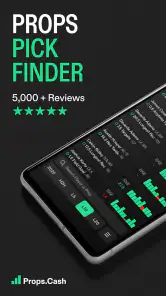
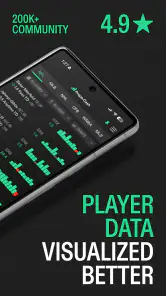

Analysis by Reviewed
I usually approach sports apps with one question: will I still open this after the first burst of curiosity disappears? Props.Cash | Player Props Data made a strong first impression because it focuses on a very specific task instead of trying to become an all-purpose sports destination. It is built for people who want to study player props across NCAA, NBA, MLB, and other sports, then make their own decisions with more context than a basic sportsbook screen usually provides.
That focus is also the reason I would not recommend it to everyone. If you only check a score, follow a favorite team, or place an occasional wager without comparing player performance, this may feel like more work than it is worth. But if you regularly examine player markets and want a repeatable research routine, the app has a clearer purpose. My experience was less about entertainment and more about deciding whether its information could become part of a sensible weekly habit.
Why the first week feels useful
The opening appeal comes from having a dedicated workspace for player props rather than digging through several unrelated screens. The app belongs to the sports category and is developed by props.cash, with a free starting point that makes it easy to test without committing money immediately. The audience is broad enough to include NCAA, NBA, and MLB followers, yet the use case remains narrow: compare player-prop information before acting.
That distinction matters. A sportsbook is generally designed to take you from market selection to a ticket as quickly as possible. A general sports app is usually better at scores, schedules, news, and team coverage. Props.Cash sits between those experiences, giving more attention to the player-market research step. I found that useful when I wanted to slow down and ask whether a line made sense instead of accepting the first number I saw.
During the first few sessions, the most practical workflow is to begin with the sport and slate that actually interests you, identify a small group of players, and compare the available prop information before forming an opinion. I would avoid opening the app with a vague goal such as “find something to bet.” That approach can turn any research tool into a temptation machine. A better habit is to arrive with a question: is this player’s recent production consistent, is the matchup changing the context, or is the market asking me to overlook too much uncertainty?
The app is most valuable when it changes your process, not merely when it gives you more screens to browse. That is an important first-week test. If the information helps you reject weak ideas, it is doing useful work even when you decide not to make a selection. If you only use it to collect attractive-looking possibilities, the novelty can become expensive and exhausting.
A practical evening routine
Imagine I am checking an NBA slate after work. I can use the app to narrow my attention to the players and props that deserve a closer look, then compare what I see with my own understanding of role, minutes, injuries, and game context. Instead of jumping between a sports news app, a sportsbook, and scattered browser tabs, I have one specialist tool for the player-prop portion of the process.
More From Our News Desk

Clash of Clans Is Won Between the Battles

Android Auto Makes the Case for Quieter Car Software

MobiOffice: Transforming Mobile Productivity with Seamless Integration

EA SPORTS FC™ Mobile Soccer: Redefining Mobile Sports Gaming

How Microsoft OneDrive Became a Mobile Productivity Giant

How Google Translate Breaks Language Barriers Effortlessly
The same idea applies to an MLB afternoon or a busy college sports schedule. The app’s cross-sport coverage gives it more recurring potential than a tool tied to one league. Still, cross-sport breadth is not automatically a benefit for every user. If I only follow one competition, the extra areas can become visual noise. I would treat the broad coverage as an advantage only if I genuinely move between sports during the year.
One non-obvious benefit is that a dedicated research step can create a natural pause before a decision. That pause is easy to lose when using a fast betting interface. I can write down my reasoning elsewhere, compare the prop with my original expectation, and decide whether the idea survives scrutiny. The app does not replace judgment, but it can make impulsive browsing less central to the routine.
What the early learning curve feels like
There is still some adjustment. Player props involve their own vocabulary, market types, and statistical context, so someone completely new to the subject may not understand the significance of every number or comparison immediately. The app can support research, but it cannot turn an inexperienced user into an expert simply by being installed.
I would spend the first week learning how I personally use the information rather than trying to inspect everything. Pick one sport, follow a manageable number of players, and note which views genuinely affect your decisions. This prevents the common mistake of treating every available data point as equally important. More information can improve a decision, but only after I know which information answers my question.
The app has an average rating of 4.8 from around 1.5 thousand ratings, which suggests that many users find the focused experience worthwhile. I would read that as encouragement rather than proof that it fits every workflow. A high rating cannot tell me whether the interface suits a casual fan, a daily researcher, or someone who prefers to do everything inside a sportsbook.
Whether it earns a place month after month
The long-term question is harder than the first-week question. A fresh research app can feel impressive because it gives me a new way to look at familiar markets. After a month, the value depends on whether it saves time, improves discipline, or helps me discover useful comparisons repeatedly. Props.Cash has a reasonable chance of becoming a regular tool for active player-prop users because its subject is not tied to one short-lived event.
The coverage of NCAA, NBA, MLB, and more gives the app a seasonal rhythm. When one sport becomes less interesting, another may keep the habit alive. That is more durable than an app built around a single tournament or a temporary trend. The trade-off is that I need to manage my attention. Switching between sports can broaden research, but it can also encourage shallow browsing across too many markets.
For month-to-month use, I would create a simple personal routine. Before a slate, I would identify the props I care about, use the app to examine them, and record why I accepted or rejected each idea. Later, I could review whether the process was consistent. This is more useful than judging the app only by whether a particular selection worked. A research tool should be evaluated by the quality of the routine it supports, not by short-term outcomes that can be noisy.
Another concrete trade-off is convenience versus independence. The app can make research more organized, but it may also encourage me to rely on a single source of information. I would still check official team news and other trustworthy context, especially when player availability or role changes could affect a market. Props.Cash works best as a focused layer in my process, not as permission to stop thinking or verifying important developments.
Who benefits from recurring use
I see the strongest fit for a user who follows player props several times a week, compares markets across multiple sports, and enjoys building a personal research method. That person can justify the time needed to learn the app because the same workflow repeats. The app also suits someone who wants to separate analysis from the faster, more emotionally charged act of placing a wager.
It is less convincing for a fan who checks props only during major games. That user may get enough value from the sportsbook’s built-in information or a general sports application, especially if simplicity matters more than depth. I would also skip it if I dislike reviewing numbers, tracking my reasoning, or making decisions slowly. The app’s specialist focus is a strength only when I am willing to engage with that focus.
The age rating is Everyone, and the app is free to install, but those points should not be confused with a risk-free experience. In-app purchases range from about twenty dollars to two hundred dollars per item, so anyone considering paid access should understand that the free entry point does not necessarily represent the entire cost of a serious long-term workflow. I would first determine whether the app genuinely improves my routine before considering any purchase.
That is one of the most important practical decisions for a new user: do not pay simply because the app looks specialized. Use the free experience to test whether you return to it, whether the information changes your choices, and whether it reduces the time spent searching elsewhere. If those benefits are not clear after a fair trial, a paid upgrade is unlikely to solve the underlying mismatch.
Maintenance, friction, and the risk of fatigue
Any player-prop research tool demands maintenance from the user. Sports change quickly, and a useful workflow requires attention to schedules, player roles, availability, and the difference between a promising trend and a small sample that looks persuasive. The app can organize the research experience, but I still have to keep my assumptions current. That ongoing effort is part of the product’s real cost, even when the initial download is free.
The maintenance burden is manageable when I limit the number of markets I follow. It becomes heavier when I try to inspect every sport, every slate, and every player. I would rather complete a focused review of a few relevant props than skim a large list and mistake activity for analysis. This is also where the app’s broad coverage can work against me: more possible research means more opportunities to overextend the habit.
Fatigue can arrive in several forms. Repeatedly checking similar player information may feel routine rather than insightful. A user can also become tired of switching between research and external context, especially when the final decision still depends on judgment outside the app. If I open it automatically without a clear question, the session can turn into endless comparison with no conclusion.
My solution would be to set a stopping rule before I begin. For example, I might review only the players connected to the games I am already watching, record the reason for each decision, and stop once I have enough information to act or pass. The point is not to force a wager; it is to prevent the tool from expanding the decision indefinitely. This kind of boundary is especially useful for people who enjoy research but find it hard to stop searching.
There is also a psychological limitation worth stating plainly. A polished data-focused experience can make an uncertain decision feel more precise than it really is. I would treat patterns as evidence to examine, not guarantees. The app may help me compare a player’s situation, but it cannot remove injuries, coaching changes, game flow, or ordinary variation from sports. Users who want certainty should not expect to find it here.
How it compares with familiar alternatives
Compared with a standard sportsbook, Props.Cash is better suited to preparation and comparison, while the sportsbook remains the place where a user handles the final transaction. The specialist app may encourage a calmer review, but it adds another step. If I value speed above all else, the extra step may feel unnecessary. If I value a deliberate process, that separation is a benefit.
Compared with a general sports app, it is more directly relevant to player props but less likely to satisfy someone who mainly wants scores, standings, news, or team discussion. I would not replace a general sports app with it if broad fan coverage is my priority. Instead, I would use each for its proper job, provided I am comfortable maintaining more than one tool.
Compared with manually searching the web, a dedicated app can make repeated research feel more consistent. The downside is that I may lose the flexibility of finding unusual context from a wide range of sources. My preferred approach is to use the app for the structured player-prop investigation, then consult reliable outside information when a specific question remains unresolved.
The current version is 3.0.16 and it supports devices running Android 7.0 or later. That makes the technical entry requirement fairly approachable for many Android users, including people who do not own a recent phone. Still, compatibility alone does not guarantee a comfortable experience on every device. I would pay attention to how easily I can read and compare information on my particular screen, because research becomes frustrating when the interface requires constant zooming or switching.
My long-term verdict
After the novelty fades, I think Props.Cash | Player Props Data can earn lasting space for the right kind of sports user. Its strongest quality is not that it promises a shortcut; it is that it gives player-prop research a dedicated place in the routine. The cross-sport focus helps it remain relevant across NCAA, NBA, MLB, and other markets, while the free starting point makes a cautious trial practical.
I would recommend it to a disciplined, curious user who already spends time comparing player props and wants a more organized process. I would not recommend it to someone seeking a simple score app, a complete sports-news replacement, or a way to eliminate uncertainty. The app asks for attention, judgment, and some maintenance. That is a fair trade for a serious research tool, but it is still a trade.
The best way to decide is to judge the habit rather than the first impression. Use it for a few real slates, keep your research focused, note whether it changes your decisions, and watch how much time it adds. If it helps you reject weak ideas and approach stronger ones with clearer reasoning, it is doing something valuable. If it only creates more browsing, more temptation, or more paid pressure, it has not earned a permanent place.
With over one hundred thousand installs, the app has clearly reached a meaningful audience, and its strong rating reflects genuine appeal. My final view is positive but measured: this is a specialized sports companion, not a universal answer. Its lasting value comes from turning player-prop research into a repeatable habit without pretending that better information guarantees better outcomes. For me, that is enough to keep it available, provided I use it with limits and a clear purpose.
Props.Cash | Player Props Data Frequently Asked Questions
What devices and operating systems can run Props.Cash?
Props.Cash is a sports app for Android, and its listed minimum operating-system requirement is Android 7.0. Before downloading, check that your device meets this requirement and has enough available storage for installation and updates. Keeping the app and operating system current can also help with compatibility and access to the latest version.
Who develops Props.Cash, and is it suitable for younger users?
Props.Cash is developed by props.cash and is categorized as a sports app. Its content rating is Everyone, so the app is designated for a broad audience. However, its focus on researching player prop bets may be more relevant to adults interested in sports statistics and wagering. Betting itself is subject to local laws and age restrictions, which users should follow.
What is Props.Cash | Player Props Data?
Props.Cash is a research and analytics platform designed to help users evaluate player prop bets. It brings together player statistics, historical performance, matchup information, trends, projections, and other data in one place. Rather than placing bets for you, the app is intended to support your own research when comparing available player props across supported sports and sportsbooks.
Which sports and player props are supported?
The available sports, leagues, markets, and player props may depend on the current version of Props.Cash, your location, and the data providers connected to the service. The platform commonly focuses on popular U.S. sports and markets such as player points, rebounds, assists, shots, yards, or similar statistical outcomes. Users should check the app’s current coverage before subscribing or relying on a specific prop market.
Does Props.Cash guarantee winning bets or provide guaranteed picks?
No. Props.Cash provides statistics, trends, projections, and research tools, but it cannot guarantee profitable results. Sports outcomes are unpredictable, and even strong historical trends can fail because of injuries, line changes, coaching decisions, game pace, or unexpected performance. Treat the information as analytical support rather than financial advice, and only wager legally and within limits you can afford.
Pros
- Clear player-prop trends help support faster research.
- Useful data for comparing recent performance across players.
- Covers multiple sports and betting markets in one app.
- Clean interface makes statistics easy to scan on mobile.
- Helpful for identifying potential value before placing a bet.
Cons
- Data depth may vary between sports and individual leagues.
- Some advanced insights may require a paid subscription.
- Prop lines and odds can change quickly after data is displayed.
- Not a substitute for checking injuries
- news
- and confirmed lineups.
- New users may need time to understand the available metrics.
- Category
- Sports
- Version
- 3.0.16





