Precision Trolling Data
- 259.00
- 3.6
- Installs
- 100.00K
- Price
- Free
Screenshots
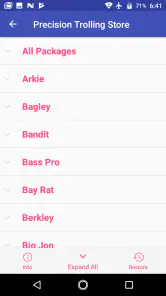
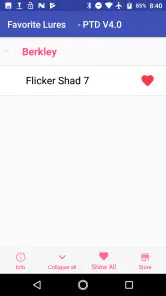
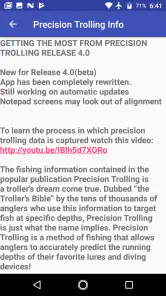
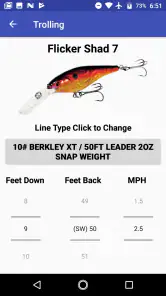
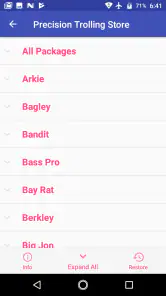
Analysis by Reviewed
I approached Precision Trolling Data as a practical fishing reference rather than a conventional sports app. Its purpose is narrow but useful: it helps anglers work with trolling information while they are planning a trip, preparing tackle, or trying to make sense of what happened on the water. The app comes from Precision Trolling Data App, and its reputation is reflected in a 3.6 average from around 476 ratings, with more than 100K installs. That is enough adoption to show that it has found a real audience, although the middling score also suggests that the experience will not suit everyone.
The short version of my opinion is simple: this is most valuable when I treat it as a decision-making reference, not as an automatic fish-finding tool. It does not replace time on the water, local knowledge, or careful observation. What it can do is give a more disciplined starting point for lure depth and trolling choices. For anglers who already understand basic trolling, that focus is its greatest strength. For someone looking for maps, live conditions, social reports, or a broad fishing companion, the app feels much more limited.
How the app feels in current use
The current release is version 7.1, and the application supports devices running Android 5.0 or later. That relatively broad system requirement makes it approachable for people who keep an older phone on the boat instead of risking a newer daily device near water. I also like the idea of using a dedicated backup phone for this kind of reference: the app’s usefulness comes from having the information available at the moment a trolling plan needs adjustment, not from constantly interacting with it.
Precision Trolling Data is free to install, with optional purchases ranging from $0.99 to $109.99 per item. That detail matters more here than it would with a casual sports app. A free download lets me inspect the basic experience before committing, but the possible cost of individual content means I would decide what I actually need before buying anything. I would not approach it as a single, all-inclusive purchase without first checking how the available material fits my fishing style.
The Everyone content rating is also appropriate for the subject. This is an informational fishing tool, not a competitive game or a social platform built around mature content. Its audience is defined more by experience and interest than by age. A young angler can learn from it, but the practical value becomes clearer when the user already knows terms such as line, lure, trolling speed, and target depth.
The store summary calls it a “Troller’s Bible,” a phrase that communicates the app’s intended role without making it sound like a general fishing encyclopedia. I read that positioning as a useful warning: the app is about precision in trolling, not every possible part of angling. If I want a broad logbook, weather dashboard, navigation aid, or community feed, I would look elsewhere or use this alongside those tools.
What I would use it for before launching
My most useful workflow would begin before leaving home. I would first decide what species, water depth, and lure family I expect to work with. Then I would use the relevant trolling reference to form a starting plan instead of arriving with a random collection of lines and hoping one happens to run correctly. That small change is important: the app is better at improving preparation than at eliminating uncertainty.
More From Our News Desk

Clash of Clans Is Won Between the Battles

Android Auto Makes the Case for Quieter Car Software

MobiOffice: Transforming Mobile Productivity with Seamless Integration

EA SPORTS FC™ Mobile Soccer: Redefining Mobile Sports Gaming

How Microsoft OneDrive Became a Mobile Productivity Giant

How Google Translate Breaks Language Barriers Effortlessly
I would also write down the initial setup in a notebook or phone note. The reference can guide a starting position, but fishing conditions change. Recording the lure, line arrangement, approximate speed, and result gives me something to compare after several passes. The app becomes more useful when it is part of a repeatable process rather than the only source of information.
A less obvious strength is that it can help separate two different problems: choosing a lure and controlling its running depth. Anglers often change both at once, which makes it difficult to know what caused a bite or a failure. I would use the app to keep the depth variable more deliberate, then change one other factor at a time. That is a simple way to get more learning from limited time on the water.
A realistic day on the water
Imagine arriving at a lake with a rough idea of where fish should be holding, but without confidence that the first lure will reach the intended zone. Rather than immediately adding weight or letting out an arbitrary amount of line, I would consult the app’s relevant information, choose a sensible starting arrangement, and make a controlled pass. If nothing happens, I would adjust gradually and note the result.
That process does not guarantee a catch. Wind, current, water clarity, lure action, line type, boat direction, and speed can all change what happens below the surface. The benefit is that I am no longer making every adjustment blindly. When a setup produces a strike, the reference helps me understand the conditions around that choice well enough to try reproducing it.
For a small group, this can also reduce unproductive arguments about whose guess is better. One person can handle the boat while another checks the reference and tracks the changes. The app is especially practical when several rods are being run at different depths and the crew needs a common starting point. I would still keep the phone protected and readable, because a reference that is difficult to consult at the console quickly becomes an unused reference.
Where it differs from ordinary fishing apps
Many fishing apps are built around maps, forecasts, catch reports, navigation, or personal records. Those tools answer questions such as where to go, what the weather may do, or what I caught last season. Precision Trolling Data addresses a different question: how a trolling setup may behave under particular conditions. That narrower purpose can make it more useful than a crowded all-in-one app when the immediate problem is lure presentation.
At the same time, the narrow focus creates a clear trade-off. A map-based application may be better for finding structure or planning a route. A weather-focused tool may be better for wind and pressure changes. A fishing log may be better for building a personal history. I would not replace those tools with this one. I would use it when the technical side of trolling is the part of the puzzle I am struggling with.
The important distinction is that this app should not be judged as though it were a live sonar display or a location service. It is a reference, and references depend on the user applying them sensibly. If I expect the app to tell me exactly where fish are or automatically adapt to every boat and lure combination, I will probably be disappointed.
What the version history means for existing users
The application was released on May 29, 2014, so it has had time to develop beyond a brand-new experiment. The current version, 7.1, shows that the product remains maintained in a recognizable form rather than being an abandoned download. That is reassuring for an existing user who has built a routine around it, though a version number alone does not tell me that every older device, purchase, or workflow will feel identical.
For someone moving from an earlier release, I would approach the update carefully. Before a fishing trip, I would open the app on the actual phone I plan to carry, check the material I rely on most, and make sure I understand which parts are available without last-minute purchasing. I would also avoid making the first test on the boat. A few minutes at home can prevent a frustrating situation when the signal is weak, the sun is bright, or the crew is waiting to start.
Existing users should think of version 7.1 as a current working point, not a promise that the app has become a completely different product. Its central value remains the same: providing specialized trolling information. That continuity is good for anglers who already know where they find useful material, because an established workflow is often more valuable than a dramatic redesign.
New users, however, should not assume that long availability automatically means a modern, frictionless experience. The rating of 3.6 indicates a mixed reception, and the count of around 259 written reviews suggests that people have had enough experience to comment on practical details. I would read recent comments before spending heavily, paying particular attention to whether the current purchase structure and navigation match my expectations.
How I would decide what to buy
The optional purchase range deserves a deliberate approach. I would begin with the free portion, identify the species and trolling situations I actually encounter, and then choose only the material that supports those situations. Buying everything at once would make little sense for a casual angler who trolls only occasionally. A specialist who fishes several waters or regularly experiments with different presentations may find broader coverage easier to justify.
This is also where the app may be less attractive than a traditional book or printed reference. A book can be browsed without thinking about in-app purchase boundaries and can stay open beside a tackle box. The app has the advantage of being searchable and portable, but the value depends on how clearly its paid material matches the user’s needs. I would compare the cost of the specific information I need with the convenience of having it on a phone.
Another practical tip is to avoid treating a purchase as a substitute for calibration. Even a well-organized reference cannot account perfectly for every line, lure, rod angle, boat movement, or local condition. I would use the information to establish a repeatable starting point, then verify what my own setup does. That habit prevents overconfidence and makes the app more useful over time.
Limitations that affect the experience
The biggest limitation is scope. Precision Trolling Data is not designed to be a complete fishing companion, so users who want one app for navigation, weather, mapping, catch records, and trolling analysis will need additional tools. That is not necessarily a flaw, but it does affect value. The app makes more sense as a specialist reference in a small toolkit than as the only fishing application on a phone.
There is also a learning curve. A beginner may understand the recommendations mechanically without understanding why a change in line, speed, or lure behavior affects the result. I would not hand this to a first-time angler and expect immediate confidence. A short introduction to trolling basics, combined with patient testing, will make the information much easier to apply.
Another source of friction is the difference between reference precision and real-world precision. A chart or recommendation can appear exact, while the boat is moving through changing conditions and the lure is not behaving in a perfectly controlled environment. I would treat every value as a starting estimate and watch for patterns rather than chasing a number as though it were guaranteed.
Finally, the phone itself can be a weak point. Glare, wet hands, battery concerns, and distractions are all more serious on a boat than on a sofa. I would review the relevant information before launching and keep a short written backup for the setups I plan to use. That workflow protects the app’s usefulness without forcing me to handle a phone constantly in difficult conditions.
Who should use it, and who should skip it
I would recommend this app to anglers who troll often, enjoy testing tackle methodically, or want a more informed starting point than trial and error. It is particularly suitable for someone who already owns several lures and needs help organizing how to present them at different depths. The specialized nature is an advantage when the user has a specific trolling question.
I would be more cautious recommending it to a beginner who wants instant, simple instructions. The app can support learning, but it will not replace an explanation from an experienced angler. I would also suggest skipping it if your main goal is finding fishing locations, checking a forecast, sharing catches, or navigating unfamiliar water. Another category of app will serve those needs more directly.
For occasional anglers, the free entry point makes experimentation reasonable, but the optional purchases should be considered carefully. If I only troll once or twice a year, a printed guide, advice from a local shop, or a friend’s established setup may offer better value. If I repeatedly return to the same technique and want to improve consistency, the app becomes easier to justify.
What I would watch in future use
My main expectation for the product is not flashy expansion but continued clarity. The most valuable improvements would be anything that makes it faster to move from a fishing situation to the relevant reference, especially when several lure or depth choices are being compared. I would also watch how comfortably the current version supports both newcomers and experienced anglers without making either group work unnecessarily hard.
I would keep an eye on the balance between free access and optional content as well. A specialist app can serve serious anglers well when purchases are easy to understand and closely tied to real needs. If the structure becomes confusing, the technical quality of the information matters less because users may not reach the material they expected.
For existing users, the sensible approach is to keep personal notes alongside the app. Record what worked, under which conditions, and how closely the result matched the starting recommendation. That creates a private layer of local knowledge that no general reference can provide. Over several trips, the combination of the app and those notes should be more useful than either one alone.
After using it as a focused trolling aid, I see Precision Trolling Data as a specialized tool with a clear audience. Its free download, broad Android compatibility, Everyone rating, and established presence make it easy to try, while the optional purchases and mixed rating mean I would evaluate it before investing deeply. Its real strength is turning a vague trolling guess into a testable starting plan.
I would keep it on a fishing phone if trolling were an important part of my routine, especially when I wanted to compare setups and learn from repeated passes. I would not expect it to replace maps, weather, sonar, local advice, or personal judgment. Used with those tools, it can add useful structure; used alone, it may feel too narrow. For the right angler, that narrowness is exactly why it earns a place in the tackle-planning process.
My final recommendation is to try the free experience first, identify the specific trolling problem you want to solve, and only then consider optional content. If you enjoy careful experimentation and want a dedicated fishing reference for trolling depth and presentation, this app is worth a serious look. If you want an all-purpose fishing companion, I would choose a broader alternative and treat this as an optional specialist rather than the center of your setup.
Precision Trolling Data Frequently Asked Questions
What devices and operating systems can run Precision Trolling Data?
Precision Trolling Data is an app for anglers, and its current version is 7.1. It requires Android 5.0 or later, so check your device’s operating system before downloading. If your phone or tablet meets that requirement, you can install it through the relevant app store. It is a practical choice to consider if you want trolling reference information available on a mobile device.
What is Precision Trolling Data used for?
Precision Trolling Data is designed to help anglers plan and improve trolling sessions by providing reference information about lure performance, trolling depths, line lengths, speeds, and related fishing conditions. It can be useful when targeting species that respond to precise presentations. The app works best as a practical guide alongside personal experience, local knowledge, weather information, and current regulations rather than as a guarantee of catching fish.
Is Precision Trolling Data suitable for beginners?
Yes, beginners can use Precision Trolling Data, although some basic fishing terminology may take time to understand. The app is most helpful when users already know the type of tackle, lure, line, and target species they are working with. New anglers may need to compare the app’s information with a tutorial or advice from an experienced fisherman. Once the main settings and data tables are understood, the information is generally practical for preparing a trolling setup.
Does the app require an internet connection?
Whether an internet connection is required can depend on the version of Precision Trolling Data and the content being accessed. Some reference material may be available after installation, while updates, account services, advertisements, or externally loaded information may require connectivity. Before heading onto the water, it is sensible to open the app in advance and check that the information you need is accessible, especially in locations with weak or unavailable mobile coverage.
Can Precision Trolling Data tell me exactly how deep my lure will run?
The app provides guidance and reference data intended to help estimate lure depth, but it should not be treated as an exact measurement in every situation. Actual running depth can change because of lure design, line diameter, line type, trolling speed, current, water conditions, rod position, and the amount of line released. Anglers should use the figures as a starting point and adjust their presentation based on real conditions and on-water results.
Pros
- Provides precise trolling data for more informed fishing decisions.
- Useful reference for anglers targeting specific species and locations.
- Helps compare trolling conditions before heading onto the water.
- Can reduce guesswork when planning trolling speed and depth.
- Practical tool for improving consistency across fishing trips.
Cons
- Data accuracy may vary by region
- season
- or available sources.
- New users may need fishing experience to interpret the information.
- Some features may depend on an internet connection or GPS access.
- Results may not account for sudden changes in weather or water conditions.
- Advanced data could feel overwhelming for casual or beginner anglers.
- Category
- Sports
- Version
- 7.1





