Parachute: Get Paid for Plasma
- 622.00
- 4.4
- Installs
- 100.00K
- Price
- Free

Screenshots


Analysis by Reviewed
I found Parachute: Get Paid for Plasma more useful as a practical bridge between interest and action than as a general health app. Its purpose is narrow: it helps people explore paid plasma donation through verified centers, rather than trying to replace a doctor, explain every part of blood donation, or manage ongoing medical care. That focus is its clearest strength, but it also sets the right expectations. If you are already considering plasma donation and want a more organized way to find an eligible location, this app is worth a look. If you want broad medical guidance or guaranteed income, it is not the right tool.
The app comes from Buoy Software, LLC and sits in the medical category, although I would describe its everyday role as a donation-finding and planning service. It is free to install, carries a Mature 17+ age rating, and has reached over one hundred thousand installs. Its average rating is 4.4 from around one thousand three hundred ratings, with roughly six hundred reviews, which suggests that many users find the central idea helpful while still leaving room for individual experiences to vary.
What using Parachute feels like in practice
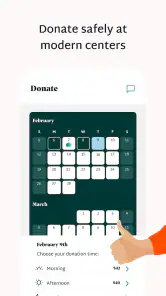
The first thing I noticed is that the app is built around a very specific question: where can I donate plasma and potentially receive compensation? That makes the experience easier to understand than a large medical platform filled with unrelated tools. Instead of asking you to sort through general wellness content, it points your attention toward donation centers and the practical steps surrounding a visit.
That narrow purpose is especially helpful when you are starting from zero. A person may have heard that plasma donation can provide extra money but still have no idea where to begin, what kind of center to look for, or how to turn a vague plan into an appointment. Parachute gives that search a defined starting point. I would use it before making a trip, not while sitting in a waiting room expecting it to handle the entire donation process.
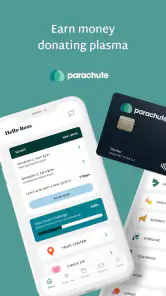
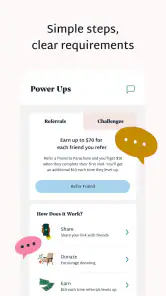
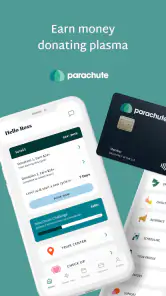
The store summary presents the possibility of earning money through verified centers and mentions up to two hundred dollars across three visits. I read that as a promotional ceiling rather than a promise for every user. Compensation can depend on the center, eligibility, current offers, visit requirements, and personal circumstances. The sensible approach is to treat the figure as a reason to investigate, then confirm the actual terms directly before spending time or transportation money.
The app is most valuable when it reduces uncertainty before you leave home. That means checking the location, reviewing the route, thinking through the time commitment, and making sure you understand what the center requires. It is less valuable if you already have a trusted donation center, know its schedule, and do not need help comparing or discovering nearby options.
Why verified centers matter more than a simple map
A normal map application can show businesses with words such as plasma or donation in their names, but that is not the same as a purpose-built search. A general map may mix donation centers with blood banks, medical offices, outdated listings, or places that are not relevant to paid plasma donation. Parachute’s emphasis on verified centers gives the search a more useful starting point.
I would still avoid treating any in-app listing as the final word. Before visiting, I would check the center’s current hours, identification requirements, appointment process, and compensation details. This is one of the app’s important trade-offs: it can make discovery more focused, but the center remains the place that controls eligibility and visit rules. The app helps with the first part of the journey; it does not remove the need for direct confirmation.
That distinction also answers a question many new donors have: does finding a center mean I am guaranteed to donate? No. A listing can help you locate an option, but donation depends on the center’s screening process and your own eligibility. I would not schedule my day around expected payment until the center has confirmed that I can donate and explained what I need to bring.
A smarter workflow for first-time users
My recommended workflow is simple but more deliberate than opening the app and immediately choosing the closest result. First, I would search for centers that are realistically reachable, considering public transportation, parking, weather, and the possibility that the visit may take longer than expected. A center that is slightly farther away but easier to reach may be a better choice than the nearest location if transportation is unreliable.
Next, I would compare the practical details rather than focusing only on the advertised earning potential. A higher possible payment may not be worthwhile if the journey takes several hours or requires repeated trips that are difficult to fit around work. This is a non-obvious strength of using a dedicated app: it encourages you to think of donation as a recurring commitment, not just a one-time cash opportunity.
Finally, I would save or note the information I need before closing the app. I would keep the center’s name, address, contact details if shown, and any appointment information in one place. That small step matters because the most frustrating experience would be arriving without the correct identification or misunderstanding the visit process. Parachute can help you find the opportunity, but careful preparation determines whether the opportunity becomes a successful visit.
Where it fits beside ordinary alternatives
Compared with searching the web, Parachute should feel more direct because its subject is already limited to plasma donation. A web search can provide more background and broader discussion, but it can also produce scattered results, sponsored pages, old information, and advice that is not tied to a nearby center. I prefer the app for discovery and a browser or direct phone call for final verification.
Compared with a general map app, its advantage is relevance. A map is excellent for directions, travel time, and checking the surrounding area, but it may not help you distinguish a suitable plasma center from unrelated medical businesses. I would use both together: Parachute to identify a plausible center, then a map to judge the real journey.
Compared with a clinic’s own app or website, Parachute may be more useful when you are still deciding where to donate. A single center’s service is naturally focused on its own locations, while a discovery tool is better at the beginning of the process. Once I had chosen a center, I would expect the center’s own communication to be more authoritative for appointment rules, screening, and payment details.
It is also important not to confuse this app with a medical consultation service. If you have a health question, a concern about whether donation is appropriate for you, or symptoms after a visit, I would contact a qualified healthcare professional or the donation center. Parachute’s medical-category label does not turn it into a substitute for clinical advice.
The limitation that affects the whole experience
The biggest weakness is the gap between finding an opportunity and knowing exactly what will happen next. A user may open the app because the earning potential sounds attractive, but compensation is only one part of the decision. Eligibility, screening, travel, waiting, repeat visits, and center-specific conditions all matter. If those details are not understood before leaving home, the app can create optimism without enough context.
I also think the earning message needs a careful reading. “Up to” language is naturally attention-grabbing, but it should not be used as a personal budget forecast. I would never count on the maximum amount for rent, groceries, or a bill. Instead, I would confirm the current offer with the selected center and consider whether the full process makes sense even if the actual payment is lower.
Another limitation is audience fit. The app is aimed at adults who are actively exploring paid plasma donation, so it will feel irrelevant to someone looking for emergency medical help, blood donation education, medication reminders, or a personal health record. That is not a flaw in the narrow concept, but it means the app has little value outside this particular task.
There is also a human consideration that the app cannot solve: financial pressure can make people rush into a decision. I would use Parachute as a research aid, not as a reason to ignore rest, health, transportation costs, or the center’s screening instructions. If the only reason you are considering donation is an urgent need for money, taking a moment to verify every condition is especially important.
Small decisions that make the app more useful
One useful habit is to compare the total effort, not merely the displayed compensation. Add travel time, preparation, the visit itself, and the return trip. If you need multiple visits to reach a promotional amount, calculate the repeated cost and disruption. This gives you a more honest picture than focusing on the largest possible figure shown in the app.
A second tip is to plan around reliability rather than convenience. If you depend on someone else for a ride, do not choose a center based only on distance. Confirm that the location is practical at the time you would actually visit. A missed appointment can turn an apparently easy opportunity into an expensive and frustrating day.
A third is to treat the app as a shortlist builder. I would identify a few plausible centers, then verify each one before choosing. This is better than assuming the first result is automatically best. The strongest match may be the center with the clearest process, the most manageable route, or the schedule that fits your life, not necessarily the one with the most appealing headline.
A fourth is to separate discovery from health judgment. The app can help answer “where might I go?” It should not be the only source for “should I donate?” If you have a condition, take medication, feel unwell, or are unsure about eligibility, ask the center or a healthcare professional before making plans. That separation keeps the app in its proper role and prevents a convenient search tool from being mistaken for medical clearance.
Who should download it, and who should skip it
I think Parachute is a good fit for an adult who has never donated plasma, wants to investigate nearby verified centers, and is willing to confirm details before visiting. It is also useful for someone comparing donation as a possible source of supplemental income and trying to understand whether the travel and repeat-visit commitment are realistic.
It may help returning donors who want to explore another center, although the benefit depends on how much discovery they need. If you already have a reliable location and its process works well for you, the app may add little beyond convenience. In that situation, direct communication with the center could be faster.
I would skip it if you expect guaranteed payment, instant medical approval, or a complete explanation of every health-related question. I would also skip it if your main goal is general wellness tracking or urgent care. The app’s value comes from its focused connection between potential donors and plasma centers, not from covering the entire medical category.
Device compatibility is reasonably broad for an older Android phone: the listed minimum is Android seven point zero, and the current version is 120260727. I would still keep the app updated when possible, especially when using location-based information or planning a visit. The free price makes trying it low-risk, but the real cost of using it is your time and travel, so careful verification remains more important than the download itself.
My final view after weighing the trade-offs
Parachute succeeds because it does not pretend to be everything. It gives paid plasma donation a clearer starting point, emphasizes verified centers, and can save a new donor from sorting through irrelevant search results. I especially like it as the first step in a careful workflow: discover a center, compare the practical route, confirm the rules, and only then decide whether a visit makes sense.
Its weakness is equally clear. The app cannot guarantee eligibility, payment, appointment availability, or a smooth visit. Anyone who reads the earning message too literally may come away with unrealistic expectations. The best results will come from users who treat the app as a locator and planning aid rather than a promise of income.
My recommendation is therefore specific: download it if you are an adult seriously considering plasma donation and need help finding a suitable verified center. Use it alongside direct confirmation from the center and sensible health judgment. If you already know where you donate, need medical advice, or want a broader health-management app, choose a different option. For the right audience, Parachute: Get Paid for Plasma is a focused and practical starting point, provided you keep its role—and its limits—in view.
Pros
- Earn extra money by donating plasma at participating centers.
- The app helps locate nearby plasma donation facilities.
- Appointment scheduling can make visits more convenient.
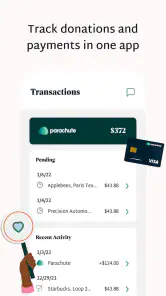
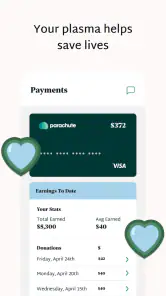
- Payment details and donation history are easy to track.
- Useful reminders may help users stay consistent with appointments.
Cons
- Availability depends heavily on your location and local donation centers.
- You must meet strict health and eligibility requirements to donate.
- Payments and offers may vary by center and promotional period.
- The app cannot guarantee short wait times at donation facilities.
- Frequent donations can be tiring and may cause temporary discomfort.

- Category
- Medical
- Version
- 120260727