Obsidian
- 1.05K
- 4.3
- Installs
- 1.00M
- Price
- Free

Screenshots



Analysis by Reviewed
I often lose more time looking for a note than writing it. A quick thought ends up in one app, a meeting detail in another, and a useful idea becomes hard to find once a project moves on. I find Obsidian most helpful when I use it to connect those fragments into a personal reference system, rather than treating it as another inbox. It is a free productivity app from Dynalist Inc., built around plain text and links between notes.
When a note needs somewhere to lead
The app makes the most sense when your notes continue to matter after the day you wrote them. A student can connect a lecture note to a reading summary; someone managing a long project can link decisions, research, and next steps without forcing them into one enormous document. If you mostly jot down a shopping list and delete it by evening, a simpler notes app is probably quicker.
That difference is not about making every thought elaborate. It is about having a place to put a small note now and a practical way to return to it later. I would judge the system by whether it saves me the repeated effort of remembering where I filed something, not by how impressive its network looks.
A small setup that pays off later
I would start with a few broad notes for ongoing areas of life, then make separate notes for individual ideas, meetings, or tasks. Link them when there is a real connection, not just to make a graph look busy. For example, a note about a work project can point to the meeting where a decision was made and the separate note where I collected related research. That modest habit makes retrieval more useful than trying to build a perfect system on day one.
Markdown also makes a practical difference in that setup. I can keep a quick note plain, then add headings, emphasis, or lists when it grows into something I need to revisit. A helpful trade-off is that this freedom asks me to choose a little structure myself: if I create too many near-duplicate notes or inconsistent titles, the network becomes harder to scan. I would settle on a simple naming habit before importing a large collection.
Why Obsidian is the Talk of the Town
So, what makes Obsidian special? For starters, it’s not just a note-taking app; it’s a powerful knowledge management tool. I’m talking about features that allow you to link your notes in a way that mimics the human brain’s web of ideas. Imagine having a digital brain dump where each thought connects to another, creating a network of knowledge that grows with you. It’s like turning your notes into a personal Wikipedia, and who wouldn’t want that?
Starting without overbuilding
My first useful setup would be deliberately modest: create a home for one active subject, add a few notes I already know I will revisit, and link them only when the relationship is meaningful. That lets me learn how the system feels before I reorganize an entire archive. If I start by designing elaborate folders, naming rules, and plugin combinations, I risk spending the time I hoped to save on maintaining the setup instead.
A useful test is whether a note can stand on its own when I find it weeks later. A title such as “Project decision” is easier to interpret if the note also records what was decided and points to the relevant project context. Links work best as paths between useful pieces of information, not as a substitute for enough context inside each note.
The Interface Experience
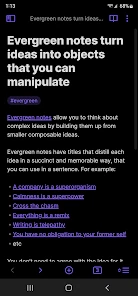
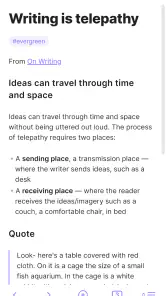
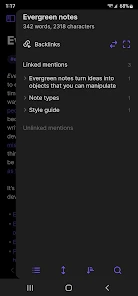
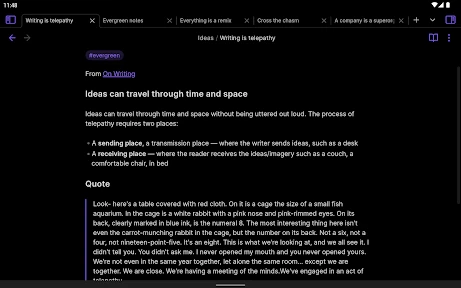
When you first open the app, you’re greeted by a clean and intuitive interface. It’s minimalistic, yes, but don’t let that fool you. Beneath its simplicity lies a robust system that’s both flexible and responsive. I found myself navigating through my notes with ease, linking ideas here and there without any hiccups.
On a phone, I would treat the app as a useful place to capture and consult rather than assume that every longer organizing task is equally comfortable on a small screen. A quick thought or a short reference is a natural fit; revising a large web of notes can take more attention. That distinction matters if you expect your mobile device to be your only workspace.
Features You’ll Love
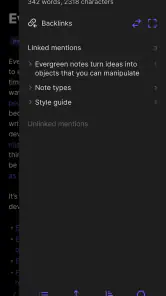
One of the standout features for me is the graph view. It’s like a mind map on steroids. Seeing all my interconnected notes visually displayed was not only satisfying but incredibly useful for revisiting old projects or planning new ones. Plus, the markdown support is a blessing for anyone who loves a bit of formatting freedom. You can easily bold, italicize, or create lists, making your notes as pretty or as plain as you like.
I would use the graph as a diagnostic view rather than a daily scorecard. If a cluster of notes looks disconnected, that can prompt me to check whether I have missed a useful link; it does not prove that the notes are valuable or that I need to connect everything. A healthy collection can contain isolated notes when they are genuinely standalone. The practical goal is easier retrieval, not a perfectly dense diagram.
Markdown also keeps the writing workflow light: I can make a quick record first and add structure only when the note earns it. One trade-off is that people who prefer formatting controls that feel like a conventional word processor may find the plain-text style less familiar. For a polished handout or collaborative document, I would write or finish the work in a tool designed for that job rather than expecting a knowledge base to replace it.
Plugins without plugin sprawl
Let’s not forget about the community plugins. Oh boy, these are game-changers. You can customize Obsidian to your heart's content. Whether it’s adding a calendar view, task management, or even a Pomodoro timer, the possibilities are endless. It’s like having a Swiss Army knife for all your productivity needs.
That flexibility is also a reason to be selective. Before adding a plugin, I would identify a recurring action that is genuinely awkward, then try one extension that addresses it. If I install tools for every possible workflow, I can end up managing settings and habits instead of writing notes. A plain, dependable core is often better than a personalized setup that becomes difficult to maintain when my needs change.
Plugins are most appealing to someone who enjoys shaping a workspace and is willing to revisit those choices. If I want a ready-made task manager with a clear team workflow, I would compare dedicated task apps first. Obsidian can accommodate task-oriented habits, but adding a task feature does not automatically make a note collection the best place to coordinate other people’s work.
A day when the links earn their keep
Imagine I am working through a week with a few meetings and a research question that keeps resurfacing. I can capture the question in a short note while it is fresh, add the key detail from a meeting to its own note, and link both to the project they affect. When I return to the project later, I have a route back to the reasoning instead of relying on memory or searching several unrelated notebooks.
The benefit is modest but real: I do not need to decide the perfect category at the moment of capture. I can write first, then make the relationship clear when I know what the thought connects to. That workflow is especially useful for research, study, recurring planning, and creative work where ideas develop over time. For a shared checklist that teammates need to update together, a collaboration-first app is likely a more direct choice.
Small habits that make the network useful
The graph is most useful to me as a way to spot neglected connections, not as a dashboard I need to admire every day. If it becomes crowded, I can narrow the view to a topic or project and use it to find notes that deserve a link. The more reliable workflow is still to write a clear title and add a link at the moment I notice a relationship; visualizing a network cannot fix vague notes by itself.
For an everyday example, I might jot down a question during a commute, expand it into a research note later, then link it to a project note when I decide to act on it. That means the first capture can stay quick, while the later connection gives the thought a place to live. This is a good fit for study notes, recurring planning, personal research, and long-running creative work. It is less compelling if all I need is a shared checklist for a group or a polished document with real-time collaboration; a focused task or document tool may involve less setup.
One simple retrieval habit is to give notes titles that describe what they contain, rather than relying on a vague label such as “Ideas.” Another is to add a short explanation when a link might otherwise be mysterious later. Those small choices help the collection remain useful even when I have forgotten the circumstances in which I wrote something.
Privacy and Control
In a world where data privacy is a big concern, Obsidian gives you peace of mind. Your data is stored locally, meaning you have full control over your notes. No cloud, no worries. It’s a breath of fresh air knowing that your thoughts and ideas are kept private unless you decide otherwise.
Local storage is also a responsibility, not just a comfort. I would include the notes in a regular backup routine, especially if they become important for work or study. A plain-text library is approachable and gives me control, but I still need to think about how I protect and move my own files. People who want every note automatically centered in a shared cloud workspace may prefer a service built around that workflow.
This makes the choice less about whether local files are universally better and more about which responsibility I want. Someone who values direct control over a personal archive may welcome the approach; someone who needs effortless sharing across a group may find a cloud-centered notebook easier. Either way, I would decide how important the notes are and make a backup habit before treating any digital notebook as the only copy.
Where it fits—and where it doesn’t
Compared with a basic notes app, Obsidian asks for more deliberate organization but rewards it with links between ideas and a flexible collection. Compared with a conventional document editor, it is better suited to accumulating small connected notes than producing a finished page for other people. Plugins can extend the experience, but every extra tool brings a choice to maintain; I would add one only when a repeated need is clear, rather than turning setup into a project of its own.
For someone deciding between it and a familiar notebook app, the key question is whether connections between notes are part of the problem. If I mainly need fast capture and a few reminders, the simpler option can be less distracting. If I repeatedly return to older information and want to connect it to new work, Obsidian’s more deliberate structure can pay back the initial effort. Neither approach is automatically more productive; the better one is the one I will actually keep using.
The app has an average rating of 4.3 from around 15 thousand ratings, with about 1.1 thousand written reviews and over a million installs. It is rated for Everyone, and version 1.10.6 runs on Android 5.1 or later. Those details make it easy to consider as a free starting point, but the right choice still depends on whether I want a personal knowledge system or simply a quick place to type.
Because it is free to start using, I can explore the basic workflow without turning the decision into a financial commitment. The more important cost is attention: building a useful archive takes repeated small choices about titles, links, and backups. I would try it with one real project rather than migrating every note immediately, then judge whether finding and reusing information has become easier.
Final Thoughts
After spending some quality time with Obsidian, I can confidently say it’s more than just a note-taking app; it’s a personal knowledge management system that evolves with you. Whether you’re a student, a professional, or just someone who loves organizing information, this app is worth giving a shot. It’s not just about jotting down notes; it’s about creating a dynamic, interconnected system of knowledge that’s uniquely yours.
I would recommend it most to people who return to the same subjects over weeks or months and want their own notes to become easier to navigate. I would skip it if my priority were instant team collaboration, finished document production, or an uncomplicated checklist with no interest in linking ideas. The app can save time, but only after a light structure becomes a habit; it cannot decide what matters or organize a neglected archive by itself.
If you’re ready to take your note-taking game to the next level, give Obsidian a try. Who knows, it might just become your favorite digital companion.
Obsidian Frequently Asked Questions
Can I use Obsidian to keep a journal or organize personal projects?
Yes. Obsidian can serve as a personal space for journaling, planning, and collecting information, with plain-text notes that you can connect as your projects develop. Its flexible structure lets you start with a few straightforward notes and add links between related ideas over time. If you prefer a preset system that guides every step, you may need a little time to shape Obsidian around your habits.
What is Obsidian, and what does it do on a phone?
Obsidian is a productivity app built around a plain-text personal knowledge base. On a phone, it gives you a place to write, keep, and revisit notes while you are on the go. Its approach can suit everything from quick personal notes to a growing collection of connected ideas, so it is worth considering whether you want a flexible note space rather than a narrowly focused task or reminder app.
Can I import my existing notes into Obsidian?
Obsidian’s plain-text approach can make it a natural fit for people who keep notes as text files and want to build a personal knowledge base around them. You can also begin with new notes and connect them as you go. Before moving a large archive, consider how you want to arrange and maintain it; the app’s flexible structure offers room to organize, but may feel different from a fixed folder-based notebook.
Is Obsidian suitable for someone who wants a simple note-taking app?
Obsidian can work for straightforward note-taking, but its distinctive strength is organizing ideas as connected notes rather than keeping everything in a basic list. You can begin with a simple personal knowledge base and explore linking or other options as your needs grow. If you prefer a very guided setup with collaboration built in, its flexible approach may take some getting used to.
What should I know about Obsidian’s Android requirements before downloading?
Obsidian is an Android productivity app, and it requires Android 5.1 or later. It is free to download and is intended for a general audience. If your device meets that operating-system requirement, you can use it as a plain-text personal knowledge base on the go and decide whether its note-linking approach suits the way you like to organize information.
Pros
- Highly customizable with plugins
- Supports markdown for note-taking
- Works offline seamlessly
- Cross-platform synchronization
- Robust community support and tutorials
Cons
- Steep learning curve for beginners
- No built-in task management features
- Limited mobile app functionalities
- Requires manual setup for sync
- Can be overwhelming with plugins

- Category
- Productivity
- Version
- 1.10.6