Oahu Hawaii Audio Tour Guide
- 525.00
- 4.8
- Installs
- 50.00K
- Price
- Free

Screenshots


Analysis by Reviewed
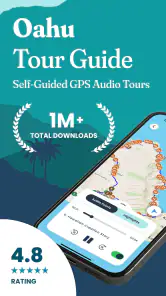
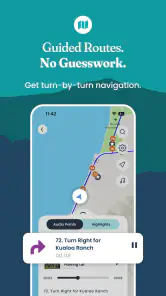
Planning an Oahu trip often means deciding how much of the island you want to understand while still leaving room for beaches, food stops, and spontaneous detours. I tested Oahu Hawaii Audio Tour Guide from Shaka Guide with that problem in mind. It is a travel and local app built around spoken sightseeing guidance, maps, and stories rather than a simple list of attractions. My overall impression is that it works best as a flexible companion for a self-guided drive, especially when the people in the car want context without committing to a scheduled group tour.
The app is free to install, carries an Everyone age rating, and comes from Shaka Guide, a developer focused on location-based travel experiences. It has a 4.8 average from around 1,000 ratings and has passed 50,000 installs, which gives it a reassuring amount of real-world use without making it feel like an overcomplicated travel platform. The current version is 9.2.4, and it runs on Android 7.0 or later. Optional purchases range from $0.99 to $399.99 per item, so I would check the individual tour or package details before assuming every experience is included.
How it feels when one phone serves the whole car
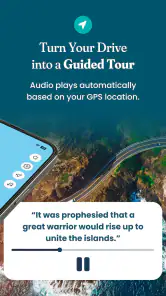
The most natural way to use this app is on a shared phone mounted or placed where the front passenger can manage it. One person handles navigation and playback, while everyone else listens and watches the scenery. That arrangement matters because an audio guide is not just another app to browse between stops. Once the route begins, the value comes from letting the commentary accompany the drive instead of asking every traveler to stare at a separate screen.
In a household group, this can be more comfortable than passing a guidebook around. Parents can keep their attention on children, a couple can discuss whether to stop, and friends can hear the same explanation at roughly the same moment. I liked that the experience encourages shared conversation: a story about a landscape or a local point of interest gives the group a reason to look up, compare impressions, and decide whether the next stop deserves extra time.
There is also a practical advantage when several people have different travel styles. The person who planned the holiday may already know the main route, while another traveler wants history and background. A standard map app can get everyone from one place to another, but it usually treats the journey as empty space between destinations. This guide attempts to fill that space with narration, making the drive itself part of the visit.
That does not mean I would hand the phone to every passenger without a plan. Audio playback, maps, and route decisions can become distracting when several people are trying to control them at once. Before leaving, I would agree on who is responsible for the device, who can request a stop, and whether the group wants uninterrupted stories or occasional pauses for conversation. A little coordination makes the app feel like a shared guide rather than a source of back-seat arguments.
What to settle before the first drive
My strongest setup advice is to prepare while stationary. Open the relevant Oahu experience, review the route, and decide which parts fit the day. Oahu is easy to underestimate: a map can make several attractions look close together even when traffic, parking, meals, and photo stops change the schedule. The app can provide useful direction and commentary, but it cannot decide how much energy your group has or how long a beach stop will take.
More From Our News Desk

Clash of Clans Is Won Between the Battles

Android Auto Makes the Case for Quieter Car Software

MobiOffice: Transforming Mobile Productivity with Seamless Integration

EA SPORTS FC™ Mobile Soccer: Redefining Mobile Sports Gaming

How Microsoft OneDrive Became a Mobile Productivity Giant

How Google Translate Breaks Language Barriers Effortlessly
I would also test the sound level before pulling away. Spoken guidance needs to remain understandable over road noise and conversation, but it should not be so loud that it becomes tiring. If one passenger has hearing difficulty, sit them close enough to the speaker or use a shared listening arrangement that everyone accepts. This is one area where a car’s built-in audio system may be more comfortable than a phone speaker, although the exact connection method depends on the vehicle and phone.
Because this is a route-based travel tool, I would treat connectivity and battery as part of the preparation rather than an afterthought. Keep the phone charged, avoid placing it where heat or direct sun can become a problem, and make sure the driver is not the person searching through menus. If your group has only one phone available, that device becomes both the guide and the practical safety tool for the day, so conserving power is sensible.
The app’s free entry point is useful for exploring the idea before spending money, but the optional purchase range deserves attention in a shared household. A child or another family member should not be the person casually selecting paid content. The account holder can review what is available, choose what fits the itinerary, and make the purchase deliberately. I would not describe the presence of in-app purchases as a reason to avoid the app, but I would treat them as a boundary to establish before handing over the phone.
Keeping a mixed group moving together
One of the less obvious challenges with any audio tour is pacing. A narration segment may be interesting to one person and too detailed for another. On a shared drive, I found it helpful to agree that the guide is a conversation starter, not a rulebook. If the group wants to stop for coffee, skip a viewpoint, or take a slower road, that decision should win. The best use of the app is to add meaning to the route, not to make everyone feel they are failing a schedule.
For a family, I would divide responsibilities in a simple way. An adult can handle route choices and purchases, an older child can watch for the next suggested point of interest while parked, and younger children can ask questions or choose which story they enjoyed most. This gives children a role without making them responsible for navigation. It also avoids the common mistake of turning a holiday into a sequence of instructions delivered by a phone.
For friends sharing a rental car, the app works well when one person acts as the navigator for a particular leg and then hands that role to someone else at a stop. I would avoid changing the designated navigator while the car is moving. The spoken stories are there to reduce the feeling that one person has to research everything in advance, but they do not remove the need for ordinary road awareness and good judgment.
Another useful approach is to use the guide during the drive between planned stops, then pause it when the group arrives. That keeps the commentary from competing with conversations while walking, swimming, eating, or taking photographs. It also helps children understand that the phone is a tool for certain moments, not the center of the entire excursion.
Age, trust, and the limits of shared access
The Everyone rating makes the app approachable for a broad household audience, and the subject matter is naturally suited to families, couples, and adult travelers. Still, an age rating is not the same thing as a complete family-management system. I would not assume that the app itself will enforce spending rules, limit access, or decide what a child should hear. Those responsibilities remain with the adults sharing the device and managing the account.
This distinction matters because a free app with optional purchases can be used by several people in the same household. If a child uses the phone to explore the guide, I would show them the approved tour first and make it clear that purchases require permission. If a teenager is navigating, I would still keep payment decisions with the account owner. These are simple household boundaries, but they prevent an enjoyable travel tool from creating an avoidable billing surprise.
Trust also applies to location and route decisions. A young traveler may be perfectly capable of choosing an interesting stop, but the adult in charge should make the final call about parking, walking distances, weather, and whether the group has enough time. The app can support curiosity without replacing supervision. I appreciate it most when it encourages questions about Oahu rather than pretending that a digital route can manage every real-world variable.
For older relatives, the main consideration is ease of listening. They may prefer a slower pace, clearer volume, or a seat where the phone audio is easy to hear. A shared device can actually be better than asking them to install and learn an app themselves, provided someone else manages the controls. In that situation, the guide becomes an inclusive way to add background to the trip without requiring every traveler to be comfortable with mobile technology.
Where it beats ordinary travel alternatives
A general map application is still the better choice when the only goal is reaching a restaurant, checking traffic, or finding a specific address. Maps are built for immediate logistics, while this app is more valuable when you want the road to feel connected to the island’s places and stories. I would use both rather than forcing one tool to do the other’s job.
A written guidebook offers more control over reading speed and often makes it easier to compare many attractions at once. It is also quieter and less dependent on battery life. However, a book requires someone to stop reading, find the right section, and connect the text to the view outside. The audio approach is more convenient for the passenger who wants to learn while the car is moving, especially on a day when nobody wants to plan every detail.
A live tour guide can answer personal questions and adapt instantly to the group, which this app cannot replicate. A scheduled tour may also remove the stress of driving and parking. On the other hand, a self-guided audio experience gives a household control over timing, breaks, food stops, and the people sharing the day. That freedom is the central trade-off: you gain flexibility but keep responsibility for transport and decisions.
I would skip this app if you dislike spoken commentary, prefer completely unplanned wandering, or already have a carefully researched itinerary with no interest in additional context. It is also not the ideal primary tool for someone who needs a dedicated navigation system, detailed accessibility planning, or live human assistance. In those cases, a map app, official local information, or a professional tour may be the stronger choice.
Small habits that make the guide more useful
First, I would preview the day with the whole group and identify the stories that sound most relevant. This prevents the navigator from making decisions alone and gives children or quieter travelers a chance to shape the outing. Second, I would leave space after an interesting segment instead of immediately starting another task. A short pause lets everyone look around and decide whether the place deserves a stop.
Third, I would use the narration to improve observation rather than to fill every silence. Ask the group to look for the landscape feature being discussed, compare what they expected with what they see, or remember one detail to talk about over lunch. That turns passive listening into a low-effort activity and makes the guide more memorable than a stream of facts.
Finally, I would keep the phone accessible but not constantly visible to children. The app is most effective when the screen supports the audio and map, not when it becomes another entertainment device during a scenic drive. This is especially useful in a household where the same phone may also contain messages, photos, and other distractions.
My household verdict after using it on Oahu
Oahu Hawaii Audio Tour Guide is at its best when one shared phone becomes the group’s storyteller. I can see it fitting naturally into a rental-car day, a family excursion, or a couple’s first drive around the island. The combination of maps, spoken guidance, and local stories gives the journey more character than ordinary turn-by-turn directions, while the self-guided format avoids the fixed schedule of a group tour.
I would recommend it to travelers who want structure without surrendering control. It is especially useful for the person who does not want to research every viewpoint in advance but still wants to understand more than a name on a road sign. The free starting point makes it easy to investigate, while the optional purchases mean the household should agree on content and spending before the trip begins.
My reservations are practical rather than fundamental. A shared device needs a responsible navigator, a charged phone, sensible volume, and clear purchase boundaries. The guide cannot replace traffic awareness, local judgment, or a backup plan when the day changes. Families should also remember that an Everyone rating does not create household controls, so adults still need to manage access and account decisions.
Shaka Guide has made a focused travel app rather than an all-purpose vacation planner. That focus is its strength. If you want Oahu to feel like more than a collection of stops, and your group is happy to listen together while keeping the freedom to pause or change plans, I think this is a worthwhile companion. If your priority is only navigation, silent exploration, or personalized human advice, another option will suit you better. For a household that wants a simple way to learn, coordinate, and share the drive, I would keep it ready for the road.
Oahu Hawaii Audio Tour Guide Frequently Asked Questions
Is Oahu Hawaii Audio Tour Guide free to download?
The app is free to download, with in-app purchases available. If you are deciding whether it fits your budget, check the purchase options shown for your device before buying anything. The basic download may be a convenient way to explore what the app offers, while any paid content should be considered separately from the app’s free installation.
What should I know about the app’s age rating and device compatibility?
Oahu Hawaii Audio Tour Guide is rated for Everyone and is listed as compatible with devices running Android 7.0 or later. It is a Travel & Local app from Shaka Guide, intended for travelers looking for an audio-led way to explore Oahu. Checking your device’s operating system before downloading can help avoid compatibility surprises.
What is the Oahu Hawaii Audio Tour Guide app?
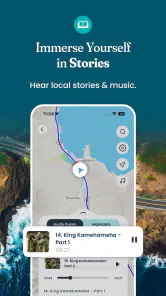
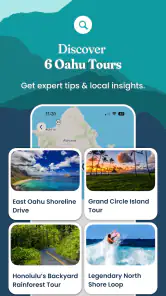
Oahu Hawaii Audio Tour Guide is a travel companion designed to help visitors explore the island independently. It provides narrated information about beaches, landmarks, scenic drives, historic locations, and cultural points of interest. Instead of following a fixed group tour, you can listen to descriptions while traveling at your own pace and choose the stops that fit your itinerary.
Does the Oahu Hawaii Audio Tour Guide work offline?
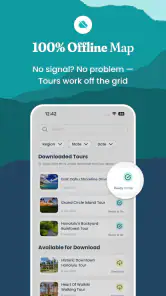
The app is intended to be useful while sightseeing, including in areas where mobile reception may be unreliable. However, offline availability can depend on the version of the app and whether tour content is downloaded in advance. Before leaving your hotel or Wi-Fi connection, download the relevant audio and map data, then test playback with mobile data temporarily disabled.
Is the audio tour suitable for a self-guided driving tour?
Yes, the guide is primarily useful for travelers exploring Oahu by car, although passengers can also follow along during a taxi, shuttle, or private tour. Narration typically helps explain nearby attractions as you move around the island. Drivers should never operate the app while driving; set up the route and audio beforehand so you can concentrate fully on the road.
Pros
- Offline maps and narration make it useful when mobile coverage is unreliable.
- Self-guided routes let you explore Oahu at your own pace.
- Audio stories add historical and cultural context to major attractions.
- Flexible start and stop points suit different travel schedules.
- Usually costs less than booking a private sightseeing tour.
Cons
- Content may not cover lesser-known areas or attractions outside the main routes.
- GPS-triggered narration can be inaccurate in dense urban areas.
- Driving while following the tour requires careful attention and planning.
- Audio quality and narration style may not appeal to every listener.
- Some features or tour content may require an additional purchase.
- Category
- Travel & Local
- Version
- 9.2.4